Protesters continued to gather in New York City on Monday to voice their anger over U.S.-Israeli strikes on Iran and calling for an immediate end to a war that threatens to spiral out of control in the Middle East.
Joint military strikes launched by the U.S. and Israel on Iran on Saturday morning have triggered a sharp escalation across the Middle East in recent days, setting off waves of missile exchanges, mounting casualties, and far-reaching political and security repercussions.
Meanwhile, a U.S.-Israeli attack on a girls' elementary school in the southern Iranian city of Minab which killed at least 165 children and staff on Saturday has caused considerable outrage.
The deepening crisis has sparked demonstrations in several U.S. cities, with many expressing their concerns over the consequences of yet another U.S. military intervention in the Middle East.
In Manhattan, protesters carried anti-war signs reading "Hands Off Iran" and "Stop the War On Iran," urging the Trump administration to immediately cease all military operations against Iran.
Among them was Mohammad Esmaeil Khodami, a 26-year-old Iranian who strongly condemned the attacks launched by the U.S. and Israel. He even suggested the operation is designed to divert attention away from other issues and questions currently facing the Trump administration.
"The bombing in this war is a war for Israel. It's a war because, frankly, I believe it's also a war to cover up the crimes of the Trump administration, right? It's a play, it's a ploy for distraction. It's a move to try to garner popularity and to try to gain that like wartime sensational popularity. It has nothing to do with liberating Iranian people. They don't care about Iranian people at all. They would sooner see us all dead than come forward about the crimes that they've committed," he said.
Given the disastrous history of American military operations in the Middle East, many demonstrators also questioned the wisdom of the decision to launch a costly war against Iran which has plunged the region into huge uncertainty.
Participants in the New York protest demanded an immediate halt to strikes on Iran and stressed that Iranian affairs should be decided only by the Iranian people themselves.
"We the people here want the war to end. We want no bombs. We want no wars of aggression ever. We are very sorry that our government, in our name, with our money, is killing people in Iran. Which is the government of Iran is not our decision, it's not the United States' decision to decide who is going to govern Iran. That is for the people of Iran," said Joanna, a protester.
"I don't really understand why we're bombing Iran. I don't quite understand how American people, people in the Middle East, people around the globe benefit from this kind of militarism. I don't understand. I don't think it's in anyone's interests. So I think we should stop," said Tobias, another participant.
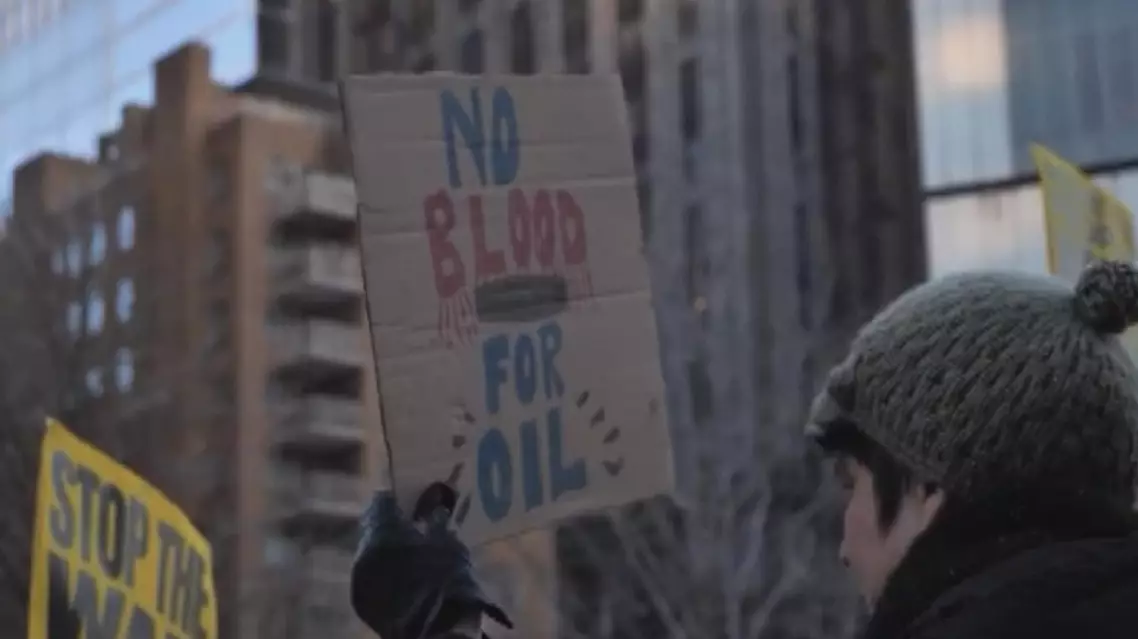
New York protesters rally against US-Israeli attacks on Iran
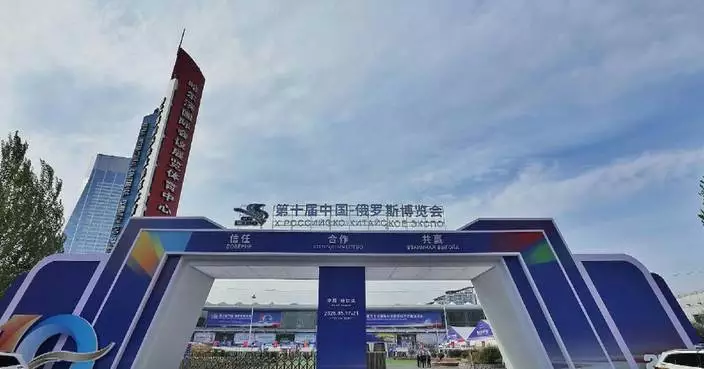
The 10th China-Russia Expo opened on Sunday in Harbin, the provincial capital of Heilongjiang in northeast China, highlighting the resilience, vitality and mutual benefits of China-Russia economic ties.
Held from May 17 to 21, this year's expo covers a floor space of 55,000 square meters, with more than 1,500 companies from 46 countries and regions taking part. Nearly 300 Russian companies are attending, while over 5,000 buyers are expected.
Since 2014, the event has attracted more than 7,200 Chinese and Russian companies and over a million visitors.
The China-Russia Expo is the largest comprehensive exhibition platform between the two countries.
President Xi Jinping and Russian President Vladimir Putin each sent congratulatory letters to the event, encouraging all sectors from both countries to seize the opportunity, make full use of their geographical proximity and economic complementarity, and further expand all-round practical cooperation.
"Leaders of the two countries have signed agreements to deepen practical cooperation, which we fully support. Russia and China stand side by side for common development, benefiting young people and all people. Such cooperation is timely and far-reaching. We are here in Harbin for the China-Russia Expo, coming from Russia's Sakha Republic. Our region is dominated by agriculture. We are seeking advanced farming technologies including irrigation equipment and harvesters. We hope to reach deals in the coming days to boost local development," said Vasiliy Petrovich Alexeev, head of Ust-Aidan Region of the Russian Federation.
"We are greatly inspired by the congratulatory letters from the heads of state of China and Russia. We will keep building targeted and efficient cooperation platforms, and smooth channels for sub-national exchanges between China and Russia," said Chen Shijun, president of Heilongjiang Council for the Promotion of International Trade.
China-Russia trade volume has surpassed 200 billion U.S. dollars for three consecutive years. China has been Russia's largest trading partner for 16 years running.
In the first quarter of this year, bilateral trade volume hit 60 billion U.S. dollars, a year-on-year increase of more than 14 percent.
This year's Expo features eight major exhibition zones. Beyond the exhibition halls, Russian delegations have also conducted field visits to Chinese companies. A delegation from the Republic of Buryatia visited one of northeast China's largest building materials distribution centers to explore potential areas of cooperation.
"Regular China-Russia economic and trade events continuously bring fresh cooperation opportunities for both sides. This field trip to Xilong Building Materials Market has helped us explore more practical directions and modes for bilateral cooperation," said Alexei Tsydenov, head of the Republic of Buryatia of the Russian Federation.
"Relying on Buryatia's abundant mineral resources and sound logistics conditions, we plan to build industrial parks focusing on home building materials, mineral resources and energy sectors in Russia. We will introduce advanced Chinese technologies and management models to drive coordinated industrial upgrading between the two countries," said Wu Jinrong, vice president of Harbin Xilong International Trade and Logistics Park.
From everyday consumer goods to advanced helicopters, and from mineral resources to intelligent robotics, China-Russia cooperation now spans a wide range of sectors. Economic ties and people-to-people exchanges between the two countries continue to advance toward higher-quality development and broader prospects.
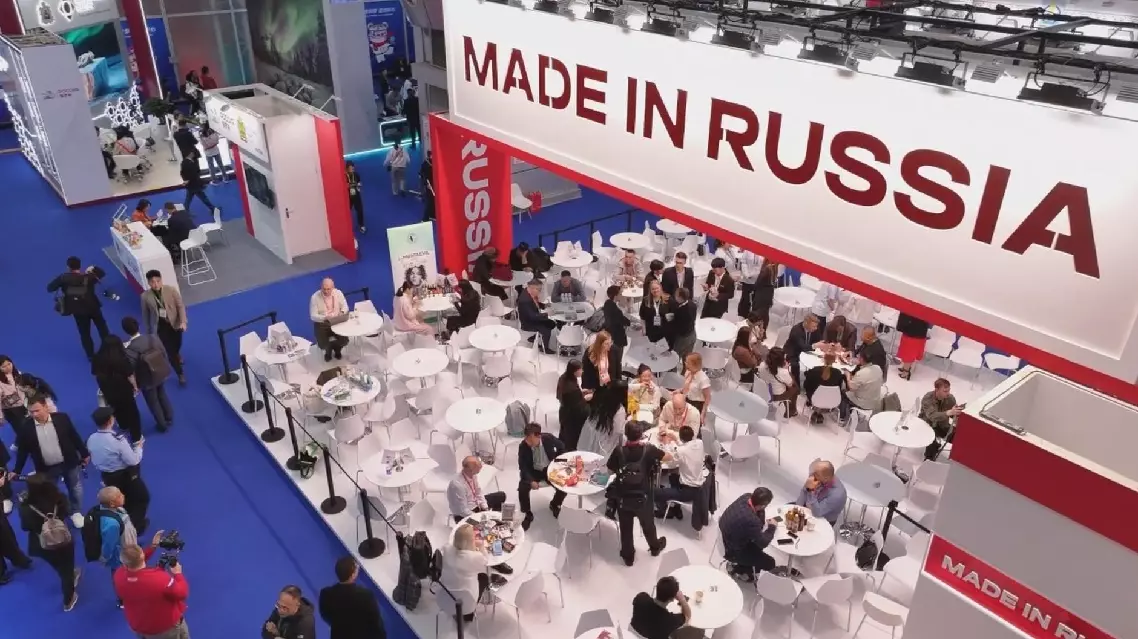
China-Russia Expo promotes trust, cooperation, mutual benefit