Skip to Content Facebook Feature Image

APEC ministers explore new pathways for energy security amid Hormuz crisis

China

China

China

APEC ministers explore new pathways for energy security amid Hormuz crisis

2026-09-11 11:47 Last Updated At:12:31

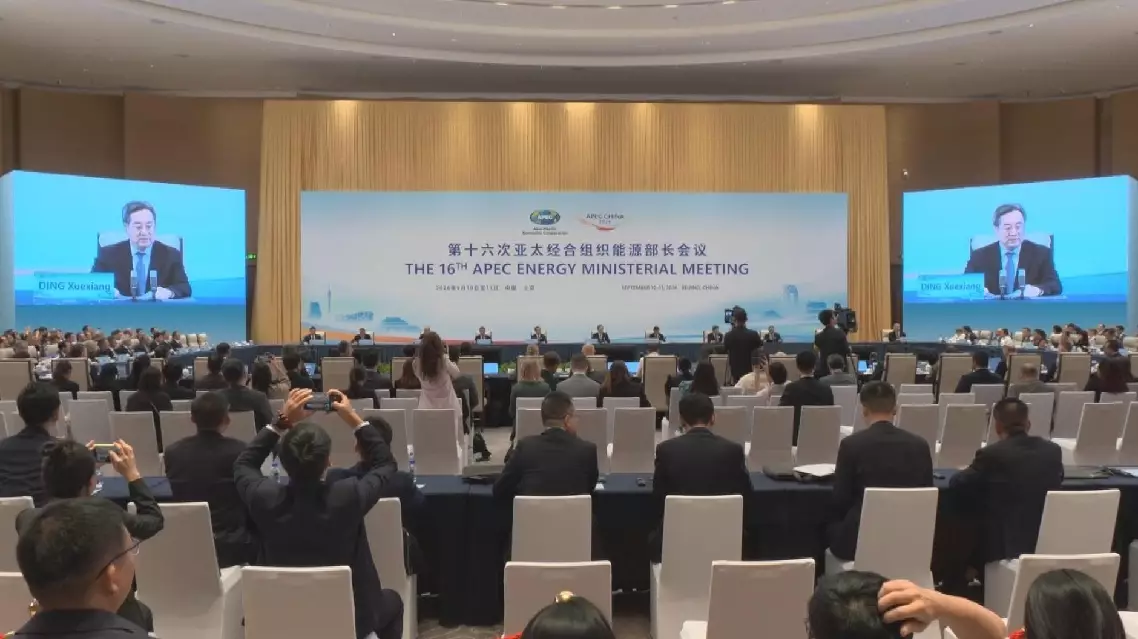
As the lingering U.S.-Iran conflict over the Strait of Hormuz disrupts global oil and gas supply, the Asia-Pacific Economic Cooperation (APEC) forum's energy ministers met in Beijing Thursday to chart a way forward, on whether the region can turn the crisis into opportunities.

The disruption of the Strait of Hormuz since late February 2026 has caused the largest oil supply shock on record, with ongoing daily shortfalls in the multi-million-barrel range. This energy supply shock has exposed the structural vulnerabilities of the Asia-Pacific region, the world's largest energy-consuming area.

As the APEC host this year, China has taken an open and inclusive approach, creating a multilateral dialogue platform. At the current energy ministerial meeting, it is pushing for a full exchange of practical experience among economies and channeling shared wisdom into real cooperative results.

"Since the beginning of this year, navigation through the Strait of Hormuz has been disrupted. China has fully leveraged its energy production, supply and marketing system, actively strengthened cooperation with all other parties, and made important contributions to safeguarding global energy security," said Chinese Vice Premier Ding Xuexiang in addressing the meeting.

The APEC Energy Ministerial Meeting, returning to Beijing after a 12-year hiatus, took place at a critical juncture following this "stress test."

"From our end in Papua New Guinea, we face the impacts of the war in Iran. We are an import-based economy. It did affect us in a great way," said Conrad Kumul, a delegate from Papua New Guinea, on the sidelines of the meeting.

Yet, many see that crises can also serve as catalysts for energy transition.

"The idea now is to push very much forward with the energy transition, even more than before. Now actually, the oil prices are so high that the comparatively renewable energies are very low in price," said Steivan Defilla, president assistant of the APEC Sustainable Energy Center, a high-level international energy think tank led by China's National Energy Administration.

China will hold the 33rd APEC Economic Leaders' Meeting in Shenzhen, south China's Guangdong Province, in November, which marks the country's third time hosting the event following Shanghai in 2001 and Beijing in 2014.
APEC ministers explore new pathways for energy security amid Hormuz crisis
APEC ministers explore new pathways for energy security amid Hormuz crisis

New Zealand's ruling National-led coalition has secured a parliamentary majority in the general election, preliminary results showed early Sunday, putting Prime Minister Christopher Luxon on course to retain power for a second term.

The Election Commission's tally of all voting places has resulted in 11 "overhang" seats, increasing to 131 the total number of seats in parliament, which normally has 120.

Among the seats, the National Party, ACT New Zealand and New Zealand First collectively secured 67, giving the three-party coalition a narrow majority to continue governing, while the opposition bloc of the Labor Party, the Green Party and the Maori Party garnered 57 in total.

The contest between the National and the Labor, led by former prime minister Chris Hipkins, remained exceptionally close, with each securing over 29 percent, according to preliminary figures.

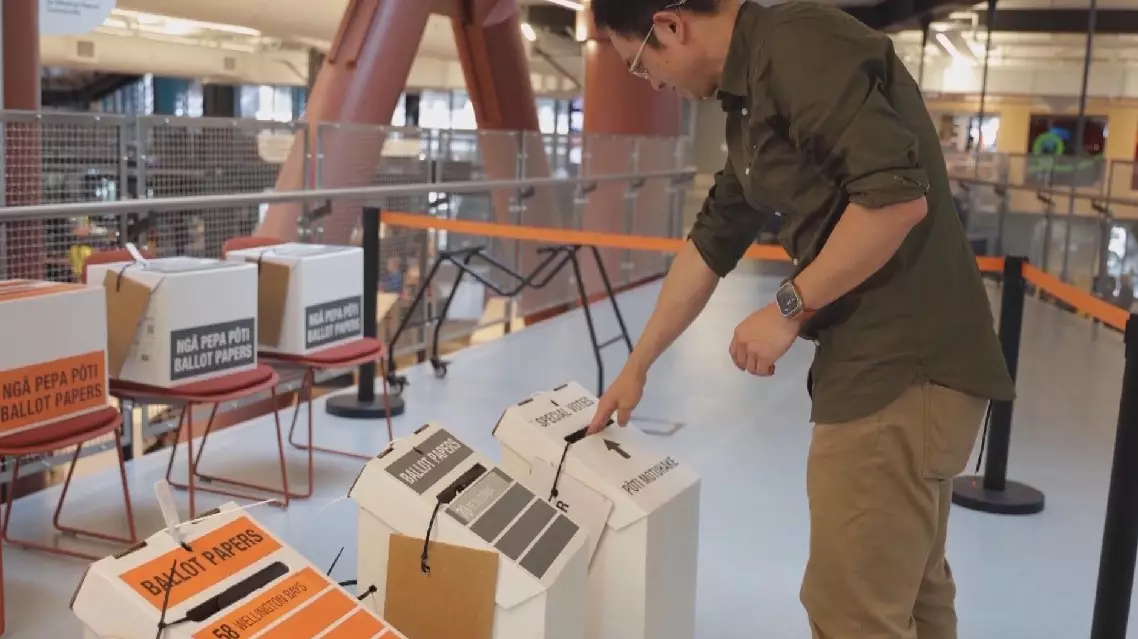
Addressing supporters in Auckland, Luxon said the election was "too close to call," with the final outcome hinging on special votes to be counted. He acknowledged that negotiations and compromise would be needed to form the next government.

The outcome could still change when 700,000 special votes are counted days later. These include ballots cast by overseas voters and people voting outside their electorates, and are not included in the preliminary results, according to the Electoral Commission, which is scheduled to release the final official results, including special votes, on Nov. 27.

The Green Party has won a record 16 seats in parliament. The centrist Opportunity Party has also made a parliamentary breakthrough, projected to win seven seats, preliminary results showed.

The country has nearly 3.8 million provisionally enrolled voters for the 2026 general election, representing 93.6 percent of the estimated eligible population, below the final enrolment rates of 94.7 percent in 2023 and 94.1 percent in 2020, the commission said.

New Zealand uses the mixed-member proportional voting system to elect its parliament. Under this system, voters cast two ballots, one for a political party and another for their local electorate candidate. The government is usually formed by two or more parliamentary political parties.

New Zealand's National-led coalition wins majority parliamentary seats: preliminary results

New Zealand's National-led coalition wins majority parliamentary seats: preliminary results

Recommended Articles