VANCOUVER, British Columbia & MIDLAND, Texas--(BUSINESS WIRE)--Mar 3, 2026--
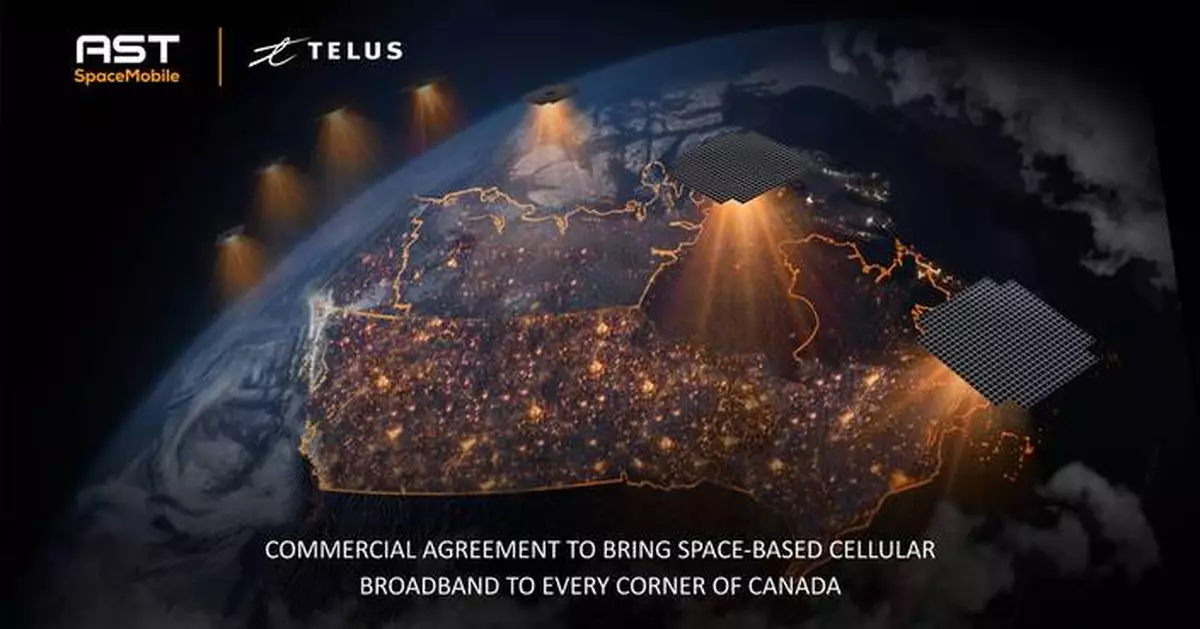
TELUS Corporation (“TELUS”) (TSX: T; NYSE: TU), a world-leading communications technology company, and AST SpaceMobile, Inc. (“AST SpaceMobile”) (NASDAQ: ASTS), the company building the first and only space-based cellular broadband network accessible directly by everyday smartphones, designed for commercial and government applications, have signed a commercial agreement to bring space-based cellular broadband service to places it’s never reached before across Canada. As part of the commercial agreement, TELUS will invest in ground-based satellite infrastructure and become an equity shareholder in AST SpaceMobile, reinforcing the long-term alignment between the two companies.
This press release features multimedia. View the full release here: https://www.businesswire.com/news/home/20260303551101/en/
Planned for late 2026, TELUS customers will be able to send texts, make calls and use data in Canada’s most remote locations, staying connected whether they're hiking through the backcountry, working at a remote job site, or spending the weekend at the lake, using the smartphone they already own with no special equipment required.
“By combining TELUS’ award-winning wireless network and AST SpaceMobile’s innovative satellite technology, we’re eliminating connectivity gaps across Canada and ensuring our customers in even the most remote corners of the country can stay connected to what matters most, when it matters the most,” said Nazim Benhadid, Chief Technology Officer, TELUS Networks. “This is a significant milestone in our commitment to keep all Canadians connected, no matter where they live, work or explore.”
Once available, TELUS customers will have the opportunity to use their existing smartphones to stay connected almost anywhere across Canada. The connectivity is made possible by combining AST SpaceMobile’s Low Earth orbit (LEO) satellite constellation, with the largest commercial phase arrays ever deployed in LEO and TELUS’ award-winning wireless network, enabling connectivity in areas where traditional cellular network infrastructure is not available.
“Canada’s vast geography, remote industries and dispersed communities make universal connectivity both a challenge and a necessity,” said Chris Ivory, AST SpaceMobile Chief Commercial Officer. “By combining TELUS’ proven leadership in network innovation with AST SpaceMobile’s innovative technology, we aim to provide seamless mobile coverage from city centers to the most isolated regions, ensuring people, businesses and first responders stay connected when it matters most. Together, we are working to redefine what mobile coverage means for Canadians, using the smartphones they already carry every day.”
This partnership builds on TELUS’ commitment to keep Canadians connected by continuing to enhance its network to bring faster 5G+ and LTE speeds and stronger signals to communities across Canada, both rural and urban.
About TELUS
TELUS (TSX: T, NYSE: TU) is a world-leading communications technology company operating in more than 45 countries and generating over $20 billion in annual revenue with more than 21 million customer connections through our advanced suite of broadband services for consumers, businesses and the public sector. We are committed to leveraging our technology to enable remarkable human outcomes. TELUS is passionate about putting our customers and communities first, leading the way globally in client service excellence and social capitalism. TELUS Health is enhancing more than 161 million lives across 200 countries and territories through innovative preventive medicine and well-being technologies. TELUS Agriculture & Consumer Goods utilizes digital technologies and data insights to optimize the connection between producers and consumers. TELUS Digital specializes in digital customer experiences and future-focused digital transformations that deliver value for their global clients. Guided by our enduring ‘give where we live’ philosophy, TELUS continues to invest in initiatives that support education, health and community well-being. In 2023, we launched the TELUS Student Bursary, which strives to ensure that every young person in Canada who wants a postsecondary education has the opportunity to pursue one. To date, the program has distributed over $6 million in bursaries to 2,000 students and counting. Since 2000, TELUS, our team members and retirees have contributed $1.85 billion in cash, in-kind contributions, time and programs, including 2.5 million days of service—earning TELUS the distinction of the world’s most giving company.
For more information, visit telus.com or follow @TELUSNews on X and @Darren_Entwistle on Instagram.
About AST SpaceMobile
AST SpaceMobile is building the first and only global cellular broadband network in space to operate directly with standard, unmodified mobile devices based on our extensive IP and patent portfolio, and designed for both commercial and government applications. Our engineers and space scientists are on a mission to enable 4G and 5G space-based cellular broadband to every device, everywhere, for today’s nearly 6 billion mobile subscribers globally. For more information, follow AST SpaceMobile on YouTube, X (Formerly Twitter), LinkedIn and Facebook. Watch this video for an overview of the SpaceMobile mission.
Forward-Looking Statements
This communication contains “forward-looking statements” that are not historical facts, and involve risks and uncertainties that could cause actual results of AST SpaceMobile to differ materially from those expected and projected. These forward-looking statements can be identified by the use of forward-looking terminology, including the words “believes,” “estimates,” “anticipates,” “expects,” “intends,” “plans,” “may,” “will,” “would,” “potential,” “projects,” “predicts,” “continue,” or “should,” or, in each case, their negative or other variations or comparable terminology. These forward-looking statements involve significant risks and uncertainties that could cause the actual results to differ materially from the expected results. Most of these factors are outside AST SpaceMobile’s control and are difficult to predict.
Factors that could cause such differences include, but are not limited to: (i) expectations regarding AST SpaceMobile’s strategies and future financial performance, including AST’s future business plans or objectives, expected functionality of the SpaceMobile Service, anticipated timing of the launch of the Block 2 BlueBird satellites, anticipated demand and acceptance of mobile satellite services, prospective performance and commercial opportunities and competitors, the timing of obtaining regulatory approvals, ability to finance its research and development activities, commercial partnership acquisition and retention, products and services, pricing, marketing plans, operating expenses, market trends, revenues, liquidity, cash flows and uses of cash, capital expenditures, and AST SpaceMobile’s ability to invest in growth initiatives; (ii) the negotiation of definitive agreements with mobile network operators relating to the SpaceMobile Service that would supersede preliminary agreements and memoranda of understanding and the ability to enter into commercial agreements with other parties or government entities; (iii) the ability of AST SpaceMobile to grow and manage growth profitably and retain its key employees and AST SpaceMobile’s responses to actions of its competitors and its ability to effectively compete; (iv) changes in applicable laws or regulations; (v) the possibility that AST SpaceMobile may be adversely affected by other economic, business, and/or competitive factors; (vi) the outcome of any legal proceedings that may be instituted against AST SpaceMobile; and (vii) other risks and uncertainties indicated in the Company’s filings with the Securities and Exchange Commission (SEC), including those in the Risk Factors section of AST SpaceMobile’s Form 10-K filed with the SEC on March 2, 2026.
AST SpaceMobile cautions that the foregoing list of factors is not exclusive. AST SpaceMobile cautions readers not to place undue reliance upon any forward-looking statements, which speak only as of the date made. For information identifying important factors that could cause actual results to differ materially from those anticipated in the forward-looking statements, please refer to the Risk Factors in AST SpaceMobile’s Form 10-K filed with the SEC on March 2, 2026. AST SpaceMobile’s securities filings can be accessed on the EDGAR section of the SEC’s website at www.sec.gov. Except as expressly required by applicable securities law, AST SpaceMobile disclaims any intention or obligation to update or revise any forward-looking statements whether as a result of new information, future events or otherwise.
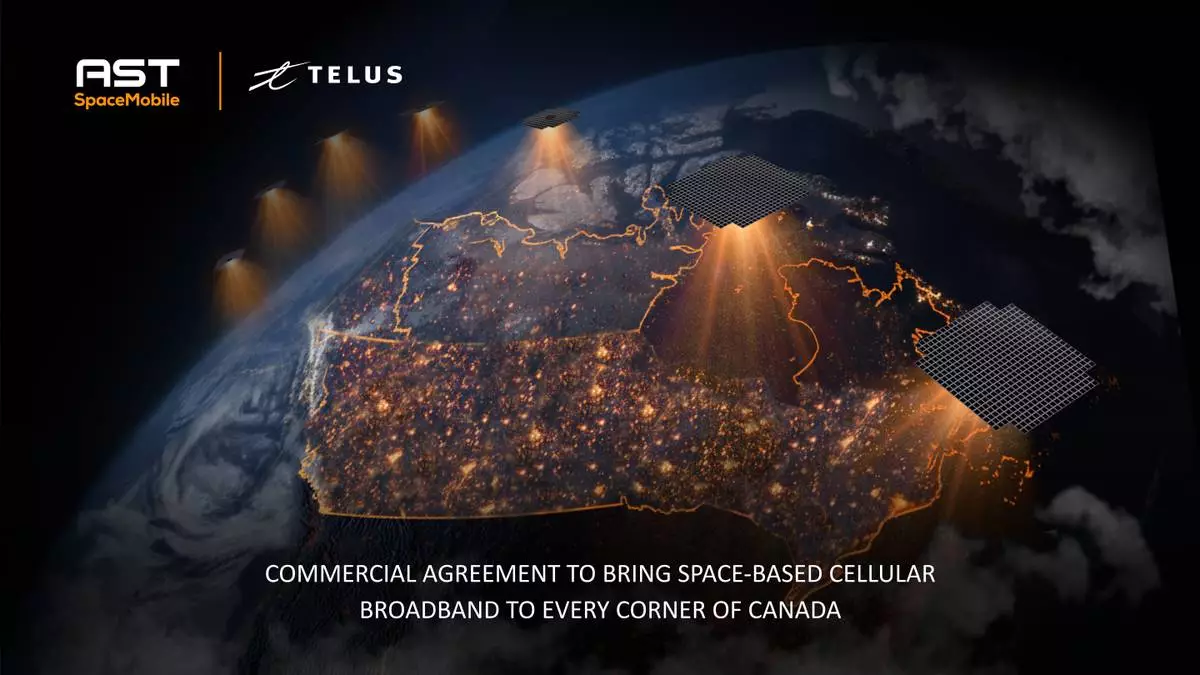
AST SpaceMobile and Telus signed commercial agreement