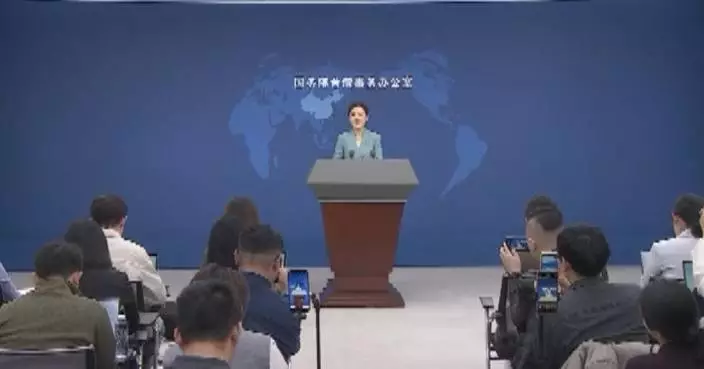
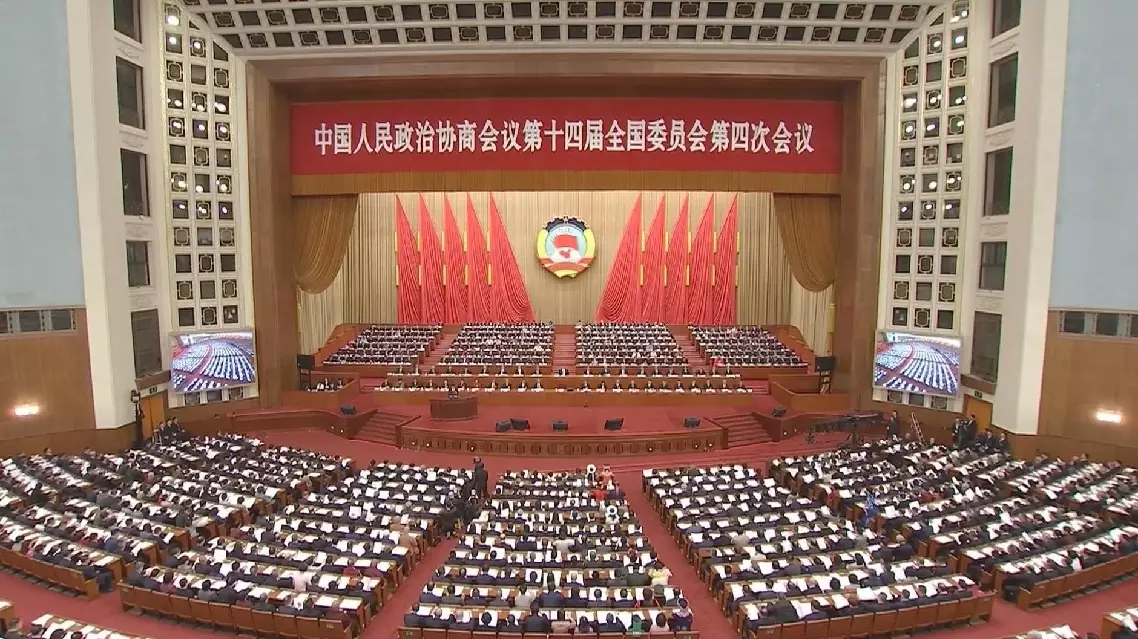
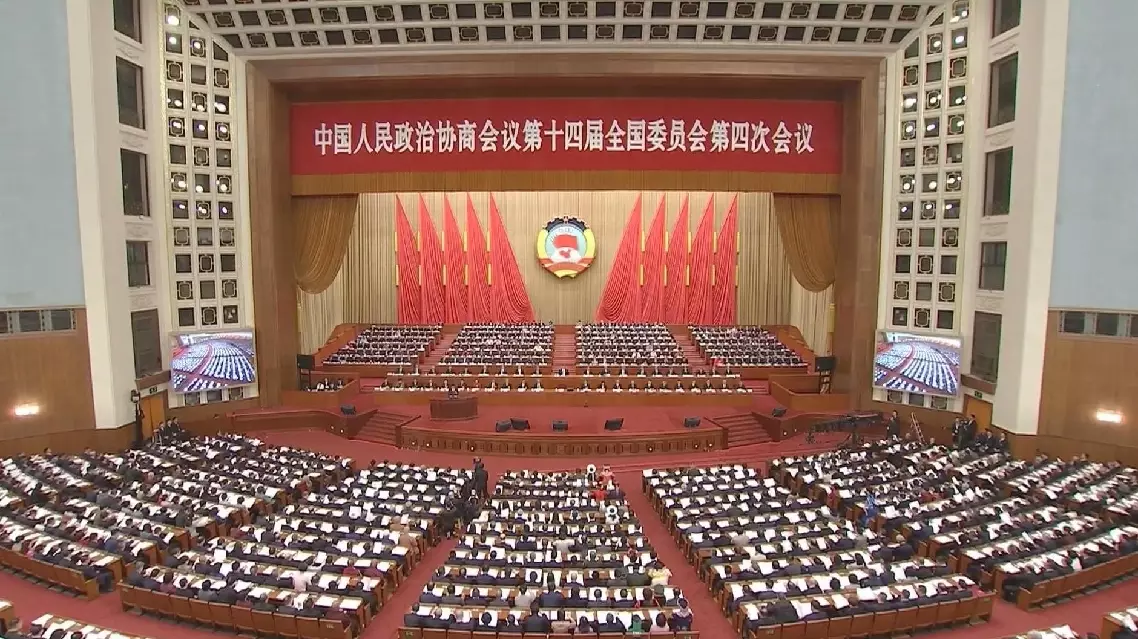
The Chinese People's Political Consultative Conference (CPPCC) National Committee, China's top political advisory body, opened its annual session on Wednesday in Beijing.
Chinese President Xi Jinping, also general secretary of the Communist Party of China (CPC) Central Committee and chairman of the Central Military Commission, attended the opening meeting of the fourth session of the 14th CPPCC National Committee at the Great Hall of the People, along with other leaders and about 2,000 political advisors from across the country.
The agenda for the session was reviewed and approved at the meeting.
Wang Huning, chairman of the CPPCC National Committee, delivered a work report on behalf of the Standing Committee of the CPPCC National Committee.
Noting that 2025 was a year of great significance in the Chinese modernization drive, Wang said the country has completed the main objectives for this year's economic and social development, and brought the 14th Five-Year Plan (2021-2025) to a successful conclusion.
Wang reviewed the CPPCC's work over the past year. The National Committee of the CPPCC and its Standing Committee regarded the CPC's leadership, the united front and consultative democracy as an integral whole, focus on the central tasks and serve the overall national interests, and fully leveraged their role as a specialized consultative body.
The CPPCC National Committee and its Standing Committee also made suggestions to the formulation of the 15th Five-Year Plan (2026-2030), he said.
Looking ahead to 2026, Wang urged the political advisors to rally public support, build greater consensus, and pool wisdom and strength for making a strong start in implementing the 15th Five-Year Plan.
Stressing the need to uphold the CPC's leadership unswervingly, Wang called on political advisors to deliver high-quality performance in fulfilling their duties to serve the central tasks of the Party and the country.
"Let us rally more closely around the CPC Central Committee with Comrade Xi Jinping at its core, pull together with one mind and forge ahead with determination, promote high-quality development of the CPPCC's undertakings on the new journey in the new era, to contribute our wisdom and strength to building a modern socialist country on the path of socialism with Chinese characteristics," said Wang.
A report on the handling of proposals submitted by political advisors since the last session of the 14th CPPCC National Committee in March 2025 was presented at the meeting.
The 14th CPPCC National Committee received 5,992 proposals from its members during the past year, of which 5,061 were accepted for processing. The response rate for the accepted proposals stood at 99.9 percent.
This year's CPPCC National Committee session will last till March 11.
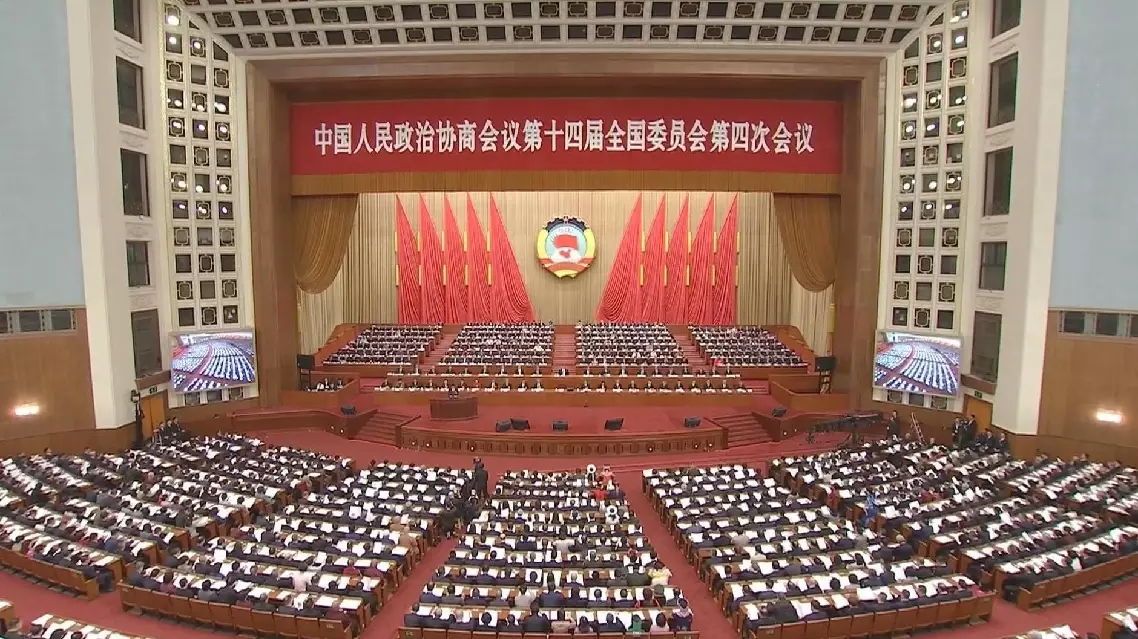
China's top political advisory body starts annual session
China's top political advisory body starts annual session
China's top political advisory body starts annual session
As Chinese-made new energy vehicles continue to power ahead and take the world by storm, the answer to what makes the country's smart manufacturing power strong enough to lead global auto production can be found in the electric vehicle (EV) HyperFactory of Chinese electronics maker Xiaomi.
The tech giant, better known for its smartphones and home appliance products, marked its bold foray into the auto market in 2021, when it set up a state-of-the-art factory in the Being Economic-Technological Development Area, also known as Beiing E-Town -- a key innovation hub for China's autonomous driving industry.
Despite the enormous scale of this facility, there are few workers in sight, with robotic arms instead moving with precision and speed, seamlessly assembling vehicle body components.
Every single Xiaomi SU7 electric car is born in this factory, where production lines run day and night, with a new car rolling off the line every 76 seconds. More than 700 robots work in sync across these highly automated production lines. Key processes are 100 percent automated -- making this facility a true example of next-generation manufacturing.
Song Jiaqiang, a production technology director at the Xiaomi EV HyperFactory, said the plant has set a benchmark in China's push for new quality productive forces -- an initiative aiming to promote high-tech development through innovation -- thanks to its exceptional application of artificial intelligence and automated processes.
"The first thing is the incredible level of automation and intelligence in this factory. Key processes are 100 percent automated. On top of that, we've introduced an industry-first AI (artificial intelligence) quality inspection system, which boasts an accuracy rate of 99.9 percent," he said.
Inside the factory, robots operate 24-hours a day, and they don't even need human staff to maintain their battery life -- when power runs low, they autonomously locate charging stations and recharge themselves.
Beyond core process automation, even material handling is finished by autonomous mobile robots, keeping the production lines running around the clock without interruption.
"The factory is packed with over 700 industrial robots. Right here in the body shop, we're looking at a 91 percent overall automation rate," said Song.
This advanced level of automation has been the key to Xiaomi's success, speeding up operational efficiency, ensuring greater build accuracy and ultimately delivering higher quality products, as Song explains.
"Take the rear door assembly, for example. Robots handle everything, from automatically picking up the part and inserting bolts, to placing it onto the body. They then inspect both the body and the component, while simultaneously tightening and adjusting the bolts to achieve a perfect fit with minimal gaps. It's a fully automated, intelligent process that drastically reduces, or even eliminates the need for human involvement," he said.
China's world-leading prowess in the smart manufacturing looks set to continue as the Xiaomi factory aims to further boost speed and AI capabilities, while helping upgrade the performance of domestically-made equipment.
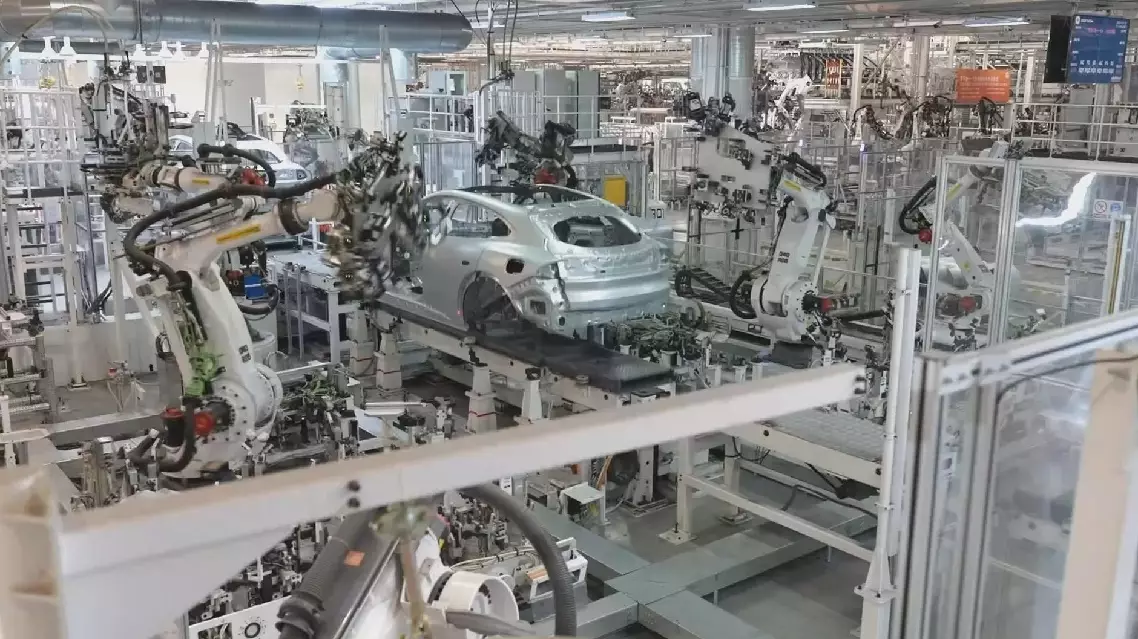
Xiaomi's EV HyperFactory offers glimpse into future of smart manufacturing