War Child UK’s first benefit compilation album was a stunning success when it debuted in 1995. Reaching No. 1 on the British charts, "Help" raised more than 1.25 million pounds (about $1.938 million) for the nonprofit’s support to children and their families in war-torn Bosnia.
Packed with unreleased songs from Britpop’s elite artists — including Oasis, Blur and Radiohead — as well as a supergroup that included Paul McCartney and Paul Weller, it’s no wonder that Rich Clarke, War Child UK’s head of music, says the charity has been looking to recreate ever since.
For a variety of reasons, an all-star follow-up to “Help” never materialized — until now. On Friday, “Help(2)” will hit stores and streaming platforms, powered by unreleased songs from Arctic Monkeys, Olivia Rodrigo, Wet Leg and others, to raise funds and awareness for children suffering in numerous war zones, including Ukraine, Gaza and Sudan.
“I think it’s a situation now where musicians feel not that they want to do something, but that they need to do something,” Clarke said. “That’s a powerful driver. And sometimes, things happen when they’re meant to happen.”
Jarvis Cocker’s connection to War Child UK stretches back to 1996, when his band Pulp donated the financial windfall from winning the prestigious Mercury Prize to the charity.
So when James Ford — who produced Pulp’s first new album in 24 years, “More,” last year — approached Cocker about contributing a song to a War Child UK compilation, he jumped at the chance.
“When the last one happened, it was something like 10% of the world’s kids were living in poor areas, and now it’s more like 20%,” Cocker told The Associated Press. “And it’s a strange thing, you know, childhood sets you up for the rest of your life or it doesn’t.”
Pulp’s contribution ended up being “Begging for Change,” a song Cocker said he started 14 years ago, but had trouble finishing. “Somehow, with it having the focus of trying to help some people and change their situation, I did manage to finish it,” he said. “And I’m quite pleased with the result.”
Part of that success on the energetic track came from the unusual recording process at Abbey Road Studios in London, Cocker said.
“I’ve never allowed people to film me singing in the studio because that’s the time when I try and become unselfconscious,” he said, adding he soon learned the session would be filmed by numerous children working on a documentary of the process with director Jonathan Glazer.
“I thought it was a good idea,” Cocker said. “I mean, if you’re going to do a thing for a charity that is supposed to help children in war zones, then it makes sense to capture it from a child’s point of view.”
Cocker even had some of the children form a choir that appears on the song. Having the children as part of the process served as a good reminder of what Pulp and War Child UK were trying to accomplish.
“Charity shouldn’t have to exist if governments did what they were supposed to, if they looked after people and looked after the world,” Cocker said. “But they do need to exist. They need to exist even more now.”
Benefit compilations are part of a long tradition in indie music and a natural way for artists to get involved with charities and issues they want to support, said John Nolan, guitarist and singer in the rock bands Taking Back Sunday and Straylight Run.
“It’s something that we can be a lot more hands-on with,” said Nolan, who released the compilation “ Music for Everyone, Vol. 2 ” in November as a fundraiser for the American Civil Liberties Union. “I think that’s also why a lot of more underground bands take on compilations for causes too, because it’s something you can be kind of DIY with.”
The British band Black Country, New Road said it’s important for artists to lend their creativity to causes and charities they believe in. Contributing their song “Strangers” to the War Child UK compilation is simply a continuation of their work, which includes fundraisers for Palestinian children.
“With what was going on in the world a couple of years ago, I think it became important to us that we became more aware and started questioning things and how we wanted to move as artists,” said violinist Georgia Ellery of Black Country, New Road.
Graham Hastings of the Scottish band Young Fathers said it was a “no-brainer” to get involved with the “Help(2)” compilation.
“When you see children in these refugee camps, for me it’s a sign of humanity failing for that to even occur,” he said. “For us, the important thing is for people just to feel a general awareness about what’s happening and why it’s happening, and get active and get involved in the community.”
Associated Press coverage of philanthropy and nonprofits receives support through the AP’s collaboration with The Conversation US, with funding from Lilly Endowment Inc. The AP is solely responsible for this content. For all of AP’s philanthropy coverage, visit https://apnews.com/hub/philanthropy.

FILE - Olivia Rodrigo arrives at the 67th annual Grammy Awards on Feb. 2, 2025, in Los Angeles. (Photo by Jordan Strauss/Invision/AP, File)

FILE - Jarvis Cocker, of the rock band Pulp, performs during the Glastonbury Festival in Worthy Farm, Somerset, England, June 28, 2025. (Scott A Garfitt/Invision/AP, File)
Iran launched more missiles at Israel and U.S. bases as war in the Middle East enters a sixth day. Israel announced multiple incoming attacks early Thursday and said it was intercepting the missiles.
Meanwhile, the Israeli military said it began new strikes against the Iranian-backed Hezbollah militant group in Lebanon. At least eight people were killed there late Wednesday into Thursday according to Lebanon’s Health Ministry and the state news agency.
Tehran has warned of the destruction of the Middle East’s military and economic infrastructure, and the war has rattled financial markets, with most taking their cues from what the price of oil is doing. Early Thursday, oil prices resumed their ascent.
Here is the latest:
Israel’s military said Thursday morning it had begun a “large-scale wave of strikes against infrastructure” in Iran’s capital, Tehran.
Oman’s top diplomat said Thursday that the sultanate was working with countries around the world to organize flights home for stranded foreigners.
Badr al-Busaidi wrote the message on X, just after Qatar Airways said it would start flights from Oman’s capital, Muscat.
“For everyone hoping to fly home from the Gulf, the Omani government is working with your governments and international airlines to organize flights to get you home,” he wrote. “We mean everyone, whatever passport you hold. The citizens of all countries have the human right to safety and security. People matter. Let’s stop the war now.”
Oman, on the eastern edge of the Arabian Peninsula, has come under attack off its coast and at its seaports, but has not seen a strike on Muscat International Airport in the war.
Qatar Airways said Thursday it will start operating a limited number of “relief flights” as the war in the Middle East goes on.
The airline said on X that the flights will include departures from Muscat, the Omani capital, to Amsterdam, Berlin, Copenhagen, London, Madrid and Rome. Another route will be from Riyadh to Frankfurt, Germany.
The flights will “support passengers who are stranded due to the current situation across the region.”
Airspace in Qatar remains closed over Iranian fire into the region.
Qatar Airways is a key East-West carrier.
Indonesian immigration authorities in Bali have granted emergency stay permits and waived overstay fines for foreign nationals stranded after air route closures in parts of the Middle East disrupted international flights from the resort island.
Nearly 6,000 of passengers traveling from Bali to Doha, Dubai and Abu Dhabi had their flights canceled over four days at Ngurah Rai International Airport, immigration officials said.
Ambassadors of Iran and Israel held separate news conferences Thursday in South Korea’s capital, trading sharp accusations as their countries continued an escalating war in the Middle East.
Speaking through an interpreter, Iran’s Ambassador to South Korea Saeed Koozechi demanded Seoul — a key U.S. ally — to be more vocal in demanding a halt to what he called an illegal aggression by U.S. and Israeli forces, which launched attacks despite active negotiations.
He said “many coffins would return to the United States” if it decides to deploy ground forces, and defended Iranian strikes on Gulf states hosting U.S. military bases as unavoidable.
The Israel ambassador in Seoul, Raphael Harpaz, said the joint U.S.-Israeli military operations aim both to destroy Iran’s nuclear development facilities and ballistic missile sites, and to help free Iranian people from oppression.
South Korea has supported U.S.-led diplomatic efforts to curb Iran’s nuclear ambitions but has not explicitly endorsed the U.S.-Israeli attacks, instead calling for a swift restoration of dialogue.
The Saudi Defense Ministry said it destroyed a drone in the kingdom’s al-Jawf province, which borders Jordan.
The Israeli military struck a building in the Beddawi Palestinian refugee camp in the coastal city of Tripoli, killing two people, Lebanon’s Health Ministry said.
The strike, which hit the area without prior warning and marked the northernmost strike so far, wounded another individual, the Health Ministry said.
The Israeli military did not immediately say who it targeted in the strike.
Located about 85 kilometers (53 miles) north of Beirut and more than 180 kilometers (112 miles) from the Lebanese-Israeli border, Beddawi was targeted during the 2024 war between Israel and Hezbollah.
Despite a ceasefire reached in November 2024, the Israeli military said in July it struck a Hamas figure in the camp.
An overnight Israeli drone strike targeted a vehicle on a coastal highway in southern Lebanon, killing three people, Lebanon’s state news agency said.
The highway connects the city of Tyre to Naqoura, a border town near Israel.
On Wednesday, the Israeli military warned residents to move north of the Litani River, which serves as a key buffer line with villages south of it lying closest to the Israeli border.
The number of people killed in Israeli strikes in Lebanon in the four days since the conflict between Israel and the Lebanese militant group Hezbollah reignited has risen to more than 70, with over 430 people wounded, Lebanon’s Health Ministry said Wednesday.
It is not clear how many of those killed in Lebanon were civilians, but the Health Ministry said Tuesday that they included seven children.
Officials with Hezbollah and the Palestinian Islamic Jihad militant group were also killed.
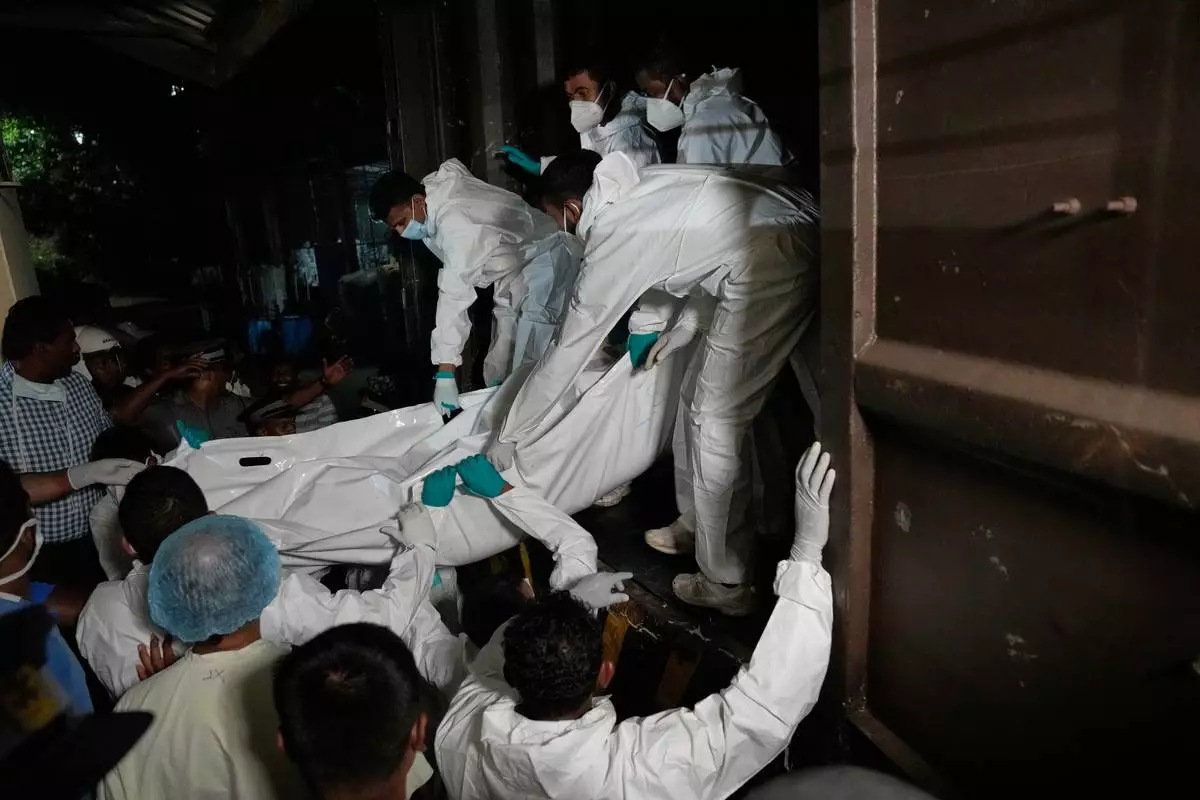
Healthcare workers unload from a vehicle the bodies of Iranian sailors who died when their IRIS Dena warship sank outside Sri Lanka's territorial waters, in Galle, Sri Lanka, Wednesday, March 4, 2026. (AP Photo/Eranga Jayawardena)
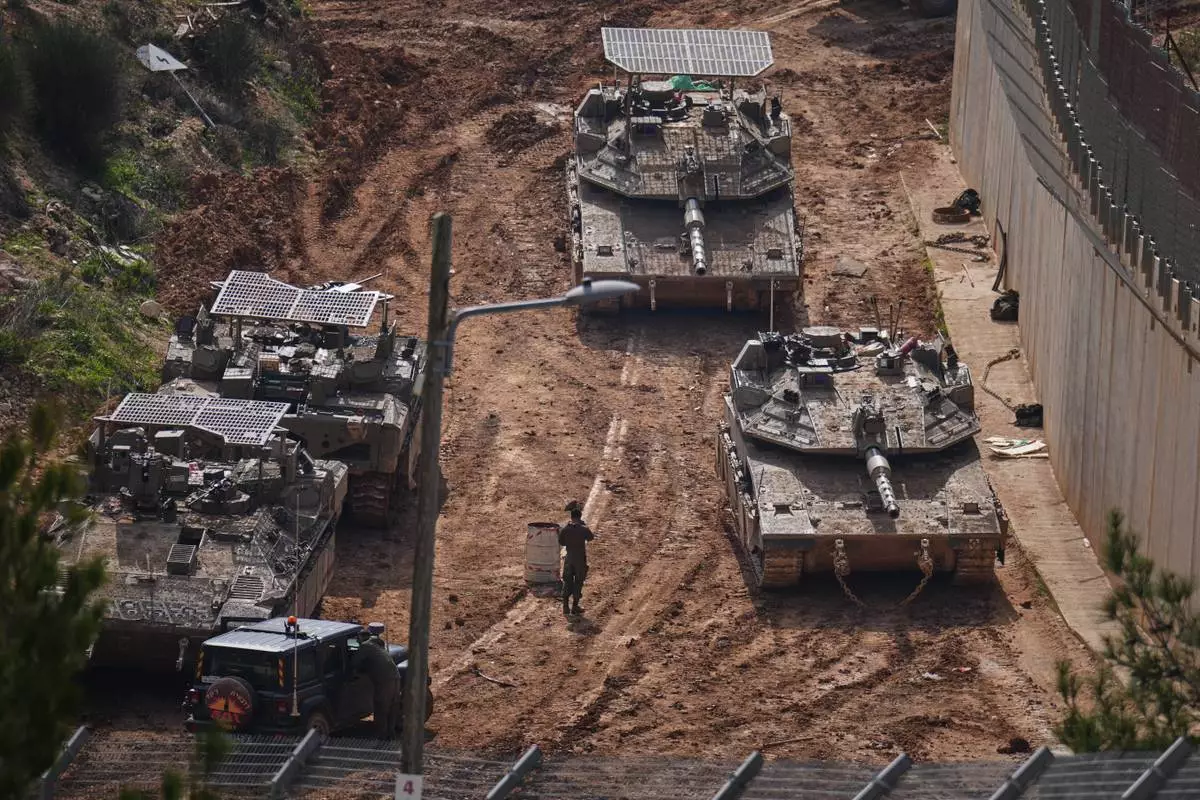
Israeli tanks maneuver near the Israel-Lebanon border, in northern Israel, Wednesday, March 4, 2026. (AP Photo/Ariel Schalit)
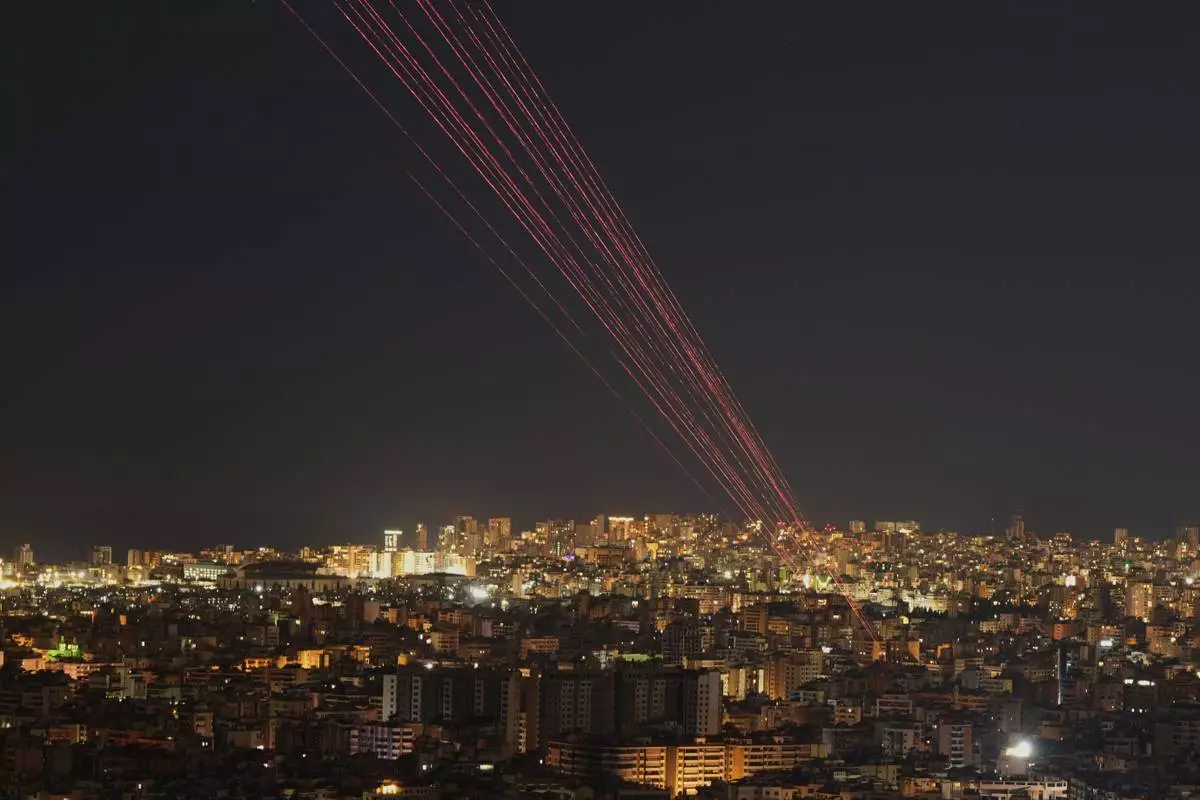
Tracer rounds light the sky as people fire live rounds into the air during a televised speech by Hezbollah leader Naim Kassem in Dahiyeh, Beirut's southern suburbs, Lebanon, Wednesday, March 4, 2026. (AP Photo/Hassan Ammar)