DUBAI, United Arab Emirates (AP) — For years, Iran's theocratic government warned it would blanket the Middle East with missile and drone fire if it felt its existence was threatened.
Now, the Islamic Republic is doing just that.
Click to Gallery
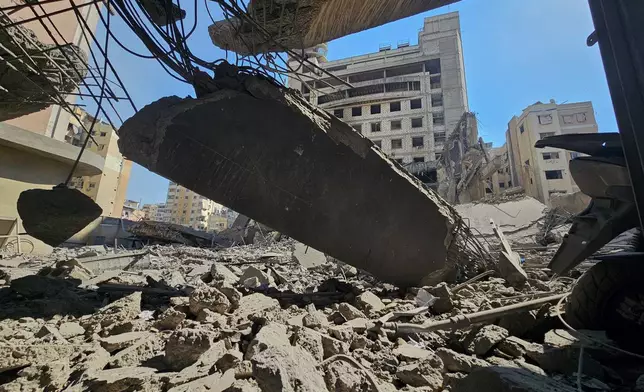
Debris cover the site of Hezbollah’s Al-Manar TV headquarters after it was hit in an Israeli airstrike on Dahiyeh, a southern suburb of Beirut, Lebanon, Tuesday, March 3, 2026. (AP Photo/Hassan Ammar)
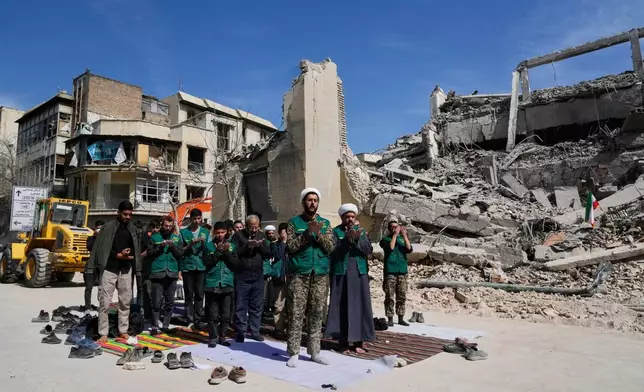
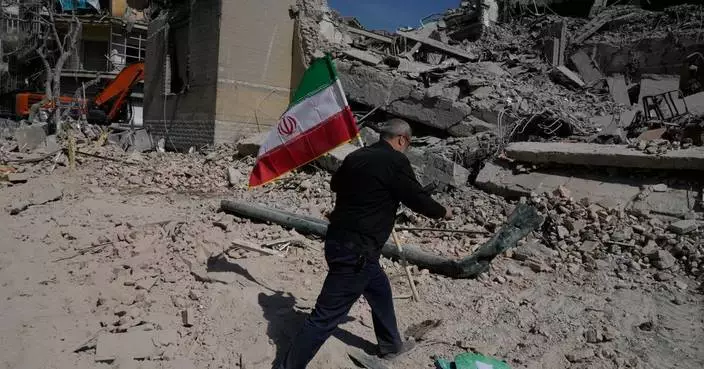
A cleric leads a group of volunteers in prayer next to a police facility struck during the U.S.–Israeli military campaign in Tehran, Iran, Wednesday, March 4, 2026. (AP Photo/Vahid Salemi)
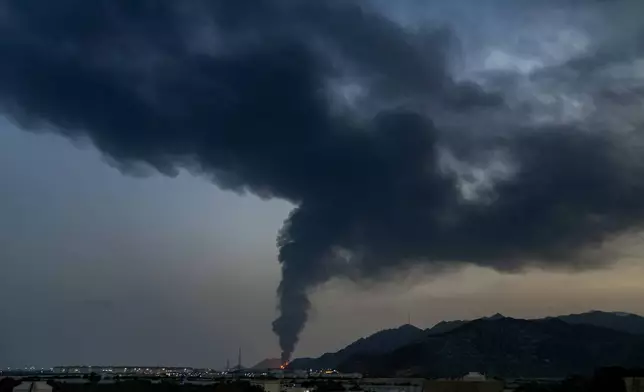
Large fire and plume of smoke is visible after, according to the authorities, debris of an Iranian intercepted drone hit the Fujairah oil facility, in Fujairah, United Arab Emirates, Tuesday, March 3, 2026. (AP Photo/Altaf Qadri)
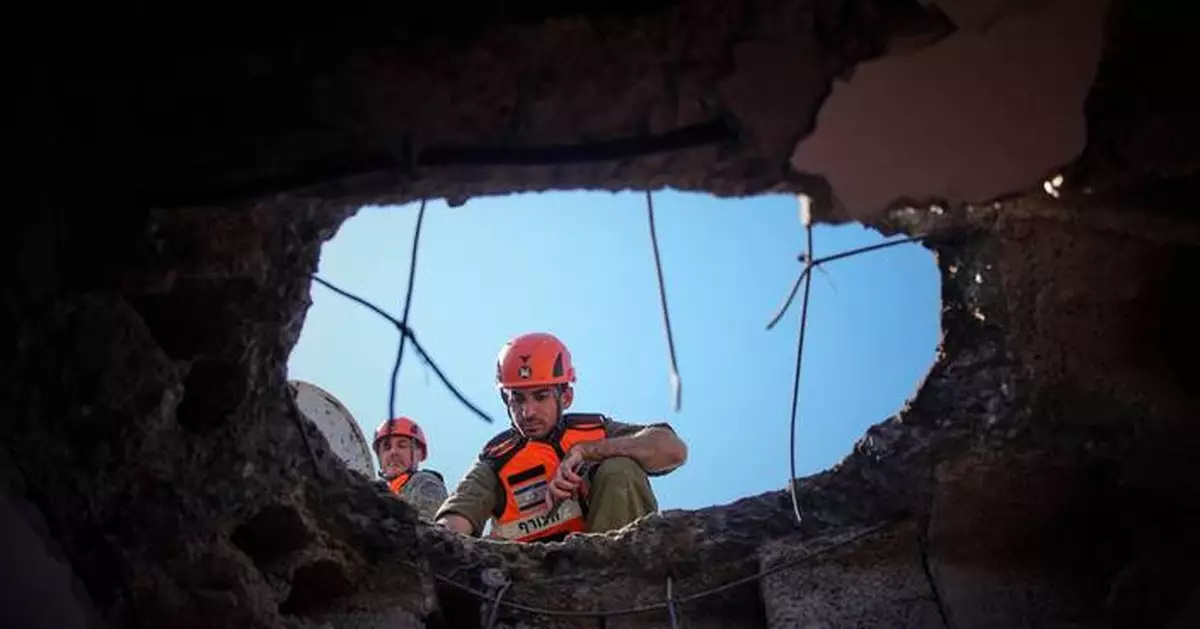
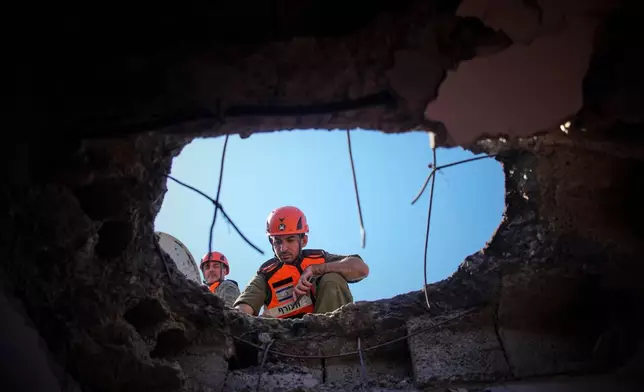
Officers from Israel's Home Front Command inspect a damaged apartment building after an Iranian missile strike in Petah Tikva, Israel, Tuesday, March 3, 2026. (AP Photo/Ohad Zwigenberg)
Since the U.S. and Israel launched the war Saturday and killed Iranian Supreme Leader Ayatollah Ali Khamenei, Iran has unleashed thousands of drones and ballistic missiles targeting Israel, American military bases and embassies in the region, and energy facilities across the Persian Gulf. Iranian fire has even been directed over its borders with Turkey and Azerbaijan.
Iran's basic strategy is to instill fear about the dangers of a widening war in hopes that allies of the U.S. will apply enough pressure to halt their campaign. A protracted conflict, along with American and Israeli casualties, could also work in Iran’s favor.
Trouble is, the barrage-thy-neighbors strategy also could backfire.
Iran’s first priority is to emerge from the war with its state institutions intact, said Ellie Geranmayeh, deputy director of the Middle East and North Africa program at the European Council on Foreign Relations.
“Iran is upping the costs for this U.S. military campaign and regionalizing it from the get-go, as they promised they would if America restarts the war again with Iran,” she said. The U.S. joined Israel last June in a 12-day war, targeting nuclear enrichment sites. Iran maintains its program is peaceful, though its officials had threatened to pursue a bomb while enriching uranium to near-weapons-grade levels.
Iran's leaders believe that by inflicting casualties and disrupting energy production to drive up oil and gas prices, America's allies or an unsettled public back home will pressure U.S. President Donald Trump to ease back.
“The Iranians are banking on basically out-stomaching him, and exhausting him and his allies to the point where they would basically have a diplomatic off-ramp,” Geranmayeh said. Trump is unpredictable, Geranmayeh said, but for now he appears to be pressing for “unconditional surrender to his demands, rather than a negotiated settlement.”
The U.S. and Israel have carried out hundreds of airstrikes and inflicted heavy damage on Iranian government, military and nuclear targets. Despite being greatly outgunned, Iran has continued to fire ballistic missiles into Israel, killing 11 people and disrupting life for millions of Israelis. More have been killed in the Gulf Arab states, and the U.S.-Israeli campaign has killed 1,045 people in Iran.
After more than two years of war in the Gaza Strip, the Israeli public appears to have little appetite for another lengthy round of fighting. Polls suggest the U.S. public is leery of a protracted conflict.
The American and Israeli onslaught came after a string of U.S.-Iranian talks over Iran's nuclear program and the West's sanctions failed to reach a breakthrough.
Trump said Monday his four objectives were to destroy Iran’s missile capabilities, wipe out its navy, prevent it from obtaining a nuclear weapon and ensure that it cannot continue to support allied armed groups.
The Iranian response has spared no one in the region, not even Oman, which mediated the latest round of nuclear talks and for decades has maintained a close relationship to Iran after it helped the late Sultan Qaboos bin Said put down a rebellion in the 1970s.
Last week, as the U.S. amassed warships in the region, Oman's foreign minister rushed to Washington in a last-ditch effort to keep the nuclear talks going.
Since then, Oman has been dragged into the conflict. An Omani port and ships off its coast have been targeted by Iranian missiles. Oman's port at Duqm helped the USS Abraham Lincoln aircraft carrier with pre-deployment logistics.
Saudi Arabia, which has maintained a detente with Tehran since 2023, also came in the crosshairs this week. Its Ras Tanura oil refinery has been repeatedly attacked and the U.S. Embassy in Riyadh got hit by drones — an embarrassing moment for Crown Prince Mohammed bin Salman, who has worked to cultivate a close relationship with Trump.
Qatar and the United Arab Emirates, which also have close ties to Trump, have been repeatedly targeted, too.
There’s a grim math equation at play as the war goes on. Iran has a finite number of missiles and drones, just as the Gulf Arab states, the U.S. and Israel all have a limited number of interceptor missiles capable of downing the incoming fire.
U.S. Defense Secretary Pete Hegseth said Wednesday that thousands of Iranian missiles and drones have been “intercepted and vaporized” during the war. The Israeli military says it has destroyed dozens of missile launchers.
From the American and Israeli side, targeting missiles and their launchers remains key. Both countries had to shoot down Iranian missiles during the war in June and multiple times in the Israel-Hamas war.
“In simple terms, we are focused on shooting all the things that can shoot at us,” said U.S. Navy Adm. Brad Cooper, the head of the American military’s Central Command.
A senior Western official, speaking on condition of anonymity to discuss intelligence matters, said Iran has several days’ worth of ballistic missiles if it continues firing at current rates, but it may hold some back to wage a longer campaign.
The Israeli military says the number of Iranian launches has greatly diminished in recent days as a result of the airstrikes — though warning sirens wailed seemingly constantly across Israel on Wednesday into Thursday.
Iran's strategy of trying to threaten energy security, drive a wedge between Gulf and Western states and raise costs is “backfiring,” said Hasan Alhasan, a Middle East expert with the London-based International Institute for Strategic Studies.
“It’s driving and pushing the Gulf states into closer alignment with the United States,” he said.
“The Gulf states can’t simply sit idle and continue absorbing indefinite attacks to their critical infrastructure and to civilians in Gulf cities,” Alhasan said. They are probably trying to both acquire more weapons to intercept incoming fire and find ways to broker an end to the war, he said.
Iran’s foreign minister has suggested his country’s military units are now isolated and acting independently from any central government control, a possible excuse for Iran’s increasingly erratic fire.
“They are acting based on instructions — you know, general instructions — given to them in advance,” Abbas Araghchi told Al Jazeera on Sunday.
But after a Wednesday phone call with Araghchi, Qatar's prime minister, Sheikh Mohammed bin Abdulrahman Al Thani, “categorically rejected” his assertion that Iranian missiles were only directed at American interests and not intended to target Qatar.
Keaten reported from Geneva. Associated Press writers Danica Kirka and Jill Lawless in London contributed to this report.
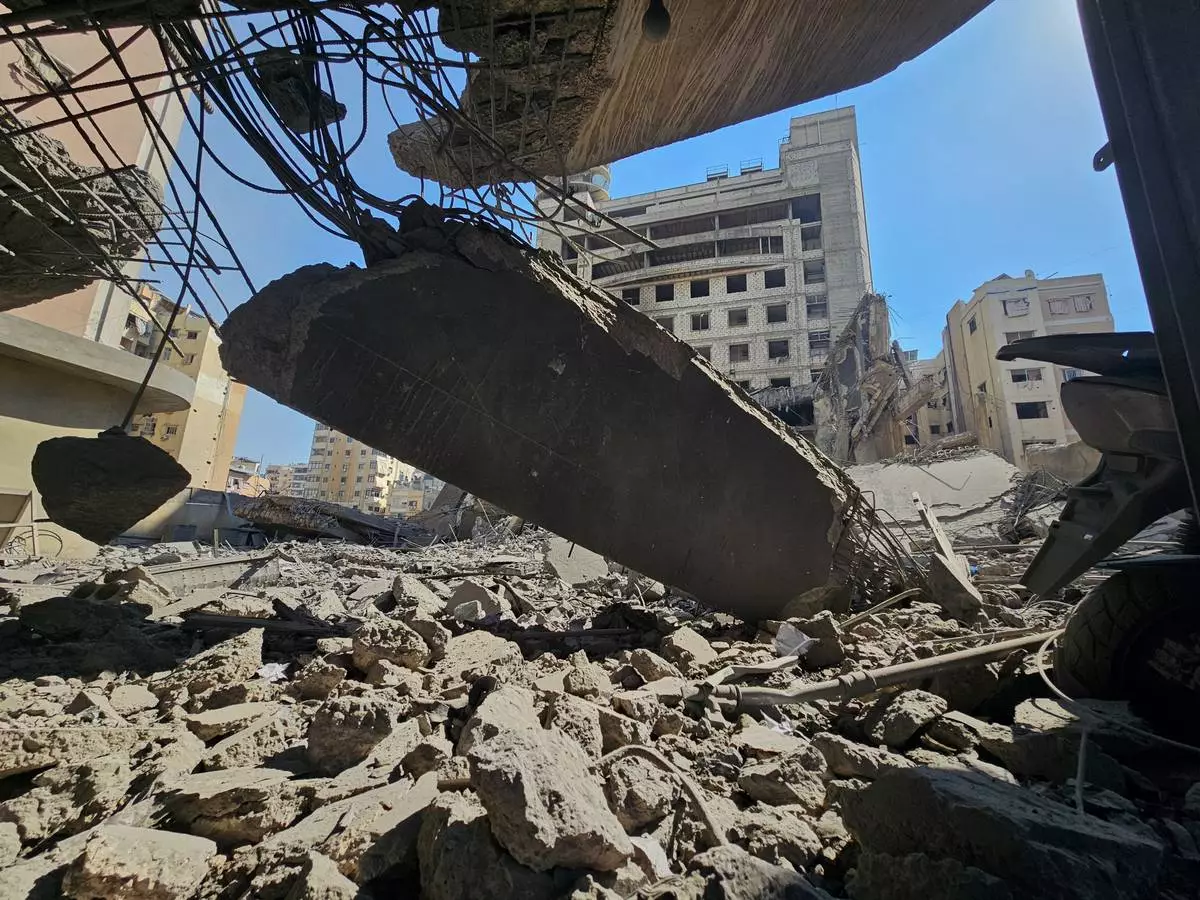
Debris cover the site of Hezbollah’s Al-Manar TV headquarters after it was hit in an Israeli airstrike on Dahiyeh, a southern suburb of Beirut, Lebanon, Tuesday, March 3, 2026. (AP Photo/Hassan Ammar)
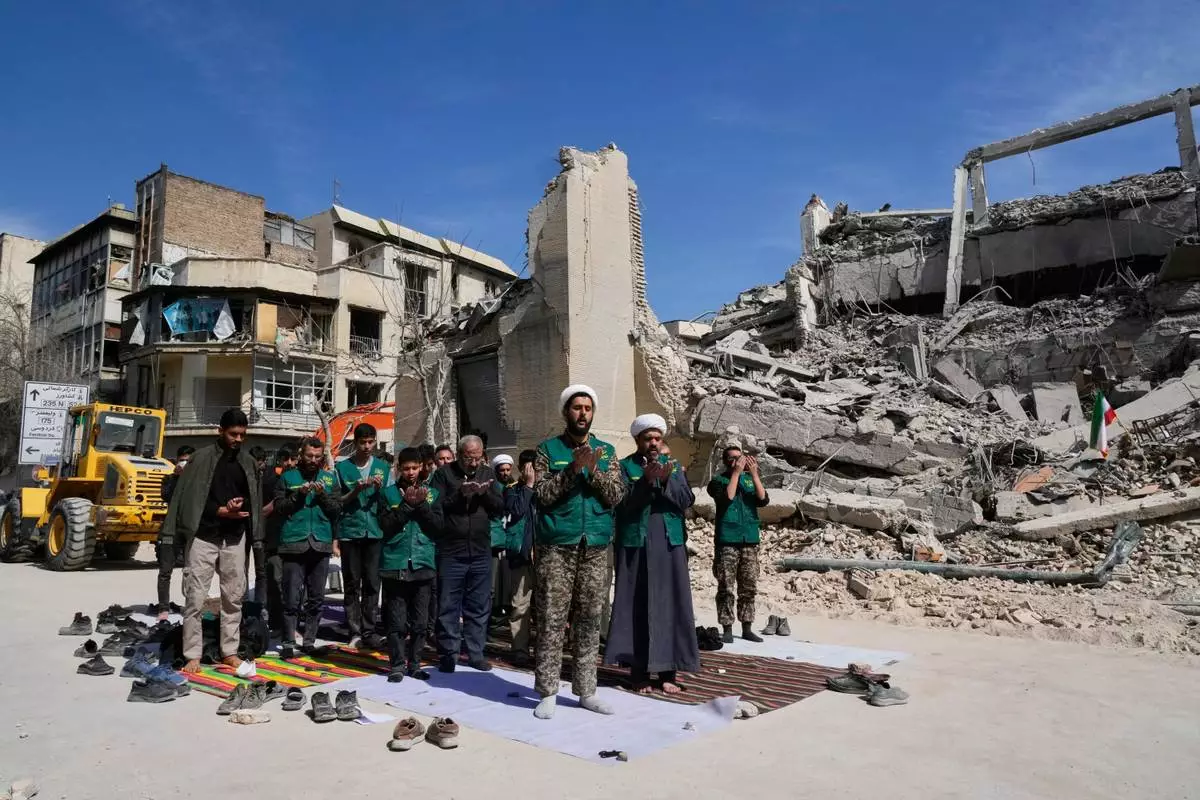
A cleric leads a group of volunteers in prayer next to a police facility struck during the U.S.–Israeli military campaign in Tehran, Iran, Wednesday, March 4, 2026. (AP Photo/Vahid Salemi)
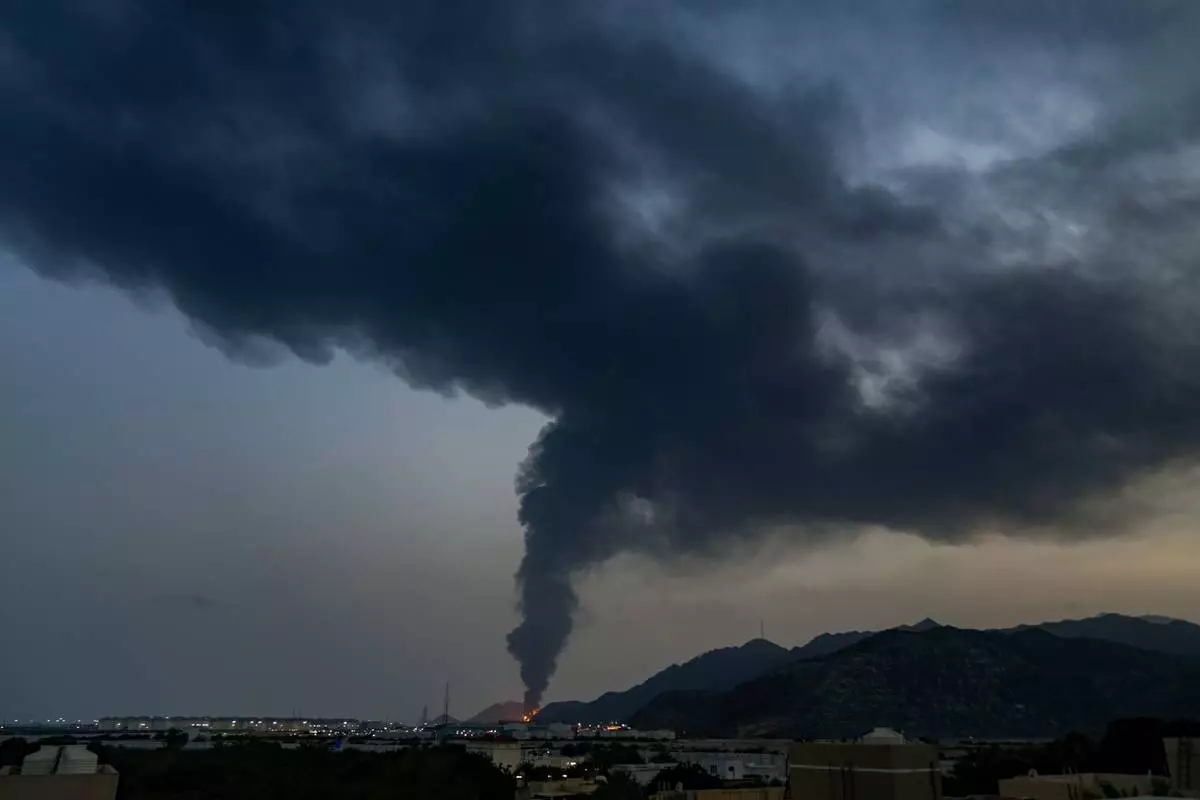
Large fire and plume of smoke is visible after, according to the authorities, debris of an Iranian intercepted drone hit the Fujairah oil facility, in Fujairah, United Arab Emirates, Tuesday, March 3, 2026. (AP Photo/Altaf Qadri)
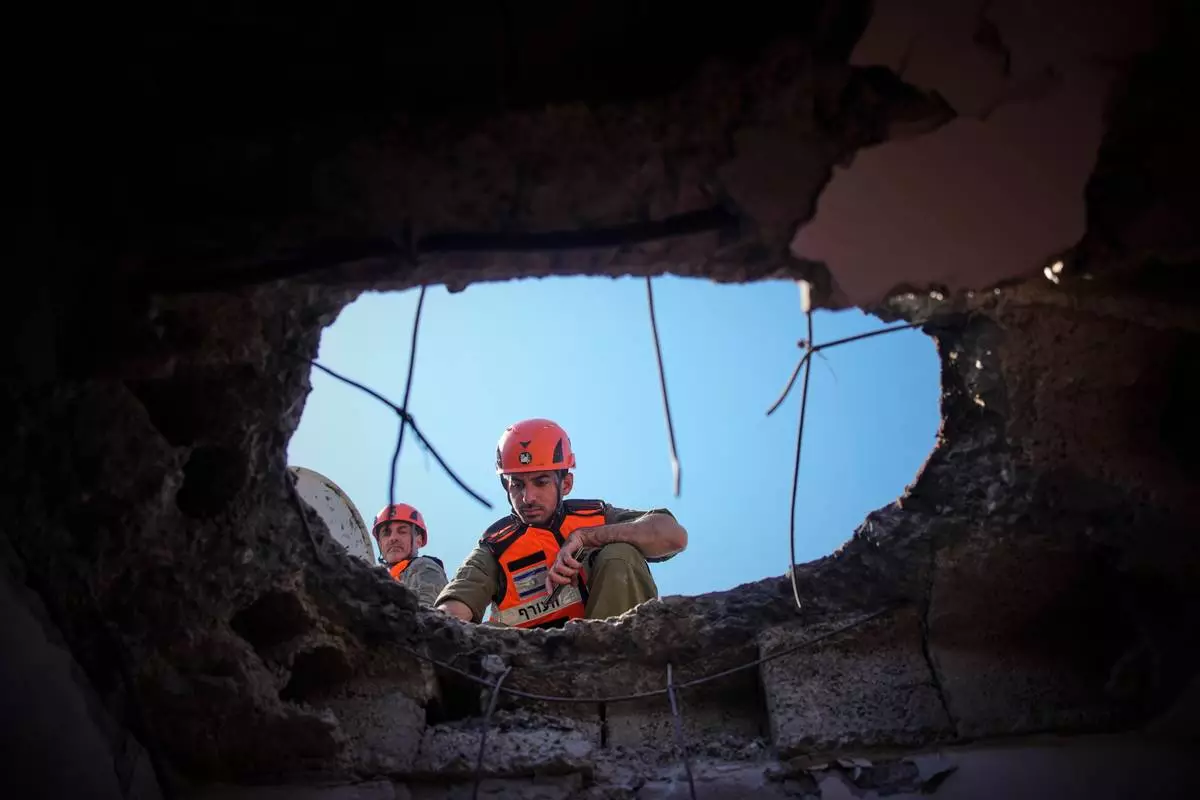
Officers from Israel's Home Front Command inspect a damaged apartment building after an Iranian missile strike in Petah Tikva, Israel, Tuesday, March 3, 2026. (AP Photo/Ohad Zwigenberg)
Iran launched more missiles at Israel and U.S. bases as war in the Middle East enters a sixth day. Israel announced multiple incoming attacks early Thursday and said it was intercepting the missiles.
Meanwhile, the Israeli military said it began new strikes against the Iranian-backed Hezbollah militant group in Lebanon. At least eight people were killed there late Wednesday into Thursday according to Lebanon’s Health Ministry and the state news agency.
Tehran has warned of the destruction of the Middle East’s military and economic infrastructure, and the war has rattled financial markets, with most taking their cues from what the price of oil is doing. Early Thursday, oil prices resumed their ascent.
Here is the latest:
The three countries will work together to ensure freedom of navigation in the Red Sea, according to a French diplomat.
The decision was announced Thursday after French President Emmanuel Macron called Italian Prime Minister Giorgia Meloni and Greek Prime Minister Kyriakos Mitsotakis. The diplomat spoke anonymously in line with government practices.
Noting that the Suez Canal and the Red Sea were under strain, Macron said earlier this week that France was taking the initiative to build a coalition to bring together the necessary means, “including military ones,” to restore and secure traffic through these maritime routes.
The war in the Middle East has blocked access to major ports in the Gulf region, impacting the supply of food to over 50 million people in a region highly dependent on agricultural imports, a ship-spotting platform said Thursday.
MarineTraffic.com said that container vessels heading to ports in the United Arab Emirates, Qatar, Saudi Arabia, Bahrain and Kuwait are now stranded.
This has impacted agricultural supplies to over 50 million people in the Gulf, a region that imports over 90% of its food, it said.
A Sri Lankan minister said Thursday that another Iranian ship has arrived in its waters, a day after a U.S. submarine sank an Iranian warship off the country’s coast, killing at least 87 people and wounding 32 others.
Government spokesman Nalinda Jayatissa confirmed the presence of the second Iranian ship in response to a question in parliament. But he did not provide further details about the ship or the number of people on board.
He said the government was making an “intervention to minimize loss of lives and to safeguard the regional peace.”
The U.N. refugee agency, citing Syrian authorities, told The Associated Press that at least 38,000 people have crossed from Lebanon into Syria – mostly Syrians – in the wake of new fighting between Hezbollah and Israel.
On Wednesday, UNHCR and Lebanese officials said 84,000 people have been internally displaced within Lebanon.
“Across the Middle East and beyond, a troubling displacement picture is emerging in the aftermath of the ongoing conflicts in the region,” UNHCR spokesman Babar Baloch said Thursday.
UNHCR said Wednesday that 100,000 people were displaced within Iran in the first two days after U.S. and Israeli strikes on Iran, but there are no immediate signs of large numbers of people trying to leave the country.
A security official with Iraq’s navy said an oil tanker flying the Bahamas flag was hit by an explosion Thursday while docked near Khor al-Zubair port in southern Iraq. The official spoke on condition of anonymity because he was not authorized to comment publicly.
The official said a small, unidentified boat approached the tanker at 01:20 a.m. local time, shortly before an explosion was heard near the vessel’s left side. The cause of the explosion and the extent of the damage were not immediately clear.
Also Thursday, Iraq’s state-run Iraqi News Agency reported that an attempt to launch missiles from an area in Basra province in southern Iraq “intended to target a neighboring country,” was thwarted and that security forces seized a mobile launch platform carrying two missiles that were ready to be fired.
The United Arab Emirates’ Defense Ministry said Thursday that one ballistic missile and six drones hit the country’s territory, as the war widens in the Middle East.
The ministry added in a statement that it repelled six missiles and 131 drones Thursday, and hundreds since the start of the war.
Earlier this week, shrapnel from the interception of cruise missiles killed three residents, and falling shrapnel in past days has wounded 94, it said.
The death toll in Iran from the ongoing war with the United States and Israel has reached at least 1,230 people, an Iranian government agency said Thursday.
The Iran’s Foundation of Martyrs and Veterans Affairs offered the toll.
Iran’s general staff of the armed forces denied Thursday that it had launched a drone toward Azerbaijan.
The denial comes, however, as Iran has repeatedly denied targeting oil infrastructure and other civilian targets during the war, despite its drone and missile fire hitting those sites.
Iran launched its large Khorramshahr-4 missiles in an attack Thursday targeting Israel, the country’s paramilitary Revolutionary Guard said.
The Guard said the missiles had a 1-ton warhead. The missiles also can be multiple warhead. Israel has said Iran used cluster munitions in attacks.
The Guard claimed attacks in Bahrain, Kuwait and the United Arab Emirates as well.
Indian authorities say that an Iranian warship that was sunk by a U.S. submarine near Sri Lanka had participated in naval exercises hosted by India before heading out into international waters in the Indian Ocean on its way home.
The sinking on Wednesday underscored the spread of the U.S.-Israeli war with Iran. It also ignited a debate in India about maritime security in the Indian Ocean — a region where New Delhi maintains a significant naval presence.
The Indian government has not yet publicly commented on the incident but opposition leaders questioned its lack of response.
The number of people killed in Lebanon since a resurgence in hostilities between Israel and the Hezbollah militant group Monday has risen to 77, with 527 people wounded, the Lebanese health ministry said Thursday.
It was not clear how many of the casualties were civilians. The health ministry had earlier said that seven children were killed.
After the attacks by the U.S. and Israel on Iran triggered a new war in the Middle East, Hezbollah launched missiles and drones into Israel Monday for the first time in over a year, and Israel has retaliated with bombardment of southern Lebanon and Beirut’s southern suburbs.
More than 83,000 people have been displaced in Lebanon by the renewed conflict.
Pakistan has evacuated nearly 2,000 of its nationals, including about three dozen diplomats, from Iran through the southwestern Taftan border following U.S. and Israeli attacks inside the country, officials said.
Balochistan Chief Minister Sarfraz Bugti said in a statement that the evacuees returned through the main land route between the two countries.
He said in recent days, a total of 1,979 people have returned home through the Taftan border, including 37 diplomats.
About 3,500 Pakistani pilgrims, students, and businesspeople were in Iran when the attacks began.
Some Pakistanis have also been evacuated through Azerbaijan, according to the Ministry of Foreign Affairs.
The Taftan border crossing in southwestern Balochistan is commonly used by traders, pilgrims, and travelers between the two countries.
One of the most powerful businessmen in the Middle East has lashed out at U.S. President Donald Trump and questioned his rationale for triggering the war in the Middle East.
Emirati tycoon Khalaf Al Habtoor said in a social media post Thursday that Trump’s decision has put the Gulf and other Arab countries “at the heart of a danger they did not choose.”
He also said the result is “sacrificing American lives in a war that is not theirs to fight.”
A drone interception in the capital of the United Arab Emirates saw shrapnel fall to the ground that wounded six people, authorities said.
The Abu Dhabi Media Office announced the injuries Thursday, saying they happened in the capital’s ICAD II industrial area. That’s near Al Dhafra Air Base, which hosts American forces.
It identified those hurt as being from Nepal and Pakistan.
Italy heightened its national air-defense systems Thursday and said it will send naval support to Cyprus and anti-missile and anti-drone defense systems to Gulf countries that have come under retaliatory strikes from Iran.
The United States hasn’t yet asked to use any of the U.S. bases in Italy for logistical or other operations in its war against Tehran. But if it does, the government will inform Parliament, Premier Giorgia Meloni said Thursday.
The United States has more than 12,000 military personnel on bases across Italy, including army bases in Vicenza and Livorno, the air force bases at Aviano, home to the 31st Fighter Wing, the naval air station at Sigonella in Sicily, and ports at Gaeta and Naples, home to the U.S. Sixth Fleet.
Israeli airstrikes on Thursday hit two indoor sports halls in Iran’s capital, Tehran.
There was no immediate explanation for the targeting choice.
However, Iran’s paramilitary Revolutionary Guard and its all-volunteer Basij use such facilities as rallying points after earlier airstrikes took out their other bases.
The Kremlin said Thursday that Iran hasn’t asked Russia for military assistance as it faces the U.S. and Israeli attacks.
Asked whether Russia could go beyond rhetoric and offer military assistance to its ally, Kremlin spokesman Dmitry Peskov responded that “there have been no requests from the Iranian side.”
He added that “our consistent position is well known, and there have been no changes to it.”
Russian officials have said that a “strategic partnership” treaty Moscow signed with Tehran in January 2025 doesn’t envisage military assistance.
The United States and its Mideast allies have approached Ukraine for help in defending against Iranian Shahed drones, Ukrainian President Volodymyr Zelenskyy said.
He said he has spoken in recent days with the leaders of the United Arab Emirates, Qatar, Bahrain, Jordan and Kuwait about possible cooperation.
Ukrainian assistance, he said, will be provided only if it does not weaken Ukraine’s own defenses and if it adds leverage to Kyiv’s diplomatic efforts to stop the Russian invasion.
“We help to defend from war those who help us, Ukraine, bring a just end to the war” with Russia, Zelenskyy said.
Qatar has condemned the attempted Iranian missile attack against Turkey and the drone attack on an airport in Azerbaijan.
The Foreign Ministry said in a statement Thursday that Iran’s attempts to widen the conflict are dangerous, and that the attacks against Turkey and Azerbaijan are a “dangerous, aggressive escalation and a blatant violation to the nations’ sovereignty.”
Turkey’s joint border with Iran remains calm and there is no extraordinary movement or mass build-up of migrants despite the ongoing conflict, Turkey’s defense ministry said.
It added that “intensive security measures” were being implemented at the frontier.
The ministry on Thursday renewed a call for all parties to end the fighting and to engage in negotiations.
On Wednesday, NATO defenses intercepted a ballistic missile fired from Iran that was heading toward Turkey’s airspace.
Seoul’s Foreign Ministry said the ban, which took effect at 6 p.m. Thursday, prohibits South Koreans from visiting or remaining anywhere in Iran without special permission.
South Korean officials have so far evacuated 24 citizens from Iran to Turkmenistan and 62 from Israel to Egypt by bus. Before the evacuations, officials said about 60 South Koreans were in Iran and about 600 in Israel.
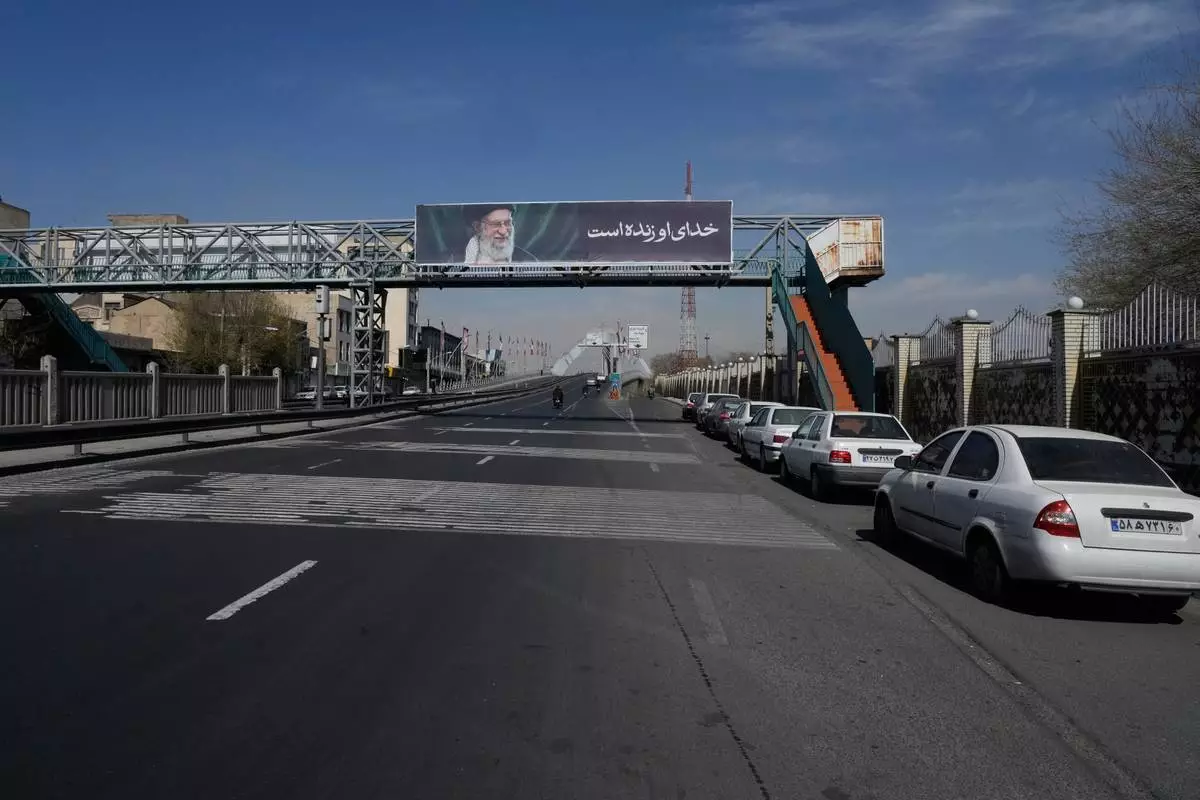
A billboard shows a portrait of the late Iranian Supreme Leader Ayatollah Ali Khamenei, who was killed during ongoing joint U.S.-Israeli military strikes, and the words in Farsi: "His God is alive," in Tehran, Iran, Thursday, March 5, 2026. (AP Photo/Vahid Salemi)
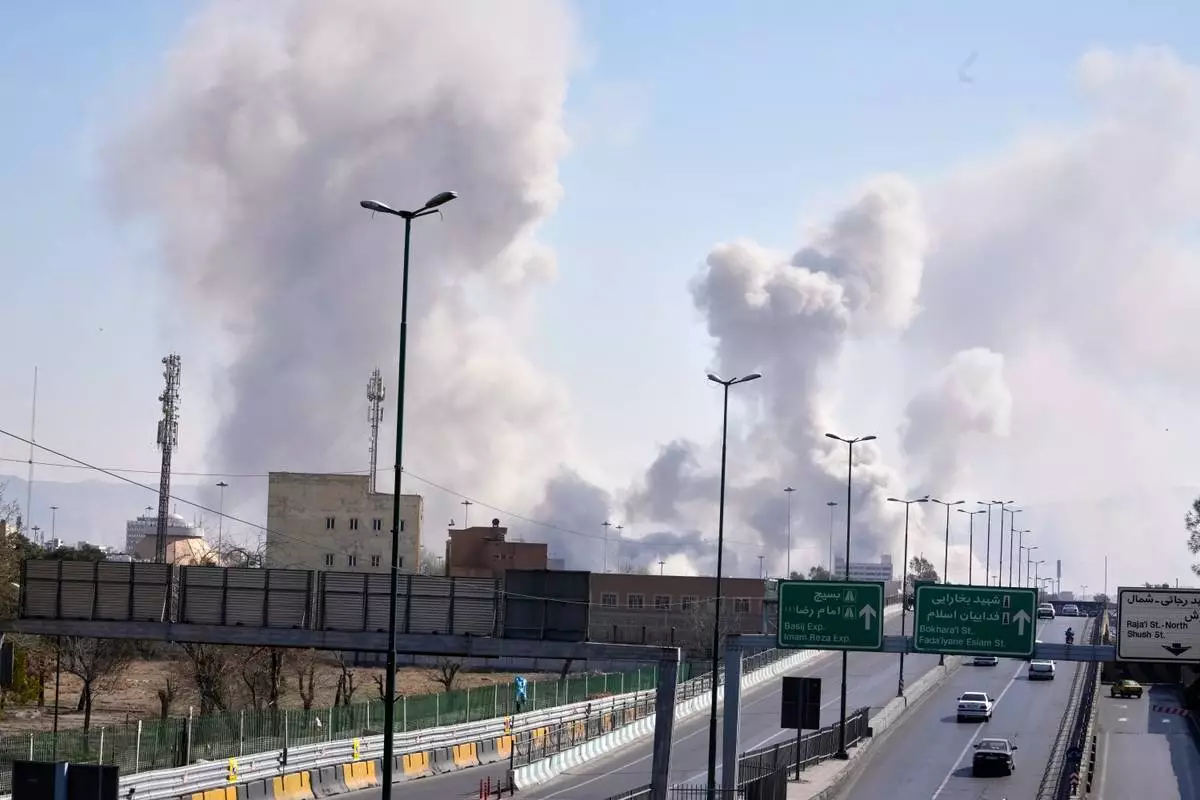
Plumes of smoke rise as strikes hit the city during the U.S.–Israeli military campaign in Tehran, Iran, Thursday, March 5, 2026. (AP Photo/Vahid Salemi)
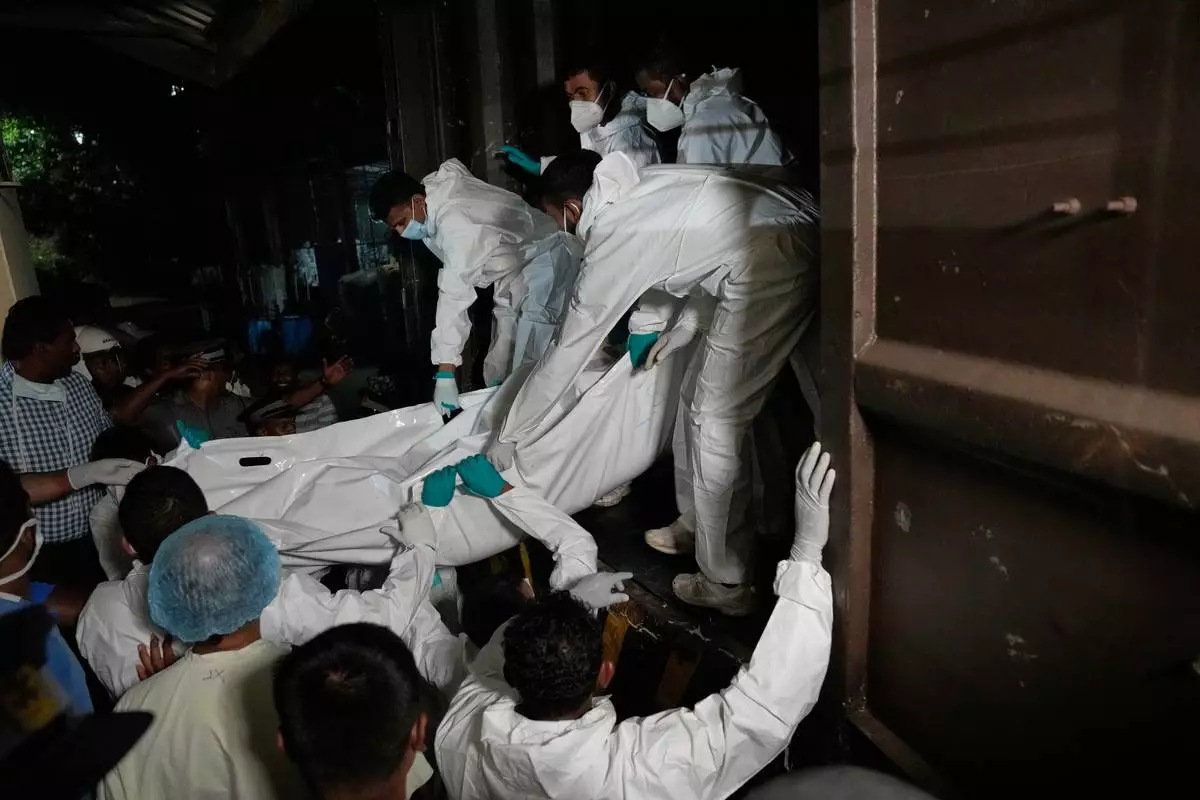
Healthcare workers unload from a vehicle the bodies of Iranian sailors who died when their IRIS Dena warship sank outside Sri Lanka's territorial waters, in Galle, Sri Lanka, Wednesday, March 4, 2026. (AP Photo/Eranga Jayawardena)
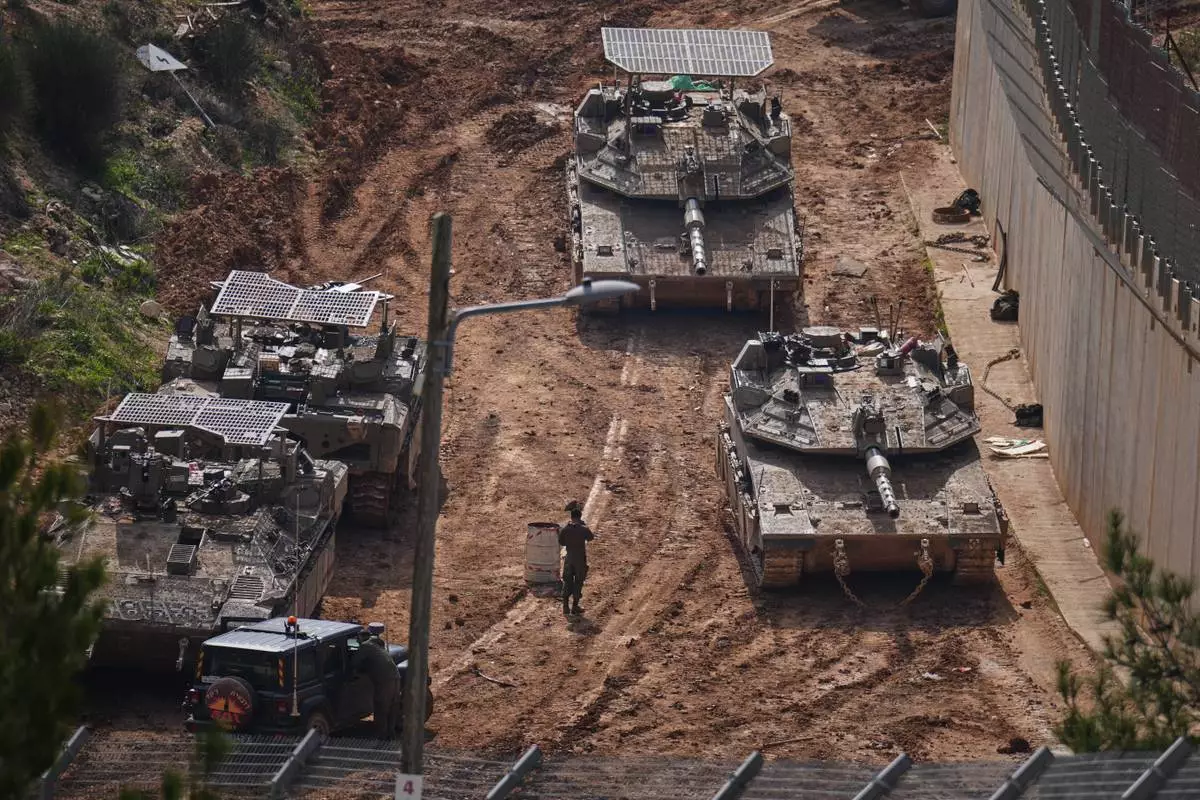
Israeli tanks maneuver near the Israel-Lebanon border, in northern Israel, Wednesday, March 4, 2026. (AP Photo/Ariel Schalit)
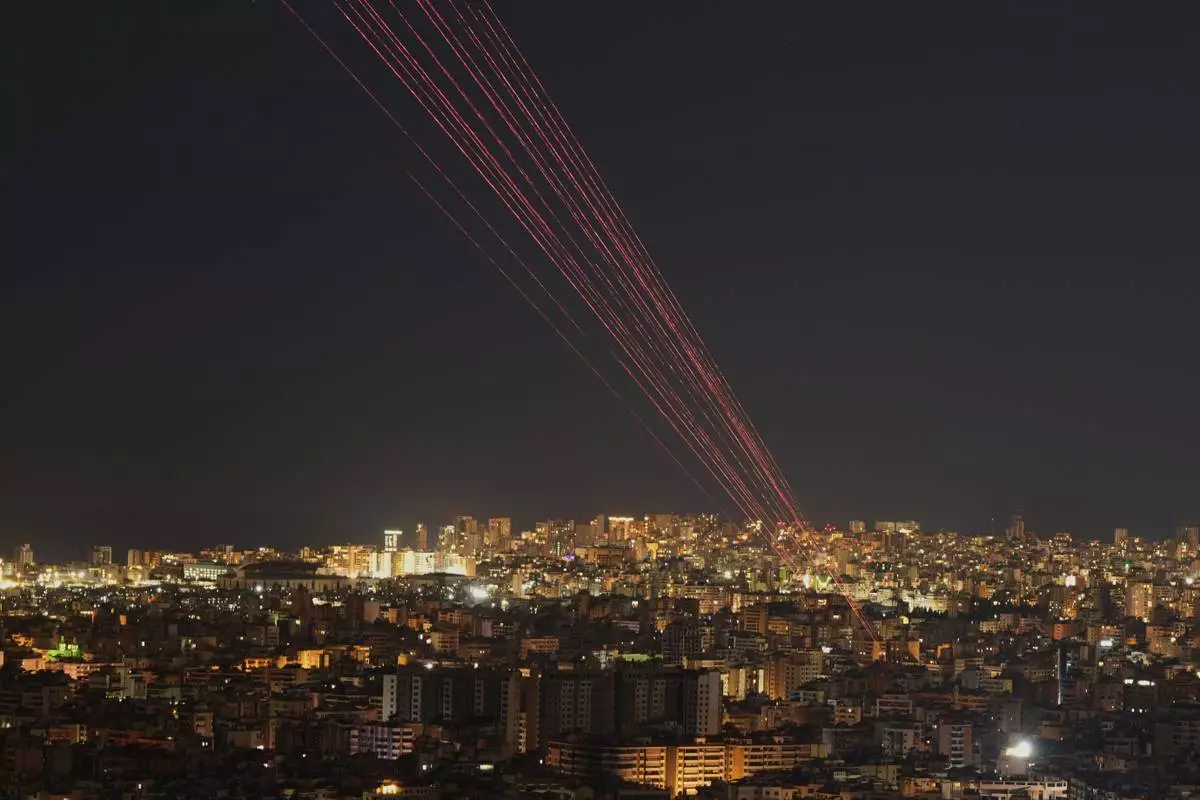
Tracer rounds light the sky as people fire live rounds into the air during a televised speech by Hezbollah leader Naim Kassem in Dahiyeh, Beirut's southern suburbs, Lebanon, Wednesday, March 4, 2026. (AP Photo/Hassan Ammar)