LONG BEACH, Calif.--(BUSINESS WIRE)--Mar 5, 2026--
Vast, the company developing next-generation space stations, announced today that it has raised $500 million in new funding to advance its mission of enabling humanity to live and work in space long-term. Vast’s strategic roadmap includes low-Earth orbit space stations, future habitats for the Moon and Mars, and crewed systems that will expand the commercial space economy while strengthening partnerships and capabilities in support of national defense objectives.
This press release features multimedia. View the full release here: https://www.businesswire.com/news/home/20260305909254/en/
“This investment underscores the market’s strong conviction in both our strategy and our engineering,” said Max Haot, CEO of Vast. “The low-Earth orbit economy is at a pivotal inflection point, poised for rapid growth. Vast’s Haven stations are engineered to deliver safe, cost-effective access to microgravity research and in-space manufacturing, empowering government and commercial partners to unlock the full commercial promise of this next era for space.”
The financing round was led by Balerion Space Ventures with participation from IQT, Qatar Investment Authority (QIA), Mitsui & Co., Ltd, MUFG, Nikon Corporation (Nikon), StellarVentures, Space Capital, and Earthrise Ventures. Jed McCaleb, founder and first investor, also participated in the round. As part of the transaction, Balerion Advisor A.C. Charania, former Chief Technologist for NASA, will join the Vast board.
“With its impressive hardware and expertise, Vast is the only operational commercial space station company to have designed, built, and flown its own spacecraft, Haven Demo, which successfully completed its mission last month. The mission reduced technical risk by testing a myriad of technologies that will be used on Haven-1,” shared Charania of Balerion. “Haven stations will play a critical role in sustaining a continuous human presence in orbit and the LEO economy while providing nations around the world the opportunity to strengthen leadership in space. Vast’s engineering excellence and global vision set them apart.”
As Vast advances its goal is to support continuous crew operations by 2030, the company is working towards its next major milestones. These include the launch of Haven-1 in 2027, conducting the private astronaut mission Vast recently won with NASA, and securing the Commercial Low Earth Orbit Destinations Phase 2 bid to build its proposed successor to the International Space Station. Funded privately to date, Vast has rapidly established itself as a leader in space hardware design, manufacturing, testing, and operations since its founding in 2021. Recent engineering achievements include flying, operating, and deorbiting Haven Demo —an in-orbit testbed to prove out space station technologies—and the current integration of Haven-1, scheduled to be the world’s first commercial space station.
“Vast was founded with a long-term vision of billions of people living and thriving in space. Achieving a goal of this magnitude requires deliberate stepping stones, and our strategy of building, testing, and iterating with real hardware is delivering results,” added Jed McCaleb, Vast founder and entrepreneur. “It is exciting to welcome additional investors who recognize Vast’s long-term potential and share our belief in making this vision a reality.”
Vast’s vertically integrated model, which has already delivered a 10X reduction in primary structure manufacturing costs compared to traditional space station programs, increases capability and shortens manufacturing timelines.
To date, more than $1 billion has been invested in Vast’s space stations technologies and facilities—resources that NASA and government partners can leverage to ensure readiness to replace the ISS in 2030. The latest financing includes $300 million in Series A equity and $200 million in debt to support the continued development of Vast’s Haven space stations. The funds will be used to expand facilities, grow the team, and advance the company’s proposed successor to the ISS, Haven-2, designed to ensure continuous human presence in low-Earth orbit for the United States and its allies.
About Vast
Vast is developing next-generation space stations to ensure a continuous human presence in space for America and its allies, enabling advanced microgravity research and manufacturing, and unlocking a new space economy for government, corporate, and private customers. Using an incremental, hardware-rich and low-cost approach, Vast is rapidly developing its multi-module Haven Station. Haven Demo’s 2025 success made Vast the only operational commercial space station company to fly and operate its own spacecraft. Next, Haven-1 is expected to become the world’s first commercial space station when it launches in 2027, followed by additional Haven modules to enable permanent human presence by 2030.
Headquartered in Long Beach, California, and with more than 1,000 employees and over a billion dollars in private capital, Vast has built the facilities required to manufacture and operate America’s next space station. The company plans to develop future habitats for the Moon and Mars, dedicated space stations for government partners, and other crewed systems that will unlock the expanding long-term space economy.

Vast secures $500M in funding to build next-generation space stations.
DUBAI, United Arab Emirates (AP) — For years, Iran's theocratic government warned it would blanket the Middle East with missile and drone fire if it felt its existence was threatened.
Now, the Islamic Republic is doing just that.
Since the U.S. and Israel launched the war Saturday and killed Iranian Supreme Leader Ayatollah Ali Khamenei, Iran has unleashed thousands of drones and ballistic missiles targeting Israel, American military bases and embassies in the region, and energy facilities across the Persian Gulf. Iranian fire has even been directed over its borders with Turkey and Azerbaijan.
Iran's basic strategy is to instill fear about the dangers of a widening war in hopes that allies of the U.S. will apply enough pressure to halt their campaign. A protracted conflict, along with American and Israeli casualties, could also work in Iran’s favor.
Trouble is, the barrage-thy-neighbors strategy also could backfire.
Iran’s first priority is to emerge from the war with its state institutions intact, said Ellie Geranmayeh, deputy director of the Middle East and North Africa program at the European Council on Foreign Relations.
“Iran is upping the costs for this U.S. military campaign and regionalizing it from the get-go, as they promised they would if America restarts the war again with Iran,” she said. The U.S. joined Israel last June in a 12-day war, targeting nuclear enrichment sites. Iran maintains its program is peaceful, though its officials had threatened to pursue a bomb while enriching uranium to near-weapons-grade levels.
Iran's leaders believe that by inflicting casualties and disrupting energy production to drive up oil and gas prices, America's allies or an unsettled public back home will pressure U.S. President Donald Trump to ease back.
“The Iranians are banking on basically out-stomaching him, and exhausting him and his allies to the point where they would basically have a diplomatic off-ramp,” Geranmayeh said. Trump is unpredictable, Geranmayeh said, but for now he appears to be pressing for “unconditional surrender to his demands, rather than a negotiated settlement.”
The U.S. and Israel have carried out hundreds of airstrikes and inflicted heavy damage on Iranian government, military and nuclear targets. Despite being greatly outgunned, Iran has continued to fire ballistic missiles into Israel, killing 11 people and disrupting life for millions of Israelis. More have been killed in the Gulf Arab states, and the U.S.-Israeli campaign has killed 1,045 people in Iran.
After more than two years of war in the Gaza Strip, the Israeli public appears to have little appetite for another lengthy round of fighting. Polls suggest the U.S. public is leery of a protracted conflict.
The American and Israeli onslaught came after a string of U.S.-Iranian talks over Iran's nuclear program and the West's sanctions failed to reach a breakthrough.
Trump said Monday his four objectives were to destroy Iran’s missile capabilities, wipe out its navy, prevent it from obtaining a nuclear weapon and ensure that it cannot continue to support allied armed groups.
The Iranian response has spared no one in the region, not even Oman, which mediated the latest round of nuclear talks and for decades has maintained a close relationship to Iran after it helped the late Sultan Qaboos bin Said put down a rebellion in the 1970s.
Last week, as the U.S. amassed warships in the region, Oman's foreign minister rushed to Washington in a last-ditch effort to keep the nuclear talks going.
Since then, Oman has been dragged into the conflict. An Omani port and ships off its coast have been targeted by Iranian missiles. Oman's port at Duqm helped the USS Abraham Lincoln aircraft carrier with pre-deployment logistics.
Saudi Arabia, which has maintained a detente with Tehran since 2023, also came in the crosshairs this week. Its Ras Tanura oil refinery has been repeatedly attacked and the U.S. Embassy in Riyadh got hit by drones — an embarrassing moment for Crown Prince Mohammed bin Salman, who has worked to cultivate a close relationship with Trump.
Qatar and the United Arab Emirates, which also have close ties to Trump, have been repeatedly targeted, too.
There’s a grim math equation at play as the war goes on. Iran has a finite number of missiles and drones, just as the Gulf Arab states, the U.S. and Israel all have a limited number of interceptor missiles capable of downing the incoming fire.
U.S. Defense Secretary Pete Hegseth said Wednesday that thousands of Iranian missiles and drones have been “intercepted and vaporized” during the war. The Israeli military says it has destroyed dozens of missile launchers.
From the American and Israeli side, targeting missiles and their launchers remains key. Both countries had to shoot down Iranian missiles during the war in June and multiple times in the Israel-Hamas war.
“In simple terms, we are focused on shooting all the things that can shoot at us,” said U.S. Navy Adm. Brad Cooper, the head of the American military’s Central Command.
A senior Western official, speaking on condition of anonymity to discuss intelligence matters, said Iran has several days’ worth of ballistic missiles if it continues firing at current rates, but it may hold some back to wage a longer campaign.
The Israeli military says the number of Iranian launches has greatly diminished in recent days as a result of the airstrikes — though warning sirens wailed seemingly constantly across Israel on Wednesday into Thursday.
Iran's strategy of trying to threaten energy security, drive a wedge between Gulf and Western states and raise costs is “backfiring,” said Hasan Alhasan, a Middle East expert with the London-based International Institute for Strategic Studies.
“It’s driving and pushing the Gulf states into closer alignment with the United States,” he said.
“The Gulf states can’t simply sit idle and continue absorbing indefinite attacks to their critical infrastructure and to civilians in Gulf cities,” Alhasan said. They are probably trying to both acquire more weapons to intercept incoming fire and find ways to broker an end to the war, he said.
Iran’s foreign minister has suggested his country’s military units are now isolated and acting independently from any central government control, a possible excuse for Iran’s increasingly erratic fire.
“They are acting based on instructions — you know, general instructions — given to them in advance,” Abbas Araghchi told Al Jazeera on Sunday.
But after a Wednesday phone call with Araghchi, Qatar's prime minister, Sheikh Mohammed bin Abdulrahman Al Thani, “categorically rejected” his assertion that Iranian missiles were only directed at American interests and not intended to target Qatar.
Keaten reported from Geneva. Associated Press writers Danica Kirka and Jill Lawless in London contributed to this report.
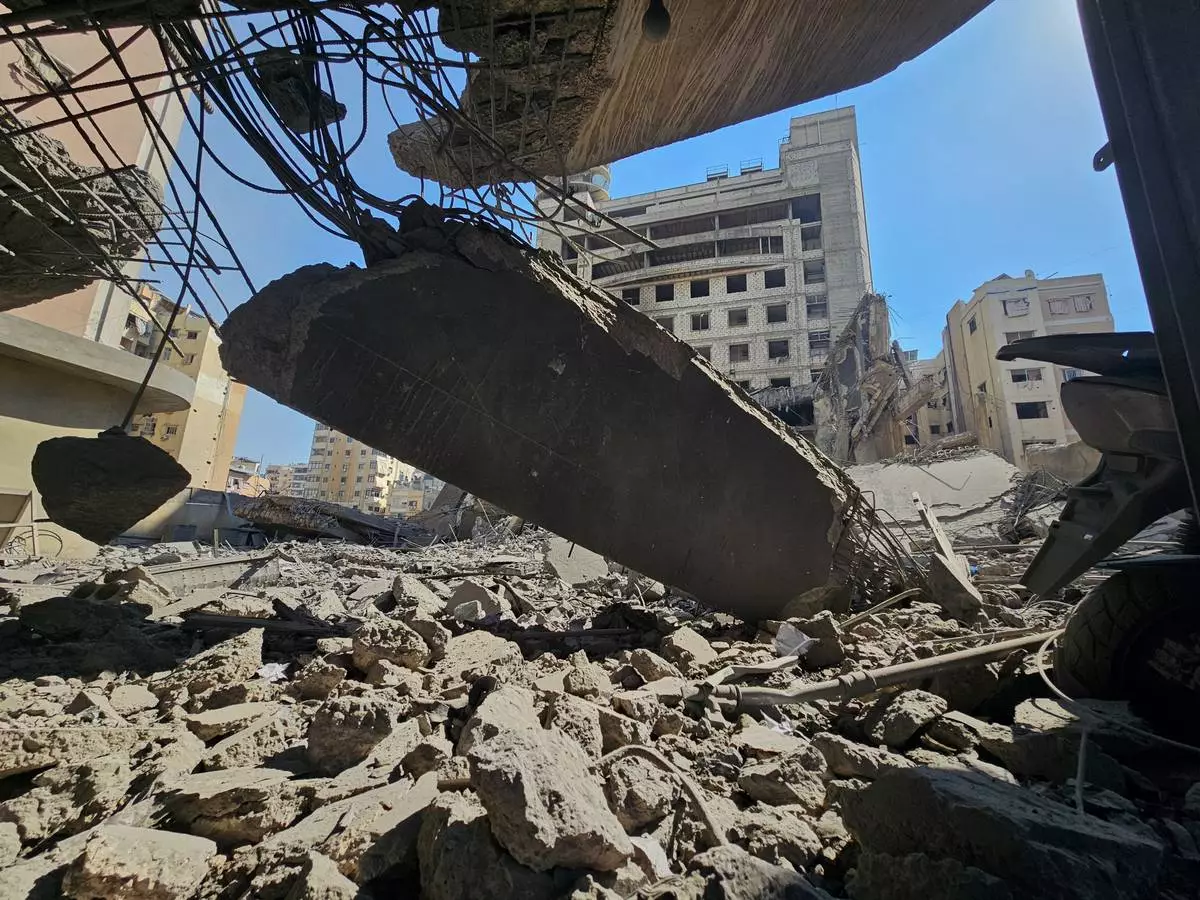
Debris cover the site of Hezbollah’s Al-Manar TV headquarters after it was hit in an Israeli airstrike on Dahiyeh, a southern suburb of Beirut, Lebanon, Tuesday, March 3, 2026. (AP Photo/Hassan Ammar)
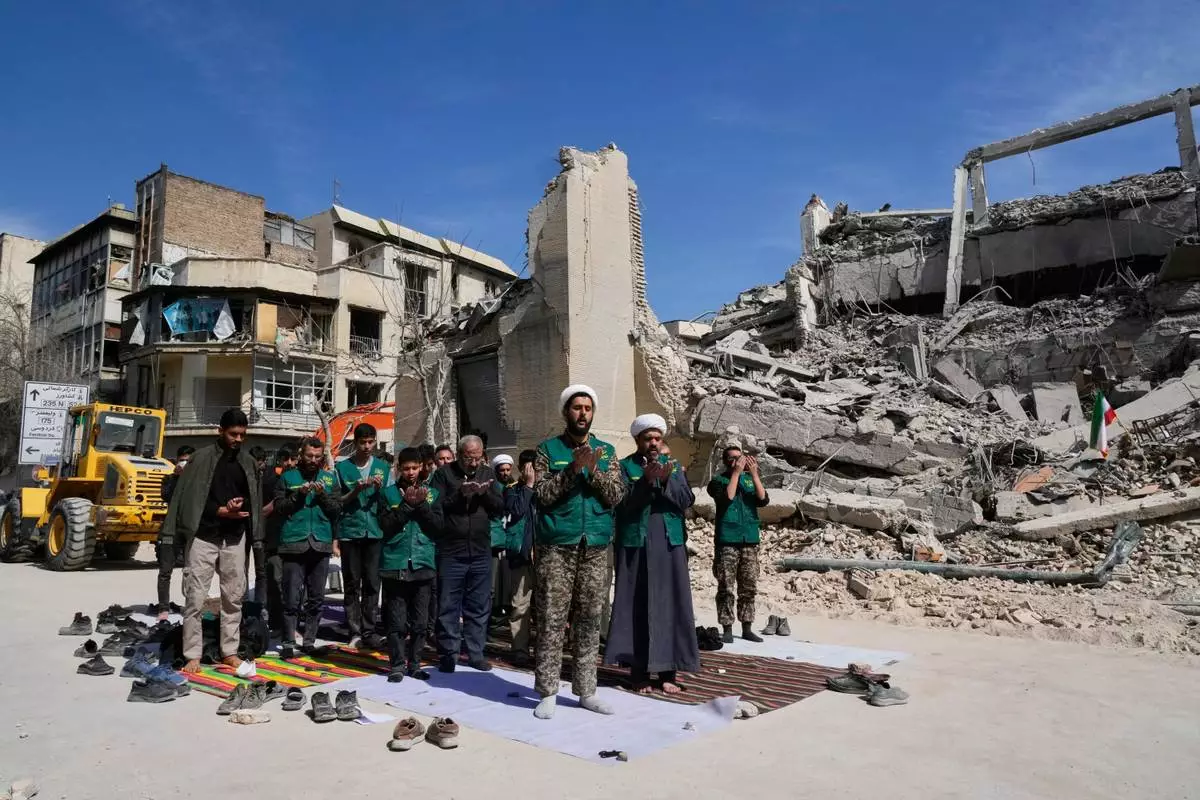
A cleric leads a group of volunteers in prayer next to a police facility struck during the U.S.–Israeli military campaign in Tehran, Iran, Wednesday, March 4, 2026. (AP Photo/Vahid Salemi)
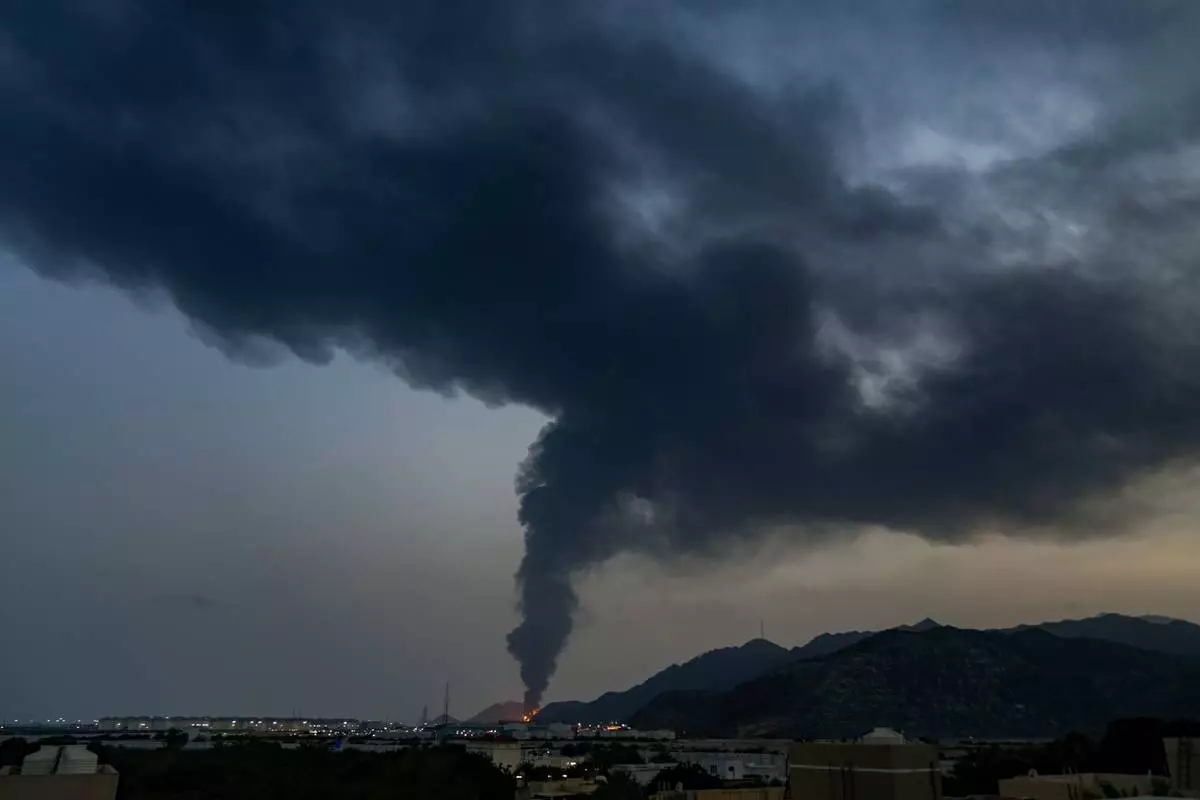
Large fire and plume of smoke is visible after, according to the authorities, debris of an Iranian intercepted drone hit the Fujairah oil facility, in Fujairah, United Arab Emirates, Tuesday, March 3, 2026. (AP Photo/Altaf Qadri)
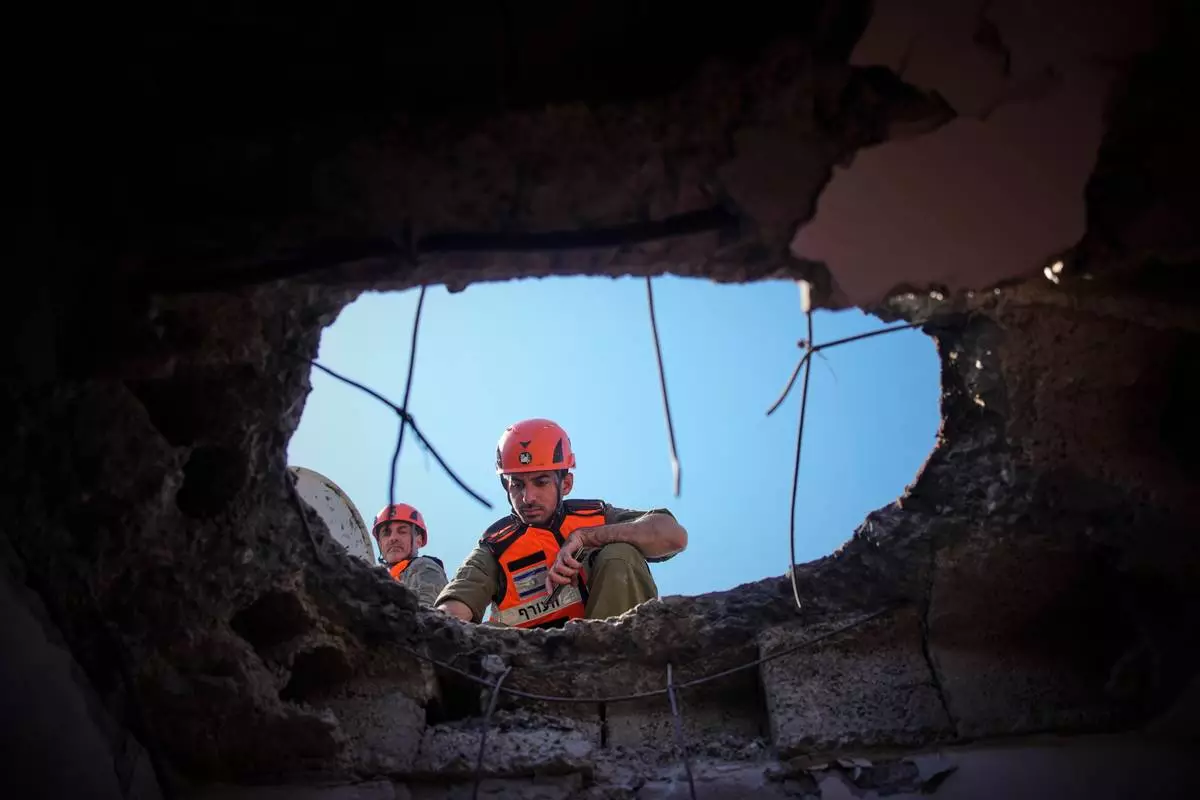
Officers from Israel's Home Front Command inspect a damaged apartment building after an Iranian missile strike in Petah Tikva, Israel, Tuesday, March 3, 2026. (AP Photo/Ohad Zwigenberg)