CAIRO (AP) — The Women’s Africa Cup of Nations was moved to the summer on Thursday less than two weeks before it was supposed to start in Morocco.
The tournament will now take place from July 25-Aug. 16, the Confederation of African Football announced on its website. It did not mention a change of host, nor did it confirm Morocco will stage the tournament again for what will be the third straight time.
The 16th tournament was supposed to be played in the kingdom from March 17-April 3 but reports persisted that Morocco wished to withdraw from hosting it and CAF said on Wednesday it would clarify the matter in the next days.
South Africa had offered to step in as host.
“After discussions between CAF and its partners, FIFA and other stakeholders, CAF decided to reschedule the dates … to ensure the success of this important women’s competition in the light of certain unforeseen circumstances,” CAF said on Thursday.
It did not specify the nature of the circumstances and the Associated Press has reached out for more details.
CAF said preparations for the tournament “are underway and all the parties are confident that it will be very successful.”
In a surprise decision last November, CAF expanded the tournament to 16 teams, giving reprieve to Cameroon, Ivory Coast, Mali and Egypt, whose teams initially failed to qualify.
Morocco, Algeria, Senegal and Kenya were drawn in Group A in Rabat, where Group B involving South Africa, Ivory Coast, Burkina Faso and Tanzania was also to be played.
Group C involving defending champion Nigeria, Zambia, Egypt and Malawi was in Casablanca, while Group D with Ghana, Cameroon, Mali and Cape Verde was in Fez.
The date change comes after CAF president Patrice Motsepe ruled it out on Feb. 13 because the tournament also doubles as a qualifying event for the 2027 Women’s World Cup in Brazil. The four semifinalists qualify directly, and teams that lose in the quarterfinals were to get another chance through playoffs involving nations from other continents.
The last edition, won by Nigeria 3-2 over Morocco in the final, was also delayed because of scheduling problems in 2024. It was eventually played in 2025.
Morocco is also a co-host for the men’s World Cup in 2030.
AP soccer: https://apnews.com/hub/soccer

FILE - Nigeria's captain Rasheedat Ajibade, center, holds the Women's African Cup of Nations trophy upon arrival at the Nnamdi Azikiwe International airport in Abuja Nigeria, Monday, July 28, 2025. (AP Photo/Olamikan Gbemiga, File)

FILE - Nigeria'a goalkeeper Chiamaka Nnadozie, upon arrival at the Nnamdi Azikiwe International Airport in Abuja Nigeria, Monday, July 28, 2025. (AP Photo/Olamikan Gbemiga, File)
BOSTON (AP) — A woman who worked as a live-in personal chef for former New England Patriots receiver Stefon Diggs declined to answer questions Tuesday about financial demands made on her behalf, as defense attorneys pressed her over claims she was owed money and inconsistencies in what she said she was paid.
Defense attorneys pressed Jamila “Mila” Adams about money she said she was owed after working as a live-in chef. She testified she was paid about $2,000 a week and believed she had not been fully compensated after being sent home. They pointed to a $19,000 demand made on her behalf and suggested the amount grew over time, culminating in a separate claim that her attorney sought $5.5 million.
Diggs has pleaded not guilty to a felony strangulation charge and a misdemeanor assault and battery charge stemming from a December incident at his home.
When asked about the $5.5 million claim, Adams said, “I can’t speak on that,” and at other points told jurors, “I don’t understand the question” and “I don’t know how to answer the question.”
Defense attorneys also questioned Adams about a public statement she issued Feb. 13 in which she said, “I have never sought money to settle this matter,” and about hiring a lawyer by mid-April. Adams said she retained an attorney for a workers’ compensation claim, saying she believed she had been injured on the job.
They challenged her accounting of what she was owed, presenting records of payments and suggesting she had sought compensation for weeks she did not work. Adams said she had been confused about the amount and “sent the incorrect amount,” maintaining she believed she was owed money.
Prosecutors pushed back on the defense’s financial-motive argument, eliciting testimony that Adams viewed the dispute as a wage issue, not a settlement. She said her statement that she had “never sought money to settle this matter” referred to the criminal case and that she later retained an attorney for a workers’ compensation claim after she believed she was injured on the job.
At times during her second day on the stand, Adams was instructed by the judge to answer questions directly and not include additional details beyond what was asked. Portions of her responses were struck from the record as nonresponsive, with jurors told to disregard them.
“This is not an opportunity for you to interject your own narrative,” Judge Jeanmarie Carroll, told her at one point, warning that continued nonresponsive answers could result in her testimony being stricken.
The testimony followed sharply conflicting accounts presented to jurors a day earlier.
Adams testified Monday that Diggs “smacked me with an open hand” before wrapping his arm around her neck and choking her, leaving her struggling to breathe. She described what she called a “complicated” relationship, saying it had previously been sexual but was not at the time of the alleged assault. She said she lived in his home, preparing meals and snacks, and had known him for more than four years.
Defense attorneys told jurors the alleged attack never happened, pointing to a lack of medical records, photos or video documenting injuries and saying no one else in the home reported seeing or hearing anything unusual. They also suggested Adams had a financial motive.
Prosecutors say the case centers on what happened on Dec. 2, when they allege Diggs entered Adams’ bedroom, slapped her and put her in a headlock that made it difficult to breathe.
A jury was seated Monday in Norfolk County District Court in Dedham.

Former New England Patriots wide receiver Stefon Diggs appears in court during his trial at Norfolk County District Court, Tuesday, May 5, 2026, in Dedham, Mass. (AP Photo/Charles Krupa, Pool)
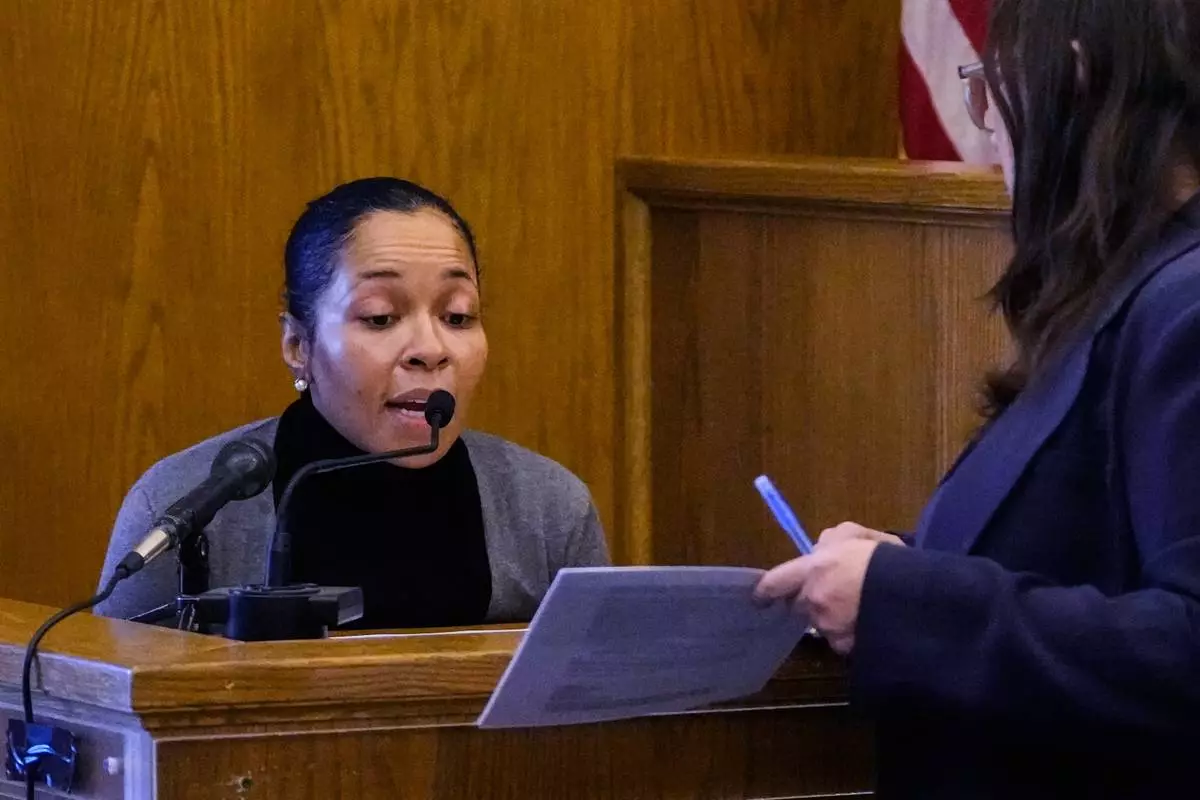
Witness Jamila Adams testifies during the trial of former New England Patriots wide receiver Stefon Diggs at Norfolk County District Court, Tuesday, May 5, 2026, in Dedham, Mass. (AP Photo/Charles Krupa, Pool)
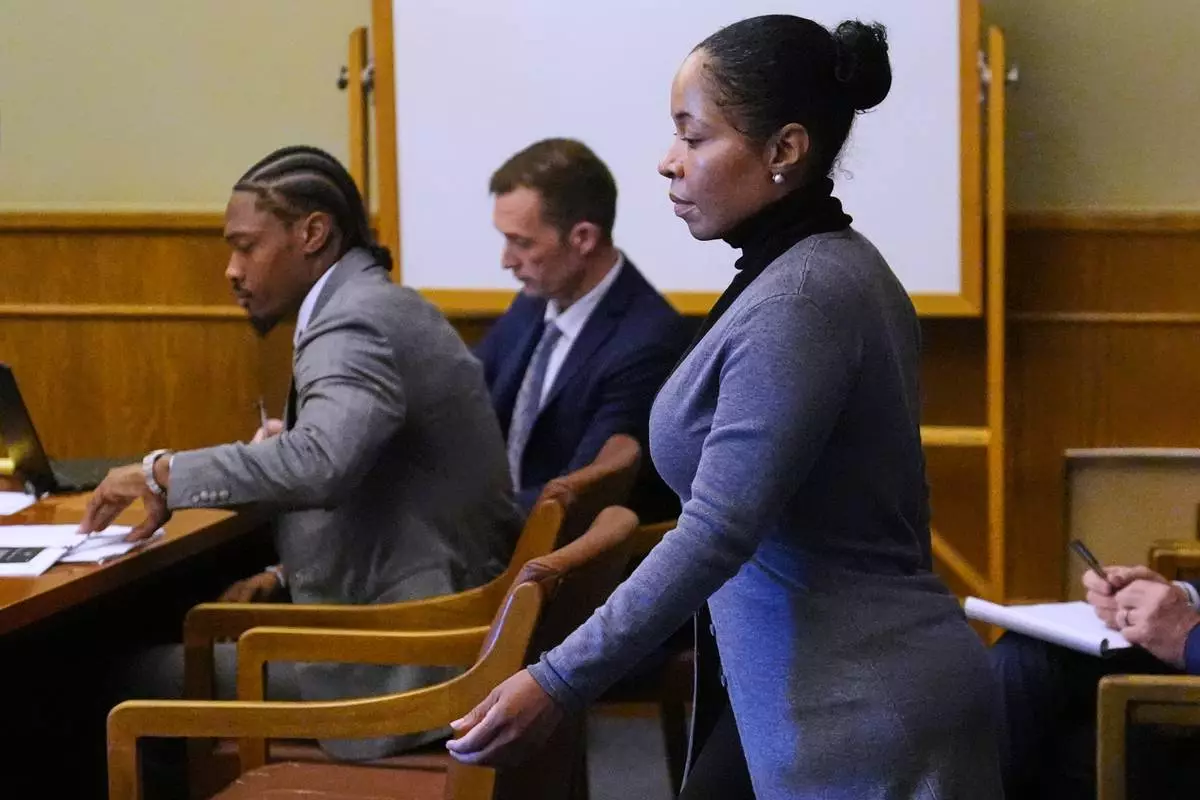
Witness Jamila Adams, right, walks past former New England Patriots wide receiver Stefon Diggs during Diggs' trial at Norfolk County District Court, Tuesday, May 5, 2026, in Dedham, Mass. (AP Photo/Charles Krupa, Pool)

Former New England Patriots wide receiver Stefon Diggs listens to his defense attorney cross examine witness Jamila Adams during his trial at Norfolk County District Court, Tuesday, May 5, 2026, in Dedham, Mass. (AP Photo/Charles Krupa, Pool)
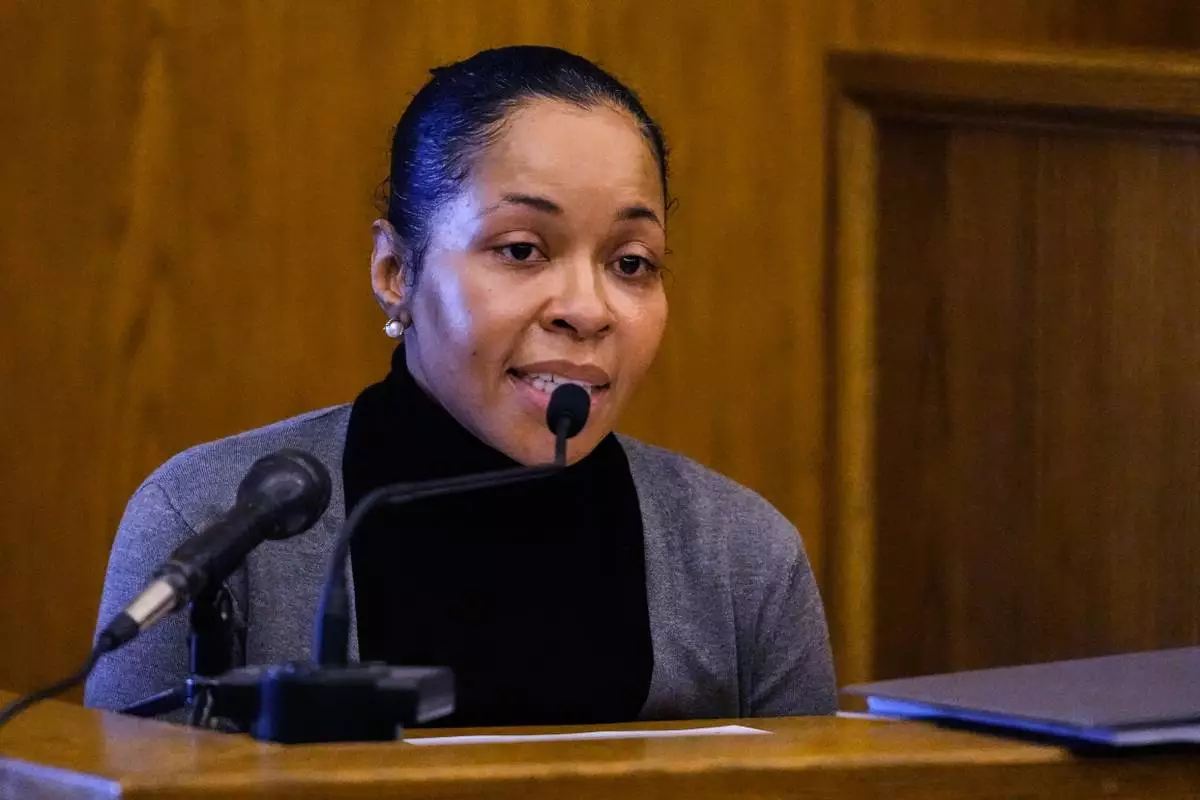
Witness Jamila Adams testifies during the trial of former New England Patriots wide receiver Stefon Diggs at Norfolk County District Court, Tuesday, May 5, 2026, in Dedham, Mass. (AP Photo/Charles Krupa, Pool)
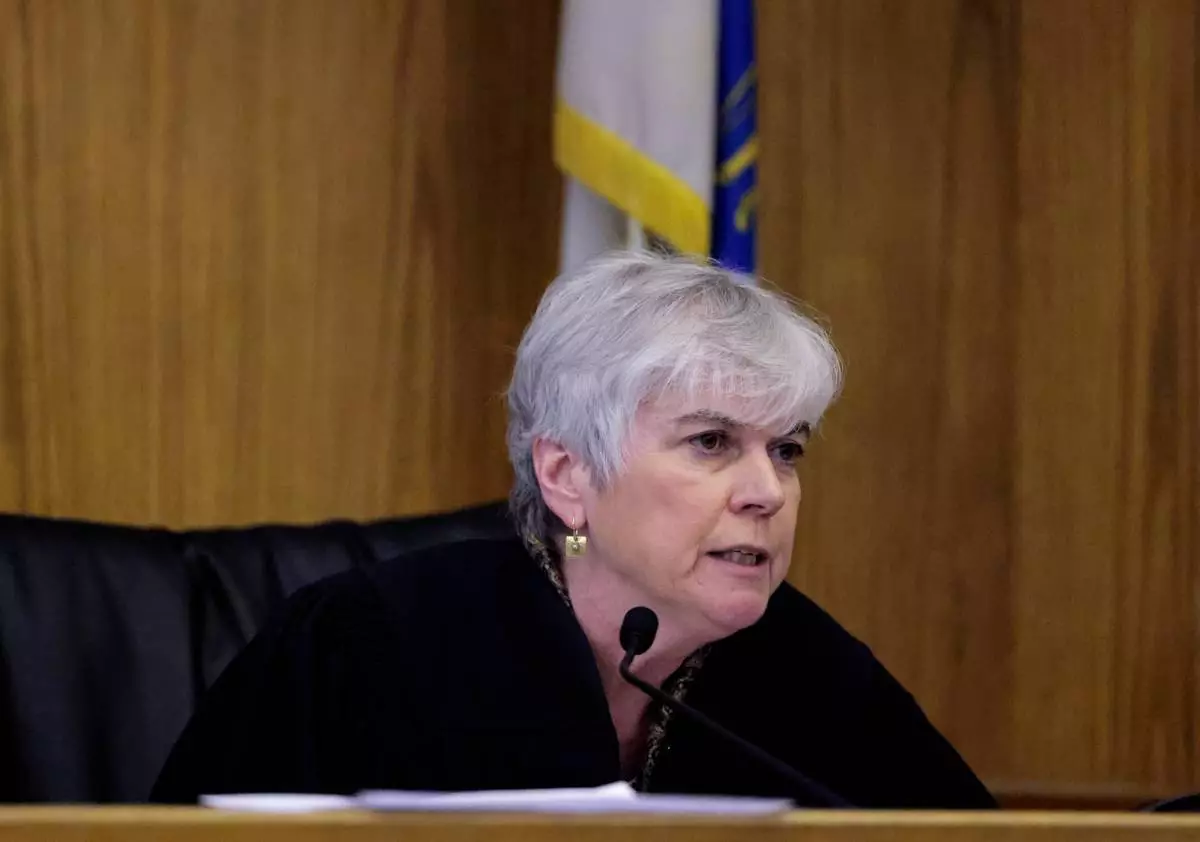
Judge Jeanmarie Carroll questions potential jurors as the assault trial of Stefon Diggs begins in Dedham, Mass., Monday May 4, 2026. (Pat Greenhouse/The Boston Globe via AP, Pool)

Former New England Patriots wide receiver Stefon Diggs leaves Norfolk County District Court, Monday, May 4, 2026, in Dedham, Mass. (AP Photo/Charles Krupa)
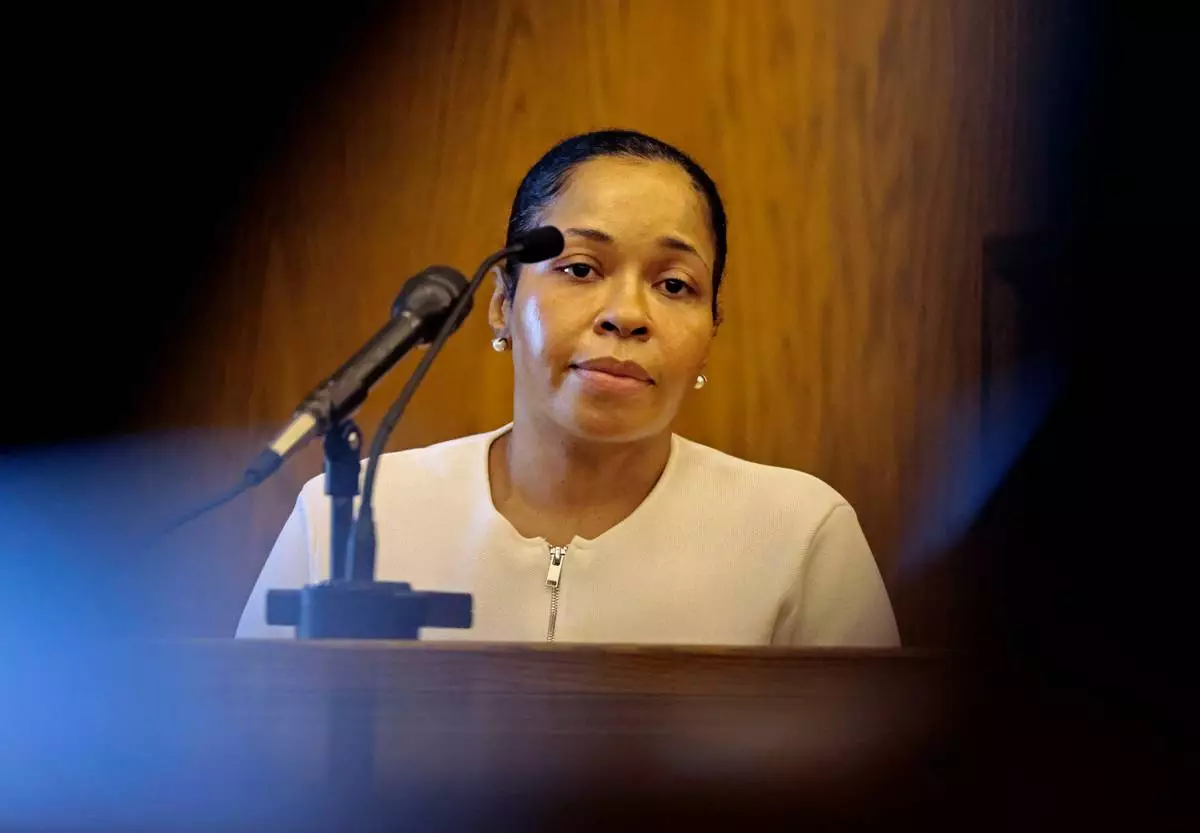
Stefon Diggs' former personal chef, Jamila Adams, is questioned by Assistant District Attorney Drew Virtue in Dedham District Court in Dedham, Mass., Monday May 4, 2026. (Pat Greenhouse/The Boston Globe via AP, Pool)
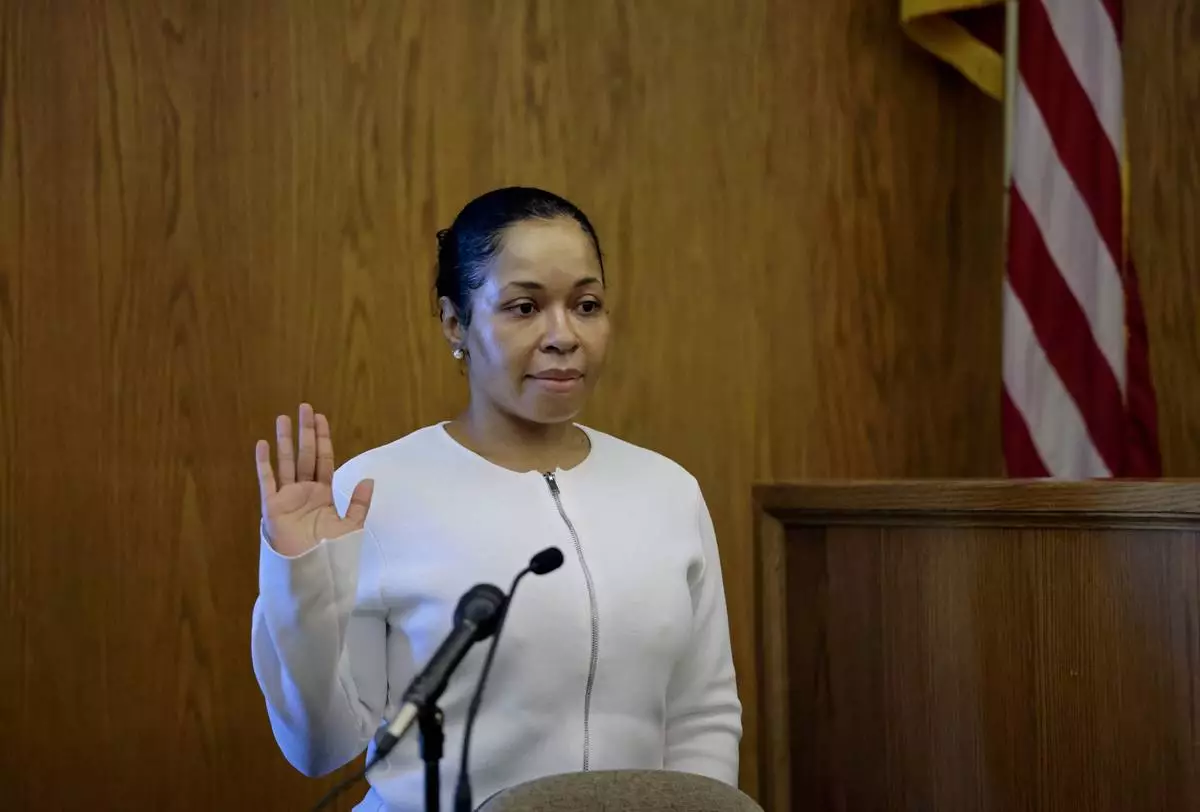
Stefon Diggs' former personal chef Jamila Adams is sworn in before giving testimony in Dedham District Court in Dedham, Mass., Monday May 4, 2026. (Pat Greenhouse/The Boston Globe via AP, Pool)

Former New England Patriots wide receiver Stefon Diggs returns to Norfolk County District Court, Monday, May 4, 2026, in Dedham, Mass. (AP Photo/Charles Krupa)