BRUSSELS (AP) — Thousands of battle-hardened Kurds in northern Iraq are preparing for a potential cross-border military operation in Iran with U.S. backing, Kurdish officials told The Associated Press.
The three officials said U.S. President Donald Trump and the heads of the two main Kurdish parties in Iraq discussed the situation Sunday. They spoke on condition of anonymity because they were not authorized to comment publicly.
The addition of armed Kurds now, as Israel and the U.S. continue to strike Iran, would significantly challenge Iranian defenses but also risk pulling Iraq — where some of the Iranian Kurdish groups have bases — deeper into the conflict.
Here’s a look at the Kurds and their relationships in the Middle East:
The Kurds are among the largest stateless ethnic groups in the world, with roughly 30 million living as minorities in Turkey, Iraq, Iran and Syria. They speak their own language, with several dialects, and most are Sunni Muslims.
Although Kurds have never had their own state, they govern a semiautonomous area in northern Iraq and for years de facto ruled much of northeastern Syria. Many have waged insurgency campaigns seeking to establish their own nation called Kurdistan.
The 9 million Kurds in Iran live mainly in a stretch of land along the country’s western borders with Iraq and Turkey. They have a long history of grievances and rebellions against both the current Islamic Republic and the monarchy that preceded it.
Before the war, Amnesty International said Kurds face “systemic discrimination” in Iran and that in the past “security forces killed or injured many unarmed Kurdish cross-border couriers (kulbars) with impunity.”
A number of Kurdish opposition groups have taken up arms against Iranian authorities over the years.
Some have established bases in neighboring Iraq, which was a point of friction between Tehran and the central Iraqi government in Baghdad until 2023, when they reached an agreement to disarm the Iranian Kurdish groups.
In the run up to the current war, five Iranian Kurdish groups formed a coalition dedicated to overthrowing the Islamic Republic and establishing the Kurdish people’s right to self-determination. On Thursday, a sixth group joined.
“For the first time, all major Kurdish parties have come together as one in a new coalition — a historic step toward shaping a new future for Kurds and a democratic Iran,” said Abdullah Mohtadi, secretary general of the Komala Party of Iranian Kurdistan.
But joining with the other Iranian opposition groups to oust the authorities in Tehran might prove difficult.
Kurds have rarely come out on the winning side in their interactions with U.S. presidents.
In 1975, President Gerald Ford failed to protect the Kurds from a routing by Iraqi forces.
In 1988, President Ronald Reagan did not stop Iraqi forces from using chemical weapons against the Kurds.
In 1990, President George Bush encouraged the Kurds to rise up against Saddam Hussein after he invaded Kuwait but then stood aside as Iraqi forces brutally crushed the rebellion.
And in January, Trump allowed Syrian forces to seize Kurdish territory won during the Syrian civil war and in bloody battles against the Islamic State group.
It is unlikely that Turkey, a key member of NATO and potential host to war refugees, would accept Western weapons transfers to Kurdish guerrillas even if their targets were in Iran.
Turkey has fought a brutal military campaign since 1984 against an armed Kurdish insurgency that has claimed tens of thousands of lives and spilled into neighboring Iraq and Syria.
On Thursday, Turkey voiced opposition to Iranian Kurdish dissident groups’ possible involvement in the conflict in Iran, warning of greater instability in the region.
Turkey considers the main Kurdish dissident group, PJAK, a terrorist group with links to separatists fighting Turkey. Turkey’s defense ministry said Thursday that PJAK’s activities “negatively affect not only Iran’s security but also the overall peace and stability of the region.”
Violence has already erupted across the Kurdish lands sprawling across the border between Iran and Iraq.
As Israel and the U.S. have struck targets across Iran, Iranian forces and its allies in Iraq launched missiles and drones targeting U.S. military bases and the U.S. Consulate in Irbil as well as the Iranian Kurdish groups’ bases.
Khalil Nadiri, an official with the Kurdistan Freedom Party based in northern Iraq’s semiautonomous Kurdish region, said Wednesday that some of their forces had moved to areas near the Iranian border in Sulaymaniyah province and were on standby.
In January, the group said it carried out raids inside Iran during a massive crackdown on protests. State media then labeled them “terrorists,” without offering any evidence to support the claim, a crime Iran punishes with death.
Officials with Iraq’s Kurdish regional government and Iraqi Kurdish political parties, meanwhile, have said they do not want attacks to be launched against Iran from their territory, fearing a harsh response.
Peshawa Hawramani, spokesperson for the Kurdistan Regional Government, said in a statement that “allegations claiming that we are part of a plan to arm and send Kurdish opposition parties into Iranian territory are completely unfounded” and that the Iraqi Kurdish parties do not want to “expand the war and tensions in the region.”
Associated Press writers Suzan Fraser in Istanbul, Qassim Abdul-Zahra in Baghdad, and Stella Martany and Rashid Yahya in Irbil, Iraq, contributed to this report.
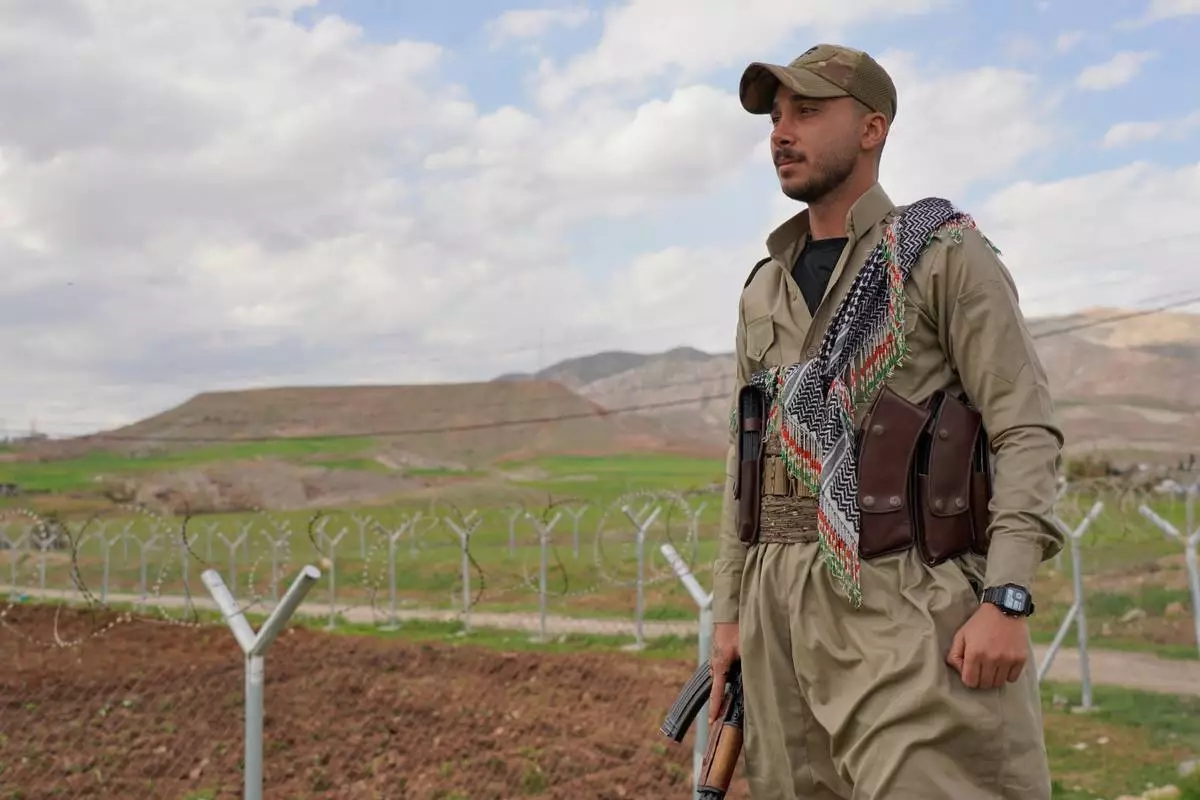
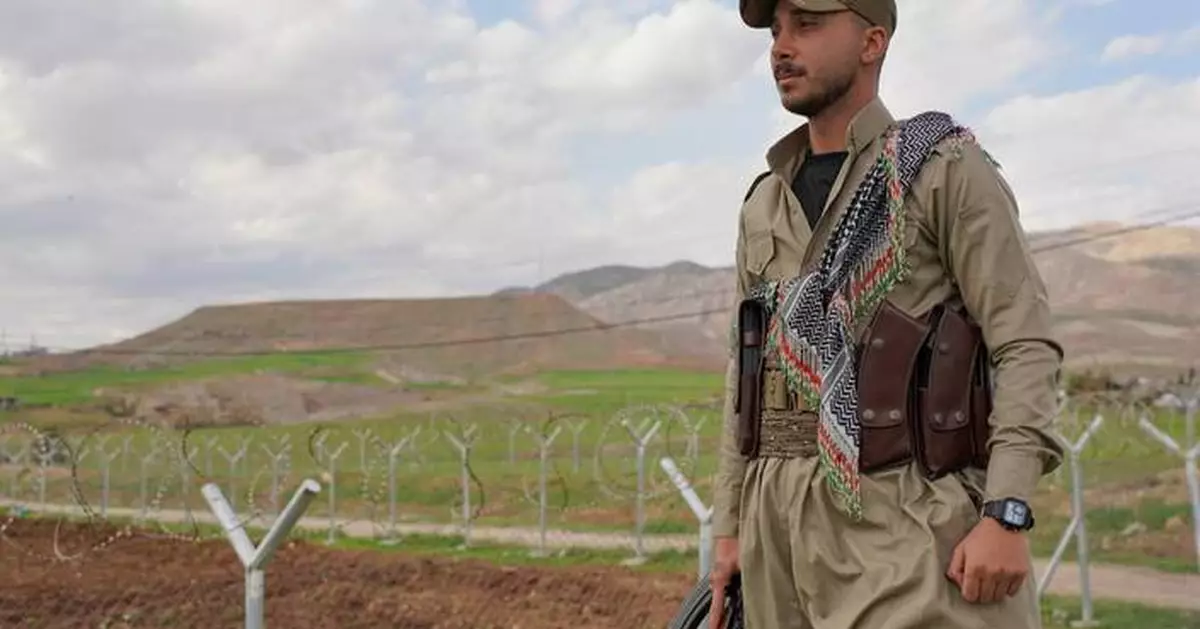
Member of the Democratic Party of Iranian Kurdistan PDKI stands at a checkpoint leading to their base in Koya district of Irbil, Iraq, Friday, Feb. 27, 2026. (AP Photo/Rashid Yahya)
House lawmakers rejected a war powers resolution to halt Trump’s attack on Iran in a 212-219 vote, a day after the Senate voted down a similar measure.
The U.S. Embassy in Kuwait shut down after retaliatory Iranian strikes on the country, becoming the second American diplomatic mission to fully halt work as the war in Iran escalates. Kuwait is also where six American soldiers were killed by an Iranian drone Sunday.
U.S. President Donald Trump said Thursday he should have a role in choosing Iran’s next supreme leader, raising questions about whether Washington and Israel seek regime change or policy concessions as the conflict has appeared increasingly open-ended.
Tehran has warned of the destruction of the Middle East’s military and economic infrastructure, and the war has rattled financial markets.
Stocks sank on Wall Street Thursday after the price of oil spiked to its highest level since the summer of 2024 because of the war with Iran.
The war has killed at least 1,230 people in Iran, more than 70 in Lebanon and around a dozen in Israel, according to officials in those countries.
Here is the latest:
Israel’s military said early Friday morning it had begun “a broad-scale wave of strikes” on Tehran, Iran’s capital.
Hezbollah urged Israelis to evacuate northern settlements for the first time.
The militant group mirrored near-constant Israeli warnings issued since 2023 for areas in Beirut, southern and eastern Lebanon.
In a post in Hebrew, Hezbollah warned residents within 5 km (about 3 miles) of the border to leave, citing Israel’s “aggression against Lebanese sovereignty and civilians” and promising a response.
Qatar’s Defense Ministry reported early Friday it intercepted a drone attack targeting Al Udeid Air Basse, which hosts the forward headquarters of the U.S. military’s Central Command.
Iranian state television reported airstrikes early Friday morning targeting Iran’s capital, Tehran.
The Kuwaiti army said early Friday that its air defenses are responding to hostile missile and drone attacks that have breached Kuwaiti airspace.
The U.S. Treasury Department on Thursday has authorized the sale of Russian oil to India for a period of 30 days, an effort meant to relieve price pressures caused by the ongoing conflict with Iran.
The Treasury Department said that crude oil and petroleum products from Russia that are already on ships can be unloaded in India from March 5 to April 4.
U.S. futures contracts for crude oil climbed above $80 in Thursday afternoon trading as the war has made it difficult to ship oil through the Strait of Hormuz.
Trump indicated on Thursday that the Treasury Department would make efforts to relieve price pressures, but it was unclear if he was referring to the temporary lifting of a ban on Russian oil tied to that country’s ongoing war in Ukraine.
Israel carried out a series of airstrikes late Thursday into Friday targeting the southern suburbs of Beirut, as well as areas in southern and eastern Lebanon. The Israeli army on Thursday night warned residents in these densely populated areas to evacuate.
Traffic in Beirut ground to a halt as panicked residents fled or sought shelter. Many were forced to remain on the roads, including along Beirut’s seaside promenade, sleeping in the cold on thin mattresses.
No casualties have been immediately reported from the strikes.
Australia’s Prime Minister Anthony Albanese says three Australian personnel were aboard a U.S. submarine that sank an Iranian warship.
Albanese commented on Friday after newspapers reported on Thursday that two Australians were aboard the submarine as part of the trilateral U.S., Australian and British AUKUS training program.
The sub torpedoed the Iranian frigate IRIS Dena in the Indian Ocean, killing at least 87 people.
“I can confirm that there were three Australian persons on board that vessel. I can confirm also, though, that no Australian personnel have participated in any offensive action against Iran,” Albanese told Sky News television.
The Australian government maintained it was not warned that the United States and Israel planned to attack Iran last weekend.
Bahrain’s Interior Ministry said on Friday that Iranian attacks targeted two hotels and a residential building in Manama, causing material damage but no casualties.
The dignified transfer of the six U.S. soldiers killed during the ongoing conflict in the Middle East will be held Saturday at Dover Air Force Base, according to an Iowa congressman.
The ritual is a transfer of remains of U.S. troops killed during their military service and is one of the most solemn acts for any president. The White House has said Trump will attend.
“This Saturday, I will attend the dignified transfer at Dover Air Force Base to honor the brave Americans who were killed in action and stand with their families during this solemn moment,” Rep. Zach Nunn, R-Iowa, said in a statement Thursday.
It was part of a statement in which he confirmed that a separate political event featuring Defense Secretary Pete Hegseth would be postponed.
Two of the six killed were from Iowa.
The spokesperson of Saudi Arabia’s Ministry of Defense said on Friday that three ballistic missiles fired toward Prince Sultan Air Base, a key Saudi Air Force base which hosts U.S. forces, located south of Riyadh, were intercepted and destroyed.
Air raid sirens sounded across Bahrain early Friday, with residents urged to seek shelter.
Kuwait’s Defense Ministry said Friday that 67 members of the Kuwaiti army have so far been injured since Iran launched strikes across Gulf countries hosting U.S. military bases.
Defense ministry spokesperson Col. Saud Al‑Atwan said the injured soldiers are receiving medical care and all are in stable condition, while two cases remain under medical observation.
Kuwait’s air defenses have intercepted multiple Iranian aerial targets, though falling debris caused casualties on the ground.
An 11‑year‑old girl died and several relatives were injured after debris from intercepted aerial targets struck a residential home earlier this week. On Sunday, six U.S. soldiers were killed in a drone strike on a military facility in Kuwait.
Republican Rep. Mike Johnson spoke briefly after the House joined the Senate in rejecting a war powers resolution to halt the Trump administration's attacks on Iran.
Johnson said the U.S. is conducting a “limited operation” over Iran, that’s “limited in scope and duration.”
“We are not at war. We have no intention of being at war,” said the House speaker, a close ally of Trump. “That mission is nearly accomplished.”
The speaker contradicted the president’s own portrayal of the joint U.S.-Israel air bombing campaign as a war.
Defense chief Gen. Jennie Carignan says a meeting is set for Friday to discuss such a proposal among allied militaries, and the Canadian Armed Forces would present a recommendation to the Canadian government.
She did not specify what type of support this might involve but said Canada is not taking part in the U.S. bombing of Iran and confirmed the discussions are not about participating in Operation Epic Fury.
Neither Hegseth nor Cooper provided any details as to what precisely that meant.
“When we say more to come, it’s more fighter squadrons, it’s more capabilities, it’s more defensive capabilities,” he said. “And it’s more bomber pulses more frequently.”
Also Thursday, Israel’s top military general said that country had “additional surprises ahead,” also without elaborating.
The first U.S. charter evacuation flight carrying Americans stranded in the Middle East after the start of the Iran war has landed in the United States, a State Department official said.
The flight landed Thursday afternoon at Dulles International Airport, the official said, speaking on condition of anonymity because he was not authorized to discuss the matter publicly.
The office could not say how many Americans were on the plane and would not say where in the Middle East it had departed from.
— Matthew Lee
Adm. Brad Cooper, head of U.S. Central Command, said Thursday that U.S. forces had to date sunk more than 30 of Iran’s ships, including “an Iranian drone carrier ship roughly the size of a World War II aircraft carrier.”
“And as we speak, it’s on fire,” Cooper said.
In February, Cooper for the first time joined indirect U.S.-Iran talks in Oman, appearing in his dress uniform as a reminder of the American buildup of military might in the region.
Speaking at U.S. Central Command, which oversees the Middle East, Hegseth said the U.S. is solely controlling the timeline of activities in Iran and will do so “as long as it takes to ensure the United States of America achieves” its objectives.
“We set the tempo,” he said. “We set the timeline led by the commander on the ground.”
Talking about U.S. weapons stockpiles, Hegseth said “our munitions are full up and our will is ironclad.”
“We have only just begun to fight and fight decisively,” he said.
On Wednesday, Hegseth said the war could go as long as eight weeks, the longest timeline given by the Trump administration thus far.
Referring to a co-owner of Inter Miami being originally from Cuba, Trump said, “You’re gonna go back: and added, “That’s going to be a great day, right?”
Without providing details, Trump added, “We’re going to celebrate that separately. I just want to wait a couple of weeks. I want him to wait a couple of weeks. But we’ll be together again soon, I suspect, celebrating what’s going on in Cuba.”
He added of the island’s communist government, “They want to make a deal so badly. You have no idea.”
Then, referring to Marco Rubio, the president said the secretary of state wants to work on Cuba but is cautious to do so amid the war in Iran.
“Your next one’s is going to be — we want to do that special — Cuba,” Trump said. “He’s waiting. But he says, “Let’s get this one finished first.’ We could do them all at the same time. But bad things happen. If you watch countries over the years, you do them all too fast, bad things happen.”
Asked why Iran is targeting U.S. bases but also tankers, strategic energy facilities and civilians in Doha, the United Arab Emirates, Bahrain and Israel, Iranian ambassador to Egypt, Mojtaba Ferdousi Pour, said Iran’s stated position has been consistent.
“We have declared repeatedly that if there are bases on the borders of the Islamic Republic of Iran belonging to the United States, and they will benefit from these bases, they will be targeted,” he said, from the Iranian Embassy in Egypt’s capital, Cairo, adding that the war extends beyond military engagement.
“It’s a comprehensive war. It’s cyber warfare. It’s an economic war. It’s a political and security war. … This is a war in all fields.”
Iran has not requested talks with the United States to bring an end to the widening war, Iran’s ambassador to Egypt told AP Thursday, denying comments by Trump that the country “wants to talk.”
“That’s not true,” the ambassador, Mojtaba Ferdousi Pour, said. “I think that’s a very weak and inaccurate statement, and it’s not credible.”
He said a lack of trust makes any such engagement impossible after talks for a possible nuclear deal twice failed and ended with the war.
“There will be no trust in Trump,” he said.
Trump said Thursday that Iranian diplomats who sought immunity could “help us shape a new and better Iran with great potential.”
He also urged the Iranian people to “help take back your country,” saying the U.S. would provide them with “immunity.”
“So you’ll be perfectly safe with total immunity, or you’ll face absolutely guaranteed death,” Trump said, of the war and ongoing dangers under the current Iranian regime. “And I don’t want to see that.”
The House narrowly rejected a war powers resolution Thursday to halt the Trump administration’s attacks on Iran, an early sign of unease in Congress over the rapidly widening conflict that is reordering U.S. priorities at home and abroad.
It’s the second vote in as many days, after the Senate defeated a similar measure along party lines. Lawmakers are confronting the sudden reality of representing wary Americans in wartime and all that entails — with lives lost, dollars spent and alliances tested by a president’s unilateral decision to go to war with Iran.
While the tally in the House, 212-219, was expected to be tight, the outcome provided a clarifying snapshot of political support for, and opposition to, the U.S.-Israel military operation and Trump’s rationale for bypassing Congress, which alone has the power to declare war.
Trump, speaking from the East Room of the White House, said Thursday that “further action to reduce pressure on oil is imminent.”
“The oil seems to have pretty much stabilized. We had it very low, but I had to take this little detour,” he said.
Trump earlier this week said on social media that he ordered the U.S. development finance arm to provide political risk insurance for tankers carrying oil and other goods through the Persian Gulf.
Political risk insurance is a type of coverage intended to protect firms against financial losses caused by unstable political conditions, government actions, or violence.
At an event with players from MLS champion Inter Miami, Trump said of Iran: “Their navy is gone” and that the U.S. had wiped out “24 ships in three days.”
He added that the country’s anti-aircraft weapons and airplanes “are gone.”
Trump gave the brief update on the war at the top of the event and didn’t provide details, making it difficult to immediately check the accuracy.
“They have no air force they have no air defense,” the president said.
Trump also suggested that Iranian leaders are now ready to make a deal and end the fighting but said: “We want to fight now more than they do.”
The number of people killed in Lebanon since a resurgence in hostilities between Israel and the Hezbollah militant group Monday has risen to 123, with 683 people wounded, the Lebanese health ministry said Thursday.
It was not clear how many of the casualties were civilians. The health ministry had earlier said that seven children were killed.
Meanwhile, Israel struck Beirut’s southern suburbs Thursday evening after issuing an evacuation notice earlier, urging residents to “save your lives and evacuate your homes immediately,” prompting a mass exodus as people scrambled to find shelter.
Two hospitals in the area also evacuated patients and staff ahead of the anticipated bombardment.
Ambassador Jamal Alrowaiei told the U.N. Security Council that Iran’s actions “are threatening the freedom of navigation” and critical energy infrastructure.
Alrowaiei, the Arab representative on the U.N.’s most powerful body, said Iran has targeted “critical infrastructure” in Bahrain and the region. And he echoed the regional Gulf Cooperation Council’s strong condemnation of Iran’s “unjustified” aggression and demand for an immediate halt to its attacks.
“Any attempt to jeopardize navigation in the Strait of Hormuz will lead to an increase in energy prices … and negatively affect international economies,” he warned at the U.S.-called meeting on “Energy, Critical Minerals, and Security.”
Bahrain urges international cooperation “to protect critical corridors and strategic infrastructure” and stresses its support for international law and the sovereignty of nations, Alrowaiei said.
The report came late Thursday night. Israel military said its defense systems were working to intercept them.
Israel on Thursday warned its citizens traveling abroad that the ongoing hostilities could make them targets of attacks or otherwise endanger them. The country’s Government Press Office said in a statement that “several attempts to carry out terrorist attacks against Israelis have been thwarted and disrupted.”
It urged Israelis to conceal Jewish identifiers, avoid traveling through the United Arab Emirates, refrain from sharing personal information on social media and remain vigilant or avoid visiting Jewish sites.
The warning cited recent violence in Canada and Texas, where authorities are investigating whether motive of a gunman who opened fire at a bar in Austin was Iran-related.
Iran has in the past staged “ asymmetric attacks ” targeting Jews and Israelis, including in Europe and South America, and such responses were feared before the war broke out.
Israel’s top general on Thursday said the country’s military had degraded most of Iran’s air defenses and specifically hit sites used to launch missiles toward Israel.
Lt. Gen. Eyal Zamir, the army’s chief of the General Staff, said Israel’s air force had destroyed 80% of Iran’s air defenses and 60% of its missile launchers but noted “the threat has not yet been removed. Every missile is lethal and poses a danger.”
“We are now moving to the next phase of the operation. In this phase, we will further dismantle the regime and its military capabilities. We have additional surprises ahead that I do not intend to disclose,” Zamir said.
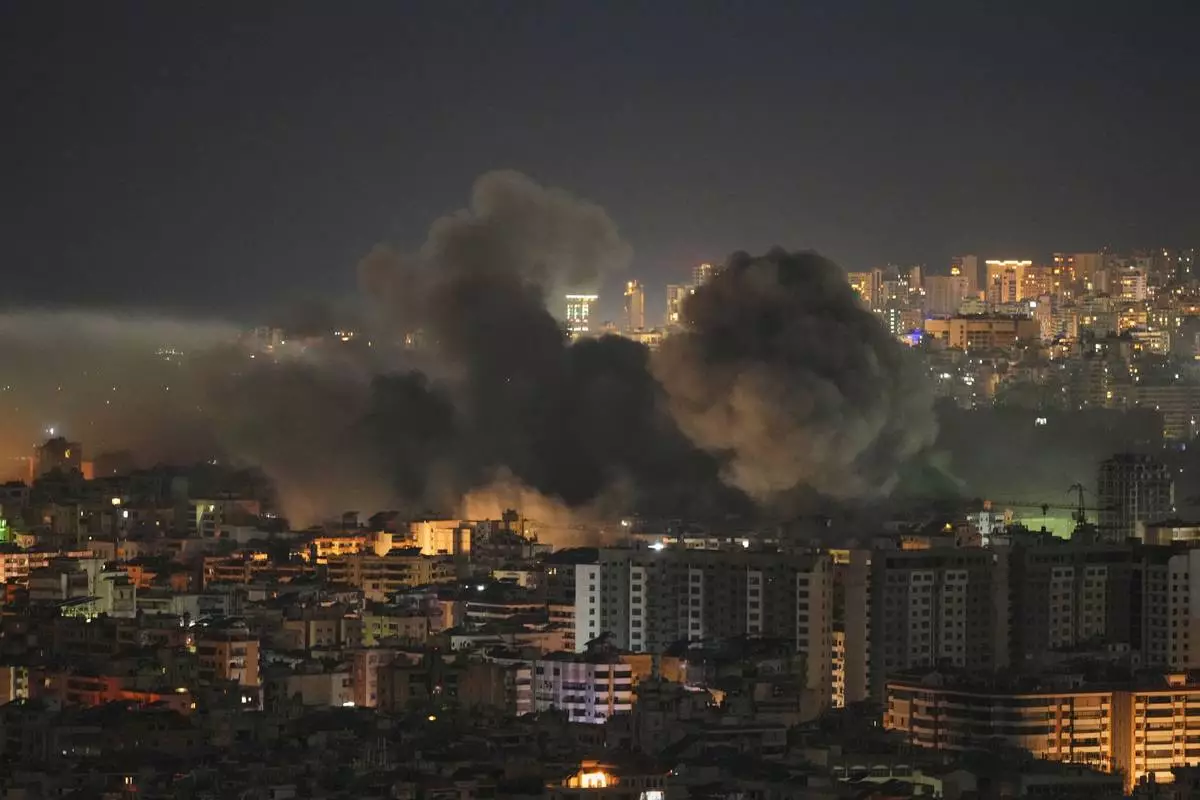
Smoke rises following an Israeli airstrike in the Dahiyeh area of Beirut, Thursday, March 5, 2026. (AP Photo/Hassan Ammar)
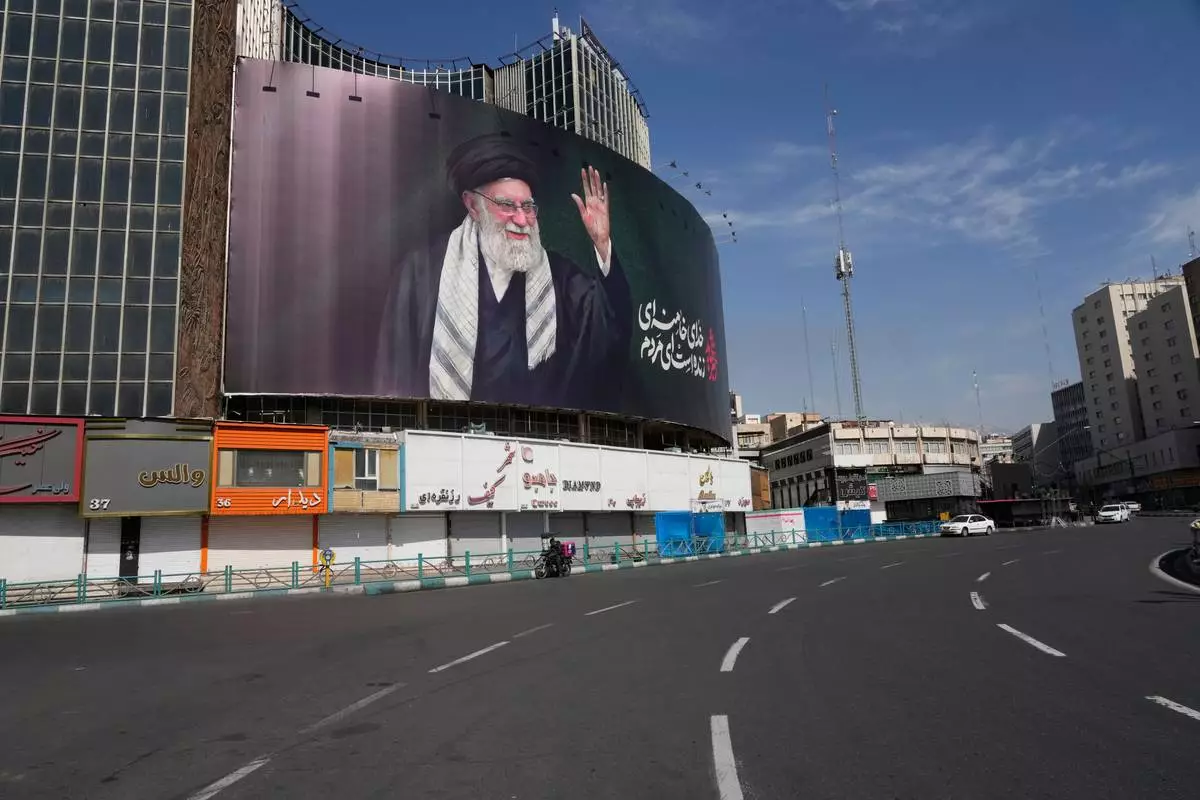
A billboard showing a portrait of the late Iranian Supreme Leader Ayatollah Ali Khamenei, who was killed in U.S.-Israeli strikes, looms over an empty square in Tehran, Iran, Thursday, March 5, 2026. (AP Photo/Vahid Salemi)
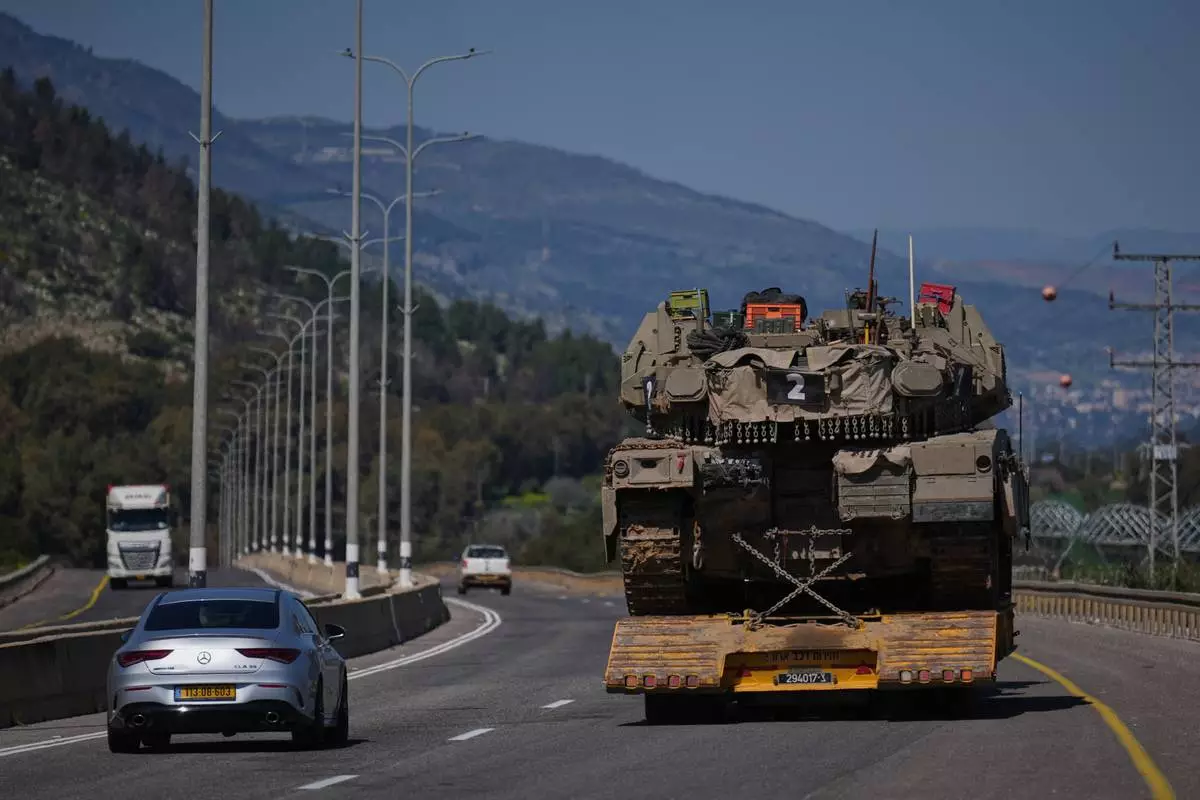
A truck carries an Israeli tank on a road in northern Israel, Thursday, March 5, 2026. (AP Photo/Ariel Schalit)
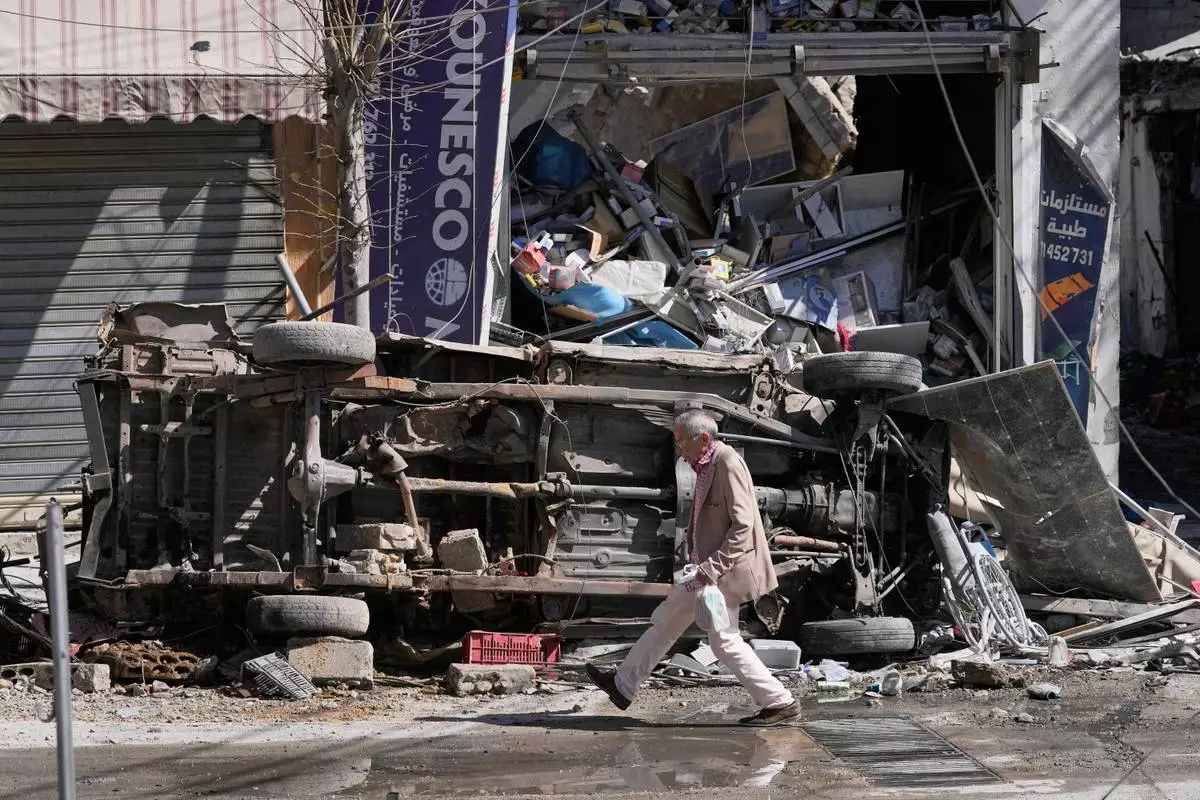
A man passes by a destroyed car and shop on a commercial street that was hit by Israeli airstrikes in Nabatiyeh town, south Lebanon, Thursday, March 5, 2026. (AP Photo/Mohammed Zaatari)
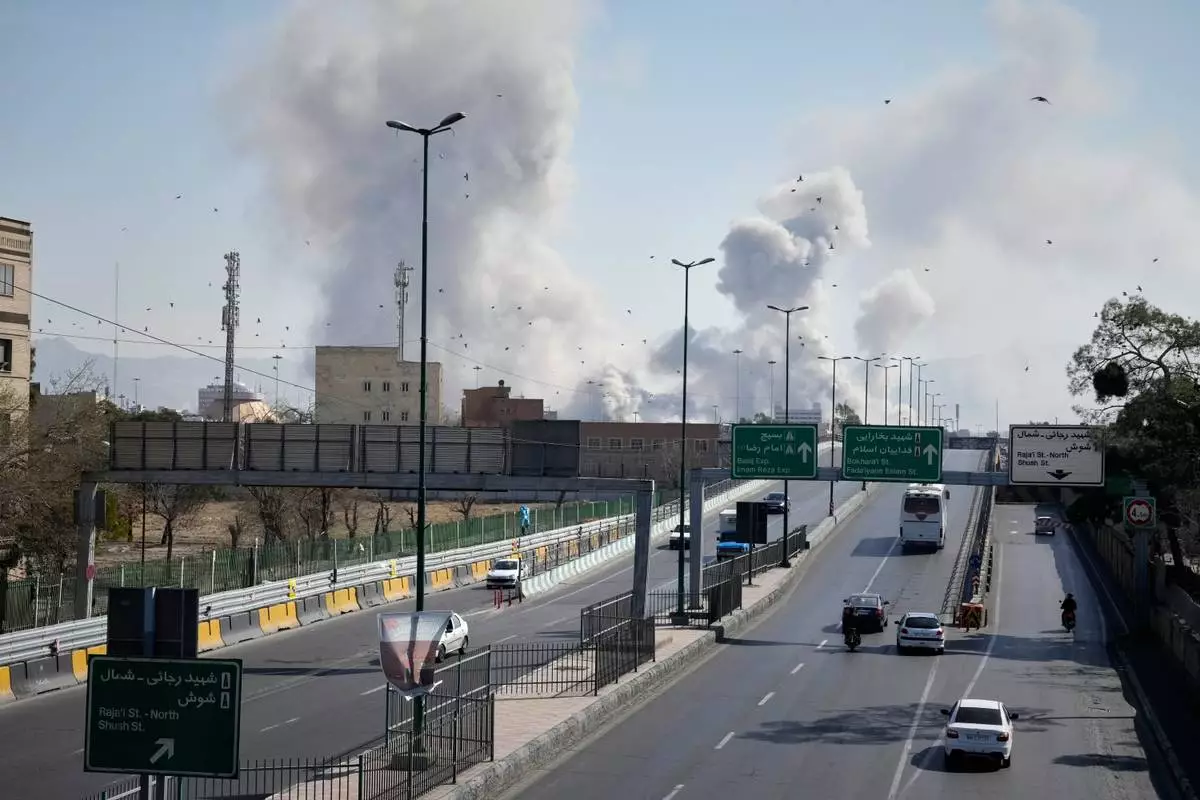
Plumes of smoke rise as strikes hit the city during the U.S.–Israeli military campaign in Tehran, Iran, Thursday, March 5, 2026. (AP Photo/Vahid Salemi)
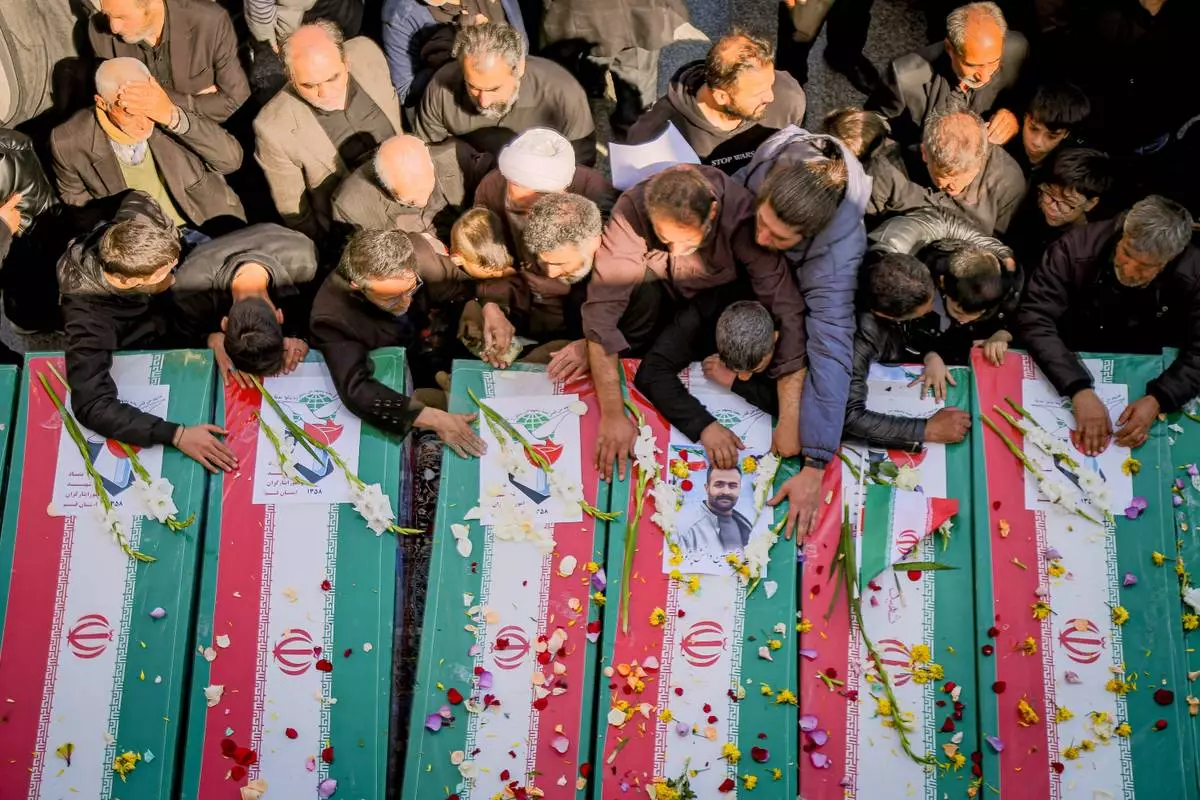
Mourners reach out to coffins during a funeral for people killed during the ongoing U.S.–Israeli military campaign in Qom, Iran, Thursday, March 5, 2026. (Seyyed Mehdi Alavi/ISNA via AP)
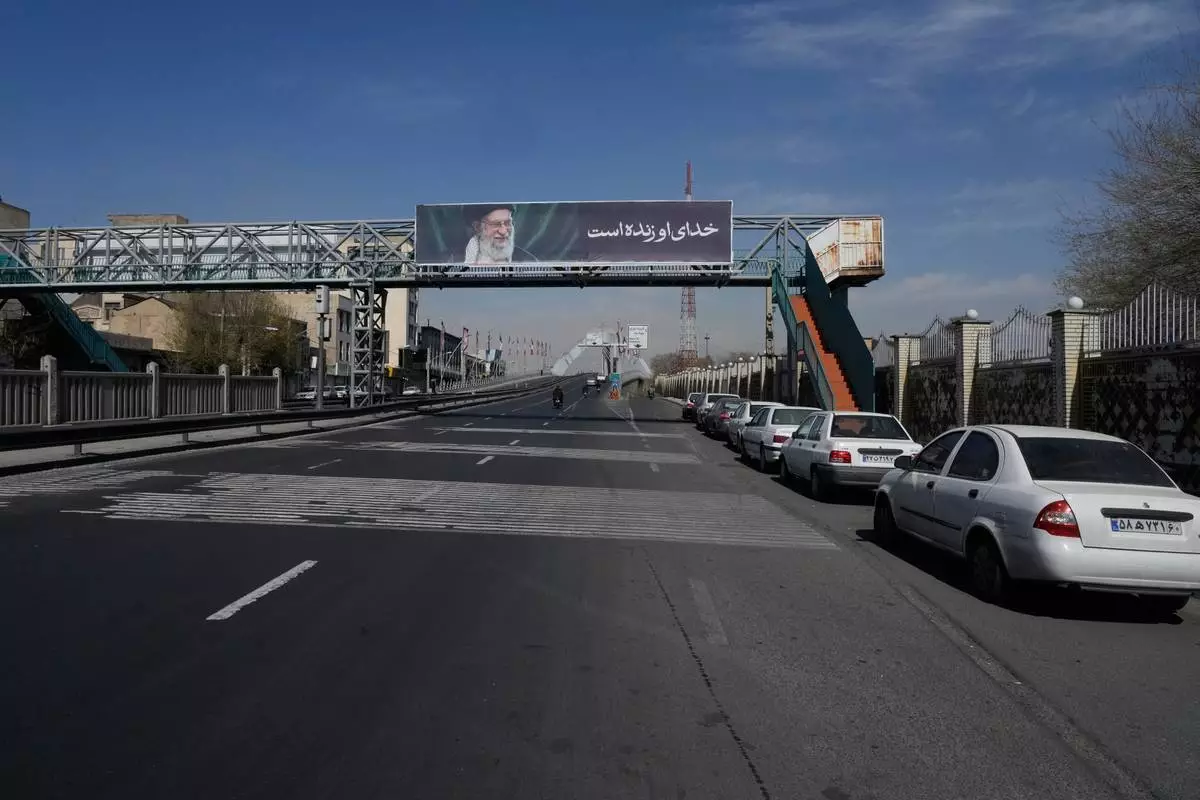
A billboard shows a portrait of the late Iranian Supreme Leader Ayatollah Ali Khamenei, who was killed during ongoing joint U.S.-Israeli military strikes, and the words in Farsi: "His God is alive," in Tehran, Iran, Thursday, March 5, 2026. (AP Photo/Vahid Salemi)
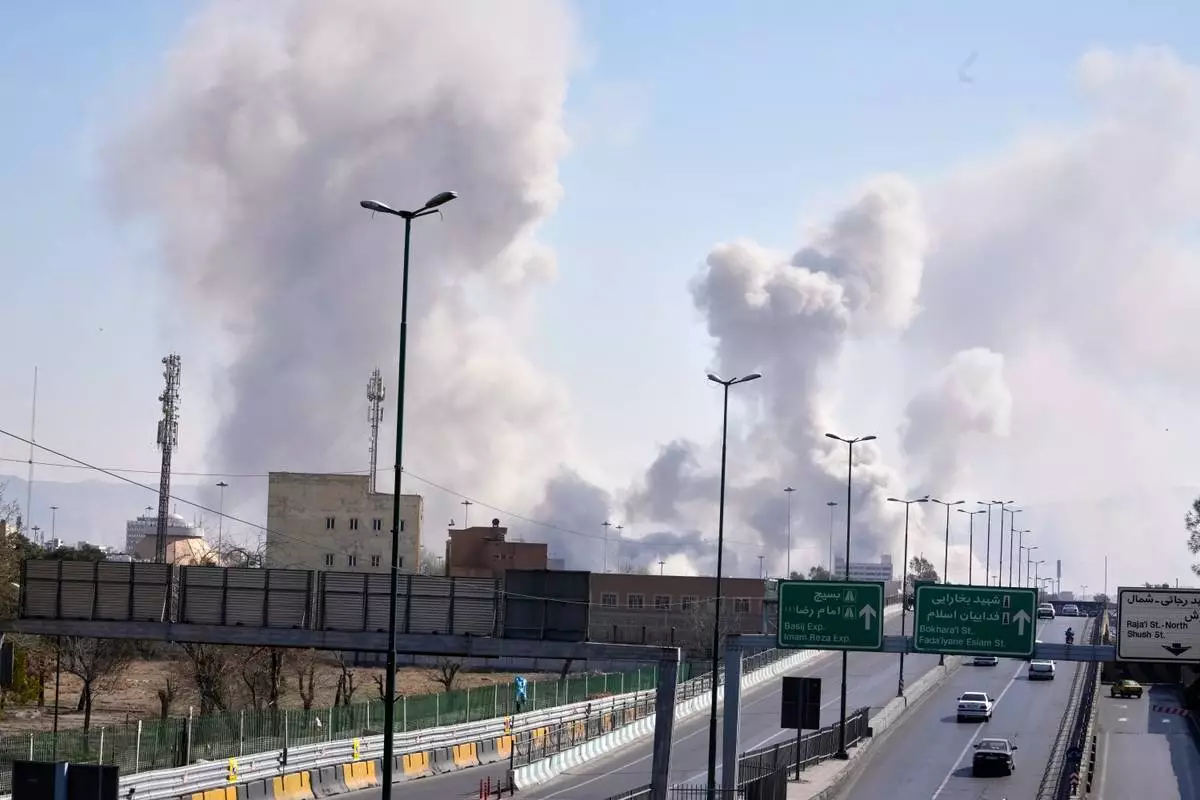
Plumes of smoke rise as strikes hit the city during the U.S.–Israeli military campaign in Tehran, Iran, Thursday, March 5, 2026. (AP Photo/Vahid Salemi)
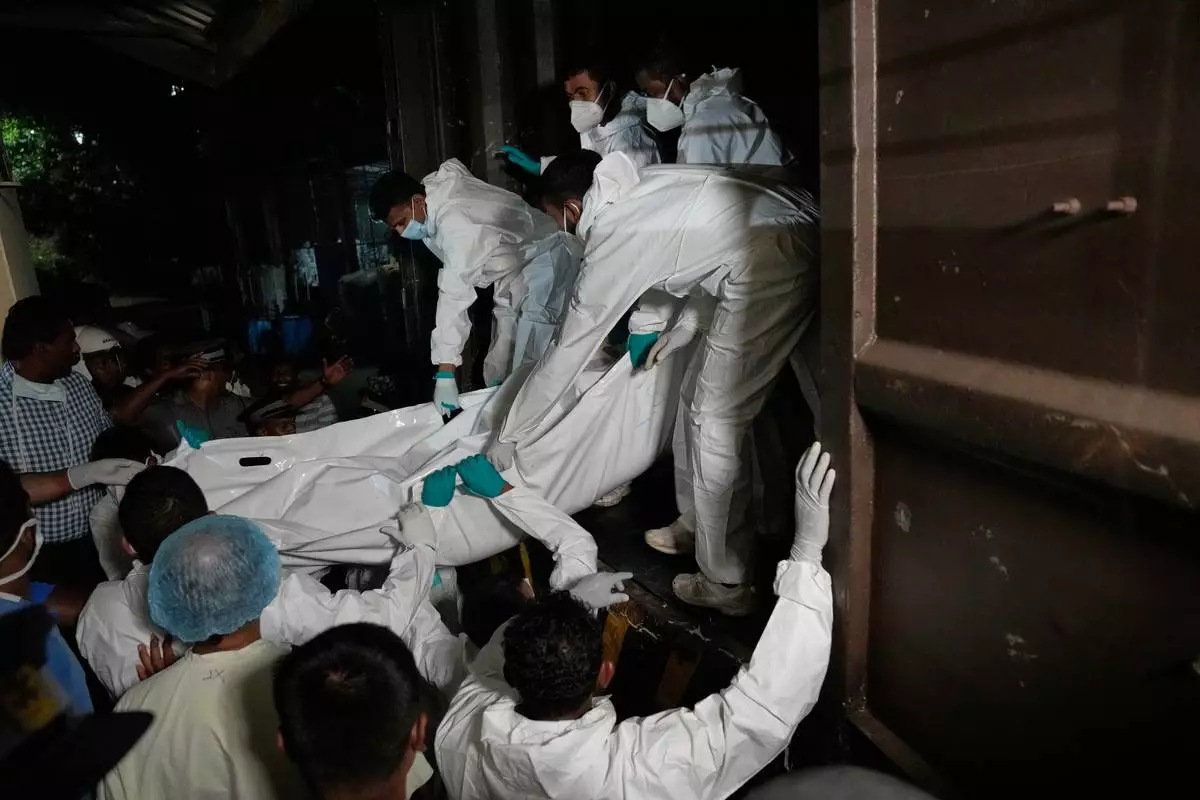
Healthcare workers unload from a vehicle the bodies of Iranian sailors who died when their IRIS Dena warship sank outside Sri Lanka's territorial waters, in Galle, Sri Lanka, Wednesday, March 4, 2026. (AP Photo/Eranga Jayawardena)
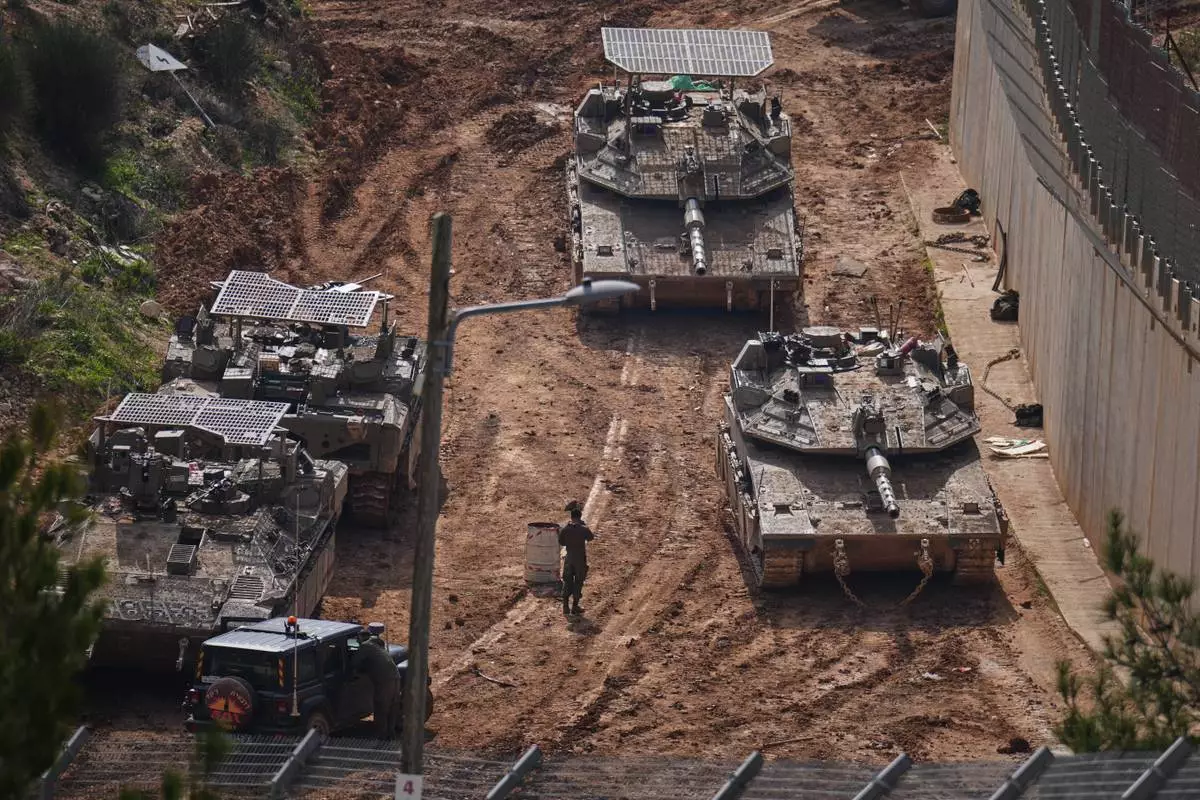
Israeli tanks maneuver near the Israel-Lebanon border, in northern Israel, Wednesday, March 4, 2026. (AP Photo/Ariel Schalit)
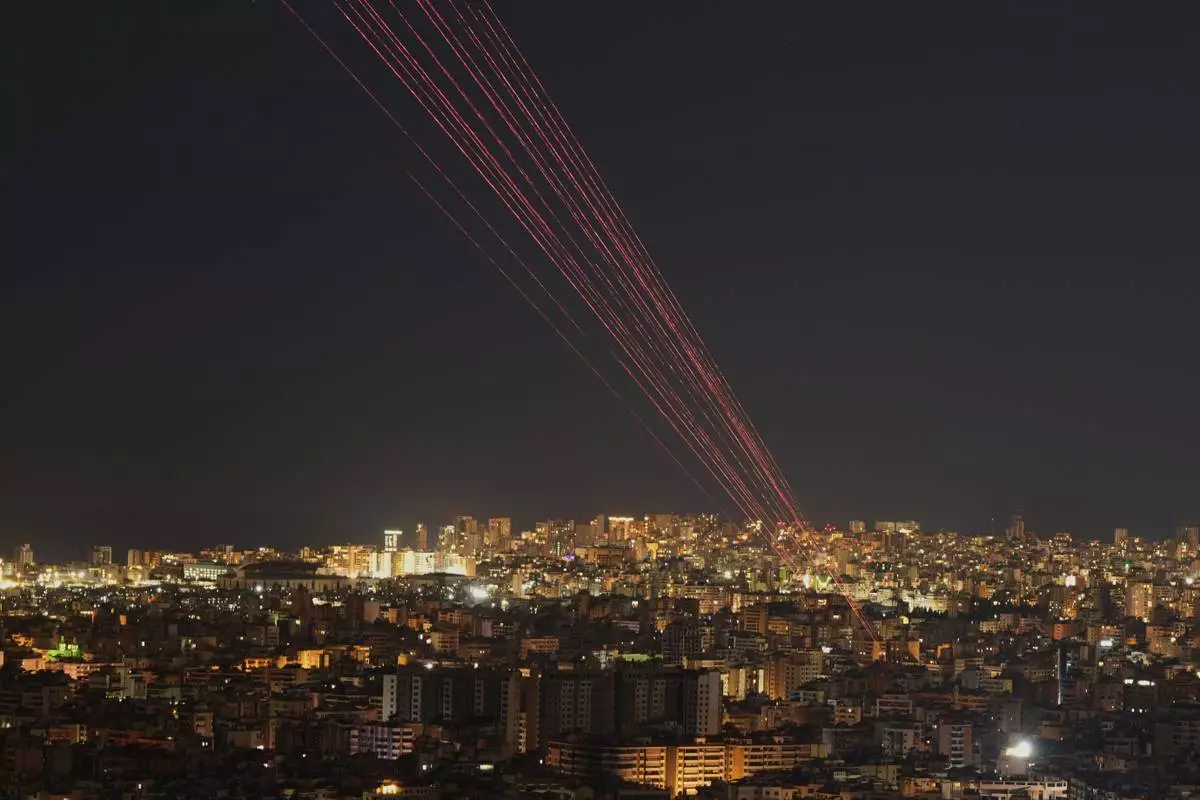
Tracer rounds light the sky as people fire live rounds into the air during a televised speech by Hezbollah leader Naim Kassem in Dahiyeh, Beirut's southern suburbs, Lebanon, Wednesday, March 4, 2026. (AP Photo/Hassan Ammar)