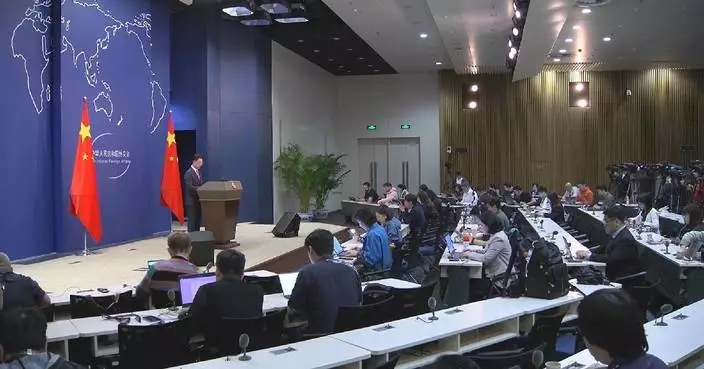
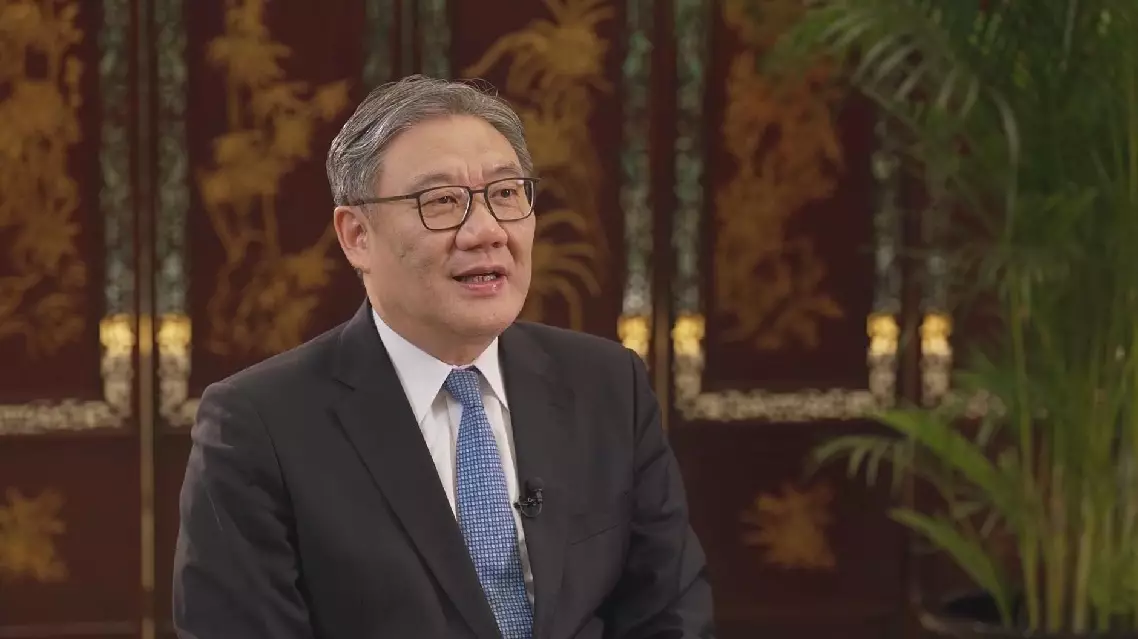
Measured by purchasing power parity, the scale of China's consumer market topped the world during the 14th Five-Year Plan period (2021-2025), Commerce Minister Wang Wentao told a press conference on Friday.
Speaking at a press conference on the sidelines of the fourth session of the 14th National People's Congress in Beijing, Wang outlined key developments in the country's consumption landscape over the past five years.
"In terms of scale, China's consumer market has remained firmly the world's second largest, with the total retail sales of consumer goods surpassing the milestones of 40 trillion yuan and 50 trillion-yuan (about 7.1 trillion U.S. dollars) successively. Meanwhile, measured by purchasing power parity, the scale of China's consumer market has emerged as the largest globally. During the 14th Five-Year Plan period, China's per capita GDP rose from 10,000 U.S. dollars to over 13,000 U.S. dollars, with the structure of China's household consumption demonstrating some new trends," said Wang.
Wang further noted that China's traditional consumption has shifted from meeting basic needs to pursuing quality, particularly green and low-carbon options.
A prime example is that the market penetration rate of new energy passenger vehicles surged from just 5.7 percent in 2020 to 53.9 percent in 2025, he said.
Wang also highlighted strong consumption during the recent Spring Festival holiday.
"During the Spring Festival holiday, the growth rate of offline consumption surpassed that of online consumption for the first time in recent years. Data from the Ministry of Commerce showed that the average daily sales of key retail and catering enterprises nationwide increased by 5.7 percent year on year. The growth rate of brick-and-mortar retail outpaced that of online retail by 3.9 percentage points," said Wang.
Looking ahead, Wang said the government will continue to implement the trade-in program for consumer goods, accelerate the cultivation of new growth drivers in service consumption, and tap into the potential of lower-tier markets to further boost consumption vitality.
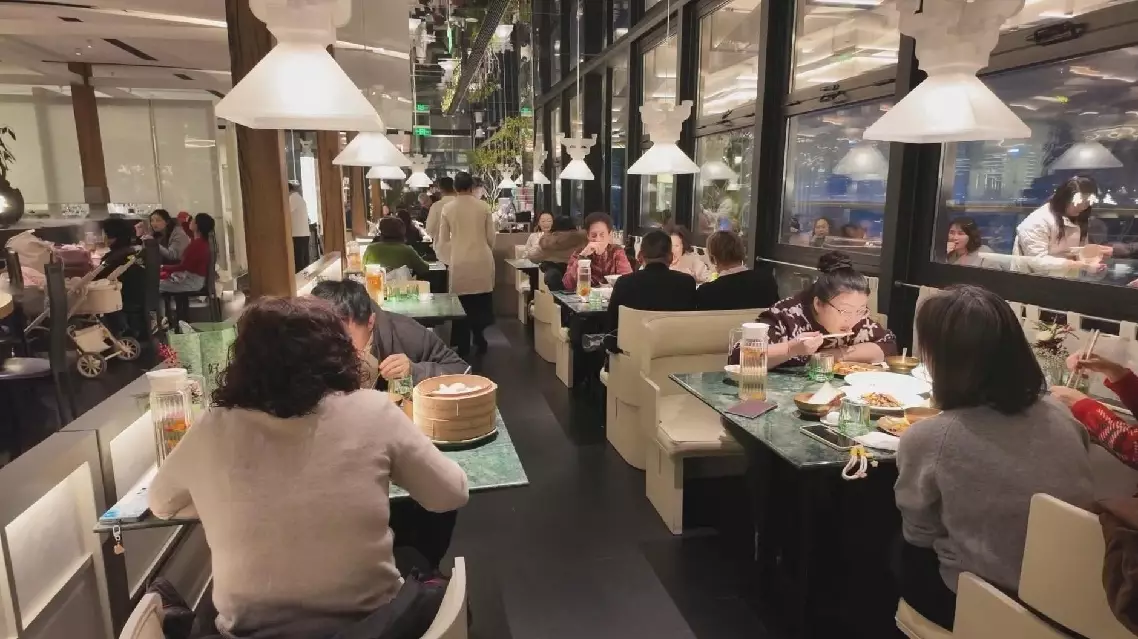
China's consumer market scale tops world measured by purchasing power parity: minister
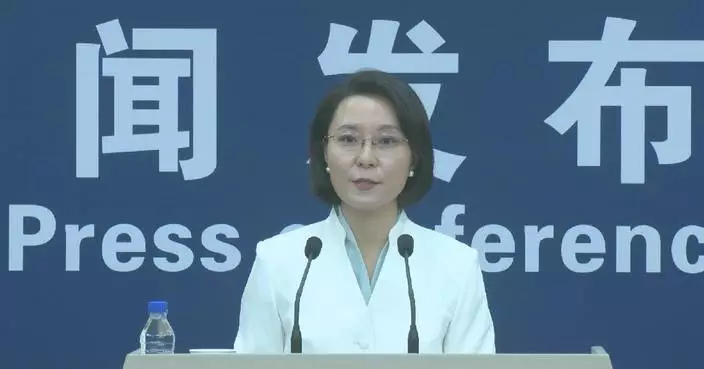
China has no need or intention to seek competitive edges in foreign trade through the depreciation of its currency, China's central bank governor said Friday.
Pan Gongsheng, governor of the People's Bank of China (PBOC), made the remarks at a press conference on the sidelines of the fourth session of the 14th National People's Congress.
"Since the beginning of this year, the Chinese yuan has appreciated against the U.S. dollar, due to China's continuously improving economy, the weaker dollar index and seasonal foreign exchange settlements by enterprises. At present, the bilateral yuan-dollar exchange rate is around the midpoint of its range in recent years," said Pan.
"China has no need or intention to obtain trade competitiveness through currency depreciation. The stance of the PBOC has always been clear. It adheres to the decisive role of the market in exchange rate formation, maintain exchange rate flexibility, strengthen expectation management, and keep the yuan generally stable at a reasonable and balanced level," he continued.
The influencing factors of exchange rates are very complex, such as geopolitics, unexpected events, monetary policies, and financial markets, Pan highlighted. Currently, there are significant changes in these factors globally, and the uncertainty is also very high. For example, he explained, the United States and Israel recently launched military strikes against Iran, which led to a substantial increase in the risk-aversion sentiment in the international financial market, as well as violent fluctuations of the U.S. dollar index and the exchange rates of the currencies of major economies.
More than 60 percent of China's import and export trade is now either settled in Chinese yuan or hedged with foreign exchange risk management tools, reducing the impact of exchange rate fluctuations on businesses, Pan noted, adding that this proportion is likely to increase this year.
During the 15th Five-Year Plan period (2026-2030), the PBOC will build a scientific and sound monetary policy system, strike a balance between short-term and long-term perspectives, between stabilizing economic growth and preventing risks, and between internal and external equilibrium, and advancing these efforts by coordinating the goals, tools, and transmission channels of monetary policies, Pan stated.
China has no need or intention to seek trade advantages via currency devaluation: central bank governor