Skip to Content Facebook Feature Image

Congress is on track for record retirements. In Illinois, that's created a candidate frenzy

News

Congress is on track for record retirements. In Illinois, that's created a candidate frenzy
News

News

Congress is on track for record retirements. In Illinois, that's created a candidate frenzy

2026-03-06 20:41 Last Updated At:20:50

CHICAGO (AP) — Political printing presses at their busiest in decades. Debate organizers limiting participation due to so many candidates. Constant political ads on television and social media.

The signs that Illinois is having one of its most frenzied primary elections in years are everywhere.

Congress is on track to see record turnover this year as lawmakers forgo reelection, and in few places is that spate of retirements felt as deeply as in Illinois. Fueled by the retirements of senior members of Congress, six House and Senate seats in the reliably Democratic state are open. That's offered a rare chance for the party to draw a new crop of candidates — all told, nearly 60 hopefuls are vying for the six seats — and for the winners to help shape the next Democratic caucus. It also has left voters with mounds of homework ahead of the March 17 primary.

“Having all these names and faces thrown at you and trying to remember which one is which, it’s disorientating,” voter James Beatley said.

He’s been represented his entire 21 years by the same Chicago-area congressman, retiring Rep. Danny Davis. Now Beatley has 13 Democrats to choose from. It’s already led to spirited discussions about political fundraising and term limits among other Democrats at the University of Illinois Chicago, a hub of political activity in the nation's third-largest city where Beatley is a student.

He remains undecided.

Illinois represents roughly one-quarter, or five of 21, of all House Democratic retirements and 10% of all House retirements in the country, according to an Associated Press analysis. By one expert's measure, it’s Illinois' largest number of open House seats going back at least 70 years.

Currently, five of Illinois’ 17 congressional seats, or approximately 29%, are open. According to University of Illinois political scientist Brian Gaines, the percentage was roughly that high twice in the 1940s, with seven out of Illinois’ then-26 seats open.

Retiring incumbents say it’s time to remake the party in an increasingly divided political environment, despite losing experience.

“Illinois is undergoing tremendous change, and you can kind of feel it,” said the 84-year-old Davis, who was first elected in 1996. “It opens up opportunities for a new generation of leadership.”

The dozens of candidates in the five open Chicago-area House races include 20-something newcomers, lawyers and two former members angling for a comeback. They’ve clashed over funding tied to Israel and disapproval of aggressive immigration enforcement that rocked cities including Chicago.

The most candidates are in the district of Rep. Jan Schakowsky, who’s retiring after 14 terms. Fifteen Democrats include Evanston Mayor Daniel Biss, digital creator Kat Abughazaleh and state lawmakers.

Maria Lordots, who's studying at UIC to be a teacher, will vote in Schakowsky's district, which includes parts of Chicago's North Side and suburbs. The 20-year-old has scoured candidate websites but been frustrated by social media.

“You see a few clips, and that sort of influences you to or away from a candidate,” she said. She’s supporting Abughazaleh, because she's unhappy with establishment Democrats.

Roberto Gomez-Valadez, a 21-year-old UIC student pursuing business, feels her pain.

He's from a suburb south of Chicago where Rep. Robin Kelly is seeking retiring Sen. Dick Durbin's seat. There are 10 Democratic candidates in Kelly's district including state lawmakers and former Rep. Jesse Jackson Jr., son of the late civil rights leader.

“It’s overwhelming,” said Gomez-Valadez, who plans to vote for state Sen. Robert Peters because he was generous with his time when they met in person. “When there’s so many candidates, overlapping opinions, it’s so much harder to stand out.”

Also running for the Senate is Rep. Raja Krishnamoorthi, leaving eight Democrats in the primary for his congressional seat, including former Rep. Melissa Bean. There's another seat left open by Rep. Jesus “Chuy” Garcia's departure, though the Democratic primary is uncontested after Garcia's political maneuvering to get his chief of staff on the ballot.

Even veterans of the political season are having trouble tracking debates.

The League of Women Voters has sponsored candidate forums for about a century. Its Illinois organizers say this year there are more than double the number of debates than usual.

“It’s usually our schtick, and it’s a thing this time around,” said Roberta Borrino from the League of Women Voters of Illinois.

So many candidates has also meant space and time limitations. Some forums are spread over two days. One group had candidates speak in batches, with one cohort waiting in a separate room while others debated.

At a recent UIC debate for Davis’ district, there was one microphone per three candidates. Candidates got 45 seconds to answer and one rebuttal over two hours.

“You have to get really good at answering questions in barely no time,” said candidate Anabel Mendoza, a 28-year-old immigrant rights organizer. “You get really good at getting to the point.”

Some households are seeing mailboxes full of congressional political ads for the first time.

Richard Lewandowski runs a family-owned printing press in Chicago that’s been in business for 50 years. To keep up with the demand for campaign mailers, employees are working seven days a week for up to 12 hours daily.

“You only see a midterm like this once every 20 years,” Lewandowski said.

Adding to the intensity are contested races for the state Legislature and state constitutional officers. Billionaire Gov. JB Pritzker, who's seeking a third term, has backed his Lt. Gov. Juliana Stratton for the Senate.

With most Democratic primary winners expected to win outright in November, the stakes are high.

Election officials say they see encouraging signs of a turnaround after 2024 saw the lowest turnout in more than 50 years. Statewide primary turnout two years ago was 19%, according to the Illinois Board of Elections.

In Chicago, more than 43,000 early ballots have been cast by mail and in person with two weeks until the primary. The number is double the roughly 20,000 in the 2022 midterm primary and roughly quadruple the 10,000 in 2018 with the same number of days until the election, according to the Chicago Board of Elections.

“When districts are competitive it does bring additional people to the polls,” board spokesman Max Bever said.

Associated Press reporter Maya Sweedler contributed from Washington.

Democratic candidates for Congress, State Sen. Laura Fine, center, speaks as Evanston Mayor Daniel Biss, left, and Kat Abughazaleh listen to her during U.S. House 9th District primary debate, in Chicago, Wednesday, Feb. 25, 2026. (AP Photo/Nam Y. Huh)
Democratic candidates for Congress, State Sen. Laura Fine, center, speaks as Evanston Mayor Daniel Biss, left, and Kat Abughazaleh listen to her during U.S. House 9th District primary debate, in Chicago, Wednesday, Feb. 25, 2026. (AP Photo/Nam Y. Huh)

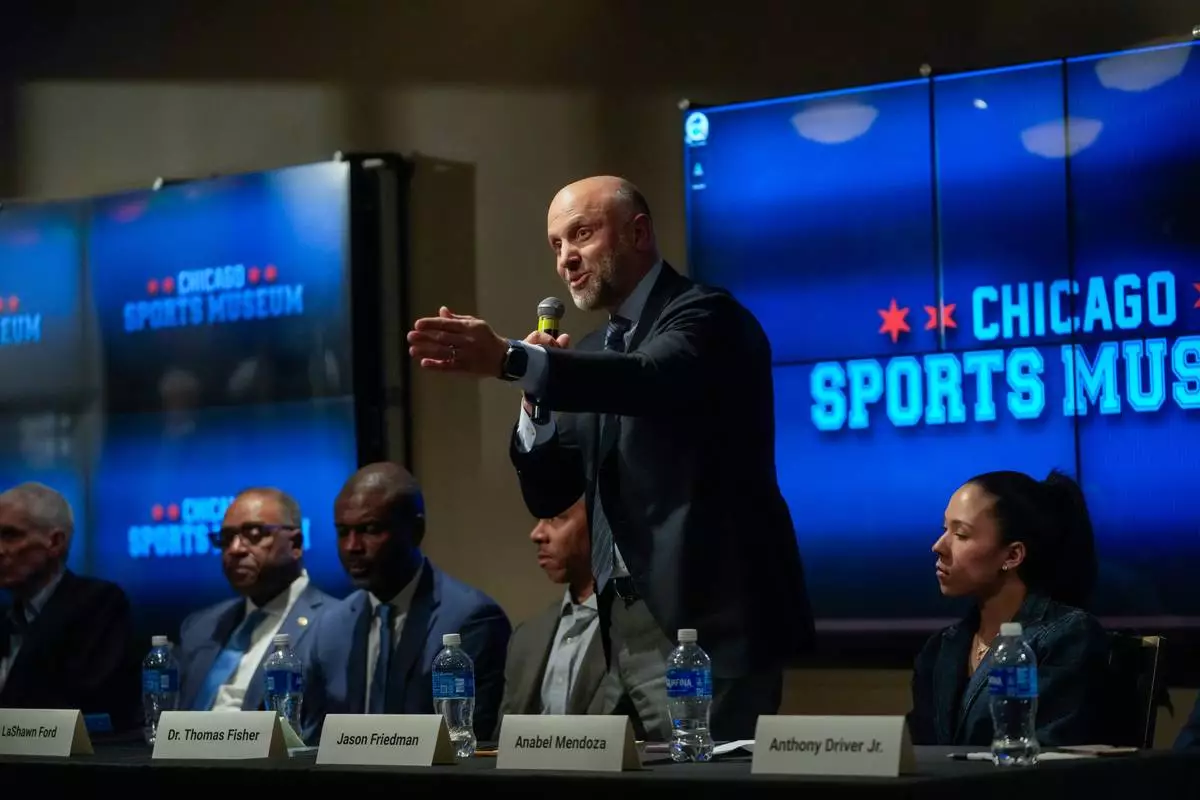
Candidate for Illinois' 7th Congressional District Jason Friedman participates in a forum Wednesday, Feb. 25, 2026, in Chicago. (AP Photo/Erin Hooley)

Candidate for Illinois' 7th Congressional District Jason Friedman participates in a forum Wednesday, Feb. 25, 2026, in Chicago. (AP Photo/Erin Hooley)
Remarks by Defense Secretary Pete Hegseth that the American press emphasizes U.S. casualties in the Iran war because it “wants to make the president look bad” are a reminder of something that has endured across many decades and conflicts: the tension and trepidation about news that reminds Americans of the human cost of war.

During his Pentagon briefing on the war on Wednesday, Hegseth bashed “fake news” while addressing the six U.S. Army reservists killed in an Iranian attack on an operations center in Kuwait.

“When a few drones get through or tragic things happen, it’s front-page news,” Hegseth said. “I get it. The press only wants to make the president look bad. But try for once to report the reality. The terms of this war will be set by us at every step.”

White House press secretary Karoline Leavitt, when questioned about the remark by CNN’s Kaitlan Collins at her own news conference later, doubled down. “You take every single thing this administration says and try to use it to make the president look bad,” Leavitt said. “That’s an objective fact.”

Memories of night after night of graphic images beamed into homes through a then-recent invention — television — were hard to shake for those who lived through the Vietnam War in the 1960s. Many believed the cumulative impact of seeing that suffering night after night turned Americans from supporters to skeptics.

Such vivid, intimate scenes of military action by Americans haven't been seen to that extent since, a legacy still in place with the war that President Donald Trump and Hegseth are waging right now on behalf of the United States.

“For many presidents, the lesson seemed to be: Don't allow the realities of war into people's living rooms if you can help it,” said Timothy Naftali, senior research scholar at Columbia University's School of International and Public Affairs.

Today, the images the public sees of warfare can resemble a video game — explosions seen lighting up the sky from afar — with the pain much more private.

Generations ago during World War II, journalists were embedded with the military, and many became household names — reporters Ernie Pyle and Walter Cronkite, photographers Robert Capa and Margaret Bourke-White. Those were the days before television, however.

Vietnam was arguably the most accessible American war for reporters. Journalists stationed in the country sent back a steady stream of death and destruction.

Cronkite, by then a CBS-TV anchorman of the most popular evening news program in the U.S., reported from Vietnam in 1968 and concluded the only rational way out was a negotiated peace. “If I’ve lost Cronkite,” President Lyndon Johnson said, “I’ve lost Middle America.”

During the Gulf War in 1991, President George H.W. Bush was angered by split-screen television images that showed the coffins of U.S. service members being returned to the United States while he, apparently unaware of the timing, was joking with reporters about another subject at the White House. The Pentagon banned coverage of these ceremonies, saying it was to protect the privacy of family members of the dead, although critics said it was to avoid showing pictures of coffins.

That ban, with a few exceptions, stayed in place until it was lifted by President Barack Obama in 2009.

Reporters who approached the battlefield in wars fought by the U.S. military in the 2000s were likely to have their movements restricted, if they were allowed at all. Jessica Donati, a reporter for The Wall Street Journal and Reuters who covered the war in Afghanistan, wrote for the Modern War Institute in 2021 that “it’s easier these days for journalists in Afghanistan to embed with the Taliban than with the U.S. military.”

The nature of this war — fought thousands of miles from the American homeland and not yet on the ground in Iran — has limited the number of American casualties and thus made them more newsworthy. Several journalists have pointed out that reporting about military casualties predates Trump's presidency. Hegseth's statement “is a warped way of looking at the world,” said CNN's Jake Tapper. “Ahistorical.”

“The news media covers fallen service members because they have made the ultimate sacrifice for their country,” he said. “It's a tribute. It's an honor.”

There has been relatively little coverage from the ground in Iran. A CNN team led by Frederik Pleitgen on Thursday became the first journalists from a U.S.-based television network to enter the country, and he spent the day racing across the country to Tehran.

Dan Lamothe, military affairs reporter for The Washington Post, posted on social media that Hegseth's comments won't stop him from continuing to cover the casualties of war — as has been done under presidents of both major political parties.

“These efforts haven’t always been perfect,” Lamothe wrote. “But they’ve highlighted sacrifices by American servicemembers and their families, and shortcomings that sometimes allowed these deaths to happen. We’ll continue to do so. It’s too important to stop.”

When Robert H. Reid was a top editor at Stars and Stripes between 2014 and 2025, he found that the newspaper's audience, primarily service members, wanted more than raw numbers when Americans were killed in military action. They wanted to know details about the lives of the people who served — where they grew up, who they left behind, what their passions were, he said.

In 10 or 20 years, many of these people will be forgotten by all but those who loved them. But for what they gave for their country, they deserve recognition for their lives, said Reid, an Associated Press international correspondent for most of his career.

“The public needs to know that war is not a video game,” Naftali said. “It affects people.”

This story has been corrected to show Obama lifted the Pentagon ban in 2009, not 2019.

David Bauder writes about the media for the AP. Follow him at http://x.com/dbauder and https://bsky.app/profile/dbauder.bsky.social.

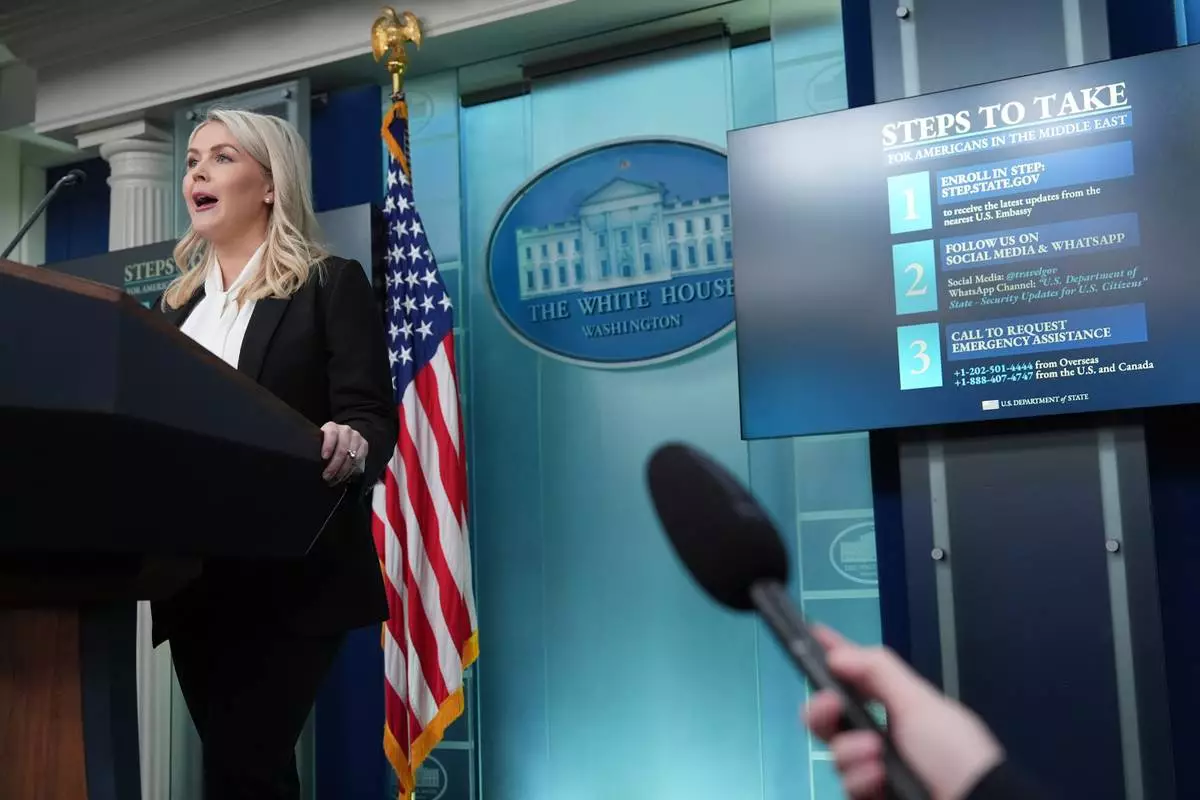
White House press secretary Karoline Leavitt speaks with reporters in the James Brady Press Briefing Room at the White House, Wednesday, March 4, 2026, in Washington. (AP Photo/Jacquelyn Martin)

White House press secretary Karoline Leavitt speaks with reporters in the James Brady Press Briefing Room at the White House, Wednesday, March 4, 2026, in Washington. (AP Photo/Jacquelyn Martin)

Defense Secretary Pete Hegseth speaks during a press briefing at the Pentagon, Wednesday, March 4, 2026, in Washington. (AP Photo/Konstantin Toropin)

Defense Secretary Pete Hegseth speaks during a press briefing at the Pentagon, Wednesday, March 4, 2026, in Washington. (AP Photo/Konstantin Toropin)

Recommended Articles