Construction on Asia's largest cylindrical floating oil-gas production, storage and offloading (FPSO) facility began in east China's coastal city of Qingdao on Friday.
The FPSO unit, independently designed by China, will be deployed in Kaiping South oilfield located in the eastern part of the South China Sea.
FPSO units are offshore facilities that integrate marine oil and gas extraction, processing, storage, and offloading functions. The new cylindrical unit being built is designed to have a full load displacement exceeding 170,000 tons, a maximum oil storage capacity of 122,000 cubic meters, and a deck outer diameter of 110 meters. Both its the hull weight and deck outer diameter rank first globally among similar facilities.
"The new facility adopts a 30-year drydock-free ultra-high standard design, and with it we have acquired the full set of technical capabilities on deepwater ultra-large cylindrical floating FPSO unit, from design to construction and installation. The new unit marks the first large-scale application of more than 10 sets of domestically built key equipment, and adds 15 intelligent functional modules. Upon completion, it will become Asia's largest cylindrical 'offshore oil and gas factory' in terms of size and weight, with the strongest oil and gas processing capacity and highest level of intelligence," said Shu Wei, general manager of the China National Offshore Oil Corp's (CNOOC) Kaiping oil field project.
Cylindrical FPSOs offer higher space utilization and oil storage efficiency compared to traditional equipment, with distinct advantages for oil and gas production in deepwater areas with harsh sea conditions.
The Kaiping South Oilfield, approximately 300 kilometers off the coast of south China's Shenzhen, has an average water depth exceeding 500 meters and proven reserves of more than 100 million tons, the largest oilfield independently discovered by China in deepwater areas.
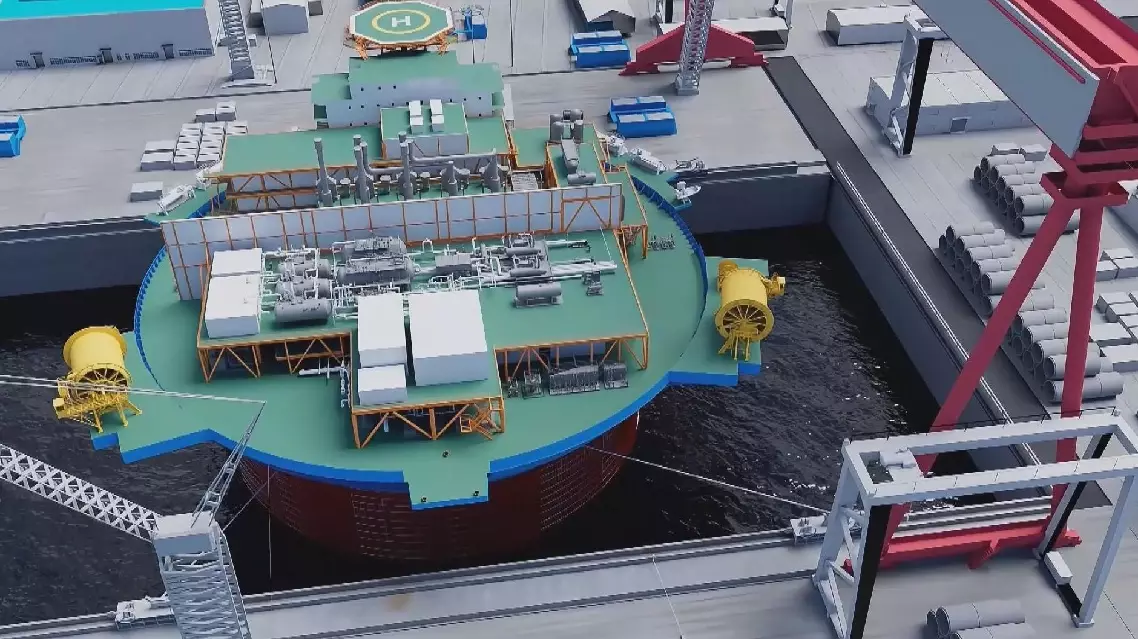
Construction begins on Asia's largest cylindrical floating oil facility in east China's Qingdao city
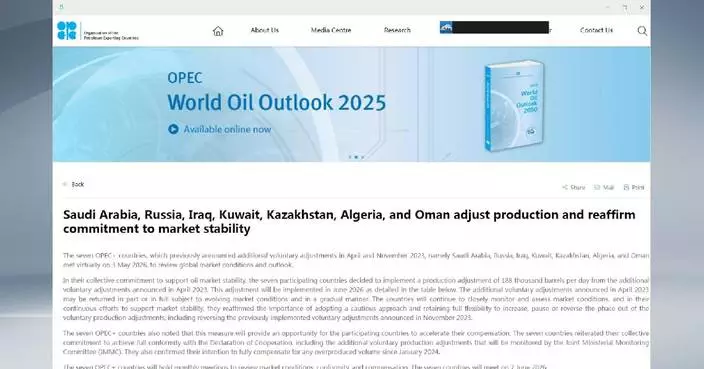
The United Arab Emirates' (UAE) exit from the Organization of the Petroleum Exporting Countries (OPEC) and the broader OPEC+ is unlikely to jolt oil markets in the short term, but sets the stage for lower prices once the Iran conflict ends and Gulf exports resume, experts said.
Effective Friday, the UAE formally withdrew from OPEC in a move poised to reshape global oil markets. The decision came amid heightened geopolitical tensions driven by the ongoing Iran conflict.
The UAE Energy Minister Suhail Al Mazrouei said the timing was chosen to cause the least market disruption. But analysts say the exit reflects the UAE's long-simmering frustrations over production quotas that no longer align with its capacity.
"It gives the UAE flexibility to move from a quota within OPEC of 3.3 million barrels a day to 5 million barrels a day in 2027. It won't radically change the pricing. It will make more energy available. So, it will take some of the price pressures off," said John Defterios, senior advisor for APCO Worldwide, a global advisory firm, and also senior fellow at the Center for Energy and Materials of the World Economic Forum.
While immediate market impact remains muted amid wartime volatility, experts anticipate meaningful shifts once regional stability returns.
"It has no impact right now, because obviously oil prices right now depend on the state of the war and whether exports can start freely through the Gulf and so on. But assume, once the war is over and a normal transit resumes, I would expect the UAE will move quickly to increase production and try to refill some of that storage that was drained. And that should mean, in general, lower prices for oil importers, for oil consumers. In the longer term, yes, I think also probably it means lower prices," said Robin Mills, CEO of Qamar Energy, a Dubai-based independent consultancy company.
The UAE's departure highlights structural tensions within OPEC+. As a low-cost producer with billions invested in upstream expansion, Abu Dhabi increasingly chafed against collective quotas.
However, other members, including Iraq and Kazakhstan, also sought higher production allowances.
"This pressure has been building up for some time. But Saudi Arabia was also in a difficult position. If it agreed to grant higher production levels to the UAE, then it would have to grant them to Iraq as well. Kazakhstan wanted more [allowance as well]. Everybody wants special treatment," said Mills.
Strategically, the move aligns with the UAE's broader vision to diversify its economy.
"They made this announcement ahead of a very important forum, Make It In the Emirates, which displays what the UAE is doing in terms of diversification outside of oil and gas. So, they want that revenue from oil and gas -- the extra 50 billion dollars a year to go into greater diversification. It's advanced manufacturing, it's artificial intelligence, it's the next wave of financial services, and it is trade," said Defterios.
The exit also signals a broader recalibration of legacy energy institutions in a world confronting new climate imperatives, geopolitical fragmentation, and energy transition pressures.
"I do think it shows definitely a world in which there's a new energy reality, there's a new climate reality, there's a new geopolitical reality. And these legacy institutions have to adapt. And if they don't, then of course, their members will either leave or at least won't take them seriously," said Mills.
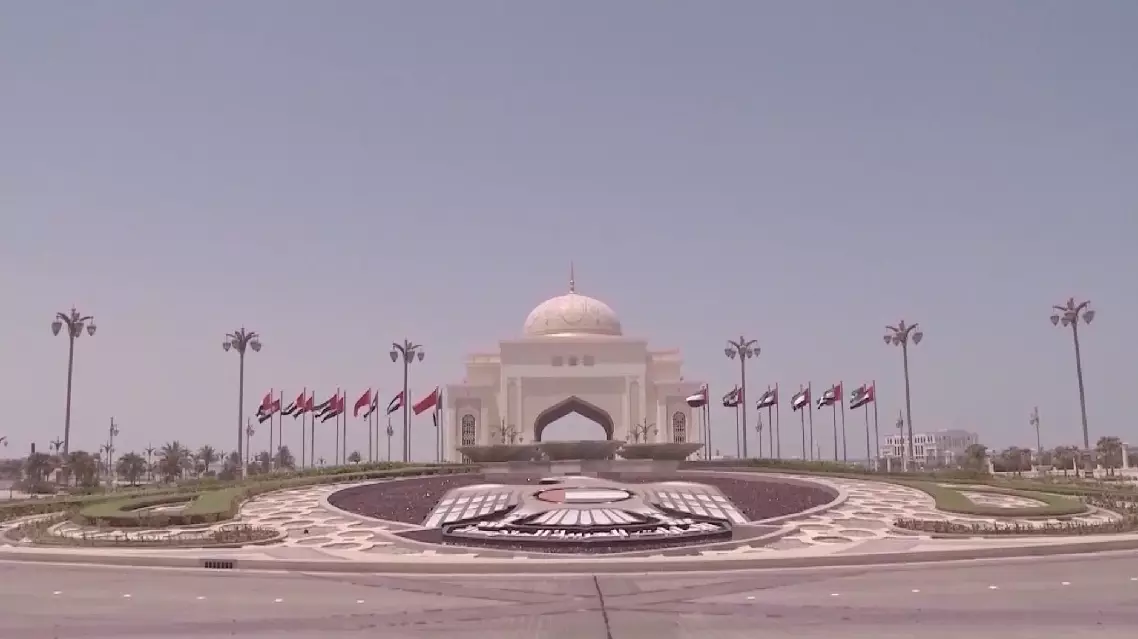
UAE's OPEC exit long expected, may ease oil prices after Iran war ends: experts