Russian President Vladimir Putin held a phone conversation with Iranian President Masoud Pezeshkian on Friday, urging an immediate end to hostilities in the Middle East, the Kremlin said.
During the phone call, Putin expressed condolences over the killing of Iran's Supreme Leader Ayatollah Ali Khamenei, members of his family, and representatives of the country's military and political leadership, as well as the numerous civilian casualties, as a result of the U.S.-Israeli armed aggression against Iran.
Putin reaffirmed Russia's principled position that hostilities should cease immediately and that the use of force to resolve issues on Iran and across the Middle East must be abandoned, calling for a swift return to political and diplomatic efforts to resolve the conflict, according to the Kremlin.
Putin also noted that he has been in constant contact with the leaders of the Gulf Cooperation Council countries regarding the situation.
For his part, Pezeshkian thanked Russia for its solidarity with the Iranian people in defending the sovereignty and independence of their homeland and briefed Putin in detail on the developments in the current phase of the conflict.
The two sides agreed to continue contacts through various channels, the Kremlin said.
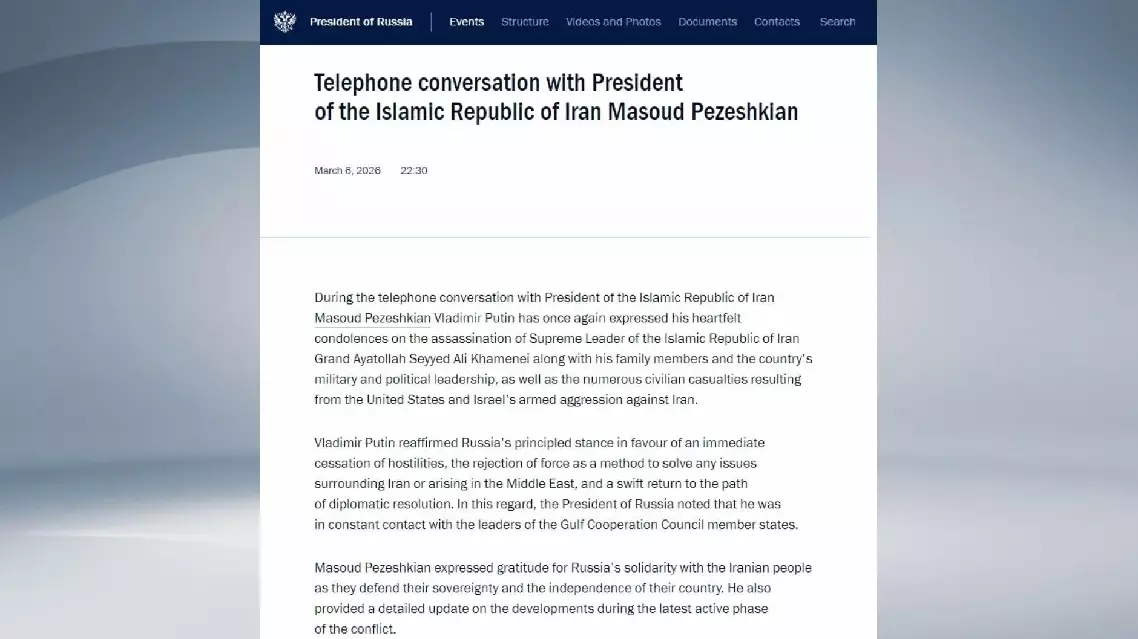
Putin urges end to Middle East hostilities in phone call with Iranian president
Nicaragua's co-foreign minister Valdrack Jaentschke has warned that militarism must never be allowed to rise again, as Japan's recent moves to lift its arms export ban and revise the pacifist Constitution continue to draw international concern.
This year marks the 80th anniversary of the opening of the Tokyo Trials, where Japan's Class-A war criminals from World War II were brought to justice.
In an interview with China Global Television Network (CGTN), Valdrack Jaentschke voiced his concern that today's world order is being undermined by interventionism and other challenges.
"It is necessary for us to remember that after the end of World War II, countries worked hard to build a new international order based on international law. However, regrettably, more than 80 years later, we are seeing that this once explored and attempted order is being challenged by interventionism, a confrontational mindset, and tendencies like 'might makes right.' These are precisely the conditions that gave rise to fascism and militarism in the past, which ultimately led to the tragedy of World War II," he said.
He said the international community has a responsibility to pursue a new international order -- one fundamentally grounded in peace.
"Looking back at the history more than eight decades ago and comparing it with today's reality, it is our responsibility to recognize that the world should, and must, build a new international order that is more just, fairer, rooted in international law, based on a logic of mutual benefit and shared success, and fundamentally grounded in peace," said the minister.
"Today, as we revisit the Tokyo Trials, it is meant to remind the world that such a tragedy must never be repeated -- and that we must do everything in our power to prevent it from happening again. We must stop that dark world -- born from militarism, interventionism, and fascism -- from ever returning," he said.
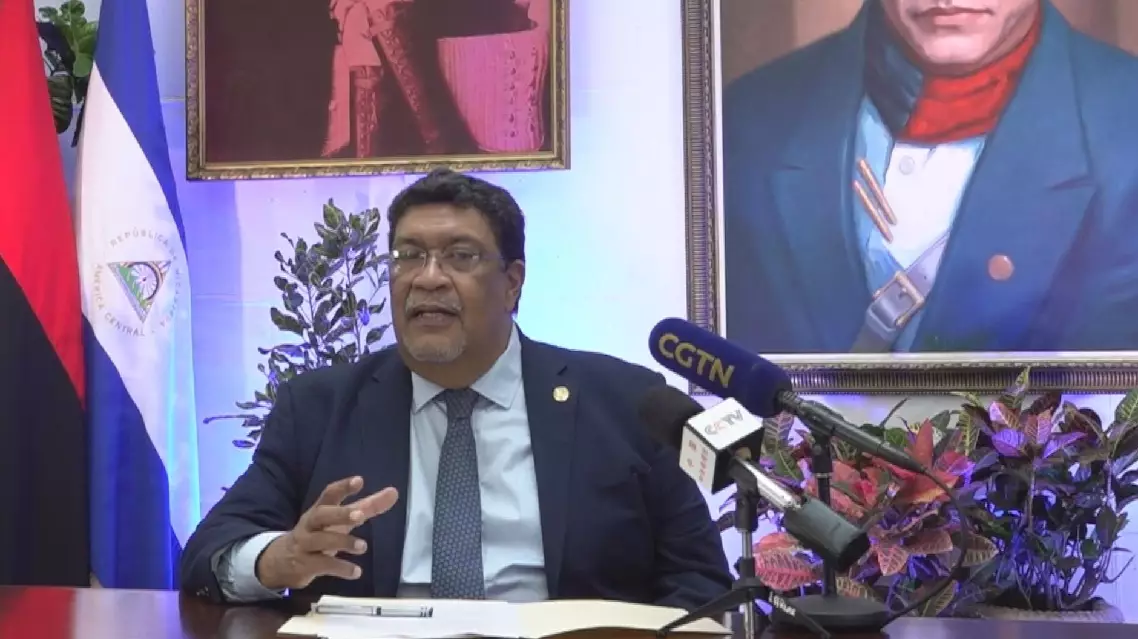
Nicaraguan FM warns of militarism revival