Skip to Content Facebook Feature Image

China to subsidize vocational training for over 10 million people in 2026

China

China

China

China to subsidize vocational training for over 10 million people in 2026

2026-03-07 13:32 Last Updated At:19:57

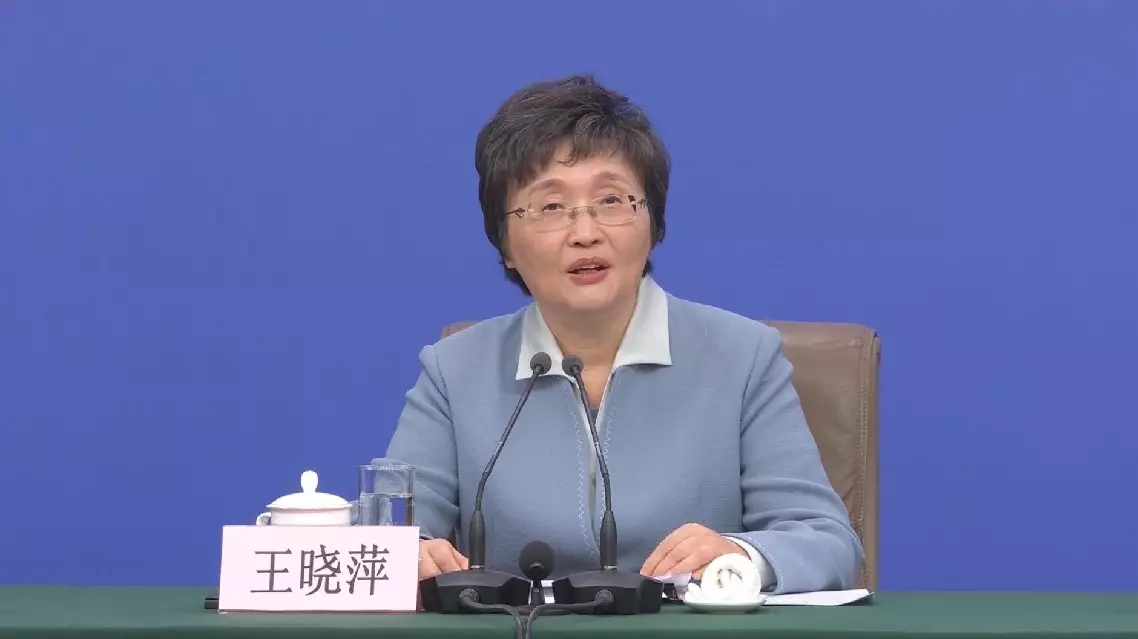
China will subsidize vocational training for more than 10 million people this year and build a skills-training system that runs through people's entire careers, an official said Saturday.

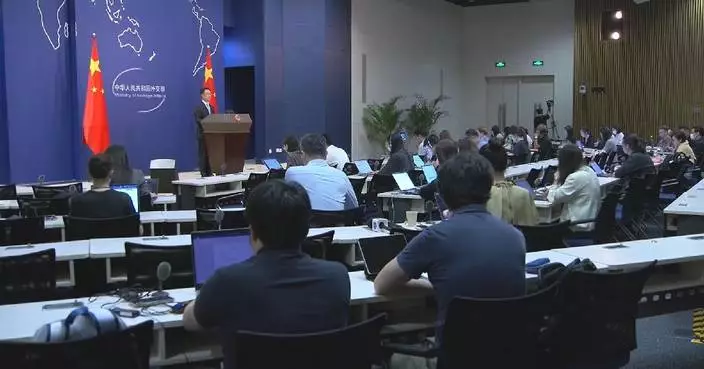
Wang Xiaoping, Minister of Human Resources and Social Security, outlined the country's vocational training plan at a press conference on the sidelines of the annual session of the National People's Congress.

"At present, technological changes are advancing at an unprecedented pace, and skill renewal is accelerating. Learning has become an inevitable requirement of this era. We will build a lifelong vocational skills training system that covers the entire career process, tailored to the individualized needs of workers at different stages, striving to create a condition where everyone can study anywhere and anytime. We will carry out preparatory training and general skills training for newly emerging labor forces, apprenticeship training and on-the-job training for enterprise employees, and new skills training and entrepreneurship training for employees in job transfers," Wang said.

"This year, we will carry out large-scale vocational skills improvement training in depth, providing subsidized training for over 10 million people. It will focus on organizing specialized training for the low-altitude economy, new energy vehicles, artificial intelligence technology, and health care services, to better align with industries and serve employment," the minister said.

The 48th WorldSkills Competition is scheduled to be held in Shanghai from September 22 to 27 this year.

Noting that the WorldSkills Competition is the world's largest and most influential skills event, the minister said it has set the direction and trend for vocational skills development and played a significant role in promoting economic growth, technological progress, and talent cultivation since its inception in 1950.

"We will earnestly implement the important instructions of General Secretary Xi Jinping to ‘present a WorldSkills Competition that is innovative and widely influential to the world’. With the theme of ‘Skills Change the World and Illuminate the Future’, we will present a splendid and successful event with high standards and quality. At the same time, taking the opportunity of holding the competition, we will pay more attention to investing in people and inspire more young people to illuminate their bright future with their skills," Wang said.
China to subsidize vocational training for over 10 million people in 2026

China to subsidize vocational training for over 10 million people in 2026
China saw fruitful scientific and technological innovation achievements during the 14th Five-Year Plan period (2020-2025) for national socioeconomic development, effectively supporting the country's high-quality development, said Wang Zhenzhang, former Chinese Minister of Science and Technology, on Saturday.

Wang, also a member of the 14th National Committee of the Chinese People's Political Consultative Conference (CPPCC), China's top political advisory body, made the statement at a group interview on the sidelines of the ongoing 4th annual session of the 14th CPPCC National Committee in Beijing, where he elaborated on China's sci-tech innovation achievements in the 2021-2025 period.

"During the 14th Five-Year Plan period, China's sci-tech innovation yielded a large number of outstanding achievements. For example, in that period of time, China's high-speed train met the target of running at a maximum speed of 450 kilometers per hour, making people's travel faster and more convenient. Additionally, in the field of artificial intelligence (AI), embodied intelligence and multimodal AI assistants, there have been many highlights," Wang said.

In the field of quantum technology, China has achieved a series of new breakthroughs in quantum communication, quantum computing, and quantum measurement, while previous sci-tech innovations in the sector of new energy have been transformed into emerging and leading industries, he said.

During 2021-2025 period, the number of researchers in China kept expanding, with improving professional capabilities. In addition to effectively addressing scientific questions and overcoming technical challenges, they also succeeding in precisely grasping the direction and priorities of the sci-tech frontiers, he said.

He specifically outlined the role that China's sci-tech enterprises played in this course.

"During the 14th Five-Year Plan period, China's sci-tech enterprises strengthened their capabilities in technological innovation and results application. In that period of time, they also emerged as a powerful new force in basic research," Wang said.

In those five years, China also made significant progress in R&D investment and improvement of the research ecosystem. This includes substantial advancements in policies and laws related to this sector, as well social consensus on building sci-tech strength, he said.

"In the 15th Five-Year Plan period (2026-2030), or in a future period of time, achieving greater self-reliance and strength in science and technology remains a top priority in our efforts for realizing [Chinese] modernization. At the same time, we need to enhance opening up and cooperation in science and technology, seeking high-quality development through science and technology, generate new quality productive forces through science and technology, and pursue sustainable development and competitiveness through technological achievements," Wang said.

The 4th annual session of the 14th CPPCC National Committee opened in Beijing on Wednesday and will run through March 11.

China sees fruitful sci-tech innovation achievements in 2021-2025: CPPCC member

China sees fruitful sci-tech innovation achievements in 2021-2025: CPPCC member

Recommended Articles