Greater efforts need to be made by China's aerospace industry to keep improving the country's rocket manufacturing capabilities, as demand has surged in recent years, a national political advisor and space engineer said on Saturday.
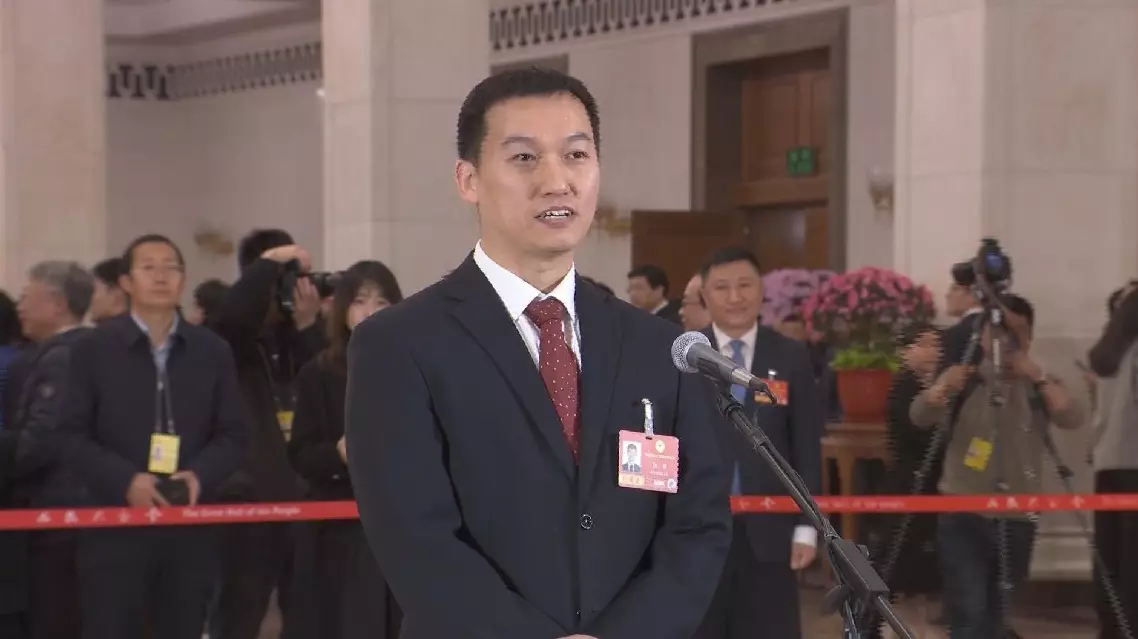
Liu Zheng, a member of the 14th National Committee of the Chinese People's Political Consultative Conference (CPPCC) and process engineer at the China Academy of Launch Vehicle Technology (CALT) under the China Aerospace Science and Technology Corporation, shared information on China's latest progress in rocket testing and his thoughts on future development at a group interview on the sidelines of the ongoing fourth session of the 14th CPPCC National Committee in Beijing.
"On February 11, the Long March-10 reusable carrier rocket developed by our company successfully underwent a joint flight test carrying the Mengzhou crewed spacecraft. This marks important progress in China's crewed lunar exploration program," he told the press.
"I did the math - it took 37 years from China's first rocket launch to the 100th launch, while the most recent 100 launches took just over one year," he said, highlighting the dramatic acceleration in China's rocket launch frequency.
He noted that with this growing rocket launch demand, the aerospace industry needs to make greater efforts to keep improving China's manufacturing capabilities to produce rockets faster and build better rockets.
The engineer said his team is responsible for developing processing methods based on design blueprints and machining raw materials into rocket components.
"We have achieved integration of processing technology and equipment, realized synchronized design, collaborative development and deeper integration, formed a innovation-friendly ecosystem driven by demand and joint iteration, and achieved self-reliance," Liu said.
The fourth session of the 14th CPPCC National Committee is part of this year's annual political "two sessions", with the other being the fourth session of the 14th NPC. The "two sessions" of this year kicked off in Beijing on Thursday and Wednesday, respectively. Both bodies serve a five-year term and hold a plenary session each year, generally in March.
Rocket manufacturing capability should further improve to meet China's growing aerospace demands: CPPCC member