The joint China-Chile expedition to the Atacama Trench concluded on Thursday after more than 40 days in the Pacific Ocean, with researchers making significant discoveries in such fields as deep-sea biodiversity, geological structures, and marine ecosystem studies.
The closing reception of the expedition was held on Thursday, onboard China's scientific research ship Tansuo-1 at the port of Valparaiso, Chile.
The expedition was jointly conducted by the Institute of Deep-sea Science and Engineering under the Chinese Academy of Sciences and the Millennium Institute of Oceanography at the University of Concepcion in Chile. Researchers from both countries completed multiple missions, including studies of biodiversity, chemosynthetic ecosystems, and mechanisms of plate subduction in the rarely explored Atacama Trench, the longest undersea trench in the world.
During the mission, the China-developed deep-sea manned submersible Fendouzhe completed 36 dives and collected over 3,500 biological samples.
"The Chinese team's operational procedures and working methods are exceptionally well-established. They possess extensive experience in this field. The technologies they employ are also beyond our current capabilities. Therefore, it's a completely new experience for us to be able to utilize such a high-caliber manned submersible and research vessel," said Valeria Cortes, Chilean geophysicist.
Located under the waters of the southeastern Pacific Ocean, the Atacama Trench, with a maximum depth of over 8,000 meters, serves as a crucial region for studying deep-sea life and geological processes.
One of the most significant findings of this expedition was the first observation of the deepest cold seep ecosystem in the Southern Hemisphere, providing further compelling evidence for the hypothesis proposed by Chinese scientists that there is a global network of chemosynthetic life corridors.
Researchers also discovered, for the first time, at least three distinct species of deep-sea lionfish within the same trench, reflecting the region's high fish biodiversity.
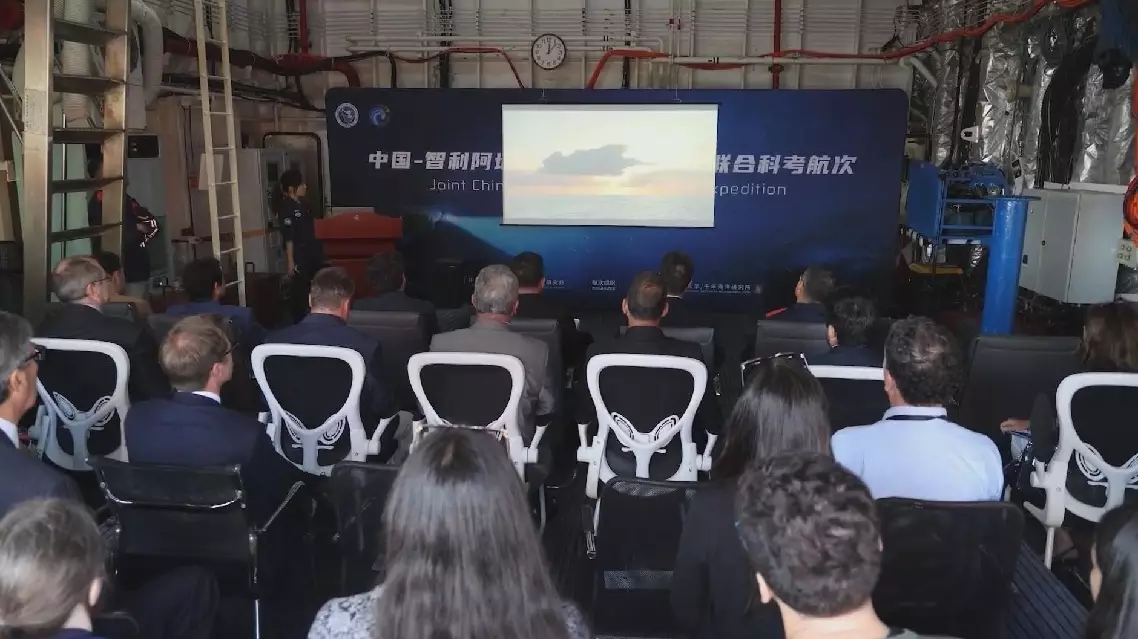
Joint China-Chile expedition to Atacama Trench concludes with significant discoveries
Li Yuhua, a farmer-turned forest ranger from a mountainous village in Dulongjiang Town, southwest China's Yunnan Province, has spent nine years protecting the forests in her hometown while helping local people increasing their incomes.
Li's family was once a registered impoverished household, relying mainly on corn farming for living. Things began to change for her family in 2016 when China launched a policy allowing registered impoverished population to work as ecological forest rangers, and Li became one of the first ecological forest rangers in the town.
"When I first began to work as a forest ranger, it was hard for me even to climb mountains, let alone climb rocks and cross rivers. But I told myself that since the country gave me this opportunity, I must do it well. I worked hard to improve my physical fitness and learn new skills, always actively taking the missions of patrolling mountains," said Li.
As Li often wears a colorful, vibrantly striped "Dulong blanket," a traditional clothing of the Dulong ethnic group, the villagers call her the "rainbow ranger."
"I think the name 'Rainbow Ranger' is beautiful. It makes me feel like a rainbow for us women of Dulong ethnic group guarding our homeland," Li said.
Dulong is a mountain-dwelling ethnic group in southwest China. It is one of the least populous of China's 56 ethnic groups, and the people were known for "direct transition" from primitive life to the modern socialist society at the founding of the People's Republic of China in 1949.
Most Dulong people live in Dulongjiang Town, where an inhospitable mountainous terrain used to thwart the place's development for decades. The town remained to be one of the poorest areas in Yunnan Province and even in the entire country. Thanks to government inputs and the development of industries with local features, the Dulong people have been experiencing remarkable life changes. In 2018, the Dulong ethnic group shook off poverty as a whole.
Beyond safeguarding forests, Li took the lead in developing non-timber forest-based economy in the town, guiding local residents to grow plants like Chinese black cardamom and wild-simulated lingzhi mushrooms as well as raising cattle and bees.
In 2025, the total output value of the town's non-timber forest-based economy reached nearly 30 million yuan (around 4.3 million U.S. dollars), with the annual average income of 43 households increasing by more than 20,000 yuan (around 2,900 U.S. dollars) each.
Li also established a cooperative for Dulong blanket making, attracting more than 170 women to learn traditional weaving techniques. They have developed 12 types of cultural and creative products, including shawls and scarves, and sold them worldwide through livestreaming, generating wealth for themselves.
"In the past, we only wove blankets for our own use. Now she teaches us to make the cultural and creative products and sell them. Last year, I earned more than 4,000 yuan (around 580 U.S. dollars) from weaving. I spent the money on my children's school fees and new appliances for my house," said Mu Jianying, member of the cooperative.
Li's dedication to both forestry and rural revitalization has earned her widespread recognition. In 2024, she was honored as model of ethnic solidarity and progress and received the title certificate from President Xi Jinping. She was also awarded the title of National March 8 Red-Banner Pacesetter, the highest honor presented by the All-China Women's Federation to the country's outstanding women, ahead of the International Women's Day observed on March 8.
Li said her achievements are the result of collective efforts.
"I often think that one person's strength is very limited, but the strength of a group is great. There are 195 ecological forest rangers like me protecting this land in the Dulongjiang Grand Canyon," she said.
As a female forest ranger, Li shared a message for women ahead of the International Women's Day.
"To mark the International Women's Day, I want to say to all my sisters: No matter what position we are in, as long as we are willing to endure hardship and work hard, we will surely weave our own rainbow," she said.
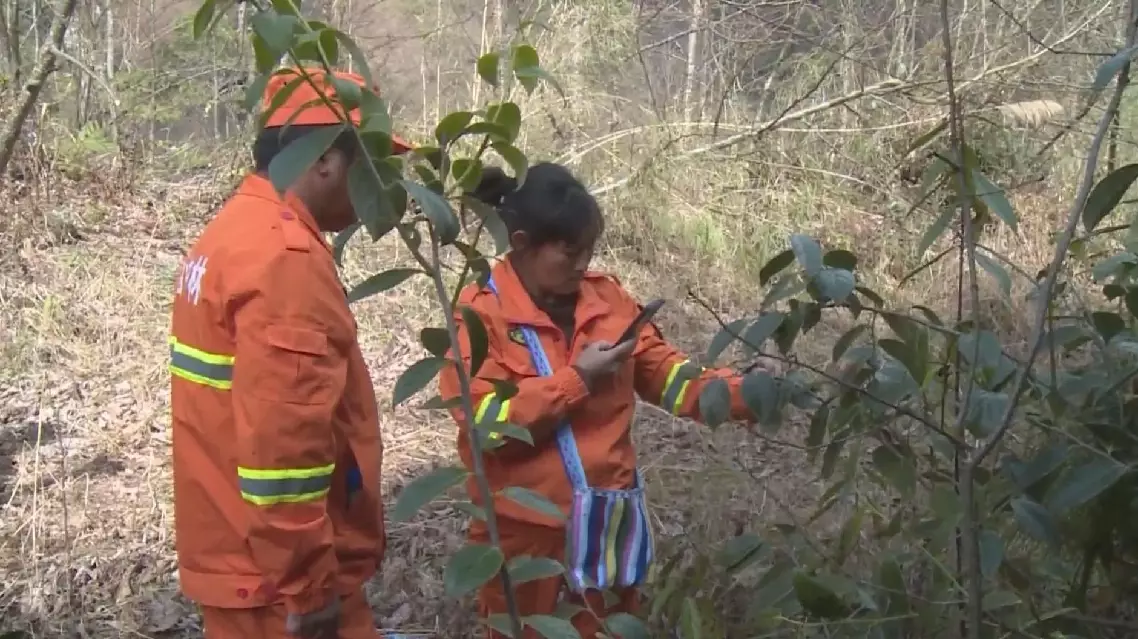
Forest ranger dedicated to guarding green mountains in Yunnan
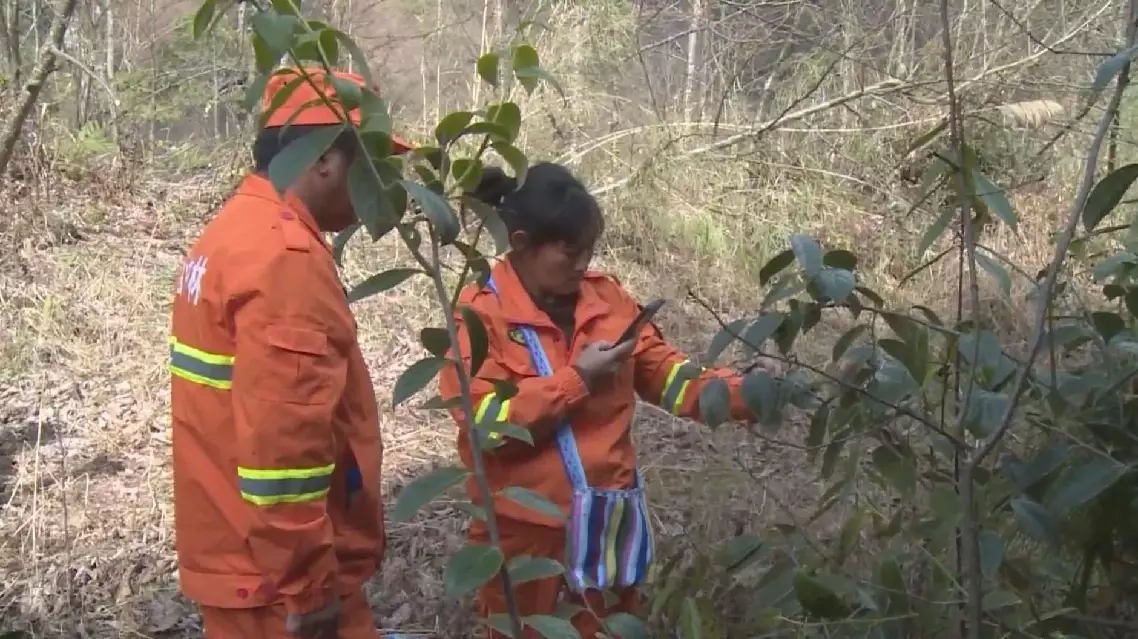
Forest ranger dedicated to guarding green mountains in Yunnan