The crew of the Chinese People's Liberation Army (PLA) Navy's hospital ship Silk Road Ark recently conducted multiple exchanges with the Chilean Navy, an effort that has significantly enhanced mutual understanding and strengthened traditional friendship between the two navies.
The hospital ship docked on March 1 at the port of Valparaiso, Chile, commencing a seven-day friendly visit and medical exchange program. This visit marks a part of the ship's "Harmony Mission 2025" and represents the first return of a Chinese PLA Navy hospital ship to Chile since 2018.
At the Hospital Naval Almirante Nef in the coastal Chilean city of Vina del Mar, the crew of the hospital ship Silk Road Ark co-hosted an international medical forum with the Chilean Navy. The two navies engaged in in-depth discussions on topics ranging from maritime medical support to the treatment of common diseases and injuries.
The Chinese team also showcased distinctive Traditional Chinese Medicine (TCM) therapies and wellness programs. Through hands-on demonstrations and interactive experiences, their Chilean counterparts were given a close-up view of TCM's unique appeal.
"These exchange activities have built an excellent communication platform for our two sides to engage in medical cooperation and share experiences. We hope the outcomes of this visit will inject new momentum into the medical collaboration between the navies of China and Chile," said Wu Qiong, member of Harmony Mission 2025.
During the visit, Chilean naval officers and personnel boarded the Silk Road Ark to learn about China's practices for maritime combat casualty care and exchange.
Meanwhile, the Chinese naval personnel also visited Chile's National Maritime Museum, the Hydrographic and Oceanographic Service of the Chilean Navy, and the Chilean training ship Esmeralda. These visits provided them with valuable insights into the historical evolution of the Chilean Navy, its hydrographic support systems, and its vessel training programs.
The Silk Road Ark also hosted a reception on its deck, an event that significantly enhanced mutual understanding and professional trust between the two navies.
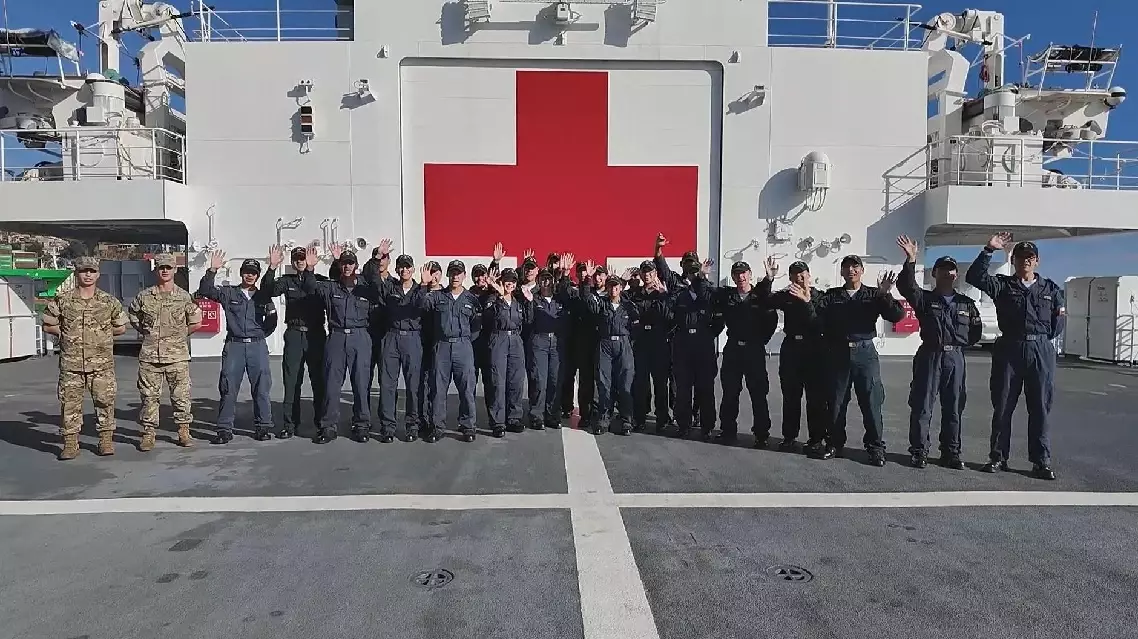
China’s navy hospital ship crew conducts exchanges with Chilean counterparts
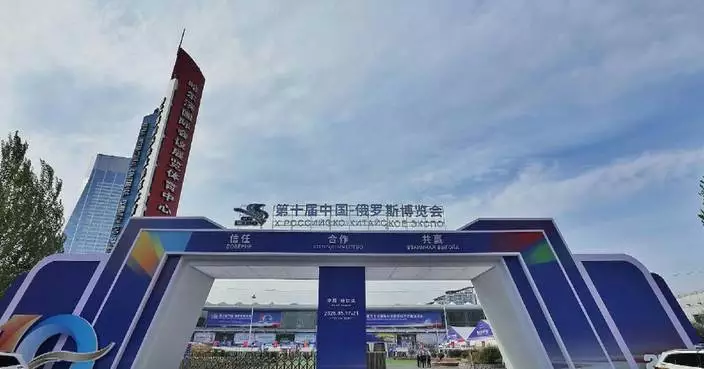
The 10th China-Russia Expo opened on Sunday in Harbin, the provincial capital of Heilongjiang in northeast China, highlighting the resilience, vitality and mutual benefits of China-Russia economic ties.
Held from May 17 to 21, this year's expo covers a floor space of 55,000 square meters, with more than 1,500 companies from 46 countries and regions taking part. Nearly 300 Russian companies are attending, while over 5,000 buyers are expected.
Since 2014, the event has attracted more than 7,200 Chinese and Russian companies and over a million visitors.
The China-Russia Expo is the largest comprehensive exhibition platform between the two countries.
President Xi Jinping and Russian President Vladimir Putin each sent congratulatory letters to the event, encouraging all sectors from both countries to seize the opportunity, make full use of their geographical proximity and economic complementarity, and further expand all-round practical cooperation.
"Leaders of the two countries have signed agreements to deepen practical cooperation, which we fully support. Russia and China stand side by side for common development, benefiting young people and all people. Such cooperation is timely and far-reaching. We are here in Harbin for the China-Russia Expo, coming from Russia's Sakha Republic. Our region is dominated by agriculture. We are seeking advanced farming technologies including irrigation equipment and harvesters. We hope to reach deals in the coming days to boost local development," said Vasiliy Petrovich Alexeev, head of Ust-Aidan Region of the Russian Federation.
"We are greatly inspired by the congratulatory letters from the heads of state of China and Russia. We will keep building targeted and efficient cooperation platforms, and smooth channels for sub-national exchanges between China and Russia," said Chen Shijun, president of Heilongjiang Council for the Promotion of International Trade.
China-Russia trade volume has surpassed 200 billion U.S. dollars for three consecutive years. China has been Russia's largest trading partner for 16 years running.
In the first quarter of this year, bilateral trade volume hit 60 billion U.S. dollars, a year-on-year increase of more than 14 percent.
This year's Expo features eight major exhibition zones. Beyond the exhibition halls, Russian delegations have also conducted field visits to Chinese companies. A delegation from the Republic of Buryatia visited one of northeast China's largest building materials distribution centers to explore potential areas of cooperation.
"Regular China-Russia economic and trade events continuously bring fresh cooperation opportunities for both sides. This field trip to Xilong Building Materials Market has helped us explore more practical directions and modes for bilateral cooperation," said Alexei Tsydenov, head of the Republic of Buryatia of the Russian Federation.
"Relying on Buryatia's abundant mineral resources and sound logistics conditions, we plan to build industrial parks focusing on home building materials, mineral resources and energy sectors in Russia. We will introduce advanced Chinese technologies and management models to drive coordinated industrial upgrading between the two countries," said Wu Jinrong, vice president of Harbin Xilong International Trade and Logistics Park.
From everyday consumer goods to advanced helicopters, and from mineral resources to intelligent robotics, China-Russia cooperation now spans a wide range of sectors. Economic ties and people-to-people exchanges between the two countries continue to advance toward higher-quality development and broader prospects.
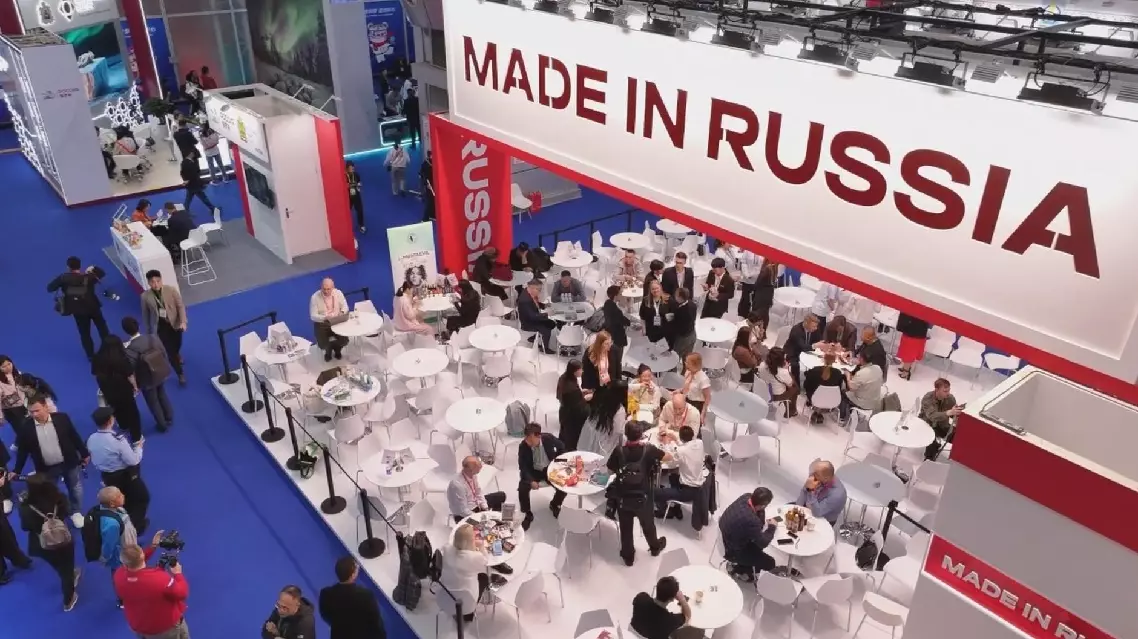
China-Russia Expo promotes trust, cooperation, mutual benefit