The Customs Administration in south China's tech hub of Shenzhen saw significantly higher efficiency in processing departure tax refund claims in the first two months of 2026, as a result of application of Artificial Intelligence (AI).
In January and February, the Shenzhen Customs handled 19,000 claims for departure tax refunds to the tune of 310 million yuan (about 44.94 million U.S. dollars), respectively up 10 times and 1.7 times year on year,
The related commodities are mainly electronic products such as mobile phones and tablet computers, as well as daily necessities like clothing and bags.
"The Shenzhen Customs is vigorously promoting the streamlined 'one sheet, one bag, one code' tax refund service. At the same time, the multimodal AI model helps us greatly reduce the time for inspection, with the fastest verification for a single sheet taking only one minute," said Zhang Peijia, a staff member with the Shenzhen Customs.
Shenzhen is the first city in China to implement the "one sheet, one bag, one code" value-added tax (VAT) refund service for eligible cross-border travelers.
The measure, rolled out last September at tax refund stores across the city, permits cross-border shoppers to clear customs without opening sealed shopping bags.
The number of tax refund stores in Shenzhen has exceeded 2,000 so far.
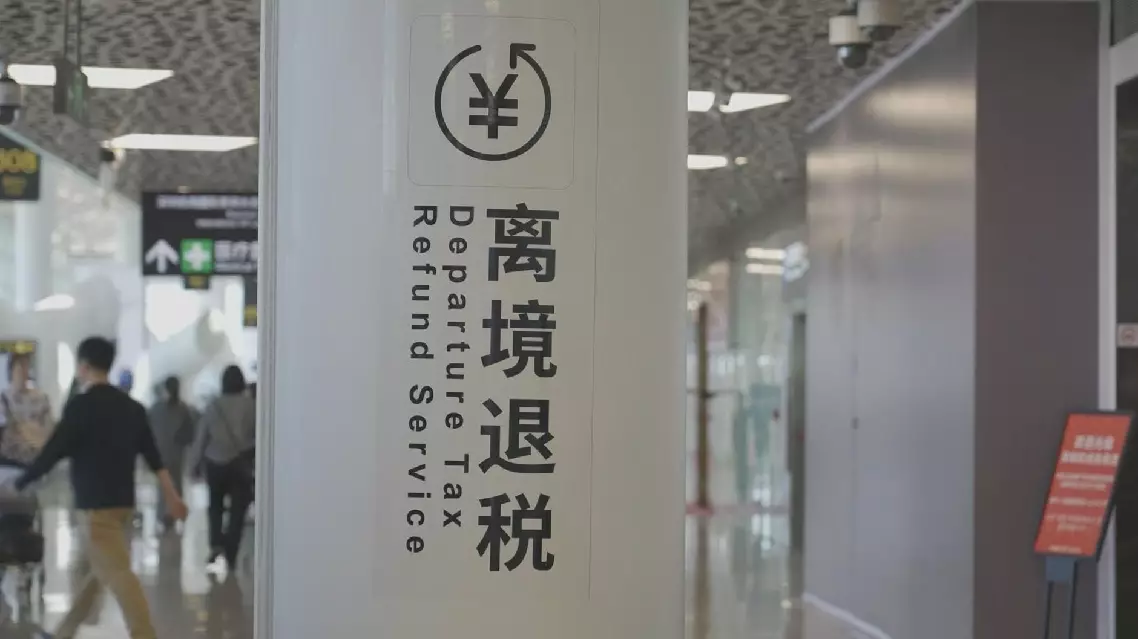
Shenzhen Customs sees higher efficiency in processing departure tax refund claims due to AI application
China on Friday called for the resumption of navigation in the Strait of Hormuz as soon as possible, saying that the closure of the strategic waterway is disrupting the global energy supply and weighing on economies worldwide.
Speaking at a press briefing at United Nations headquarters in New York, China's permanent representative to the United Nations Fu Cong said that the closure of the Strait of Hormuz is caused by the illegitimate war by the United States and Israel against Iran and that the shutdown has inflicted significant economic damage worldwide.
Fu made the remarks at the press briefing as China assumed the rotating presidency of the UN Security Council on Friday.
"The root cause of this situation is the illegitimate war by the U.S. and Israel against Iran, and this war has brought tremendous sufferings in Iran for the Iranian people and the neighboring countries, and its ramifications runs far and wide. And in particular, the close of Hormuz is actually wreaking havoc in the oil market and in the economy of the entire world, in particular in the Global South," said Fu.
Fu said that the priority at the moment is to maintain the ceasefire between the United States, Israel, and Iran. He added that both Iran and the United States must act to restore passage, with Iran lifting restrictions and the U.S. ending its naval blockade.
"So China's view is that we need to open the Strait of Hormuz as quickly as possible. And that actually applies to both sides. Iran needs to lift its restrictions on the Strait of Hormuz and the U.S. needs to lift its naval blockade. And in our view, the most urgent issue is to keep the ceasefire, and the ceasefire needs to last and there has to be a good-faith negotiation between the two sides," said Fu.
The Strait of Hormuz handles roughly 20 percent of the world's seaborne oil flows. Iran tightened its grip on the Strait of Hormuz after Israel and the U.S. launched their joint strikes on Iran on Feb. 28. The U.S. imposed a naval blockade targeting ships going to and from Iran.
Shipping traffic through the Strait of Hormuz has dropped sharply since the outbreak of the war, with the number of vessels passing through the waterway falling from about 130 per day before the war to fewer than 10, a decline of more than 90 percent, the British Royal Navy said on Friday.
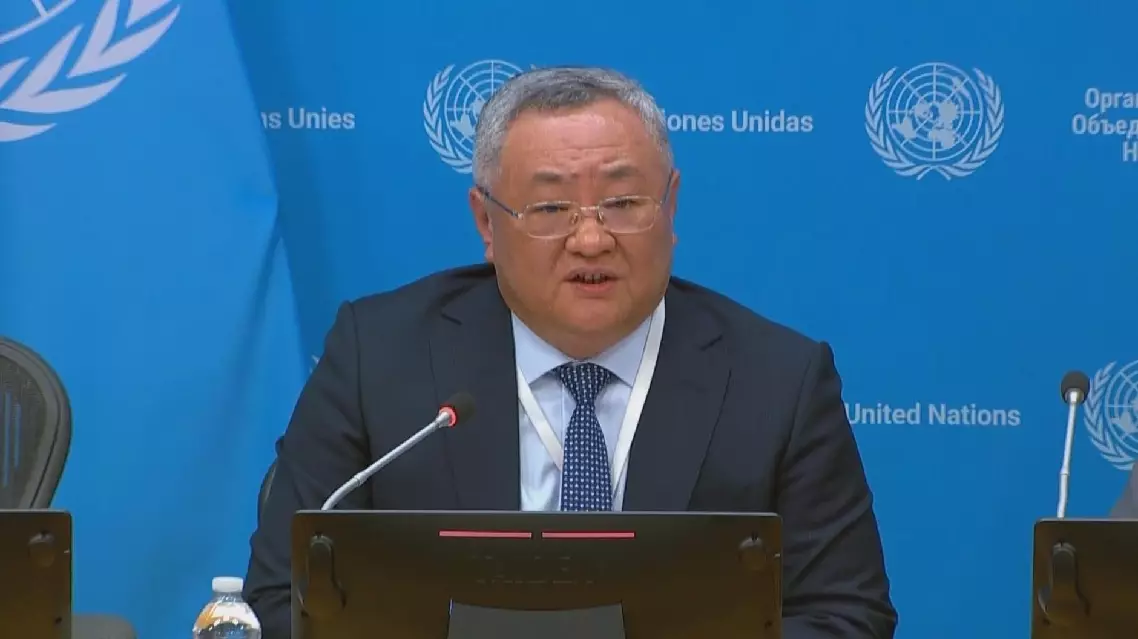
China calls for resumption of Hormuz shipping as soon as possible