NEW YORK (AP) — “Country” Joe McDonald, a hippie rock star of the 1960s whose “I-Feel-Like-I’m-Fixin’-To-Die Rag” was a four-lettered rebuke to the Vietnam War that became an anthem for protesters and a highlight of the Woodstock music festival, died Sunday. He was 84.
McDonald, who performed with his band, Country Joe and the Fish, died in Berkeley, California. His death from complications of Parkinson’s disease was reported by Kathy McDonald, his wife of 43 years, in a statement issued by his publicist.
McDonald was a longtime presence in the Bay Area music scene, where peers included the Grateful Dead, the Jefferson Airplane and his onetime girlfriend, Janis Joplin. He wrote or co-wrote hundreds of songs, from psychedelic jams to soul-influenced rockers, and released dozens of albums. But he was known best for a talking blues he completed in less than an hour in 1965 — the year President Lyndon Johnson began sending ground forces to Vietnam — and recorded in the Berkeley home of Arhoolie Records founder Chris Strachwitz.
In the deadpan style of McDonald’s hero, Woody Guthrie, “I-Feel-Like-I’m-Fixin’-To-Die Rag” was a mock celebration of war and early, senseless death, with a chorus concertgoers and others would learn by heart:
And its 1, 2, 3 what are we fighting for? Don’t ask me I don’t give a damn, Next stop is Vietnam, And its 5, 6, 7 open up the pearly gates, Well there ain’t no time to wonder why, WHOOPEE we’re all gonna die
At the time he wrote “I-Feel-Like-I’m-Fixin’-To-Die Rag,” McDonald was co-leader of the newly formed Country Joe and the Fish and he added a special “F-I-S-H” chant before the song: “Give me an F, give me an I, give me an S, give me an H.” By the time his group appeared at Woodstock in 1969, the Fish were on the verge of breaking up, the chant was a different four-letter word beginning in “F” and McDonald was performing before hundreds of thousands. Many would stand and sing along, a moment captured in the Woodstock documentary released the following year. (For the film, the song’s lyrics appeared as subtitles, a bouncing ball on top).
“Some people alluded to peace and stuff (at Woodstock), but I was talking about Vietnam,” McDonald told The Associated Press in 2019. He called the opening chant “an expression of our anger and frustration over the Vietnam War, which was killing us, literally killing us.”
The song helped make him famous, but brought legal and professional consequences. In 1968, Ed Sullivan canceled a planned appearance by Country Joe and the Fish on his variety show when he learned of the new opening cheer. Soon after Woodstock, McDonald was arrested and fined for using the cheer at a show in Worcester, Massachusetts, an ordeal which helped hasten the band’s demise.
McDonald even performed the song in court. His friendships with such political radicals as Abbie Hoffman and Jerry Rubin led to his being called in as a witness in the “Chicago Eight (or Seven)” trial against organizers of anti-war protests at the 1968 Democratic National Convention in Chicago. On the stand, he explained how he had met with Hoffman and others and told them about “I-Feel-Like-I’m-Fixin’-To-Die Rag.” When he began performing it, the judge interrupted and told him "No singing is permitted in the courtroom.”
McDonald recited the words instead.
In 2001, the daughter of the late jazz musician Edward “Kid” Ory sued McDonald, alleging that his song’s melody closely resembled Ory’s 1920s jazz instrumental “Muskrat Blues.” A U.S. district judge in California ruled in McDonald’s favor, citing in part the “unreasonable” delay between the song’s release and the suit being filed.
McDonald continued touring and recording for decades after Woodstock, but remained defined by the late 1960s, a time period he openly longed for in the late 1970s rocker “Bring Back the Sixties, Man.” His albums included “Country,” “Carry On,” “Time Flies By” and “50,” and he would continue writing protest songs, notably the 1975 release “Save the Whales.”
Although defined by his anti-war activism, McDonald would acknowledge conflicted feelings about Vietnam. He had served in the Navy, in Japan, in the late 1950s, and found himself identifying with both the protesters and those serving overseas. In the 1990s, he helped organize the construction of a Vietnam Veterans Memorial in Berkeley, formally unveiled in 1995.
“Many remembered the ugly confrontations that had happened during the war years in the city,” McDonald later wrote of the ceremony. “Yet the atmosphere proved to be one of reconciliation, not confrontation.”
McDonald was married four times, most recently to Kathy McDonald, and had five children and four grandchildren. He was involved off and on with Joplin over the second half of the 1960s, two young hippies whose careers and temperaments drove them apart. When McDonald told her he thought they should break up, she asked him to write a song, which became the ballad “Janis”:
Even though I know that you and I
Could never find the kind of love we wanted
Together, alone, I find myself
Missing you and I
You and I
Country Joe McDonald did not come from the “country.” He was born on Jan. 1, 1942 in Washington, D.C., and grew up in El Monte, California. He was the son of onetime Communists who named him for Josef Stalin and otherwise encouraged him to love music and identify with the working class. He was still in his teens when he began writing songs, playing trombone well enough to lead his high school marching band and teaching himself folk, country and blues songs on guitar.
After returning from the Navy, in the early 1960s, he attended Los Angeles State College, but soon moved to Berkeley and became immersed in folk music and political activism. He founded an underground magazine, Rag Baby, for which “I-Feel-Like-I’m-Fixin’-To-Die Rag” was written to help promote, and helped start such local groups as the Instant Action Jug Band and the Berkeley String Quartet.
In 1965, he formed Country Joe and the Fish with fellow singer-guitarist Barry “The Fish” Melton, later adding Bruce Barthol on bass, organ player David Bennett Cohen and Gary “Chicken” Hirsh on drums. The name was suggested by magazine publisher Eugene “ED” Denson, who cited a quote from Mao Zedong that revolutionaries are “the fish who swim in the sea of the people.” McDonald was dubbed “Country Joe” because Denson had heard that Stalin was known as “Country Joe” during World War II.
Like the Jefferson Airplane, the Byrds and other bands, the Fish evolved from folk to folk-rock to acid rock. “Electric Music for the Mind and Body,” their debut album, was released in May 1967 and featured a minor hit, “Not So Sweet Martha Lorraine,” along with numerous long jams. A month after the album came out, they appeared at the Monterey Pop Festival, the first major rock gathering and a highlight of the so-called Summer of Love.
“I think the ‘Summer of Love’ thing was manufactured by the media or something, because I don’t remember us thinking, 'Wow, this is the “Summer of Love,′ ” he told aquariandrunkard.com in 2018. "(But) I was just thrilled to be a part of this new counterculture and new tribe because I had never really felt comfortable in the other tribes that I was a part of growing up and in the Navy. My parents were actually Jewish Communists. I never felt a part of it, but I was really thrilled and happy to be a hippie.”
This story has been updated to correct that the song “Save the Whales” was released in 1975, not 1982.

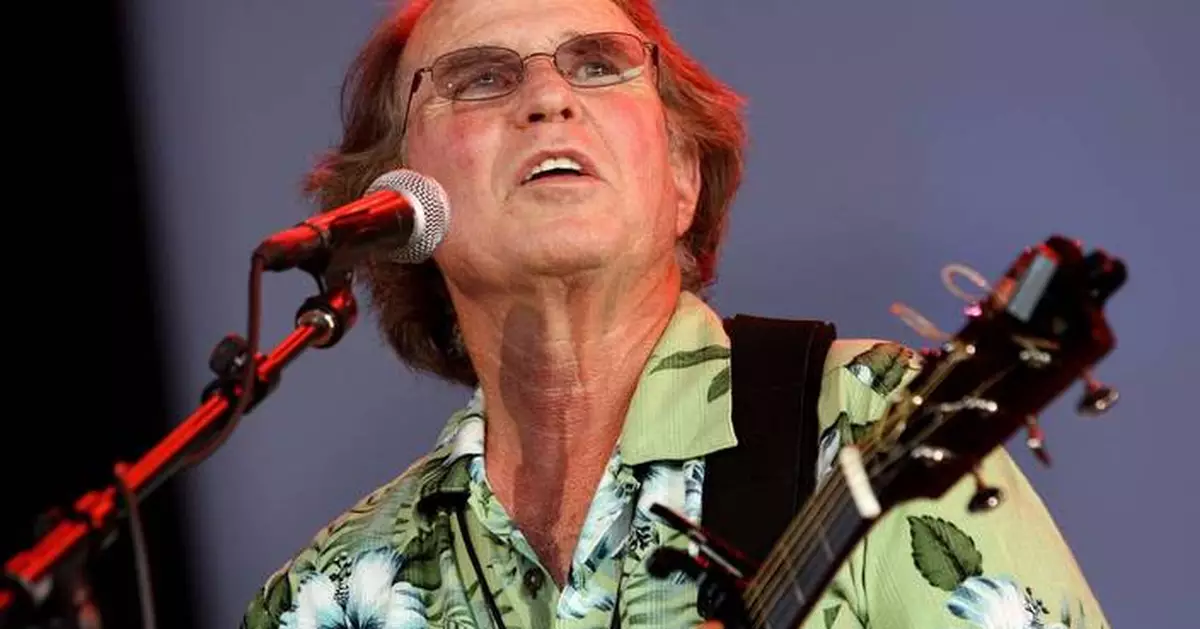
Singer-songwriter Country Joe McDonald performs at the Vietnam War Summit at the LBJ Presidential Library, in Austin, Texas, Thursday, April 28, 2016. (AP Photo/Nick Ut, File)
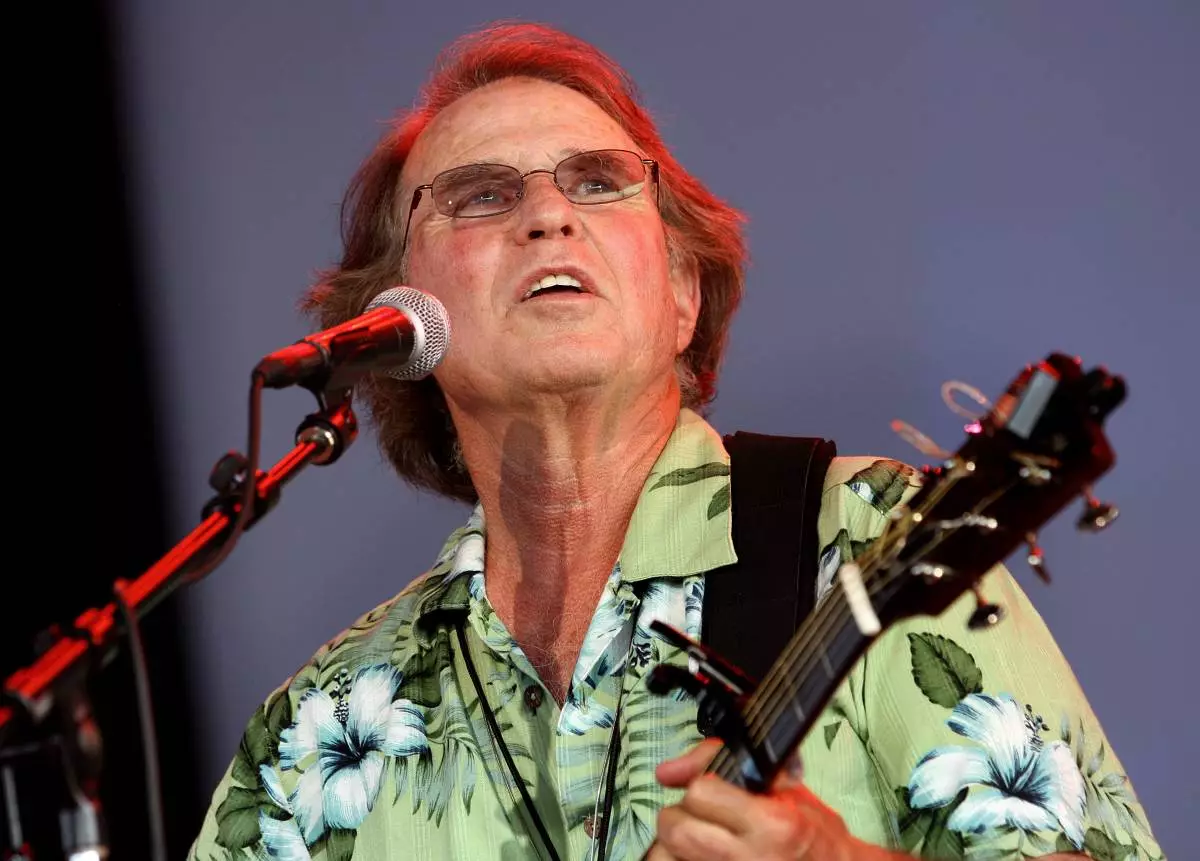
FILE - Country singer Joe McDonald plays during the Heros of Woodstock concert at Bethel Woods Center for the Arts in Bethel, N.Y., Saturday, Aug. 15, 2009, marking the 40th anniversary of the original 1969 Woodstock concert. (AP Photo/Craig Ruttle, File)
Iran launched more attacks on Israel and Gulf countries Monday, hours after Iranian state TV said Ayatollah Mojtaba Khamenei, son of the country’s late supreme leader and long considered a contender, had been named his successor.
Iran’s powerful paramilitary Revolutionary Guard answers to the supreme leader and the younger Khamenei will have a central say in the war strategy.
Oil prices skyrocketed Monday, leading to more worries that higher energy costs will fuel inflation and lead to less spending by U.S. consumers, the main engine of the economy. Tokyo’s benchmark Nikkei 225 index plunged as much as 7% in early Monday trading, while other Asian markets also tumbled.
Saudi Arabia sharpened its warnings to Iran, telling Tehran Monday it would be the “biggest loser” if it continues to attack Arab states. The Saudi statement came after a new drone attack apparently targeted its massive Shaybah oil field.
Here is the latest:
Iran has been using cluster munitions against Israel on a “nearly daily basis,” an Israeli military spokesperson said Monday. He said Iran had fired similar missiles at Israel during the 12-day war last June.
Lt. Col. Nadav Shoshani said that the cluster munitions fired at Israel so far have targeted Israel’s most “densely populated civilian areas” in Jerusalem and central Israel.
A cluster munition is a bomb that opens in the air and releases smaller “bomblets” across a wide area. The bomblets are designed to take out tanks and equipment, as well as troops, hitting multiple targets at the same time.
Russian President Vladimir Putin sent a telegram to Ayatollah Mojtaba Khamenei to congratulate him on becoming Iran’s new leader.
The message, published on the Kremlin’s website Monday, reaffirmed Moscow’s “unwavering support for Tehran,” and said that “Russia has been and will remain a reliable partner of the Islamic Republic.”
“At a time when Iran is opposing armed aggression, your tenure in this high post will undoubtedly require great courage and dedication. I am sure that you will honorably continue your father’s work and unite the Iranian people,” Putin’s message read.
There was no advance warning, suggesting rocket fire from Lebanon.
In naming Mojtaba Khamenei as the new supreme leader, the Assembly of Experts and Iranian state media referred to him as “ayatollah,” one of the highest titles given to clerics within Shiite Islam. Khamenei’s father, Ali, similarly became an ayatollah with his appointment as supreme leader in 1989.
French President Emmanuel Macron says Group of Seven nations could dip into their emergency oil stockpiles in response to soaring energy prices.
Speaking to reporters en route to a visit to Cyprus, Macron said “the use of strategic reserves is an envisaged option.” He said G7 leaders could meet this week to coordinate a response to climbing energy prices, expected via a call or a video conference. France currently holds the rotating presidency of the G7 group.
Separately, finance ministers from the G7 nations are meeting Monday afternoon by video conference to discuss the repercussions from the Iran war.
The man was killed in an attack that targeted central Israel.
It marked the first death from missiles in Israel in a week.
China’s government said the authorities “have noted” the reports of Iran naming Mojtaba Khamenei as new supreme leader and called on all parties to go back to negotiations to avoid further escalation.
“This is a decision made by the Iranian side in accordance with the country’s constitution,” Foreign Ministry spokesperson Guo Jiakun said Monday.
He added that “China opposes interference in other countries’ internal affairs under any pretext” and said that the sovereignty and territorial integrity of Iran “should be respected.”
Around 70,000 Syrians have crossed the border from Lebanon “under duress in a rush to Syria because they were so afraid of what is happening in Lebanon,” Karolina Lindholm Billing, the representative of the U.N. refugee agency in Lebanon, said Monday.
Lebanon was at one point hosting more than 1 million Syrian refugees, but the numbers have declined, particularly since the ouster of former Syrian President Bashar Assad in December 2024. Today around 532,000 registered refugees remain, with potentially hundreds of thousands more believed to be unregistered.
The United States and Iran have offered sharply different accounts of the sinking of an Iranian warship in the Indian Ocean.
Washington has rejected Tehran’s claim that the warship IRIS Dena was unarmed when it was sunk in a submarine attack near Sri Lankan waters on March 4.
In a statement Sunday on X, the U.S. Indo-Pacific Command called Iran’s assertion that the vessel was unarmed “false.”
Iranian officials say the vessel was operating in a noncombat role as it returned home after taking part in a naval exercise in India.
Iran’s Deputy Foreign Minister Saeed Khatibzadeh said last week the warship was “unarmed.”
Israel said Monday it has carried out airstrikes in Beirut.
The Israeli army earlier Monday said it would operate against targets associated with the Hezbollah-linked financial institution al-Qard Al-Hasan. It repeated the warning to residents of Beirut’s Dahiyeh suburb to flee.
Israel says Hezbollah uses al-Qard al-Hasan to finance its military activities.
Smoke billowed over Beirut after the attacks. The first strike destroyed a building housing an office of al-Qard al-Hasan in the southern suburb of Chiyah.
Israel’s military targeted several branches of al-Qard al-Hasan in southern and eastern Lebanon last week.
During the last Israel-Hezbollah war in 2024, Israel’s military carried strikes that destroyed more than a dozen branches of al-Qard al-Hasan across Lebanon.
Emirati authorities have reported another missile attack in the capital, Abu Dhabi, urging people to remain in safe locations.
Israel has identified another launch on northern Israel shortly after a previous warning of an incoming missile attack from Iran on Monday.
Israel said in a new warning Monday that it has identified missiles launched from Iran toward northern and southern Israel.
Sirens sounded in Israel warning of a missile attack from Iran for the sixth time Monday.
Bangladesh on Monday closed all universities, bringing forward the break for Eid al-Fitr as part of emergency measures to conserve electricity during the conflict in the Middle East.
The South Asian country, which depends on imports for 95% of its energy requirements, already has experienced instances of panic buying. Car owners and drivers have struggled to collect fuel as shortages are reported.
The government has shut most fertilizer factories, redirecting available gas to power plants to avoid widespread outages.
Islam’s biggest festival is expected to be held either March 20 or 21, depending on the moon sighting, at the end of a month-long fasting ritual.
Energy Minister Iqbal Hasan Mahmud urged people to remain calm, saying Bangladesh has sufficient fuel stocks.
The capital of the United Arab Emirates came under Iranian attack Monday, with two people hurt by shrapnel from interceptions in Abu Dhabi, authorities said.
South Korea says it will cap oil prices for the first time since 1997 to stabilize soaring fuel costs driven by the war.
Kim Yong-beom, the presidential policy chief of staff, said in a briefing Monday that Seoul plans to introduce the caps sometime this week.
The government did not immediately provide details on how the caps would be structured and operated.
The move will help make fuel prices more predictable and prevent refineries and gas stations from raising prices “abnormally,” Kim said.
The Korea National Oil Corporation says it is holding several months’ worth of strategic oil reserves at nine storage facilities across South Korea, a stockpile that exceeds the International Energy Agency’s recommendation of 90 days.
South Korea last released its strategic reserves, which are used to address serious supply disruptions, in 2022 when Russia’s invasion of Ukraine shocked global energy markets.
India’s foreign minister says two Indian mariners have been killed during the war.
Subrahmanyam Jaishankar confirmed the deaths in an address to India’s parliament Monday and said the victims were working on merchant shipping operating near the conflict zone.
One sailor was still missing, he said.
The minister did not give further details of the vessels involved.
“This ongoing conflict is an issue of particular concern for India,” Jaishankar said, explaining that nearly 10 million Indians live and work in Gulf countries.
The region also is central to India’s energy security and trade, accounting for nearly $200 billion annually in commerce, he said.
Jaishankar reiterated that India favors peace in the region and urged a return to dialogue and diplomacy.
“We advocate de-escalation, restraint and ensuring the safety of civilians,” he said.
Turkey has deployed six F-16 jets and air defense systems to the Turkish-Cypriot part of the divided island of Cyprus to bolster its security, the defense ministry said.
A ministry statement said Monday additional measures would be taken if deemed necessary.
A British air base on Cyprus’ southern coastline was hit by a drone last week.
Ankara maintains some 30,000 troops in northern Cyprus, which broke away from the Greek south in 1974. Turkey is the only country to recognize the northern administration.
Iran’s judiciary reiterated it can order the assets of “enemies” abroad seized in the country.
It made the announcement Monday on the judiciary’s Mizan news agency.
Reporters for Farsi-language media abroad have seen their assets seized over the years.
The report also said “any intelligence or espionage activity conducted” abroad for the Israeli or U.S. governments “could lead to the confiscation of all assets and even the death penalty.”
A barrage of drones was fired toward Saudi Arabia early Monday, hours after an attack killed two Bangladeshi nationals in the kingdom.
The Saudi Defense Ministry said it intercepted drones in the northern Jawf region, as well as the vast Shaybah oil field.
Late Sunday an attack in the central city of Kharj killed the two Bangladeshi nationals and wounded 12 others. All but one was from from Bangladesh.
As Iranian state television reported on the ascension of Mojtaba Khamenei as supreme leader, it referred to him as being wounded in war.
State TV on air described him as “janbaz,” or wounded by the enemy, in the “Ramadan war,” which is how media in Iran refer to the current conflict.
However, later an analyst on air suggested Khamenei’s wounding could have been during his service in the 1980s Iran-Iraq war.
The differing accounts could not be immediately reconciled.
Khamenei’s father and his wife were killed in the Feb. 28 Israeli airstrike in Tehran at the start of the war. Khamenei has yet to be seen since the war began. He was announced as Iran’s new supreme leader on Monday.
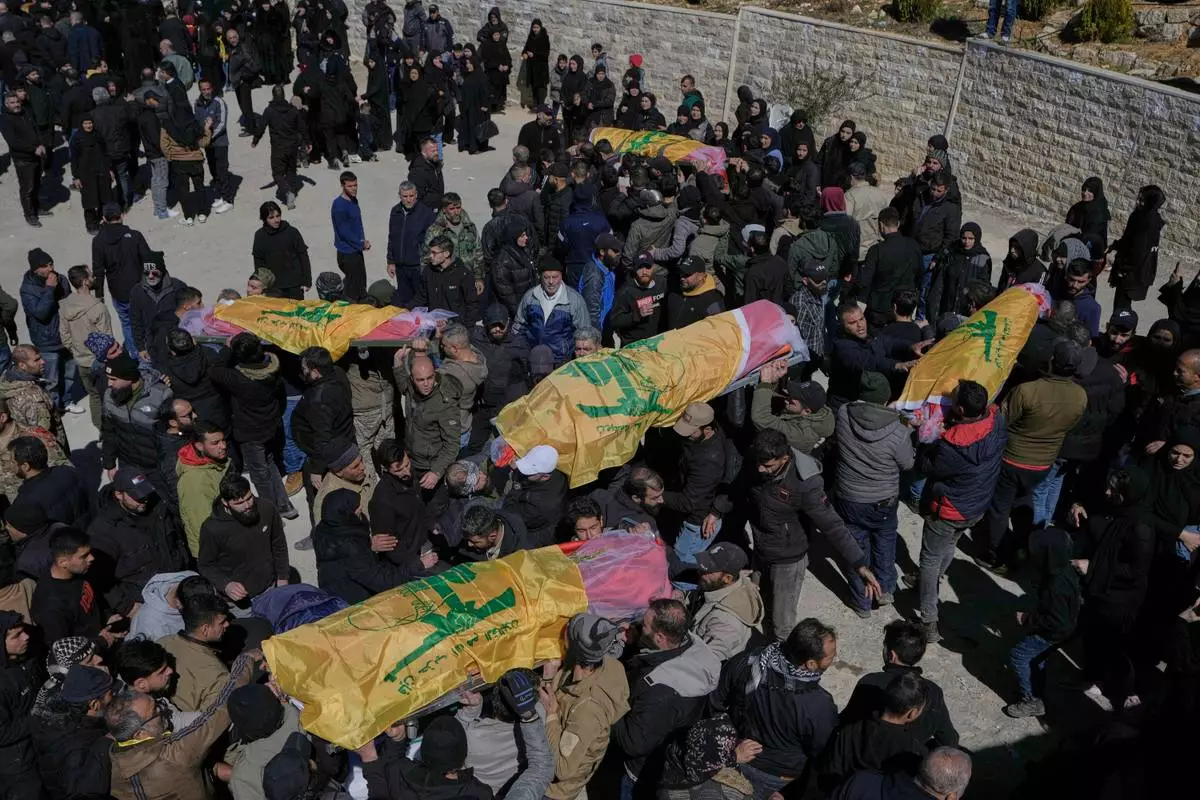
Mourners carry the bodies of Hezbollah fighters who were killed by Israeli airstrikes during their funeral procession in Khraibeh village, eastern Lebanon, Sunday, March 8, 2026. (AP Photo/Bilal Hussein)
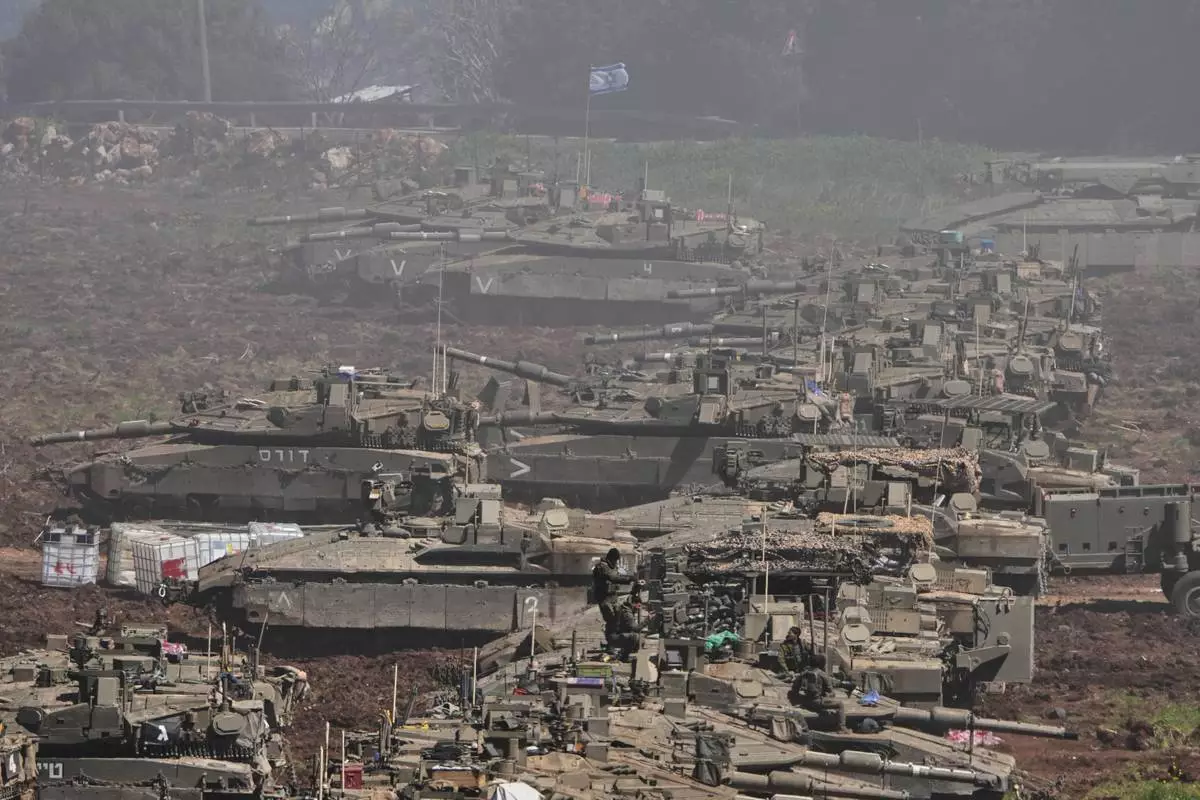
Israeli tanks are parked in a staging area in northern Israel near the border with Lebanon, Israel, Sunday, March 8, 2026. (AP Photo/Ariel Schalit)
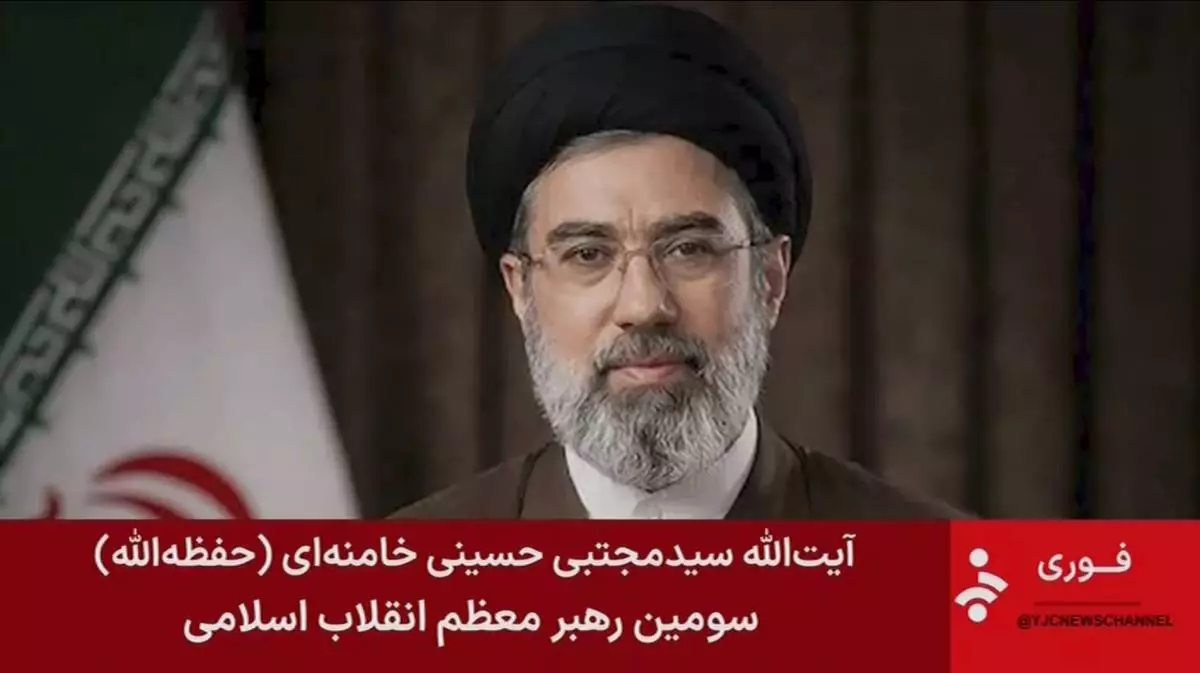
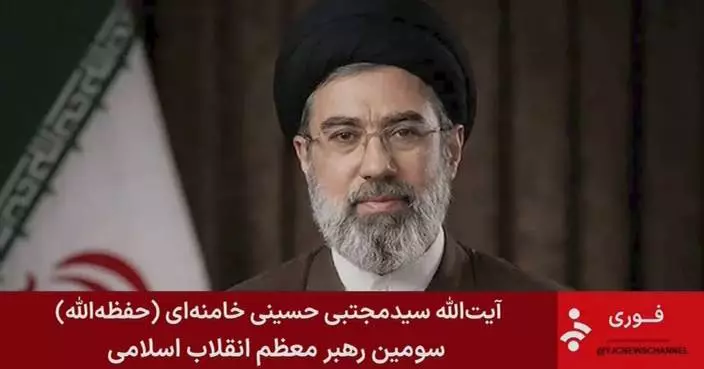
This image taken from video provided by Iran state TV shows Mojtaba Khamenei, a son of Iran's slain supreme leader, who has been named as the Islamic Republic's next ruler, authorities announced Monday, March 9, 2026. (Iran state TV via AP)
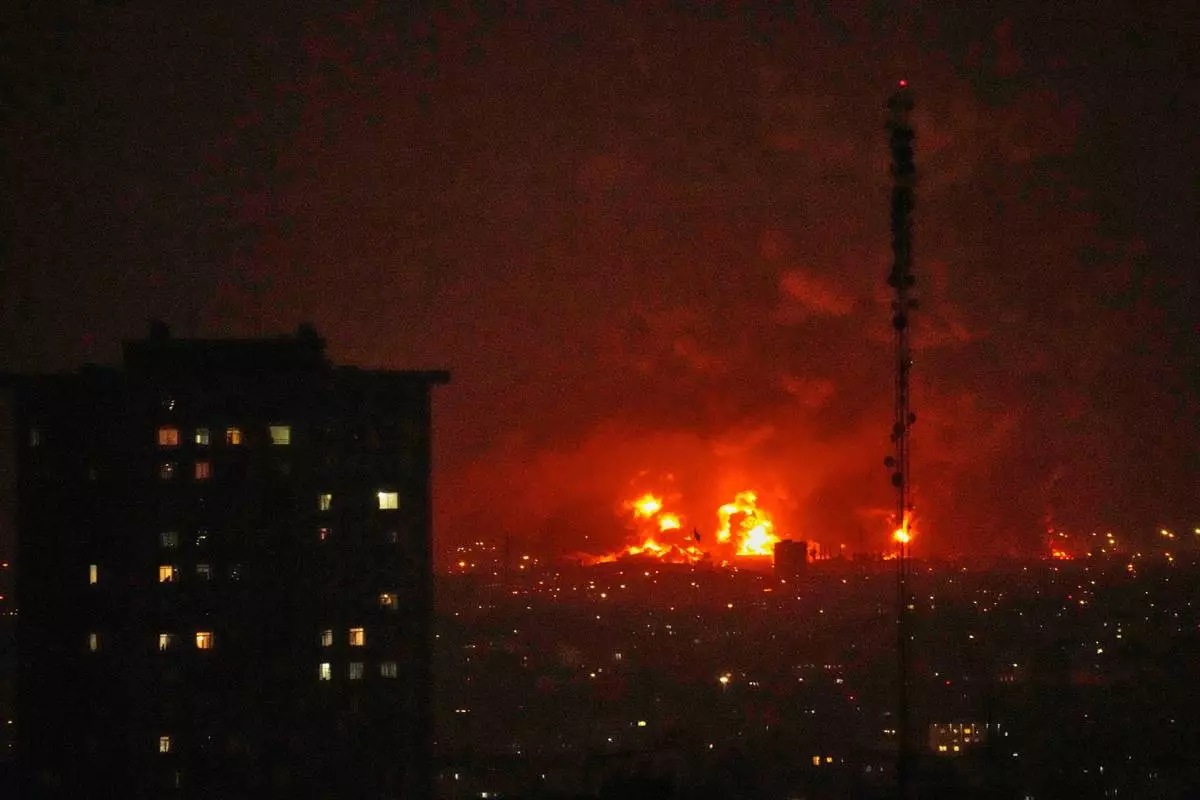
Flames rise from an oil storage facility south of the capital Tehran as strikes hit the city during the U.S.–Israel military campaign, Iran, Saturday, March 7, 2026. (AP Photo/Vahid Salemi)