More than 100 Iranian medical professionals gathered near Gandhi Hospital in northern Tehran on Saturday, condemning the U.S.-Israeli attacks on the facility and demanding accountability.
The hospital was severely damaged in a U.S.-Israeli strike on the night of March 1, with heavy casualties reported.
The protesters held signs condemning the United States and Israel and waving Iranian flags to mourn the healthcare workers and patients killed in the attack.
They accused the two countries of constituting serious violations of international law by attacking health infrastructure.
"This is one of the most cruel crimes against humanity, a clear violation of international law and a breach of human rights. Tragically, some infants lost their lives here. This is one of the most inhumane actions carried out by the United States," said Sarlakian, a Tehran-based medical worker.
The protesters called on the international community to launch an independent investigation into the hospital strikes and bring the perpetrators to justice.
"As Iranian healthcare workers, we have gathered here to speak out for our colleagues who were killed inside this hospital, as well as for the patients who lost their lives while receiving treatment. No provision of international law can justify such a cowardly attack on a hospital. This act is inhumane. Sadly, they [the U.S. and Israel] seem to believe they can break the will of the Iranian people, but that will never happen," said Hamid, another medic.
According to the latest statistics from the Iranian Red Crescent Society, as of Sunday noon local time, U.S.-Israeli strikes had damaged 9,669 civilian facilities across Iran, including 32 medical institutions.
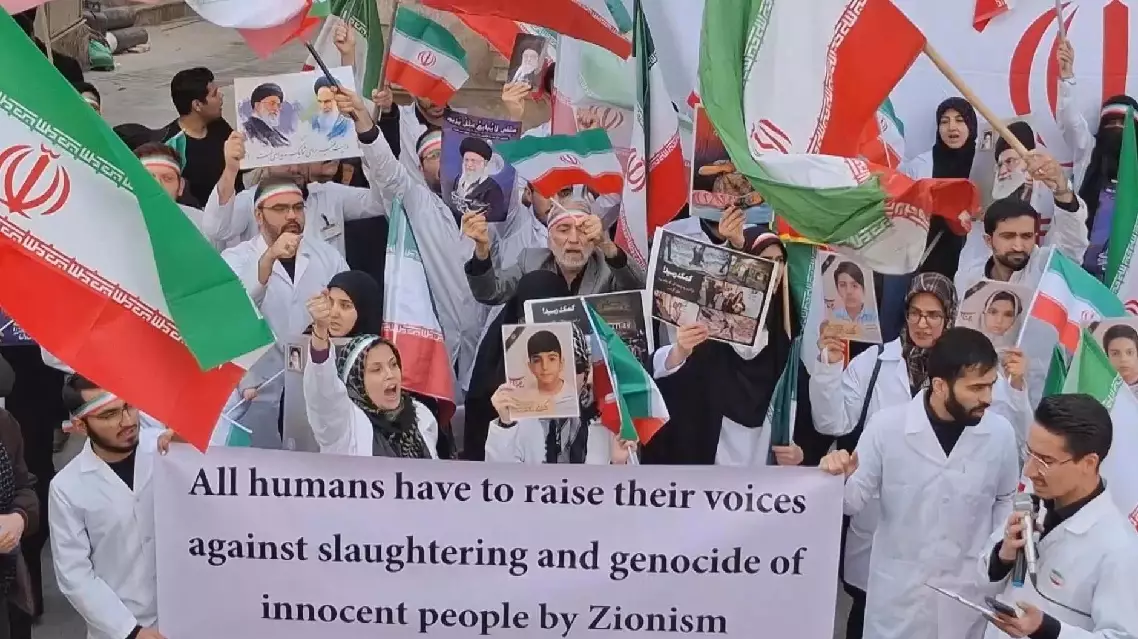
Iranian medics demand accountability over deadly strikes on Tehran's Gandhi Hospital
Local women in Yemen's capital Sanaa on Sunday showcased their entrepreneurial spirit and resilience in overcoming the hardships bought by a prolonged war via an exhibition organized by a non-governmental organization.
Organized by the Sakha Foundation as part of the Productive Families Program, the event, gathered 35 women on Sunday, the International Women's Day, including those who are deaf and non-speaking, showcasing a diverse array of homemade products from food items to crafts. Their aim is to build reliable sources of income and lessen dependence on humanitarian aid.
Behind a modest table, Naseem Al-Maamari, a mother of five, sells homemade cleaning products she makes at home. Her story is one of everyday resilience in a country depleted by war and adversity.
After the conflict disrupted her family's peaceful life, she became the sole provider for her children, turning her small business into a vital lifeline to ensure food and essentials.
"We make this product to support our family and achieve self-sufficiency. Because of the difficulties we face, we started this small project so we can raise our children and secure a living under the conditions our country is going through, with the disasters and wars it has witnessed," she said.
Naseem's experience is emblematic of a broader trend among Yemen's women, who have increasingly taken on economic roles in the face of instability as the economy and living standards in the country have sharply declined after being ravaged by over a decade of conflict.
"The main goal of organizing this exhibition is to support local productive families. Some families run small home-based businesses, but customers cannot easily reach them. So I provided this space to serve as a sales point for their products. All the booths here were opened free of charge by the foundation, as a way to support and assist these families," said Radwan Al-Kabsi, the exhibition director.
Visitors expressed appreciation for the event’s significance.
"Today we came to visit the exhibition. It features many different products, and all of them belong to productive families. What makes it special is that everything on display is handmade. There are no imported products from outside," said Nabila Ahmed, a visitor. International observers highlight the profound shifts occurring within Yemen. The conflict has left women responsible for supporting more than a quarter of households, pushing many into the informal labor market. These women face double hardships, surviving in an economy that has been weakened and destabilized by displacement, economic collapse, and the breakdown of essential services.
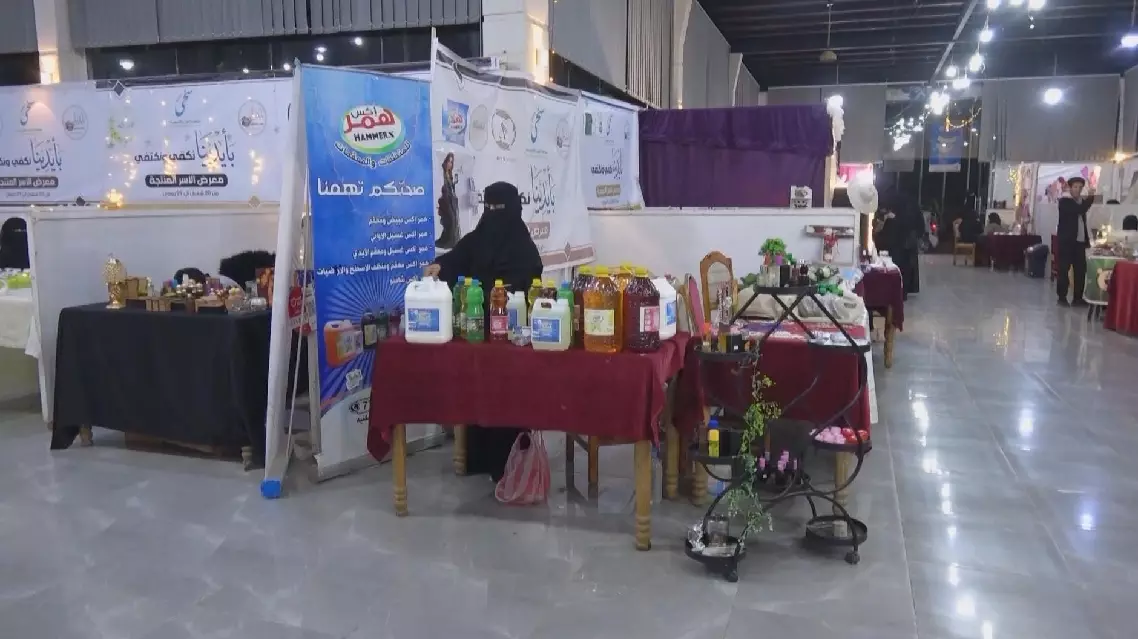
Sanaa handicrafts exhibition offers Yemeni women business opportunities