OTTAWA, Ontario--(BUSINESS WIRE)--Mar 9, 2026--
Mitel, a global leader in business communications, today announced Mitel Edge, an intelligent communications architecture that enables mission-critical workloads to run locally while extending AI, automation, and centralized governance across hybrid environments.
This press release features multimedia. View the full release here: https://www.businesswire.com/news/home/20260309120880/en/
As organizations expand AI initiatives and modernize communications environments, regulated industries, including healthcare, manufacturing, and the public sector, are evaluating how to balance innovation with operational control over security and resiliency. Cloud platforms offer scalability and rapid access to new capabilities, while on-premises infrastructure provides resiliency, performance, and critical data governance. Mitel Edge blends the best of both worlds with a cloud-linked edge architecture built specifically for regulated and high-availability environments that require local custody for sensitive data transmission and residence.
"The future of enterprise communications isn't just in the cloud; it’s at the edge,” said Jim Lundy, CEO and Lead Analyst at Aragon Research. Lundy continued: "By bringing intelligence to the point of presence, Mitel is ensuring that mission-critical AI and automation remain resilient, even when the outside world isn't."
Representing the evolution of Mitel’s enterprise-grade on-prem communications architecture, Mitel Edge transforms traditional hardware deployments into a distributed, cloud-linked architecture complementing its broader hybrid solution portfolio. Unlike traditional on-premises deployments that operate in isolation, Mitel Edge is built on a unified control plane powered by cloud-linked microservices. Mission-critical voice and workflow services run locally where survivability and latency matter most. Organizations can keep sensitive communications data streams and data sources under local custody when required, while AI, automation, analytics, and centralized management operate through a unified services layer spanning local and cloud environments.
This approach allows organizations to align communication workloads with performance, regulatory, and operational requirements—including data residency and sovereignty needs—without fragmenting governance or sacrificing modernization.
“Mitel Edge represents a fundamental shift in how hybrid communications are architected,” said Martin Bitzinger, Senior Vice President of Product Management at Mitel. “Mitel Edge complements Mitel’s hybrid and private cloud deployments through a common services layer. Customers can run mission-critical workloads locally and keep select communications data streams under local custody when required, while seamlessly extending intelligent capabilities and centralized governance across their hybrid environment. All of this operates within a unified communications foundation that strengthens resiliency and simplifies operational management.”
Mitel Edge is built on a unified control plane through Mitel’s Common Communication Framework, complementing Mitel’s private cloud and Mitel Secure Cloud deployments through cloud-linked microservices as part of an integrated hybrid environment. This enables:
“For many industries, communications are no longer a support function; they are operational infrastructure,” said Mike Robinson, CEO of Mitel. “With Mitel Edge, communications infrastructure follows employees and critical workflows wherever they operate, leveraging the latest emerging technologies like AI, while also maintaining the security, resiliency, and control that enterprises demand. We’re empowering customers to modernize with AI and automation without surrendering oversight or data sovereignty.”
Available today, Mitel Edge reinforces Mitel’s strategy of delivering intelligent communications architectures purpose-built for critical industries.
Visit Mitel.com to learn more. Mitel will showcase its industry-leading enterprise communication solutions at Enterprise Connect in Las Vegas, March 10–12, 2026, in executive meeting room #102.
About Mitel
A global market leader in business communications powering more than two billion business connections, Mitel helps businesses and service providers connect, collaborate, and provide innovative services to their customers. Our innovation and communications experts serve business users in more than 100 countries. For more information, go to www.mitel.com and follow us on LinkedIn.
Mitel is the registered trademark of Mitel Networks Corporation.
All other trademarks are the property of their respective owners.
Source: Mitel Networks Inc

Representing the evolution of Mitel’s enterprise-grade on-prem communications architecture, Mitel Edge transforms traditional hardware deployments into a distributed, cloud-linked architecture complementing its broader hybrid solution portfolio.
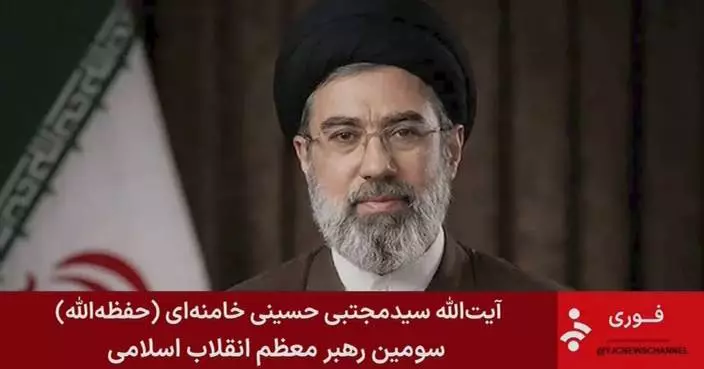
Iran launched more attacks on Israel and Gulf countries Monday, hours after Iranian state TV said Mojtaba Khamenei, son of the country’s late supreme leader and long considered a contender, had been named his successor.
Iran’s powerful paramilitary Revolutionary Guard answers to the supreme leader and the younger Khamenei will have a central say in the war strategy.
Oil prices skyrocketed Monday, leading to more worries that higher energy costs will fuel inflation and lead to less spending by U.S. consumers, the main engine of the economy. Tokyo’s benchmark Nikkei 225 index plunged as much as 7% in early Monday trading, while other Asian markets also tumbled.
Saudi Arabia sharpened its warnings to Iran, telling Tehran Monday it would be the “biggest loser” if it continues to attack Arab states. The Saudi statement came after a new drone attack apparently targeted its massive Shaybah oil field.
Here is the latest:
Bangladesh on Monday closed all universities, bringing forward the break for Eid al-Fitr as part of emergency measures to conserve electricity during the conflict in the Middle East.
The South Asian country, which depends on imports for 95% of its energy requirements, already has experienced instances of panic buying. Car owners and drivers have struggled to collect fuel as shortages are reported.
The government has shut most fertilizer factories, redirecting available gas to power plants to avoid widespread outages.
Islam’s biggest festival is expected to be held either March 20 or 21, depending on the moon sighting, at the end of a month-long fasting ritual.
Energy Minister Iqbal Hasan Mahmud urged people to remain calm, saying Bangladesh has sufficient fuel stocks.
The capital of the United Arab Emirates came under Iranian attack Monday, with two people hurt by shrapnel from interceptions in Abu Dhabi, authorities said.
South Korea says it will cap oil prices for the first time since 1997 to stabilize soaring fuel costs driven by the war.
Kim Yong-beom, the presidential policy chief of staff, said in a briefing Monday that Seoul plans to introduce the caps sometime this week.
The government did not immediately provide details on how the caps would be structured and operated.
The move will help make fuel prices more predictable and prevent refineries and gas stations from raising prices “abnormally,” Kim said.
The Korea National Oil Corporation says it is holding several months’ worth of strategic oil reserves at nine storage facilities across South Korea, a stockpile that exceeds the International Energy Agency’s recommendation of 90 days.
South Korea last released its strategic reserves, which are used to address serious supply disruptions, in 2022 when Russia’s invasion of Ukraine shocked global energy markets.
India’s foreign minister says two Indian mariners have been killed during the war.
Subrahmanyam Jaishankar confirmed the deaths in an address to India’s parliament Monday and said the victims were working on merchant shipping operating near the conflict zone.
One sailor was still missing, he said.
The minister did not give further details of the vessels involved.
“This ongoing conflict is an issue of particular concern for India,” Jaishankar said, explaining that nearly 10 million Indians live and work in Gulf countries.
The region also is central to India’s energy security and trade, accounting for nearly $200 billion annually in commerce, he said.
Jaishankar reiterated that India favors peace in the region and urged a return to dialogue and diplomacy.
“We advocate de-escalation, restraint and ensuring the safety of civilians,” he said.
Turkey has deployed six F-16 jets and air defense systems to the Turkish-Cypriot part of the divided island of Cyprus to bolster its security, the defense ministry said.
A ministry statement said Monday additional measures would be taken if deemed necessary.
A British air base on Cyprus’ southern coastline was hit by a drone last week.
Ankara maintains some 30,000 troops in northern Cyprus, which broke away from the Greek south in 1974. Turkey is the only country to recognize the northern administration.
Iran’s judiciary reiterated it can order the assets of “enemies” abroad seized in the country.
It made the announcement Monday on the judiciary’s Mizan news agency.
Reporters for Farsi-language media abroad have seen their assets seized over the years.
The report also said “any intelligence or espionage activity conducted” abroad for the Israeli or U.S. governments “could lead to the confiscation of all assets and even the death penalty.”
A barrage of drones was fired toward Saudi Arabia early Monday, hours after an attack killed two Bangladeshi nationals in the kingdom.
The Saudi Defense Ministry said it intercepted drones in the northern Jawf region, as well as the vast Shaybah oil field.
Late Sunday an attack in the central city of Kharj killed the two Bangladeshi nationals and wounded 12 others. All but one was from from Bangladesh.
As Iranian state television reported on the ascension of Mojtaba Khamenei as supreme leader, it referred to him as being wounded in war.
State TV on air described him as “janbaz,” or wounded by the enemy, in the “Ramadan war,” which is how media in Iran refer to the current conflict.
However, later an analyst on air suggested Khamenei’s wounding could have been during his service in the 1980s Iran-Iraq war.
The differing accounts could not be immediately reconciled.
Khamenei’s father and his wife were killed in the Feb. 28 Israeli airstrike in Tehran at the start of the war. Khamenei has yet to be seen since the war began. He was announced as Iran’s new supreme leader on Monday.
Bahrain again sounded an alarm over incoming fire from Iran on Monday.
The investigative group Bellingcat says its analysis of a newly released video “appears to contradict” U.S. President Donald Trump’s claim that Iran was responsible for an explosion at an Iranian school, which Iran’s state media said killed 165 people on Feb. 28.
The video shared by Bellingcat was a three-second clip released Sunday by the Iranian semi-official news agency. It shows a munition hitting a building, sending a dark plume of smoke into the air.
The Associated Press was not immediately able to authenticate the video.
Experts interviewed by the AP have deduced from satellite image analysis that the school was likely struck during a quick succession of bombs dropped on an adjacent IRGC base.
Neither U.S. central command nor the Israeli military immediately responded to requests for comment from the AP.
Israel’s military warned Monday of new incoming missile fire from Iran. Moments later, sirens sounded in parts of northern Israel.
Bahrain’s state oil company declared force majeure on Monday for its shipments after an Iranian attack set its refinery ablaze.
The state-run Bahrain News Agency carried the announcement of the force majeure, a legal maneuver that releases a company of its contractual obligations because of extraordinary circumstances.
It said the company’s operations “have been affected by the ongoing regional conflict in the Middle East and the recent attack on its refinery complex.”
It insisted local demand could be met.
The United Arab Emirates said Monday its air defenses were working to intercept drones and missiles coming from Iran, the second time in the day it faced an attack.
An Iranian attack Monday on Bahrain sparked a fire apparently at the island kingdom’s sole oil refinery, sending thick plumes of smoke into the air.
Online video purportedly shows the fire at the Sitra refinery.
The state-run Bahrain News Agency later published a report saying “a fire broke out due to the Iranian aggression targeting a facility in Maameer, with material damage but no loss of life.”
Maameer is a Bahraini village adjacent to the refinery.
Bahrain’s government did not immediately identify the refinery itself as being hit, though it has been a target of repeated Iranian attacks since the war began.
The Israeli military claimed strikes Monday on targets in Iran’s city of Isfahan targeting security forces there.
The Israelis described hitting command centers for Iran’s paramilitary Revolutionary Guard and its all-volunteer Basij force there.
The military also said it hit a rocket engine production facility and missile launch sites.
Iran did not immediately acknowledge the strikes. Iran has not provided any details on its materiel losses since the war started Feb. 28.
A Chinese envoy to the Middle East has called on all sides to stop their military actions and said attacks on non-military targets and civilians should be condemned.
Special Envoy Zhai Jun, meeting in Saudi Arabia with Foreign Minister Prince Faisal bin Farhan, said Sunday that the sovereignty, security and territorial integrity of all Gulf countries must not be violated, a Chinese Foreign Ministry statement said.
China is a major importer of oil and natural gas from the region.
Zhai also met Jassim Mohammed al-Budaiwi, the secretary-general of the Gulf Cooperation Council, the Foreign Ministry said.
South Korean President Lee Jae Myung on Monday warned that a steep rise in fuel prices could rattle the country’s economy and called on officials to accelerate efforts to diversify fuel routes away from the Strait of Hormuz.
Lee spoke at a Cabinet meeting after the country’s stock market opened with an 8% plunge, as concerns grew about how the spiraling war in the Middle East could affect an economy heavily dependent on trade and imported fuel.
Lee called on officials to aggressively use a 100 trillion won ($67 billion) market stabilization fund activated last week to reduce volatility in stock markets and strengthen monitoring of disruptive market activities, such as fuel price collusion or hoarding.
Foreign Minister Cho Hyun said Seoul was also negotiating with Gulf states to find alternative trade routes to reduce reliance on the Strait of Hormuz, including the possible use of alternative ports in the UAE.
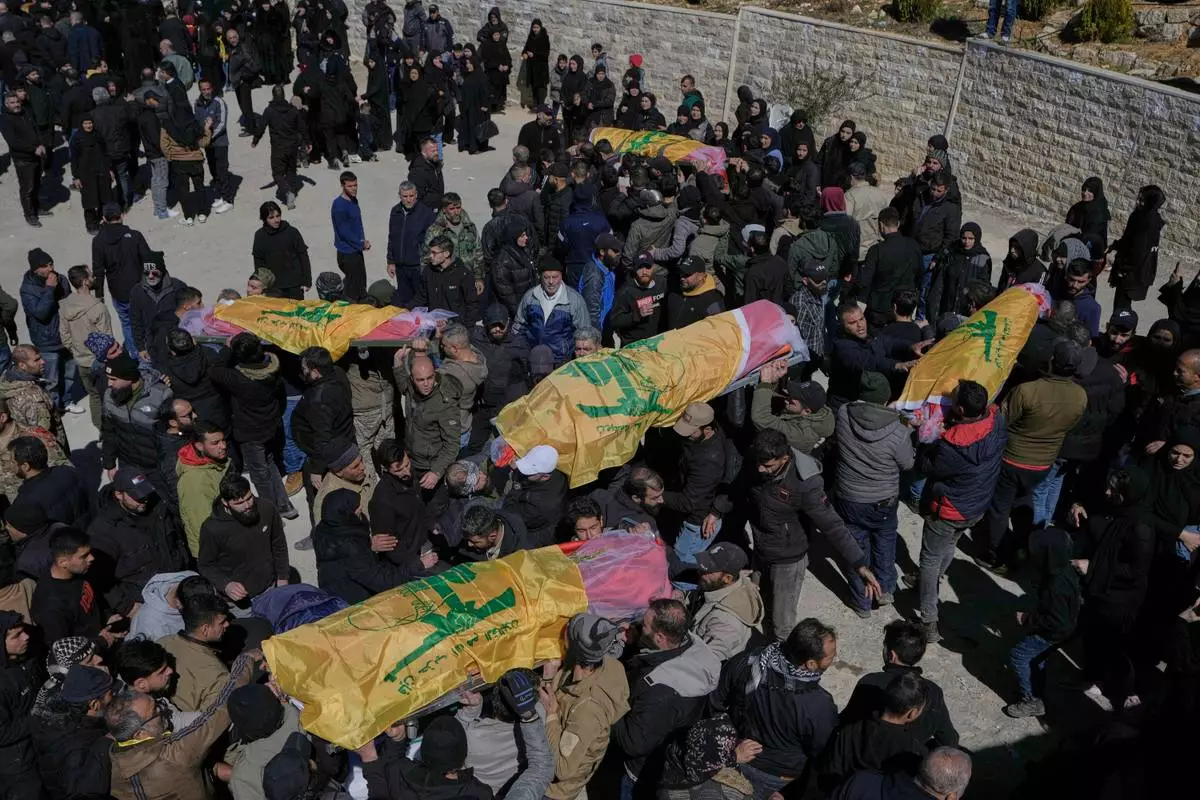
Mourners carry the bodies of Hezbollah fighters who were killed by Israeli airstrikes during their funeral procession in Khraibeh village, eastern Lebanon, Sunday, March 8, 2026. (AP Photo/Bilal Hussein)
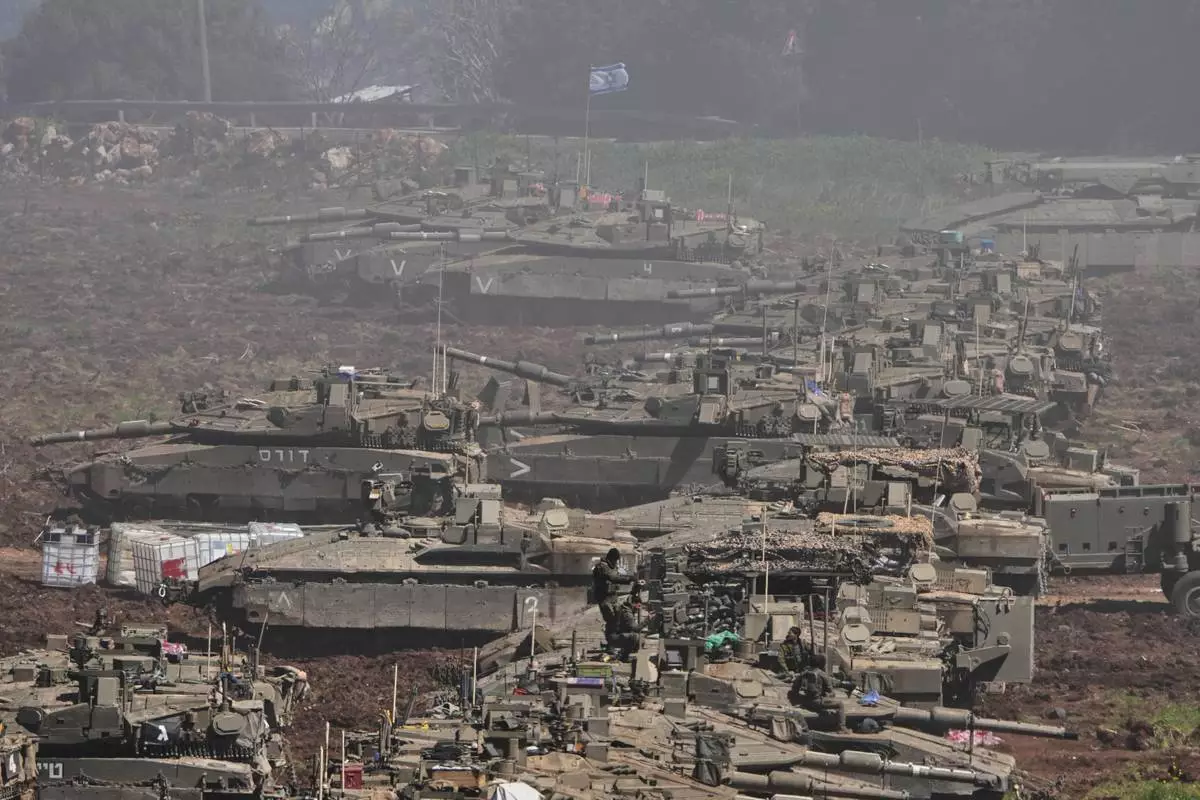
Israeli tanks are parked in a staging area in northern Israel near the border with Lebanon, Israel, Sunday, March 8, 2026. (AP Photo/Ariel Schalit)
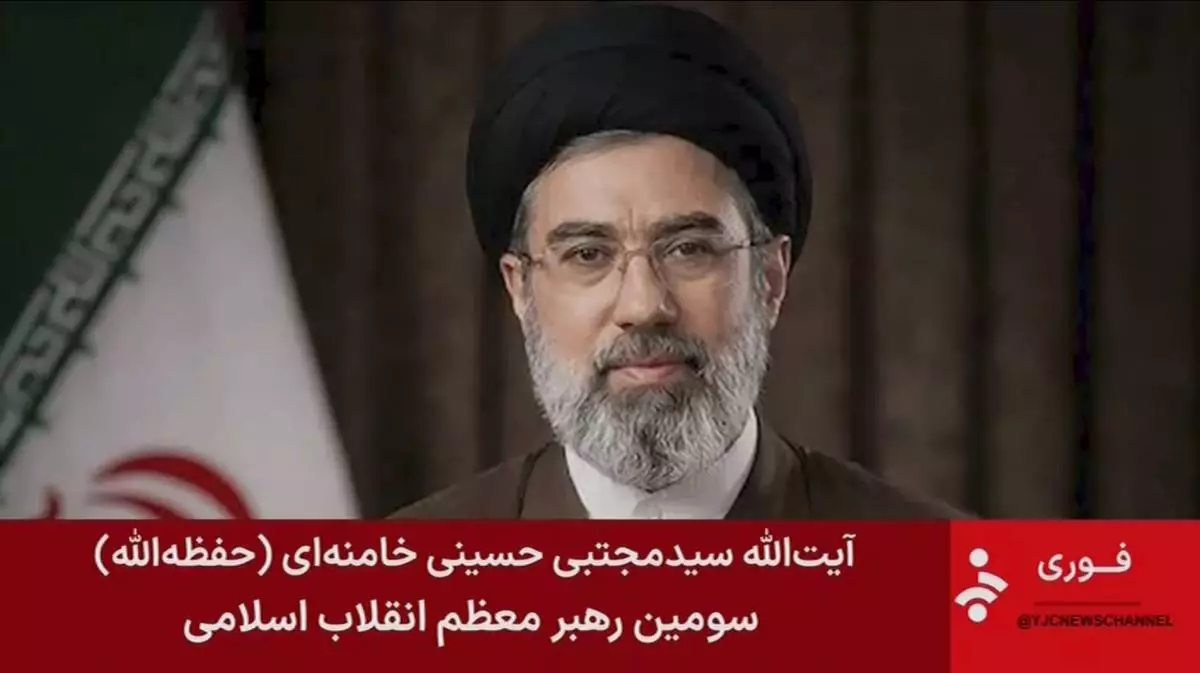
This image taken from video provided by Iran state TV shows Mojtaba Khamenei, a son of Iran's slain supreme leader, who has been named as the Islamic Republic's next ruler, authorities announced Monday, March 9, 2026. (Iran state TV via AP)
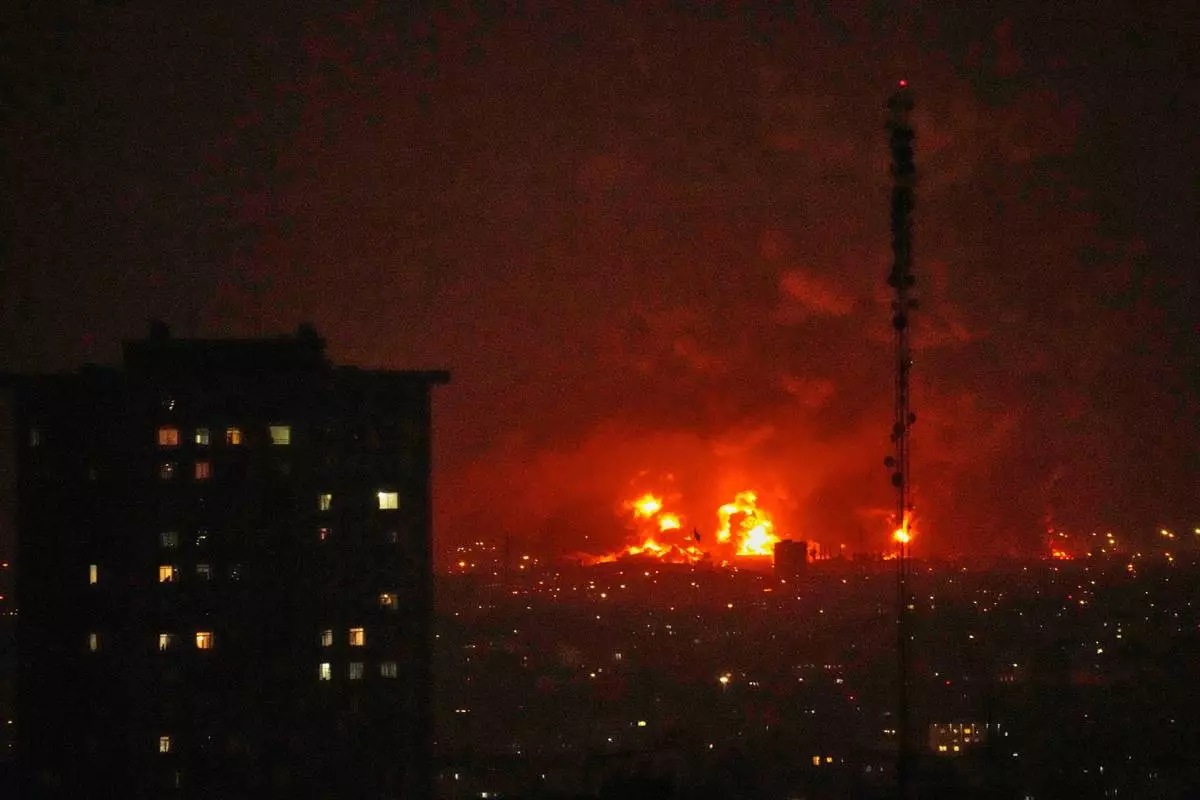
Flames rise from an oil storage facility south of the capital Tehran as strikes hit the city during the U.S.–Israel military campaign, Iran, Saturday, March 7, 2026. (AP Photo/Vahid Salemi)