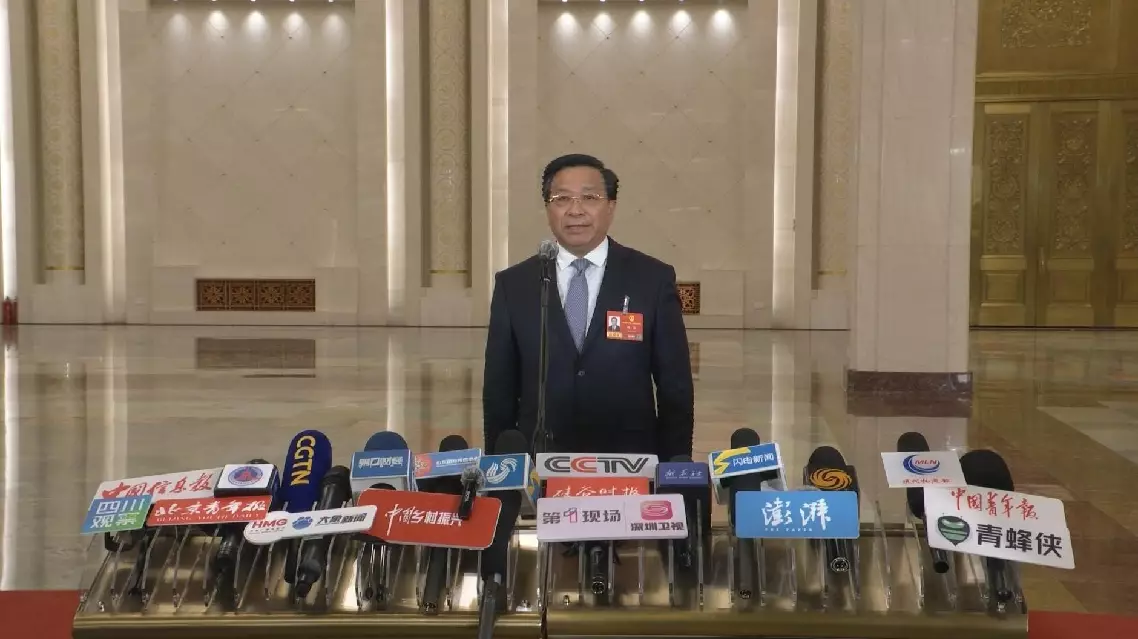
China's Minister of Agriculture and Rural Affairs Han Jun said on Monday that the country will prioritize agricultural productivity, green technology and diversity to ensure that "China's food supply remains firmly in its own hands".
Briefing media on the ministry's work at a group interview of the fourth session of the 14th National People's Congress (NPC), Han emphasized that food security concerns the safety of life and survival, calling it the utmost national security.
China has maintained a new level of 700 billion kilograms of grain output for two consecutive years, with per capita grain availability exceeding 500 kilograms, which is above the world average, he said.
The minister elaborated on three priorities that China is focusing on in consolidating food security.
"First, ensuring quantity. That is to put capacity improvement as the top priority, making greater efforts to carry out a new round of initiatives to boost grain production by 50 billion kilograms, stabilizing the grain acreage, and increasing per-unit yield of major grain and oil crops. By promoting the efficient integration of high-quality farmland, seeds, machinery, and methods, we will solidly implement the strategies of storing grain in the land and in technology, and ensure stable and abundant grain production," said the minister.
"Second, ensuring quality. That is to target green and high-quality development by cultivating superior varieties, promoting green production technologies at the grassroots level, improving post-harvest processing, and advancing strict quality control to enhance the adaptability and effectiveness of our agricultural supply system," he said.
"Third, ensuring diversity. That is to have a broad view of agriculture and food, advance crop farming, forestry, animal husbandry, and fisheries together, vigorously develop modern animal husbandry and fisheries, promote facility agriculture and under-forest economies according to local conditions, and strengthen the forest and grass industries. Our goal is to build a diversified food supply system to better meet the people diversified, personalized, and differentiated demands for agricultural products," said Han.
China to prioritize productivity, green technology, diversity to consolidate food security: minister
Highlighting the "Future Energy" as a key direction for China's strategic emerging industries, the country's nuclear energy development, guided by its three-step strategy, has seen major strides in the past year, said a member of the 14th National Committee of the Chinese People's Political Consultative Conference (CPPCC).
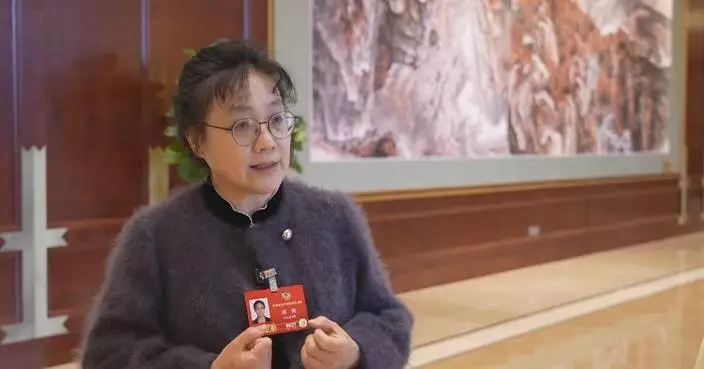
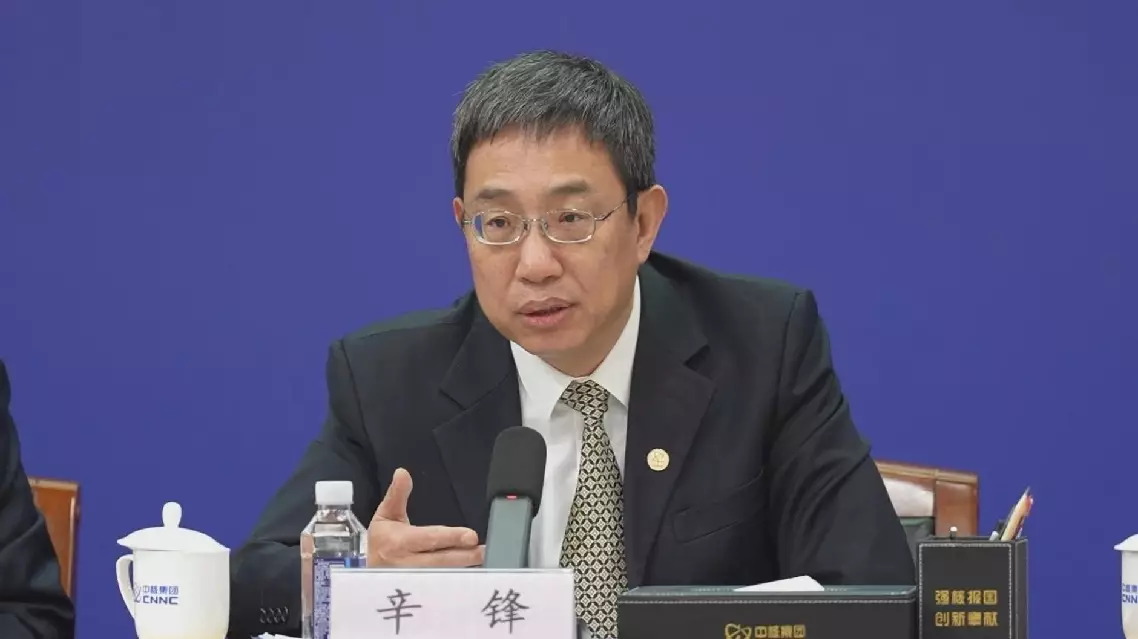
In a recent press briefing, Xin Feng, also deputy general manager of China National Nuclear Corporation (CNNC), updated the media on the progresses China has achieved under the strategy.
"China's three-step strategy for nuclear energy development -- from the thermal reactor to the fast reactor and the fusion reactor -- was formulated in 1983 as a medium- and long-term plan. For the thermal reactor, over the past year, our 2.0 version of the Hualong One technology has been approved. This is a unified and fully self-owned intellectual property based third-generation nuclear power technology solution. And the Linglong One small modular reactor also successfully completed its cold-state functional test last year and is expected to be put into commercial operation this year," he said.
For the second and third steps, Chinese researchers and engineers have achieved milestones in the past year with the government support, Xin noted.
"Then for the fast reactor, last year, a closed-cycle system for an integral fast reactor successfully achieved preliminary standard design. We will continue to solve its engineering technology challenges. As for the fusion reactor, in 2025, with national support, we established the China Fusion Energy Company in Shanghai. And our Huanliu-3, a platform for conducting research and development of fusion technology, made a big stride, with an iron temperature in it achieving 117 million Celsius and an electron temperature reaching 160 million Celsius. We will continue to adhere to the development strategy and focus on technological research and engineering technology development," Xin said.
The fourth session of the 14th NPC and the fourth session of the 14th National Committee of the CPPCC kicked off in Beijing on March 5 and March 4, respectively.
The "two sessions" -- which refer to the annual meetings of China's supreme organ of state power, the National People's Congress (NPC), and its top political advisory body, the National Committee of the CPPCC -- are a key event on the country's political calendar and offer a window into the country's development direction.
China's nuclear energy development makes great strides with three-step strategy: CPPCC member