DHAKA, Bangladesh (AP) — Bangladesh’s police chief said Monday that diplomatic efforts are being made with India to arrange the handover of two suspects in the December killing of a Bangladeshi political activist that sparked protests across the country.
Authorities in India said Sunday that a special police team arrested two Bangladesh nationals, Faisal Karim Masud and Alamgir Hossain, during a raid in Bongaon, a city in the North 24 Parganas district of India's West Bengal state.
The two are suspects in the Dec. 12 shooting of Sharif Osman Hadi, who took part in the 2024 political uprising that ended former Bangladesh Prime Minister Sheikh Hasina’s 15-year rule. Days after being shot in the Bangladeshi capital Dhaka, he was flown to Singapore for further treatment and died there Dec. 18.
An Indian court on Sunday ordered the two suspects to be held for questioning, the PTI news outlet reported.
Bangladesh Inspector General of Police Mohammed Ali Hossain Fakir said Monday that the Ministry of Foreign Affairs was working to transfer the suspects through Bangladesh's extradition treaty with India.
Separately, Bangladesh’s junior minister for foreign affairs Shama Obaed said later Monday that the country expected cooperation from India on granting consular access and the subsequent extradition of the suspects. She said that consular access was necessary to confirm the identities of the suspects by Bangladeshi officials.
She said Bangladesh is waiting for response from India.
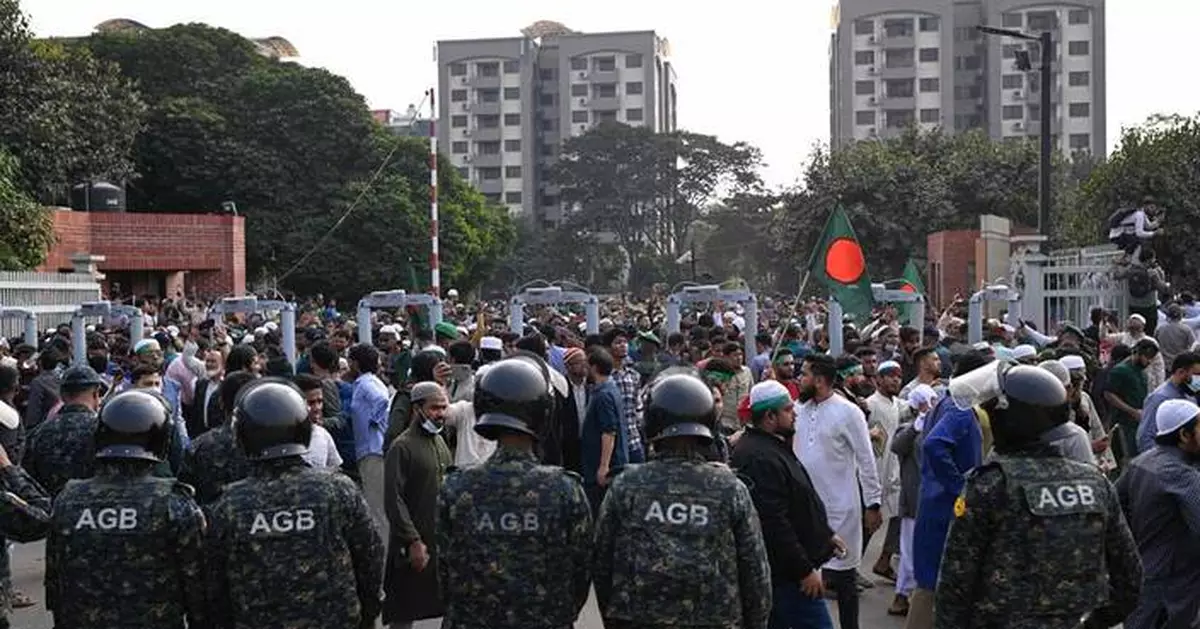
Hadi was a student leader and spokesperson of a youth group, Inquilab Mancha, which promoted cultural revolution in Bangladesh. His death sparked protests across the country. Furious protesters rallied in Dhaka and attacked the offices of the country’s two leading daily newspapers.
Hadi’s supporters blamed India and former Prime Minister Hasina for killing him. He had fiercely criticized India and Hasina, who fled to India after the mass uprising ended her rule in August 2024. Liberals in Bangladesh blamed Hadi for promoting radical views as he built a strong follower base among young people and Islamists.
Police in Bangladesh previously said they identified the suspects in the killing but they may have fled the country. Indian authorities said the men sheltered in the border area of Bongaon with the intention of crossing back into Bangladesh.
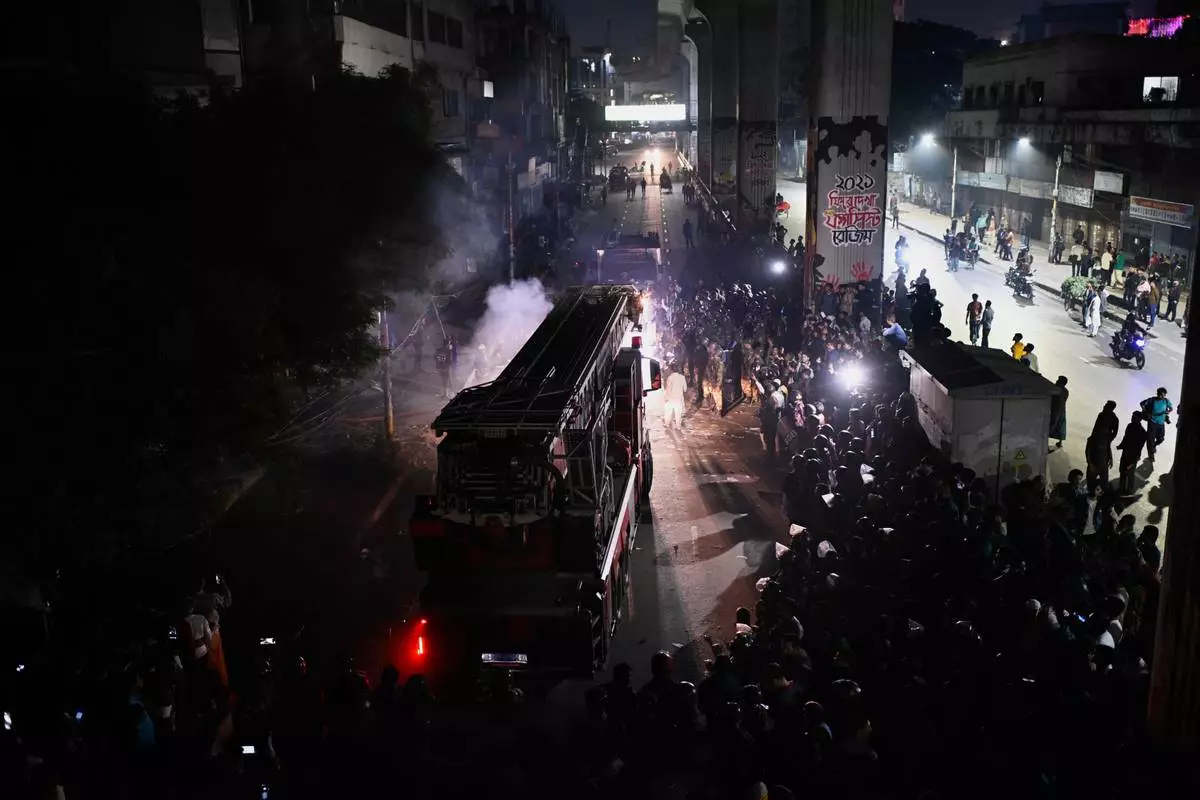
FILE - A fire engine arrives at the premises of The Daily Star newspaper after angry protesters set it on fire after news reached the country from Singapore of the death of a prominent activist Sharif Osman Hadi, in Dhaka, Bangladesh, Dec. 19, 2025. (AP Photo/Mahmud Hossain Opu, file)
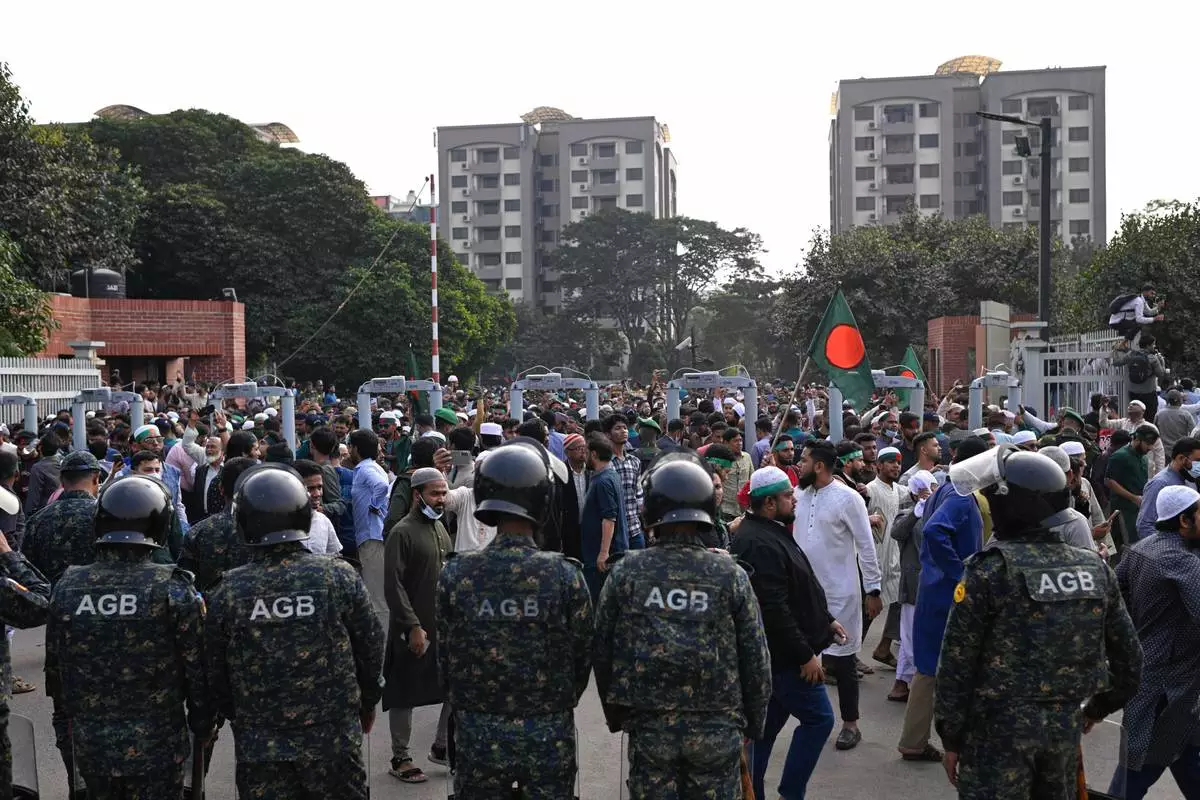
FILE - Security forces stand guard at the entrance of nation's Parliament complex as people arrive to perform funeral prayers for leading Bangladeshi activist Sharif Osman Hadi, who died from gunshot wounds sustained in an attack in Dhaka earlier this month, in Dhaka, Bangladesh, Dec. 20, 2025. (AP Photo/Mahmud Hossain Opu, file)
DUBAI, United Arab Emirates (AP) — Oil prices surged and stock markets slid Monday after hard-line Ayatollah Mojtaba Khamenei was chosen to succeed his late father as Iran's supreme leader. His appointment, and new strikes on regional oil infrastructure, signaled that Iran was digging in 10 days into the war launched by the United States and Israel.
The war has choked off major supplies of oil and gas to world markets, led foreigners to flee from business hubs and prompted millions to seek shelter as bombs hit sites like military bases, government buildings, oil and water installations, hotels and at least one school.
Khamenei, a secretive 56-year-old cleric, is only the third supreme leader in the history of the Islamic Republic. He has close ties to the paramilitary Revolutionary Guard, which has been firing missiles and drones at Israel and Gulf Arab states since his father, Ayatollah Ali Khamenei, who had ruled since 1989, was killed during the war’s opening salvo.
The appointment suggests Tehran is not close to giving up on what it considers a fight for the Islamic theocracy's survival.
Thousands poured into a central square in the capital, Tehran, and other locations in a show of allegiance to the new supreme leader, waving flags and shouting phrases like “Death to America” and “Death to Israel.”
“America and Israel: you’ve failed and you will drown in the swamp you are stuck in,” said Abbas Ali Saeedipoor, one of the demonstrators.
Iranian authorities have long encouraged public shows of support for the Islamic Republic while violently cracking down on dissent. Thousands of people were killed and tens of thousands detained during mass protests against the elder Khamenei earlier this year.
Brent crude oil, the international standard, surged to nearly $120 a barrel Monday, about 65% higher than when the war started, before retreating below $100. The Dow Jones Industrial Average sank more than 600 points, or over 1.3%, shortly after opening — marking a drop of more than 6-1/2% from its all-time high close last month, though it later pared its losses.
Iran’s attacks in the Strait of Hormuz have all but stopped tankers from using the shipping lane through which a fifth of the world’s oil is carried, and Iranian drones and missiles have targeted oil and gas infrastructure in major producers.
“There is not an oil shortage,” U.S. President Donald Trump wrote on Truth Social overnight. “Prices will drop again soon,” he added, suggesting shipments from Venezuela to the U.S. could help offset the price spike.
The White House said Trump was planning a news conference later Monday to focus on the situation in Iran.
Secretary of State Marco Rubio said the United States is “well on our way” to achieving its objective, which he said was to eliminate Iran’s ballistic missile stockpile, and its ability to produce and launch them. The administration has offered shifting rationales and timelines since the start of the conflict.
Elsewhere in the region, sirens blared multiple times across Israel on Monday amid unrelenting Iranian drones and missiles. A man was killed in central Israel in a missile strike, the first such death in Israel in a week, and a woman was wounded.
Israel said Monday that it was carrying out “a wide-scale wave of strikes” on the Iranian city of Isfahan, as well as Tehran and in southern Iran. The Israeli military said it hit dozens of infrastructure sites across Iran, including the drone headquarters of the Revolutionary Guard.
Turkey meanwhile said NATO defenses had intercepted a ballistic missile that entered the country’s airspace for the second time since the war started.
The younger Khamenei, who has not been seen in public since the war started, was long considered a potential successor — even before the killing of his 86-year-old father. The younger Khamenei's wife, Zahra Haddad Adel, was killed in the same strike.
An Iranian state TV report suggested the younger Khamenei may have been wounded in that strike, though a state TV analyst later appeared to amend the report, saying he had been wounded in the 1980s Iran-Iraq war in which he served.
The younger Khamenei is seen as even less compromising than his late father, and as supreme leader has final say on all major policies, including war, peace and Tehran’s disputed nuclear program.
Though Iran’s key nuclear sites are in tatters after the U.S. bombed them during the 12-day Israel-Iran war in June, it still has highly enriched uranium that’s a technical step away from weapons-grade levels. Khamenei could choose to do what his father never did — build a nuclear bomb.
President Masoud Pezeshkian, a relative moderate in Iran’s Shiite theocracy, welcomed the choice in a post on X. Top Iranian security official Ali Larijani, speaking to Iranian state television, said Mojtaba Khamenei had been trained by his father and “can handle this situation.”
Israel has already described Khamenei as a potential target, while Trump has called him “unacceptable” and dismissed him as a “lightweight.”
Saudi Arabia lashed out at Iran following the drone attack on its massive Shaybah oil field, saying Tehran would be the “biggest loser” if it continues to attack Arab states.
In the UAE, home to the futuristic city of Dubai, authorities said two people were wounded by shrapnel from the interception of Iranian missiles over the capital, Abu Dhabi. By mid-afternoon, the Emirati Defense Ministry said 15 ballistic missiles and 18 drones were fired on the country on Monday.
Iran also attacked Kuwait, Qatar and Bahrain, where it hit a residential area, wounding 32 people, including several children, according to authorities. Another attack appeared to have started a fire at Bahrain's only oil refinery, sending thick plumes of smoke into the air.
The U.S. State Department early Monday ordered nonessential personnel and families of all staff to leave Saudi Arabia following the escalation in attacks. Several other U.S. diplomatic missions have ordered all but key staff to leave.
The war has killed at least 1,230 people in Iran, at least 397 in Lebanon and 11 in Israel, according to officials. Another person died in Israel of an asthma attack on her way to a shelter. Israel reported its first soldier deaths on Sunday, saying two were killed in southern Lebanon, where it is fighting Hezbollah. A total of seven U.S. service members have been killed.
UNICEF, the children's agency, reported that at least 83 children have been killed and 254 wounded in Lebanon since March 2.
“As military strikes continue across the country, children are being killed and injured at a horrifying rate, families are fleeing their homes in fear, and thousands of children are now sleeping in cold and overcrowded shelters,” it said.
Magdy reported from Cairo and Keaten from Geneva. Associated Press journalists David Rising in Bangkok; Sam Metz in Ramallah, West Bank; Natalie Melzer in Nahariya, Israel; Melanie Lidman in Tel Aviv, Israel; Sally Abou AlJoud in Beirut; Aamer Madhani in Doral, Florida; Lorne Cook in Brussels, Matthew Lee in Washington, and Edith M. Lederer at the United Nations contributed reporting.
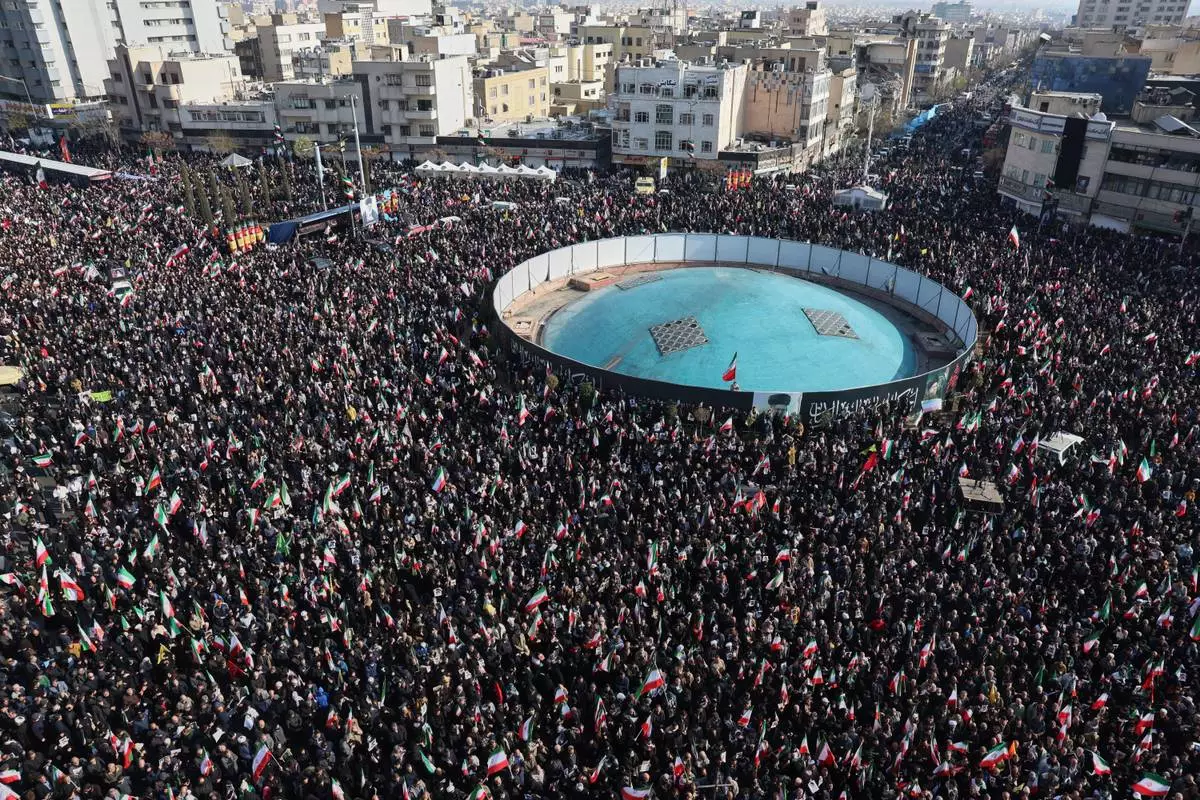
People gather in a rally to support Ayatollah Mojtaba Khamenei, the successor to his late father Ayatollah Ali Khamenei as supreme leader, in Tehran, Iran, Monday, March 9, 2026. (AP Photo/Vahid Salemi)
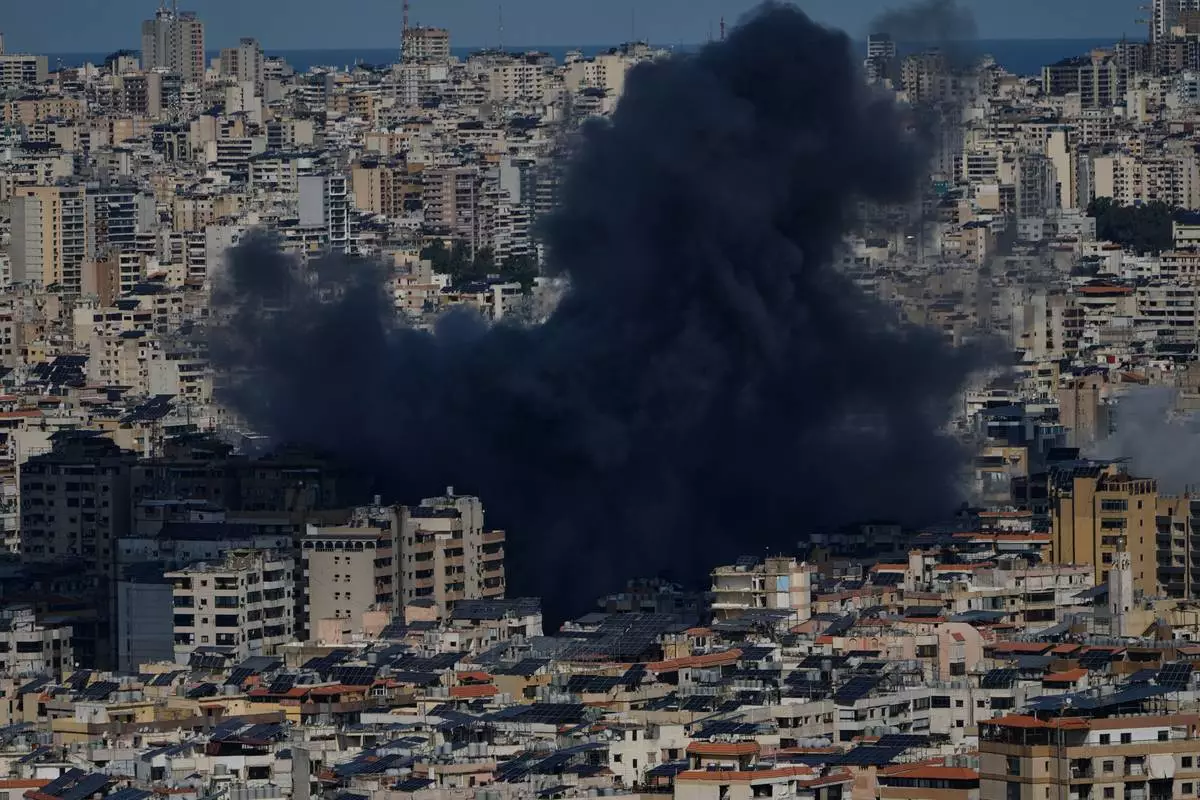
Smoke rises following an Israeli airstrike in Dahiyeh, Beirut's southern suburbs, Lebanon, Monday, March 9, 2026. (AP Photo/Bilal Hussein)
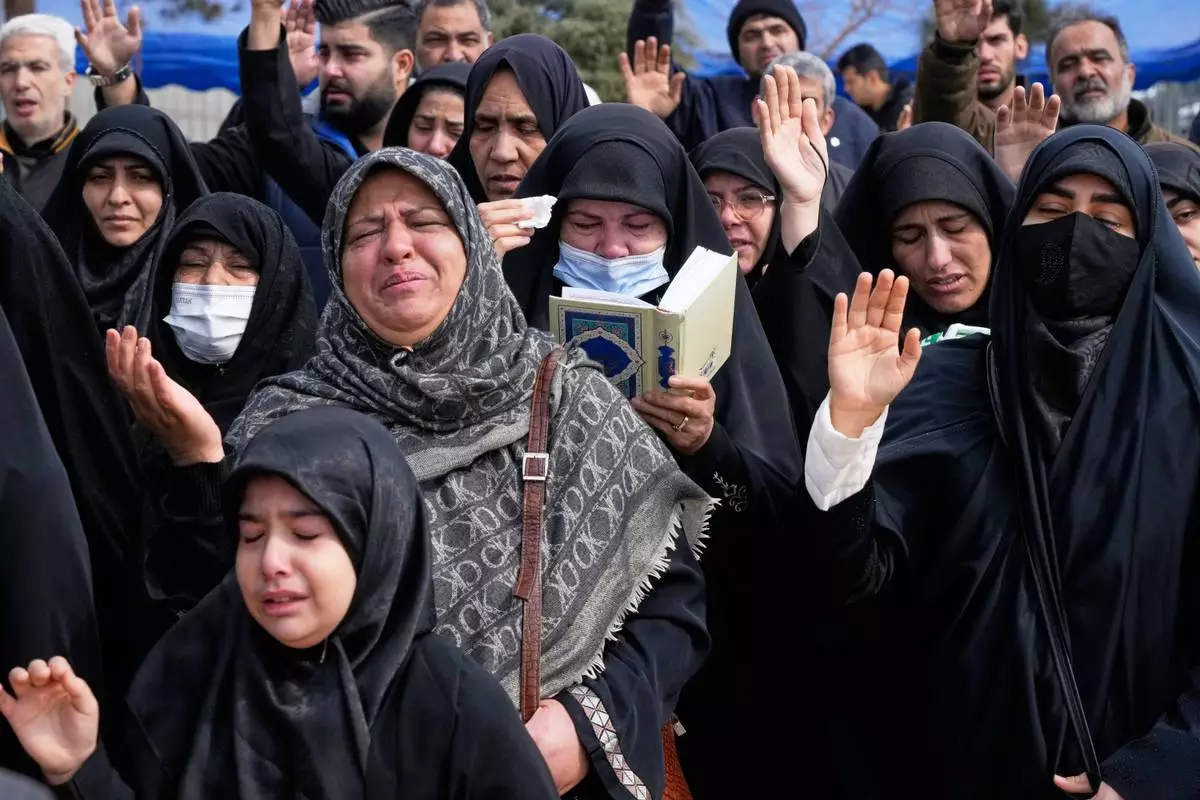
Mourners pray during the funeral of Mehdi Hosseini, a man killed in a U.S.-Israeli strike, at Behesht-e Zahra cemetery in Tehran, Iran, Monday, March 9, 2026. (AP Photo/Vahid Salemi)
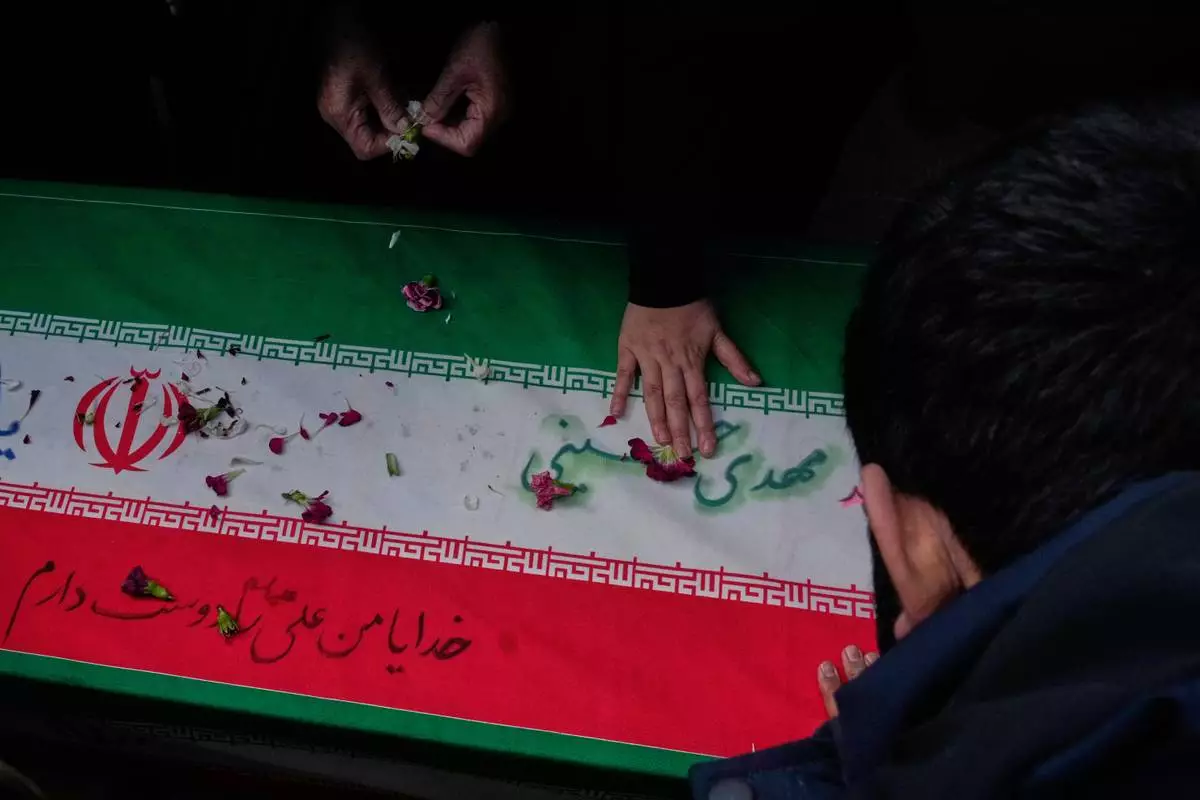
Relatives mourn over the flag draped coffin of Mehdi Hosseini who was killed in a U.S.-Israeli strike during his burial ceremony at Behesht-e Zahra cemetery in Tehran, Iran, Monday, March 9, 2026. (AP Photo/Vahid Salemi)
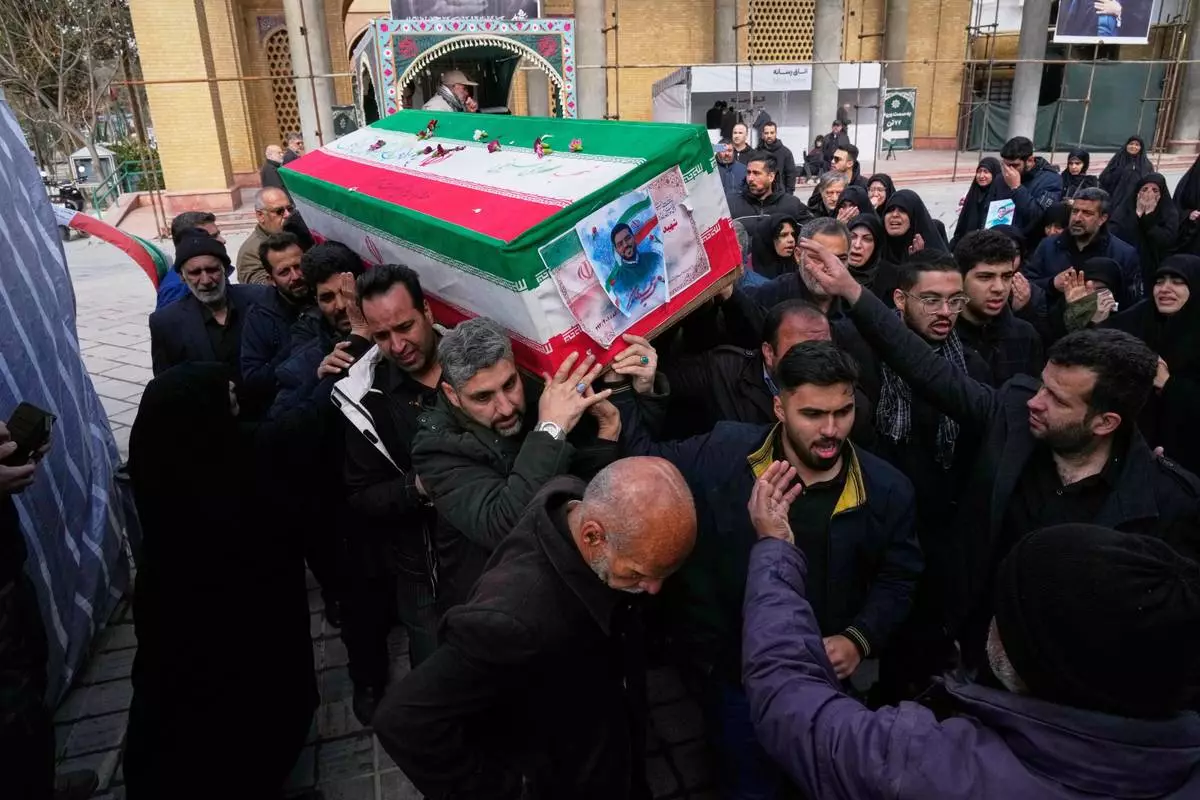
The coffin of Mehdi Hosseini, a man killed in a U.S.-Israeli strike, is carried for burial at Behesht-e Zahra cemetery in Tehran, Iran, Monday, March 9, 2026. (AP Photo/Vahid Salemi)
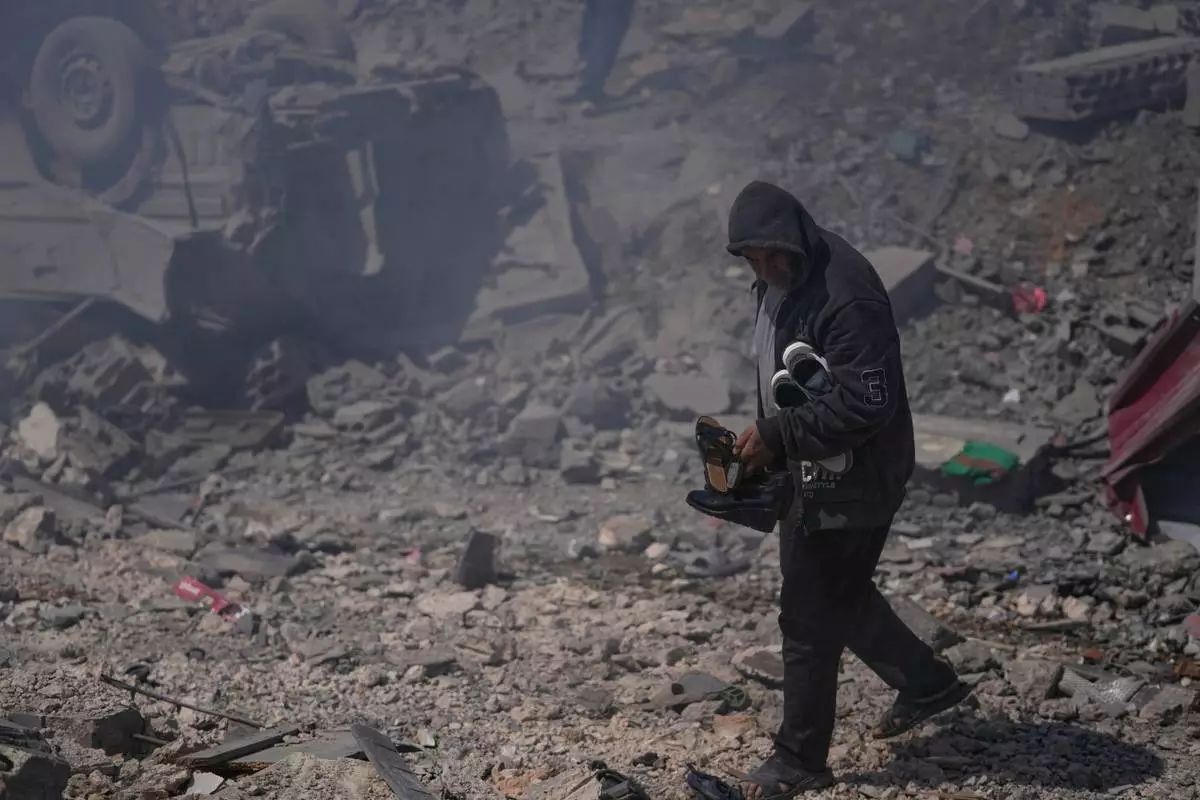
A man carries shoes from his destroyed house that was hit by Israeli airstrikes hit several houses in Sir al-Gharbiyeh village south Lebanon, Sunday, March, 8, 2026. (AP Photo/Mohammed Zaatari)
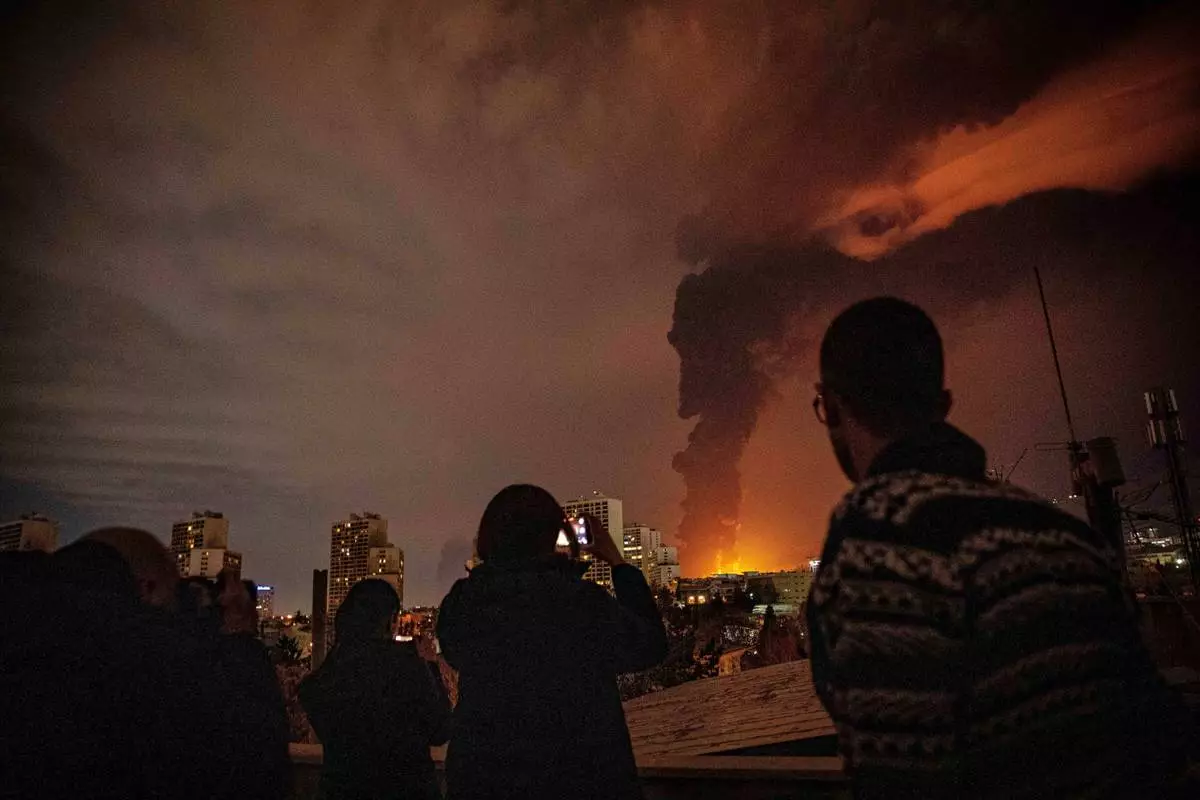
Residents look on and take pictures as flames and smoke rise from an oil storage facility struck as attacks hit the city during the U.S.–Israeli military campaign in Tehran, Iran, Saturday, March 7, 2026. (Alireza Sotakbar/ISNA via AP)
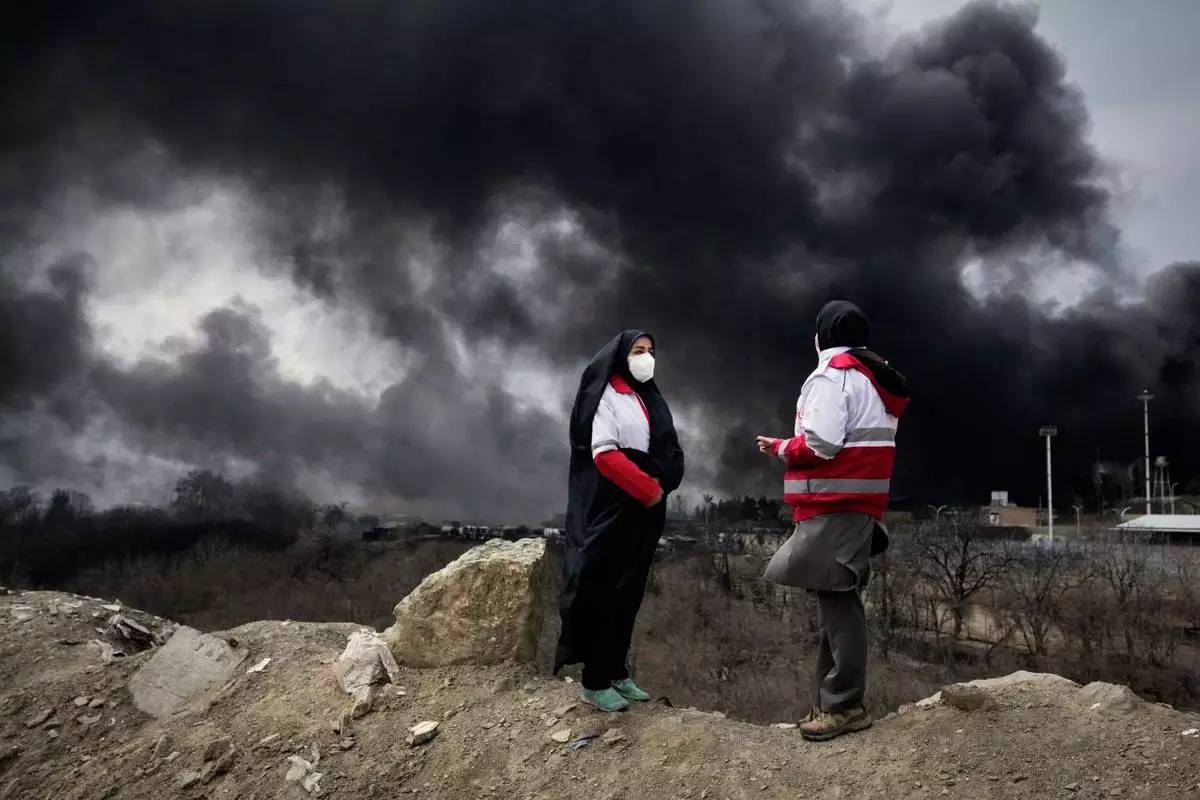
Two women from the Iranian Red Crescent Society stand as a thick plume of smoke from a U.S.-Israeli strike on an oil storage facility late Saturday rises in the sky in Tehran, Iran, Sunday, March 8, 2026. (AP Photo/Vahid Salemi)
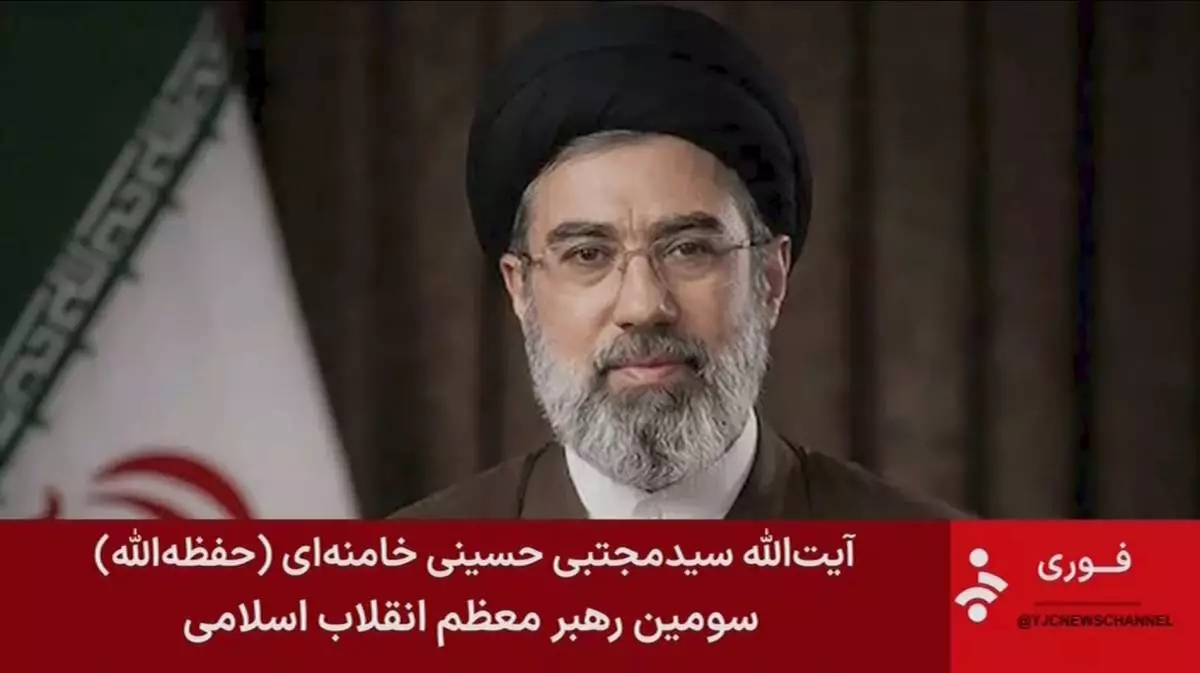
This image taken from video provided by Iran state TV shows Mojtaba Khamenei, a son of Iran's slain supreme leader, who has been named as the Islamic Republic's next ruler, authorities announced Monday, March 9, 2026. (Iran state TV via AP)