Skip to Content Facebook Feature Image

Q&A: Activists, 'sister-friends' Gloria Steinem and Leymah Gbowee channel their bond into a new book

ENT

Q&A: Activists, 'sister-friends' Gloria Steinem and Leymah Gbowee channel their bond into a new book
ENT

ENT

Q&A: Activists, 'sister-friends' Gloria Steinem and Leymah Gbowee channel their bond into a new book

2026-03-09 22:05 Last Updated At:22:10

Leymah Gbowee, the Liberian peace activist and Nobel Peace Prize winner, says she doesn’t pay much attention to celebrities. With one key exception: that time she first met Gloria Steinem.

“I was just starstruck,” Gbowee confesses to The Associated Press of the moment a mutual friend introduced her to the feminist icon. “Everyone knows of Gloria, regardless of which continent you come from.”

Steinem, for her part, protests that she’s not any more of a star than Gbowee. “She’s a GLOBAL celebrity,” the famed activist, now 91, says of Gbowee, 54, who won the Nobel in 2011 for her work promoting peace and women’s rights in Liberia.

In any case, their introduction two decades ago — via filmmaker and fellow activist Abigail Disney, who'd made a documentary about Gbowee's peace movement — led to a strong friendship, separated by an ocean but fueled by shared commitment to social justice.

“Their spirits were in sync,” recalls Disney. “I said: ‘My work is done here. You guys do your thing.’”

Steinem smiles when repeating the phrase “sister-friend,” a term she says Gbowee invented: “It just expressed how we felt.” Now, the friendship — and that phrase — has led to something tangible and colorful: “Rise, Girl, Rise: Our Sister-Friend Journey. Together For All,” a picture book for kids. Dubbed “a journey of activism, sisterhood and friendship,” it’s both a joint biography and a call to a new generation to fight for equality.

With vivid illustrations by Kah Yangni, the two women trace their childhoods, young Steinem traveling the United States in a trailer with her antique-dealer father, over “miles of highways fruit stands, gas stations, diners,” and Gbowee in Liberia, “a land rich with timber, ripe with hopes for a new tomorrow.” They learn about injustice and inequality in their countries, and grow up to fight it — meeting as adults around a kitchen table.

The friends spoke in separate interviews — Gbowee from Liberia, and Steinem from her Manhattan brownstone — about their friendship, their book, and that kitchen table. Interviews have been combined and edited for length and clarity.

GBOWEE: Gloria and I were introduced by a mutual friend, Abby Disney, many moons ago. And from that time onward, I was like, “If I ever need to talk to you, can we? And it was “Yes, yes, yes.” And it’s been that way for a long time. When I was pregnant with my daughter (now 16), we had the baby shower at Gloria’s home.

STEINEM: I remember her as a kind of global, amazing figure who somehow from Africa to the U.S., through Europe, everywhere, is a unifying figure and unifying storyteller. …. I mean, she IS the movement. Look at her life. She’s an inspiration, whether we’re talking about an ecological global save-the-trees movement or about women’s equality.

GBOWEE: It was our Easter Sunday conversation in 2009, where I was really feeling funky about being in the feminist movement. Did I want to stay? Did I want to leave? And she said to me, “One of the reasons you feel the way you’re feeling is because you need a sister.” She was telling me about how she had all these sisters from Alice Walker to different people she used to go on trips with, they didn’t need anything from each other, just to be there for each other. She said, “That’s the kind of person you need, that you can be very vulnerable with.” It was a beautiful conversation.

STEINEM: First of all, we wanted to communicate, to write, to somehow connect with each other despite the global distance. … I think that as children, we were interested in stories and were ourselves storytellers, as well as consumers of stories. We also had a relationship to the natural world, which perhaps is true for most children. Just a sense of kinship with trees and flowers and gardens.

GBOWEE: During the pandemic, I started writing a lot. Someone put me in touch with Scholastic and I sent a manuscript and they looked at it and said, “Let’s talk some more.” I raised the issue of wanting to collaborate with a few individuals. And once I said “Gloria,” they were like, “Do you know her?” I was like, “Of course I know Gloria!”

STEINEM: Until the sixth grade. We lived in rural Michigan in the summertime ... And in the wintertime, my father always put the whole family in a house trailer and we were working our way, buying and selling antiques and so on, to Florida or California. I think my family thought because I was always reading books in the back seat, that was enough.

STEINEM: Well, I’m probably still lousy at math.

STEINEM: (Laughing) I mean, it’s called “Rise, Girl, Rise,” but I think boys could tolerate that title, too. Girls have read “The Hardy Boys” for years and other boys’ books and felt connected.

GBOWEE: They say from age 11, but I would say I'd read it to my seven-year-old grandson. I would read it to my five-year old grandson. None of my kids have children, but I have daughters of the heart and they have children. So they're my grandchildren. And that book is appropriate for them. The message of love and acceptance and everything else is something I want to pass on to them.

STEINEM: There's a continuing series of meetings going on in my living room, sometimes initiated by me, sometimes by other people. We’re all certainly concerned with the political system in an electoral sense. And, you now, we live in a democracy that’s one of the few in the world that’s never had a female elected leader. That’s kind of ridiculous. I mean, we’re choosing from half the country’s talent.
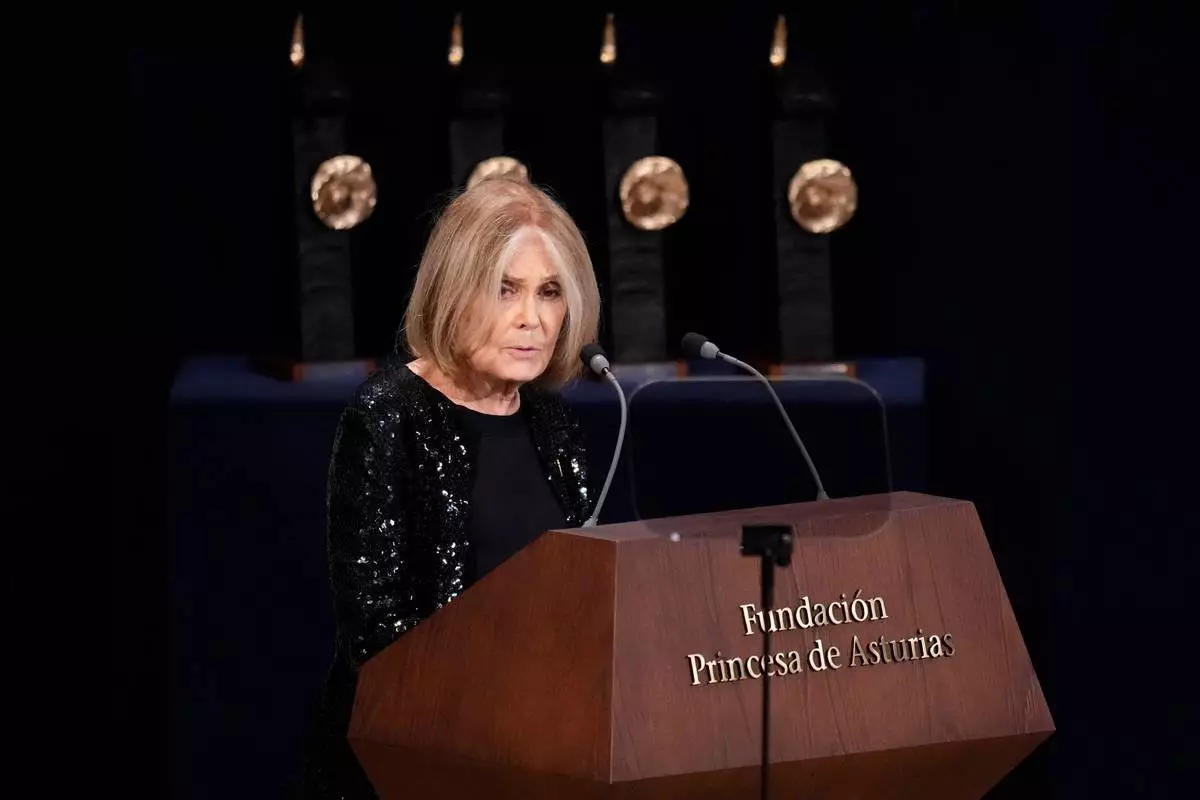
FILE - Gloria Steinem speaks during the 2021 Princess of Asturias Awards ceremony in Oviedo, northern Spain, Oct. 22, 2021. (AP Photo/Manu Fernandez, File)
FILE - Gloria Steinem speaks during the 2021 Princess of Asturias Awards ceremony in Oviedo, northern Spain, Oct. 22, 2021. (AP Photo/Manu Fernandez, File)

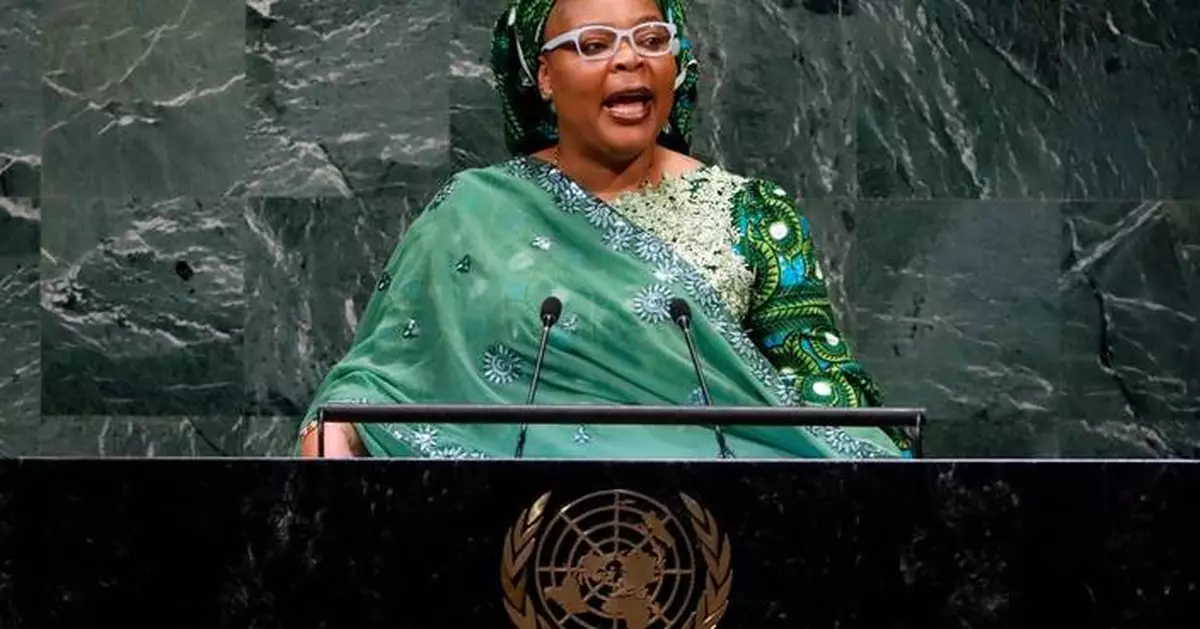
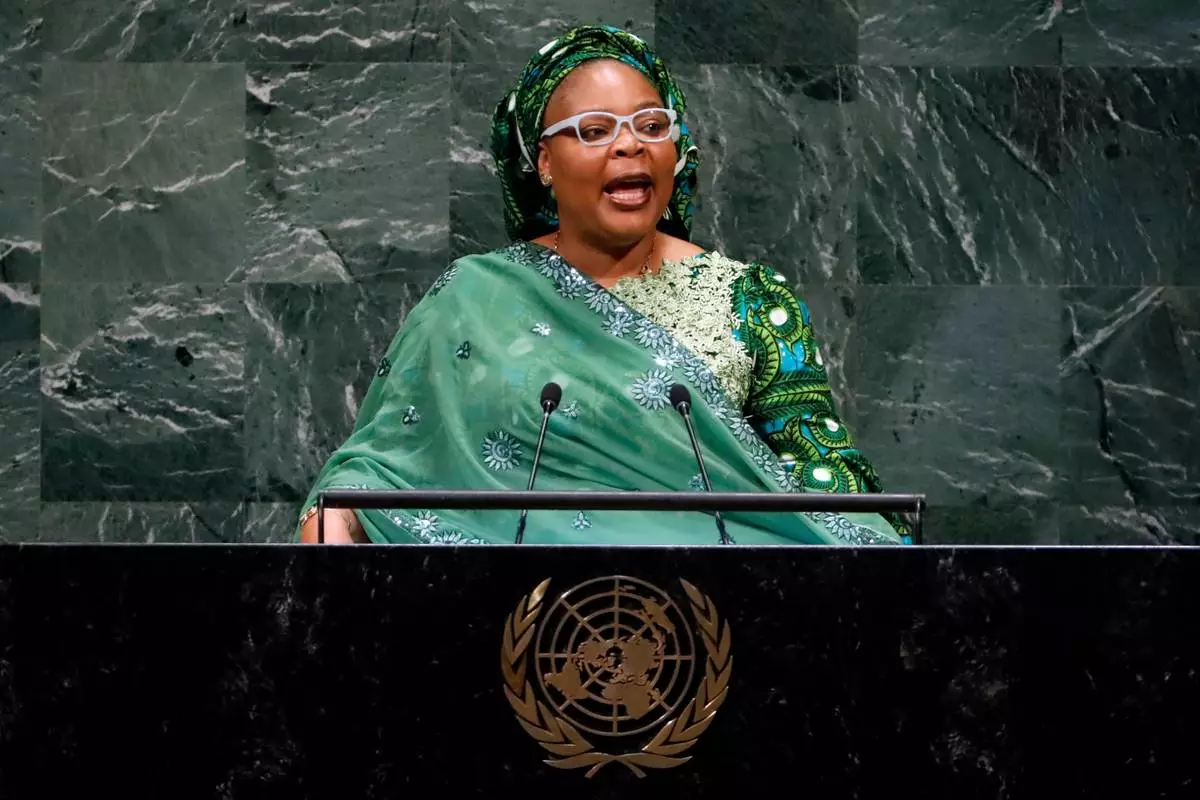
FILE - Nobel laureate Leymah Gbowee, from Liberia, addresses the 73rd session of the United Nations General Assembly, at U.N. headquarters, Sept. 25, 2018. (AP Photo/Richard Drew, File)
FILE - Nobel laureate Leymah Gbowee, from Liberia, addresses the 73rd session of the United Nations General Assembly, at U.N. headquarters, Sept. 25, 2018. (AP Photo/Richard Drew, File)

BEIRUT (AP) — The Lebanese parliament extended its term by two years on Monday due to the U.S.-Israel war with Iran, which has pushed the region into an escalating conflict, and Israel stepping up its attacks on Lebanon following renewed strikes with the militant group Hezbollah.

The Israeli military said Monday it was targeting Hezbollah’s financial arm, al-Qard Al-Hasan, as its ground forces in Lebanon's south launched “focused raids” against what it called the group’s infrastructure.

Meanwhile, Human Rights Watch has accused Israeli forces of using white phosphorus incendiary shells in strikes on residential areas in a Lebanese village in violation of international law.

Lebanon’s state news agency said 76 legislators voted in favor of the decision, 41 were against, and four abstained. Hezbollah’s 13-member bloc in parliament voted in favor of the extension.

The ongoing war with Israel that began last week has displaced over half a million people in Lebanon and made it difficult to hold a vote in large parts of the country.

The parliamentary elections were scheduled for May.

Residents of Beirut’s southern suburb, widely known as Dahiyeh, were ordered to evacuate before Israel launched strikes.

Smoke billowed over Beirut after the attacks. The first strike destroyed a building housing an office of al-Qard al-Hasan in the southern suburb of Chiyah. A Lebanese journalist on site told The Associated Press he was wounded in the leg and taken to a nearby hospital. Video footage showed what appeared to be two strikes on the building that were minutes apart.

The strikes on Chiyah were followed by more airstrikes on nearby areas, forcing Lebanese troops to close roads where al-Qard al-Hasan branches are located to ensure people's safety.

Israel says Hezbollah uses al-Qard al-Hasan to finance its military activities and has targeted several of the group's branches in southern and eastern Lebanon last week.

In southern Lebanon, the Israeli military said it launched a “focused raid” to eliminate Hezbollah operatives and infrastructure using a brigade combat team under the command of the 36th Division.

The military said before they initiated the operation, its forces launched a combined air and ground attack in the area.

Hezbollah, meanwhile, said it struck Israeli troops inside Lebanon with anti-tank missiles and that it fired a volley of rockets on the northern Israeli city of Kiryat Shmona in retaliation for Israeli strikes on cities, towns and villages in Lebanon.

The group also said it had repelled an attempted Israeli helicopter landing in the eastern town of Nabi Chit, in the same area where a commando force landed two days earlier to search for the remains of Ron Arad, an Israeli navigator who has been missing for nearly 40 years after crashing in Lebanon.

The Israeli army said it was “not aware" of another attempted landing.

The latest round of fighting between Israel and Hezbollah beganon Feb. 2 when the group fired rockets and drones on northern Israel following the killing of Iran’s Supreme Leader Ayatollah Ali Khamenei two days earlier in a joint U.S.-Israeli strike. Israel retaliated with large waves of airstrikes and Israeli troops captured several new posts in southern Lebanon.

The Lebanese government last week declared Hezbollah’s military activities illegal and ordered the country’s security forces to detain those who were behind the strikes on Israel.

Three Hezbollah members were also detained last week while carrying weapons on their way to southern Lebanon and were questioned by judicial authorities. On Monday, the military court in Beirut ordered them released on a $20 bail each, judicial officials said.

The officials said the judge asked the three men what they were doing and they responded that they were heading to southern Lebanon to fight against Israeli forces. They spoke in condition of anonymity as they are not allowed to speak to the media.

The human rights group said in a report Monday the Israeli military “unlawfully” hit a village in southern Lebanon with shells containing white phosphorus, a controversial incendiary munition.

Through geolocating and verifying seven images, Human Rights Watch said Israel fired white phosphorus using artillery at residential areas in the southern Lebanese village of Yohmor. It happened hours after the Israeli military warned the residents of the village and dozens of others in southern Lebanon to evacuate.

Human Rights Watch said it couldn’t independently identify if any residents were still in the area or if anyone was harmed.

The Israeli military said in a statement that it is “currently unaware and cannot confirm use of shells that contain white phosphorous in Lebanon as claimed.” It added that any weapons that contain white phosphorus are used in line with international law.

Human rights advocates say the use of white phosphorus is illegal under international law when the white-hot chemical substance is fired into populated areas. It can set buildings on fire and burn human flesh down to the bone. Survivors are at risk of infections and organ or respiratory failure, even if their burns are small.

“The Israeli military’s unlawful use of white phosphorus over residential areas is extremely alarming and will have dire consequences for civilians,” said Ramzi Kaiss, Lebanon researcher at Human Rights Watch.

Organizations like Human Rights Watch and Amnesty International said the munition was used in Israel’s last war with Hezbollah, over a year ago, on numerous occasions in southern Lebanon, while civilians were still present.

Melzer reported from Nahariya, Israel.

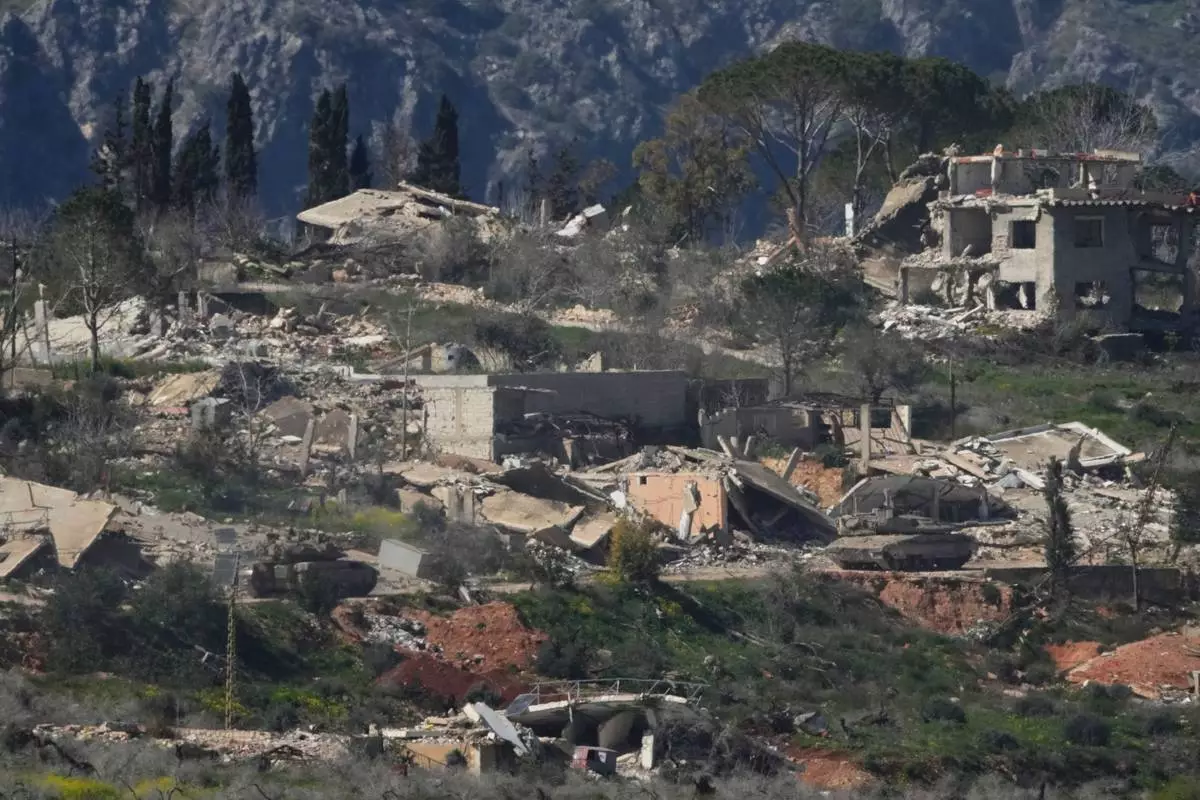
An Israeli tank maneuvers in southern Lebanon near the border with Israel, Sunday, March 8, 2026. (AP Photo/Ariel Schalit)

An Israeli tank maneuvers in southern Lebanon near the border with Israel, Sunday, March 8, 2026. (AP Photo/Ariel Schalit)

Recommended Articles