Skip to Content Facebook Feature Image

Prewar US intel assessment found intervention in Iran wasn't likely to change leadership

News

Prewar US intel assessment found intervention in Iran wasn't likely to change leadership
News

News

Prewar US intel assessment found intervention in Iran wasn't likely to change leadership

2026-03-10 02:57 Last Updated At:03:00

WASHINGTON (AP) — A U.S. intelligence assessment completed shortly before the United States and Israel launched a war in Iran had determined that American military intervention was not likely to lead to regime change in the Islamic Republic, according to two people familiar with the finding.

The National Intelligence Council's assessment in February concluded that neither limited airstrikes nor a larger, prolonged military campaign would be likely to result in a new government taking over in Iran, even if the current leadership was killed, according to the two people, who spoke on condition of anonymity to describe the classified report.

The determination undercuts the administration’s assertion that it can complete its objectives in Iran relatively quickly, perhaps in a matter of weeks. The administration has asserted that it was not seeking regime change in Iran, even as the strikes have taken out many figures in the Iranian leadership and President Donald Trump considers whom he would like to see lead the country.

The intelligence assessment concluded that no one powerful or unified opposition coalition was poised to take over in Iran if the leadership was killed, according to the people familiar with the report. It determined that Iran’s establishment would attempt to preserve continuity of power if Supreme Leader Ayatollah Ali Khamenei was killed, the people said.

In line with the assessment’s findings, Iran’s leading clerics on Sunday chose a new supreme leader, Mojtaba Khamenei, to succeed his father, who was killed in the war’s opening salvo. The son is believed to hold views that are even more hardline than his father, and his selection is a strong sign of resistance from Iran’s leadership and an indication the government won’t step aside quickly.

The details of the assessment were reported earlier by The Washington Post and The New York Times.

Trump and other top administration leaders have given different justifications for the strikes that began on Feb. 28, saying they were necessary to set back Iran's nuclear weapons program or to preempt an Iranian ballistic missile attack. While Defense Secretary Pete Hegseth has said the war is not aimed at regime change, Trump has said it's something he wants to see.

A spokesperson for the Office of the Director of National Intelligence declined to comment on the assessment on Monday and referred questions to the White House. Director Tulsi Gabbard fired the council's acting chairperson last year after the release of a declassified NIC memo that contradicted statements the Trump administration has used to justify deporting Venezuelan immigrants.

Trump, dating back to his first term, has been deeply skeptical of the U.S. intelligence community and has frequently dismissed its findings as politically motivated or part of a “deep state” effort to undermine his presidency.

Richard Goldberg, director for countering Iranian weapons of mass destruction at the National Security Council during Trump’s first term, noted that there’s also a measure of skepticism toward the intelligence community because of some of its big misses in recent years.

U.S. intelligence agencies widely failed to predict the rapid collapse of the Afghan government to the Taliban that transpired in 2021, with most assessments suggesting a much slower takeover. And in the lead-up to Russia’s invasion of Ukraine in 2022, the ODNI, the Defense Department and the CIA wrongly estimated that Kyiv would quickly fall to a bigger and better equipped Russian military.

Goldberg, who is now a senior adviser at the Foundation for Defense of Democracies, a hawkish Washington think tank, said an intelligence assessment is “almost like an op-ed from the intelligence community.”

Associated Press writers Aamer Madhani in Doral, Florida, and David Klepper in Washington contributed to this report.
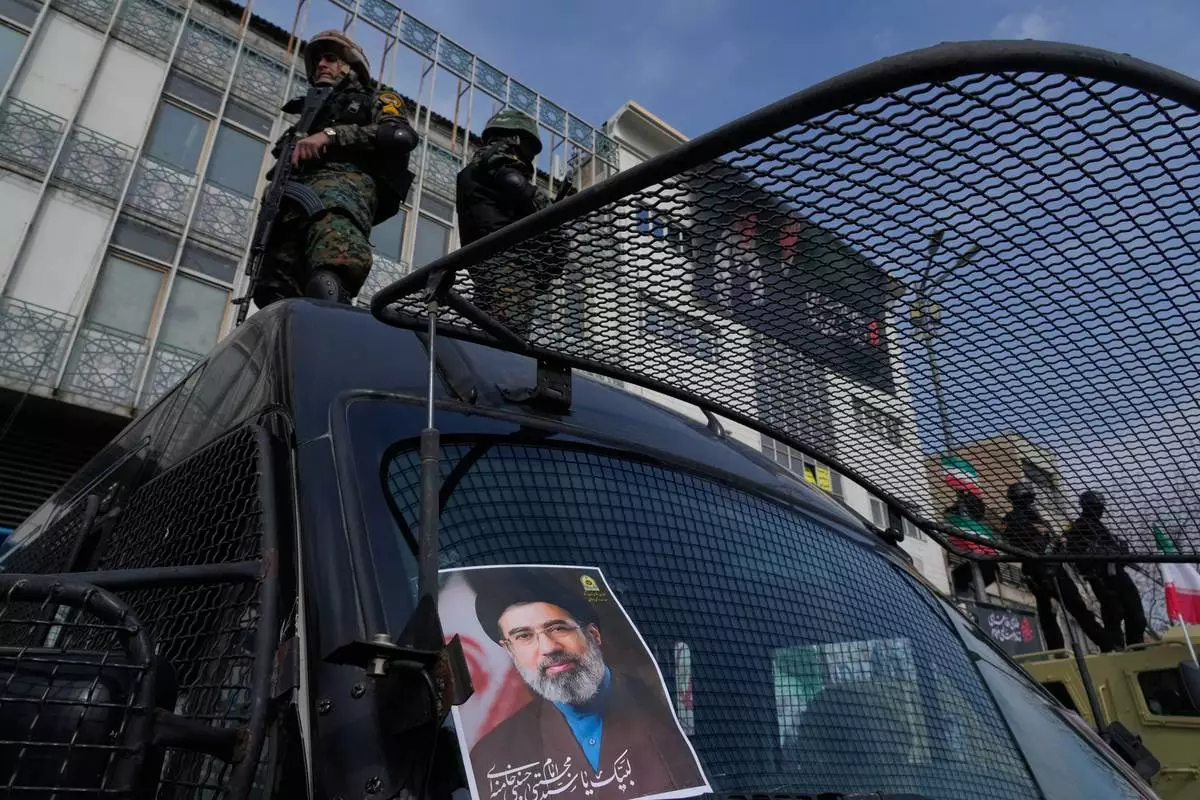
A poster of Ayatollah Mojtaba Khamenei, the successor to his late father Ayatollah Ali Khamenei as supreme leader is placed on an anti-riot police car as policemen stand on top of the car, during a rally to support him in Tehran, Iran, Monday, March 9, 2026. (AP Photo/Vahid Salemi)
A poster of Ayatollah Mojtaba Khamenei, the successor to his late father Ayatollah Ali Khamenei as supreme leader is placed on an anti-riot police car as policemen stand on top of the car, during a rally to support him in Tehran, Iran, Monday, March 9, 2026. (AP Photo/Vahid Salemi)

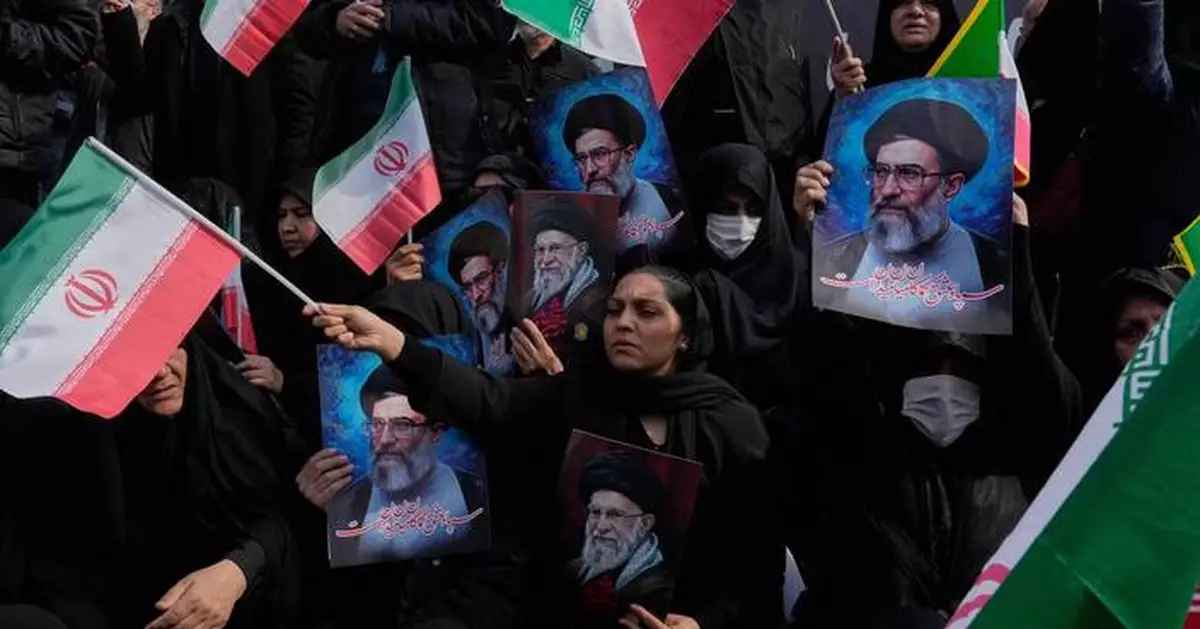
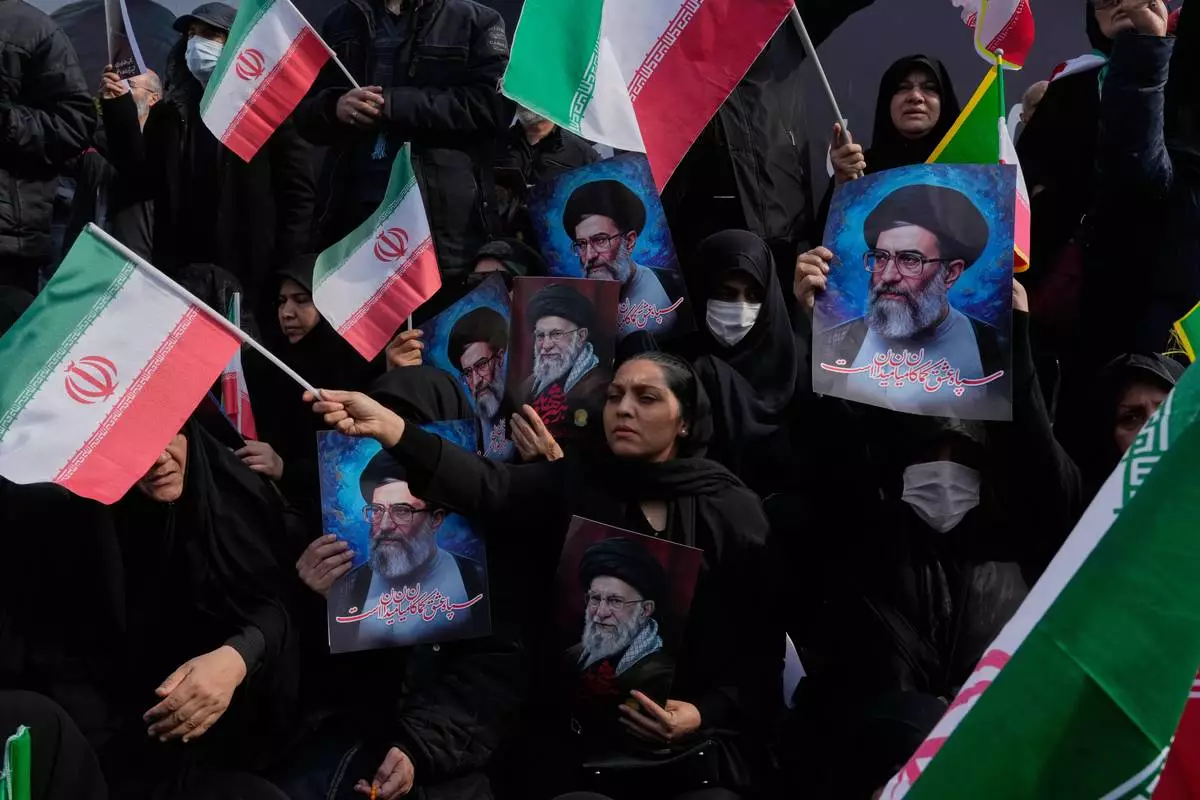
People wave Iranian flags as they hold posters of the late Supreme Leader Ayatollah Ali Khamenei, showing him at different ages, during a rally to support his son Ayatollah Mojtaba Khamenei, who succeeds his father as the new supreme leader, in Tehran, Iran, Monday, March 9, 2026. (AP Photo/Vahid Salemi)
People wave Iranian flags as they hold posters of the late Supreme Leader Ayatollah Ali Khamenei, showing him at different ages, during a rally to support his son Ayatollah Mojtaba Khamenei, who succeeds his father as the new supreme leader, in Tehran, Iran, Monday, March 9, 2026. (AP Photo/Vahid Salemi)
LONDON (AP) — Former Sinn Féin leader Gerry Adams was accused in a London court Monday of being a leader in the Irish Republican Army responsible for three of the paramilitary group’s suspected bombings in England.

Adams is being sued in London's High Court for allegedly being directly responsible and complicit for decisions by the Provisional IRA to detonate bombs in England in 1973 and 1996.

“The defendant carefully draws a distinction between being a member of ‘the Army’ and being a member of Sinn Féin," attorney Anne Studd said. “That was a distinction without a difference.”

Studd represents three men wounded in the bombings.

The allegation against Adams is an old one, but this is the first time a court is being asked to decide if it's true.

Adams is one of the most influential figures of Northern Ireland ’s decades of conflict. He led the IRA-linked political party Sinn Féin between 1983 and 2018 and helped broker the 1998 Good Friday peace accord. He has always denied being an IRA member, though some former colleagues have said he was one of its leaders.

“The only thing that I am guilty of is being an Irish republican committed to ending British rule in our country and seeking to unite the people of Ireland on the basis of freedom, equality, peace and solidarity,” Adams said after the opening day of the trial.

The claimants are seeking vindication — not money. Adams is being sued for the nominal sum of 1 pound ($1.33).

The trio claims Adams was a member of the IRA's decision-making Army Council and was as responsible as the men who planted the explosives during “the Troubles,” the three decades of violence involving Irish republican and British loyalist militants and U.K. soldiers. Some 3,600 people were killed, most in Northern Ireland, though the IRA also set off bombs in England.

John Clark, a police officer, had shrapnel lodged in his head and hand from the 1973 Old Bailey courthouse bombing in London. Jonathan Ganesh suffered psychologically from the 1996 London Docklands bombing. Barry Laycock was left 50% disabled, suffered emotionally and struggled financially from the 1996 Arndale shopping center bombing in Manchester.

“There is no doubt that the defendant contributed to the peace in Northern Ireland, but the claimants say that on the evidence, he also contributed to the war,” Studd said.

Adams, who is expected to testify in his defense during the nonjury trial due to conclude next week, “emphatically, unequivocally and categorically denies that he was ever a member of the IRA,” attorney Edward Craven said.

Adams was never charged with the bombings or even arrested on suspicion of being connected to them, Craven said.

The 77-year-old was charged with being an IRA member in 1978, but the case was later dropped because of a lack of evidence.

Adams won a 100,000 ($116,000) libel verdict last year against the BBC over a claim in a television documentary that he authorized the killing of an informant inside the Irish republican movement.

Craven said the claimants had a mountain to climb to prove their case and they had not even arrived at the foothills.

He said that Adams sympathized with and shared the IRA’s goals and sought to justify their actions, though he didn't support all those acts.

“That makes him, in the eyes of some people, a deeply controversial figure,” Craven said. "It does not mean he was factually responsible for the bombings.”

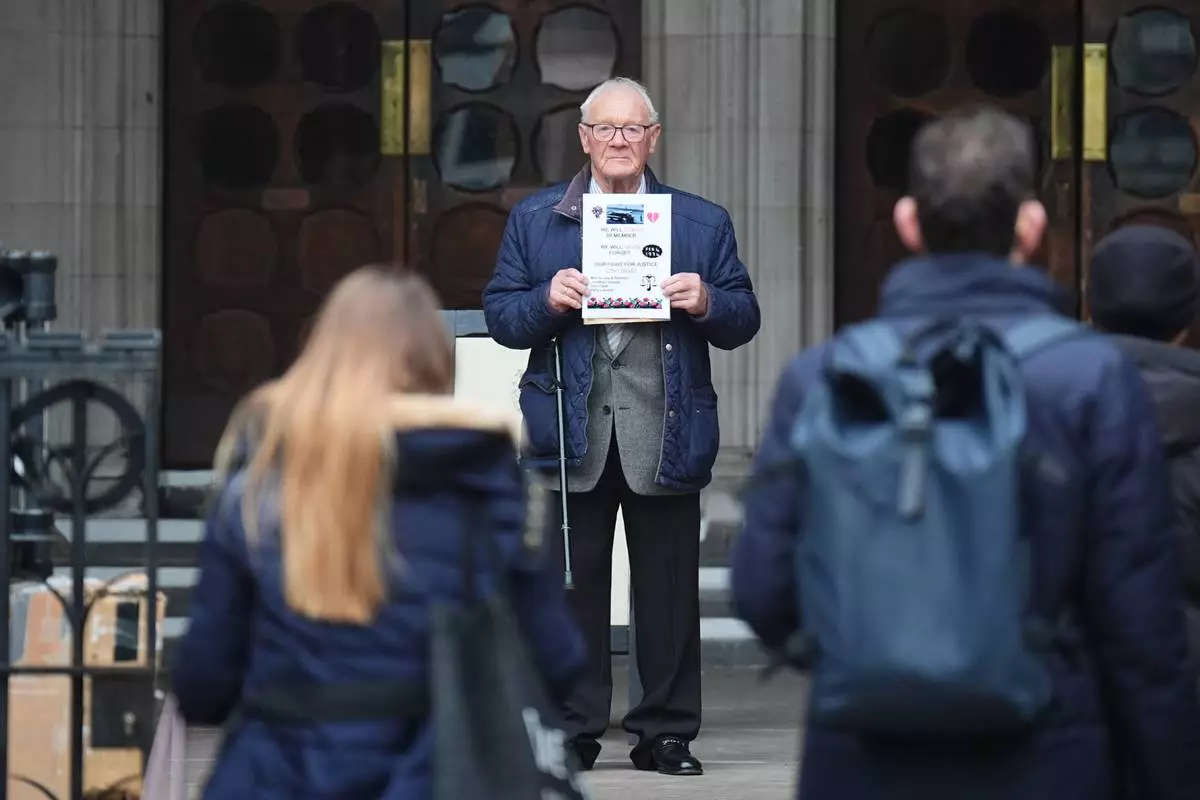
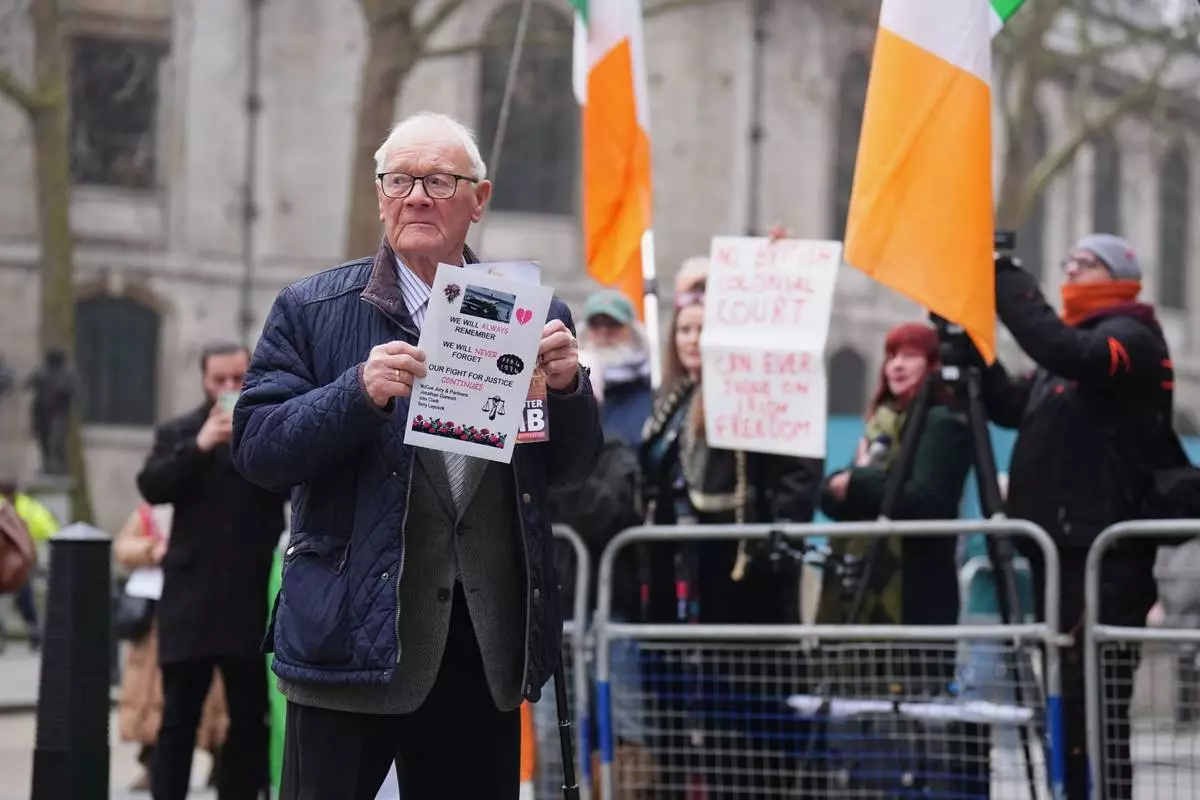
Claimant Barry Laycock poses for a photo outside the Royal Courts of Justice, where a civil claim is being brought against former Sinn Fein president Gerry Adams by three men who were injured in Provisional IRA bombings on the UK mainland in the 1970s and 1990s, in London, Monday March 9, 2026. (James Manning/PA via AP)

Claimant Barry Laycock poses for a photo outside the Royal Courts of Justice, where a civil claim is being brought against former Sinn Fein president Gerry Adams by three men who were injured in Provisional IRA bombings on the UK mainland in the 1970s and 1990s, in London, Monday March 9, 2026. (James Manning/PA via AP)

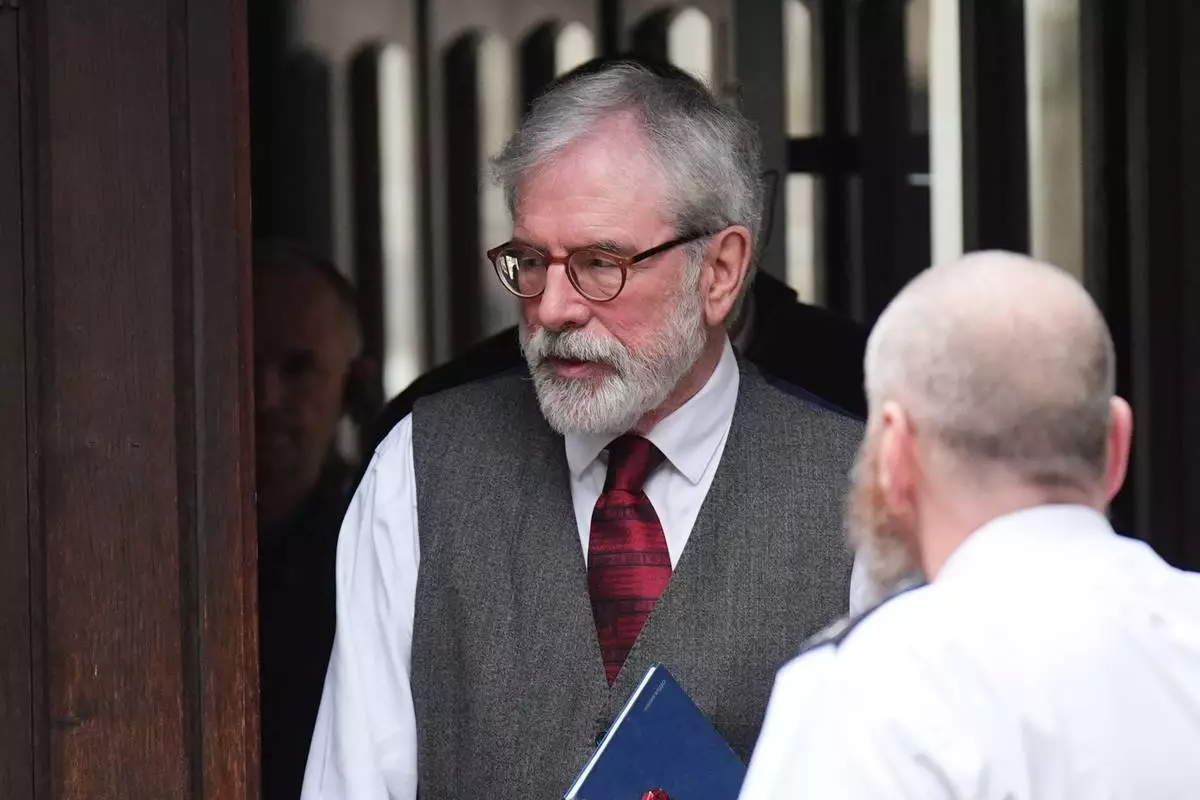
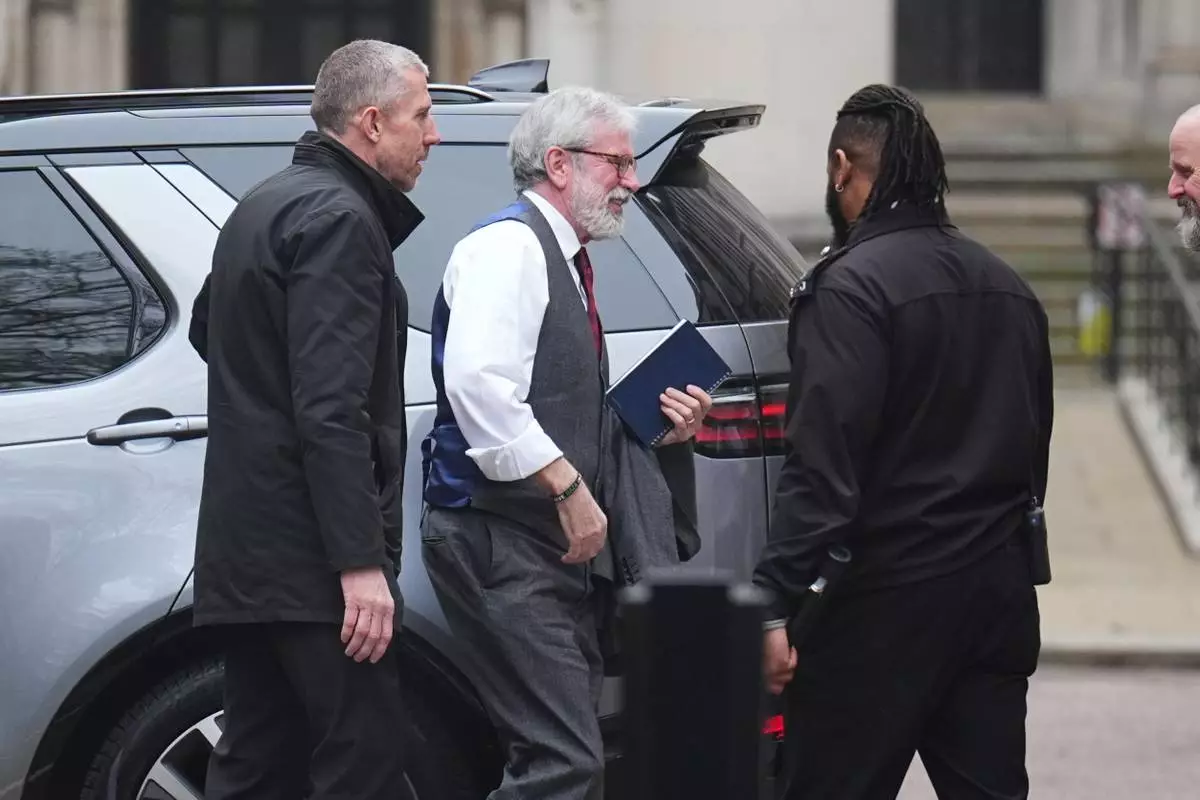
Former Sinn Fein president Gerry Adams, center, arrives at the Royal Courts of Justice, where a civil claim is being brought against him, in London, Monday March 9, 2026. ( James Manning/PA via AP)

Former Sinn Fein president Gerry Adams, center, arrives at the Royal Courts of Justice, where a civil claim is being brought against him, in London, Monday March 9, 2026. ( James Manning/PA via AP)

Claimant Barry Laycock poses for a photo outside the Royal Courts of Justice, where a civil claim is being brought against former Sinn Fein president Gerry Adams by three men who were injured in Provisional IRA bombings on the UK mainland in the 1970s and 1990s, in London, Monday March 9, 2026. (James Manning/PA via AP)

Claimant Barry Laycock poses for a photo outside the Royal Courts of Justice, where a civil claim is being brought against former Sinn Fein president Gerry Adams by three men who were injured in Provisional IRA bombings on the UK mainland in the 1970s and 1990s, in London, Monday March 9, 2026. (James Manning/PA via AP)

Former Sinn Fein president Gerry Adams arrives at the Royal Courts of Justice, where a civil claim is being brought against him, in London, Monday March 9, 2026. ( James Manning/PA via AP)

Former Sinn Fein president Gerry Adams arrives at the Royal Courts of Justice, where a civil claim is being brought against him, in London, Monday March 9, 2026. ( James Manning/PA via AP)

Recommended Articles