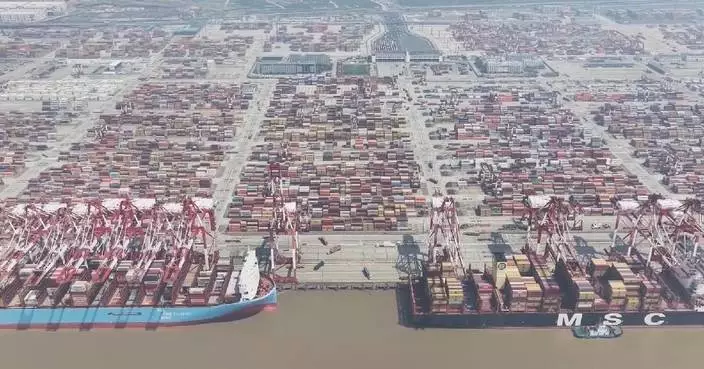
China's foreign trade has outperformed expectations over the past two months, with January-February imports and exports totaling 7.73 trillion yuan (about 1.12 trillion U.S. dollars), up 18.3 percent year on year, according to the data released by the General Administration of Customs on Tuesday.
Exports climbed 19.2 percent to 4.62 trillion yuan, while imports rose 17.1 percent to 3.11 trillion yuan, signaling strong external demand and steady domestic consumption.
During the period, trade with ASEAN nations surged 20.3 percent to 1.24 trillion yuan, while that with EU countries grew 19.9 percent to 998.94 billion yuan. However, trade with the United States declined 16.9 percent to 609.71 billion yuan.
Notably, China's trade with countries participating in the Belt and Road Initiative expanded 20 percent to 4.02 trillion yuan, underscoring the growing importance of emerging markets in China's foreign trade landscape.
Private enterprises emerged as the most dynamic force, with imports and exports totaling 4.51 trillion yuan from January to February, marking a 22.8-percent increase year on year.
Foreign-invested companies recorded 2.2 trillion yuan in trade, up 15.3 percent, while state-owned enterprises saw a steady growth of 7.4 percent to 1 trillion yuan in trade.
Experts attributed the strong opening to four key factors: recovering global demand, the release of policy dividends, China's industrial competitive advantages, and heightened vitality among market entities.
"In 2026, China's foreign trade has posted a strong start, primarily driven by multiple factors including recovering global demand, the release of policy dividends, pronounced industrial advantages, and heightened vitality among micro market entities. Since the beginning of the year, the global manufacturing PMI has remained above the expansion-contraction threshold, signaling marginal improvement in external demand. Meanwhile, adjustments in trade policies by major economies have contributed to a more favorable international trade environment. Moreover, China has continued to advance industrial upgrading, establishing a consolidated competitive advantage characterized by emerging industries leading the growth while traditional industries stabilizing the economy. This has laid a solid industrial foundation for foreign trade growth," said Yan Min, director of the macroeconomic office of the economic forecasting division of the State Information Center of China.
"Policies and measures to stabilize foreign trade have been implemented early in the year, while institutional opening-up has deepened continuously, offering robust support for trade development. At the same time, micro market entities have demonstrated strong initiative in accelerating transformation, proactively upgrading their products and diversifying market outreach. This positive momentum at the start of the year has laid a solid foundation for China's foreign trade to achieve improved quality and efficiency throughout 2026," she said.
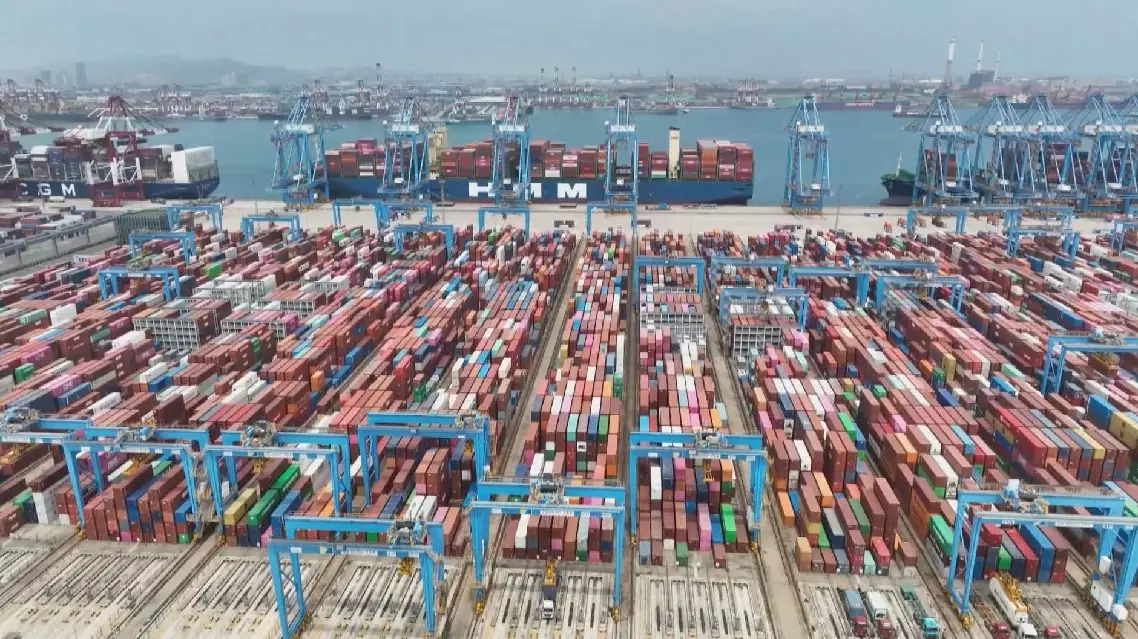
China's foreign trade outperforms expectations in first two months of 2026