China's national political advisors who are also private entrepreneurs have been playing their part in effectively promoting the growth of the foreign trade sector through pushing forward development and taking steps to respond to market needs, with data showing robust growth in the first two months of the year.
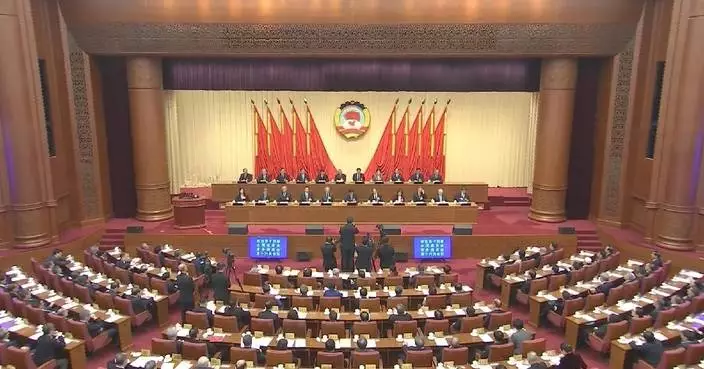
Around 2,000 political advisors from across the country are currently in Beijing to participate in the "two sessions" -- which refers to the annual meetings of China's top legislature, the National People's Congress (NPC), and its top political advisory body, the National Committee of the Chinese People's Political Consultative Conference (CPPCC) -- a key event in China's political calendar which sets out the country's development direction.
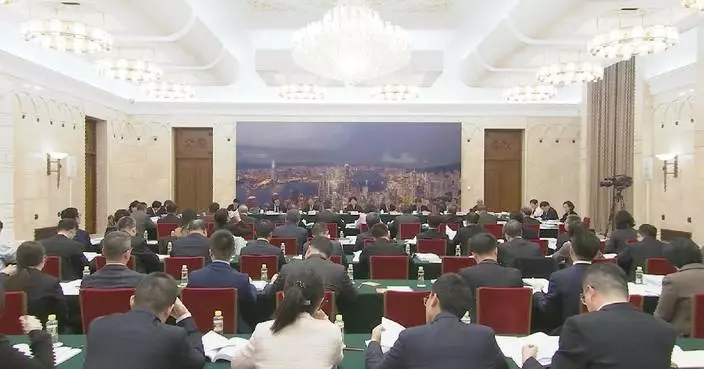
In group discussions and interviews during the ongoing fourth session of the 14th National Committee of the CPPCC, political advisors have shared some key insights into how private enterprises are making crucial contributions to ensure China's foreign trade remains on an upward trajectory, with the latest figures showing encouraging signs.
Data released by the General Administration of Customs showed on Tuesday that China's foreign trade grew 18.3 percent year on year in the first two months of 2026, with the total goods trade volume reaching 7.73 trillion yuan (over 1.12 trillion U.S. dollars) during the same period.
Exports rose 19.2 percent in the first two months compared to last year to reach 4.62 trillion yuan, while imports went up 17.1 percent to 3.11 trillion yuan, according to the data.
Meanwhile, the total goods imports and exports by China's private enterprises grew by 22.8 percent year on year to hit 4.51 trillion yuan, with private enterprises remaining the leading category of foreign trade operators in China for several years.
In east China's Zhejiang Province, known as a thriving sci-tech hub for start-ups and a center for foreign trade, private enterprises have maintained positive growth of imports and exports for 23 consecutive quarters, and have contributed over 90 percent of the rise in Zhejiang's trade in goods for five consecutive quarters.
Meanwhile, the value of imports and exports by private enterprises accounted for around 70 percent of the total foreign trade in the southern Shenzhen metropolis, where the number of private enterprises doing foreign trade and the scale of their foreign trade have both ranked first among Chinese mainland cities for many years.
It's a similar story in Jinjiang, a county-level city in the coastal Fujian Province, which has seen its private companies completing around 80 percent of local foreign trade. During China's 14th Five-Year Plan period (2021-2025), the total amount of Fujian private companies' trade in goods exceeded 5 trillion yuan, up over 80 percent from the previous five-year planning cycle.
National political advisor Wang Xiaolong, who is also general manager of the Fustech Intelligent Equipment company based in Yinchuan City of northwest China's Ningxia Hui Autonomous Region, said the high-end industrial machine tools independently developed by his company have been exported widely across Southeast Asia and the Middle East.
Wang said that Chinese-made machine tools are now highly competitive with other world-leading equipment in ultra-precision machining, and are being used directly in the manufacturing of major projects such as large passenger aircrafts and engines.
At present, about 80 percent of China's exports of high-end machine tools, 70 percent of China's exports of lithium-ion batteries, and 60 percent of the country's exports of medical devices are being implemented by private firms.
Chinese private companies are also demonstrating greater adaptability on the markets and the ability to respond to ever-evolving consumer demands.
One example is the case of the "Crying Horse" -- a popular plush toy sold in Yiwu, an eastern Chinese trading hub which has been dubbed "the world's supermarket" for its expansive small commodities market.
Originally intended to be designed as the "Smiling Horse", the manufacturer mistakenly stitched the toy's mouth on upside down. This amusing "flaw" unexpectedly helped it go viral on social media and generated huge worldwide interest. Amid the online frenzy, the manufacturer quickly stopped changing the toy back to its original design and instead embraced the phenomenon as it started producing more of what it now called the "Crying Horse", drawing in large orders from the Middle East, Europe, and other regions.
Meanwhile, many private entrepreneurs have also successfully advanced the construction of international logistics hubs as they bid to further boost connectivity with global markets.
One CPPCC National Committee member led the establishment of the Shijiazhuang International Land Port in north China's Hebei Province.
Now serving as the largest national logistics hub of its kind in the Beijing-Tianjin-Hebei mega-city cluster, the land port has been officially approved to be an assembly center of China-Europe freight trains.
The port is now operating 18 international routes covering over 50 countries and regions, supporting smooth trade flow for the Beijing-Tianjin-Hebei region.

Political advisors promote entrepreneurial spirit of private sector to drive foreign trade