Skip to Content Facebook Feature Image

Giant Baby Jesus statue visits Mexico City’s Tepito neighborhood with message of peace

News

Giant Baby Jesus statue visits Mexico City’s Tepito neighborhood with message of peace
News

News

Giant Baby Jesus statue visits Mexico City’s Tepito neighborhood with message of peace

2026-03-11 05:42 Last Updated At:11:55

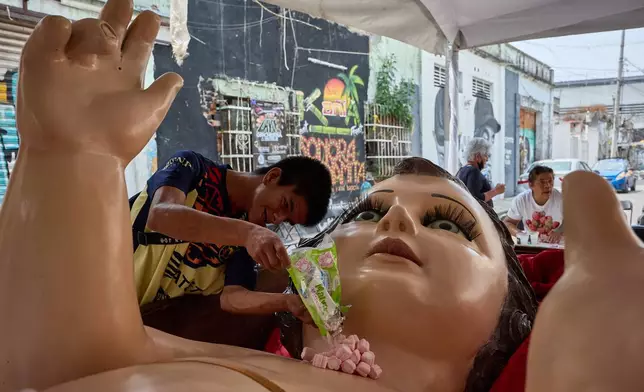
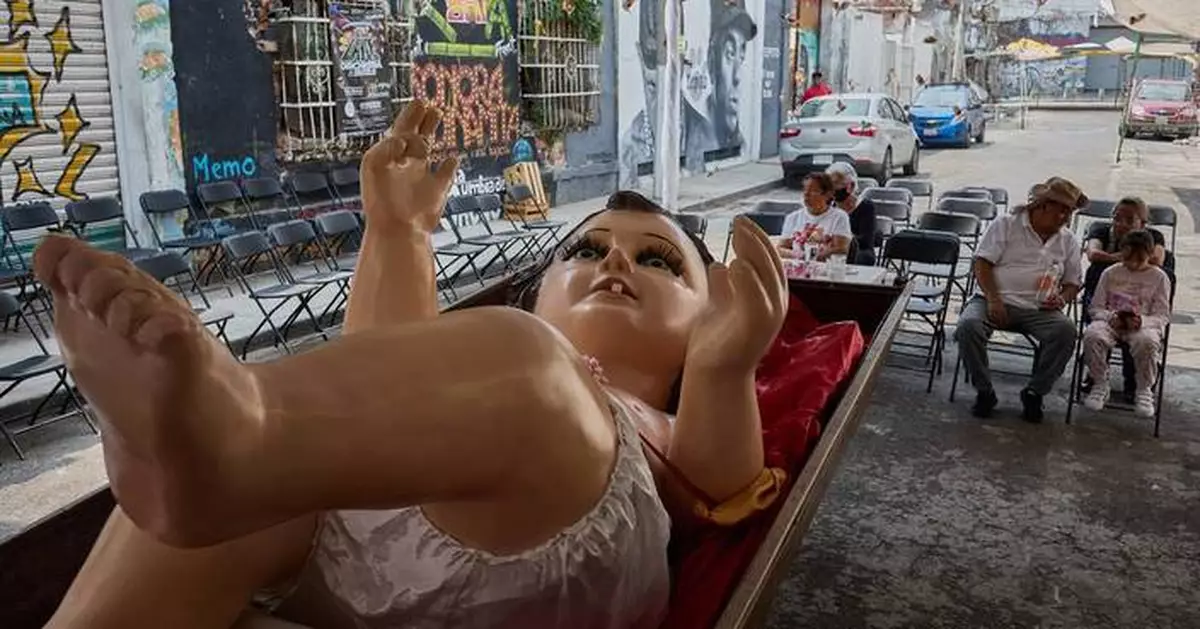
MEXICO CITY (AP) — His face and body resemble those of a newborn. Yet the Baby Jesus statue towers 16 feet (5 meters) tall and travels across central Mexico spreading a message of peace.

The giant figure arrived this week in Mexico City’s Tepito neighborhood, known for its bustling street markets and strong local identity, but also for longstanding crime problems. Prayers, offerings and a Mass followed.

More Images
A parishioner offers candy to a giant Baby Jesus in Mexico City, Tuesday, March 10, 2026. (AP Photo/Ginnette Riquelme)
A parishioner offers candy to a giant Baby Jesus in Mexico City, Tuesday, March 10, 2026. (AP Photo/Ginnette Riquelme)

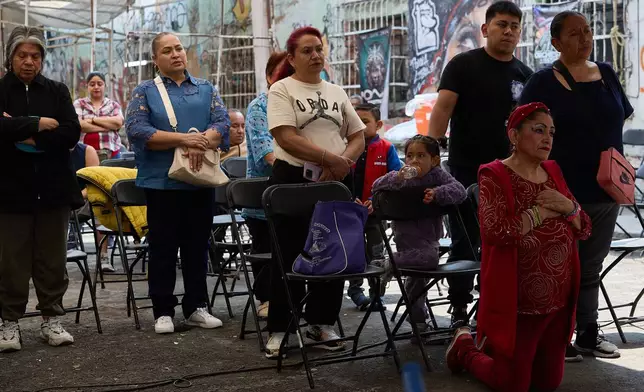
Parishioners pray to a giant Baby Jesus in Mexico City, Tuesday, March 10, 2026. (AP Photo/Ginnette Riquelme)
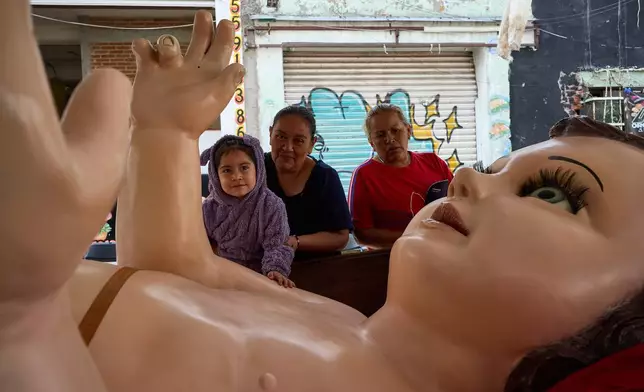
Parishioners pray to a giant Baby Jesus in Mexico City, Tuesday, March 10, 2026. (AP Photo/Ginnette Riquelme)

Parishioners take part in an offering to a giant Baby Jesus in Mexico City, Tuesday, March 10, 2026. (AP Photo/Ginnette Riquelme)
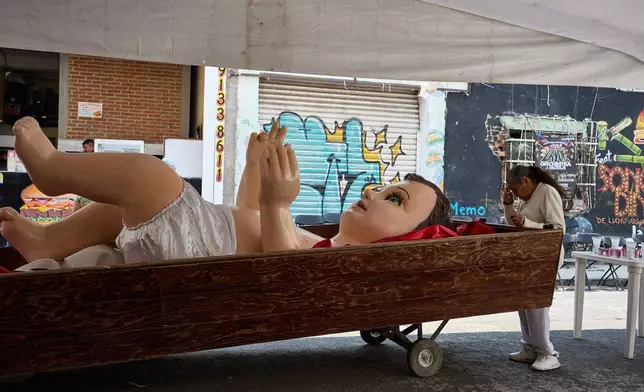
Parishioners take part in an offering to a giant Baby Jesus in Mexico City, Tuesday, March 10, 2026. (AP Photo/Ginnette Riquelme)

A parishioner crosses herself in front of a giant Baby Jesus in Mexico City, Tuesday, March 10, 2026. (AP Photo/Ginnette Riquelme)
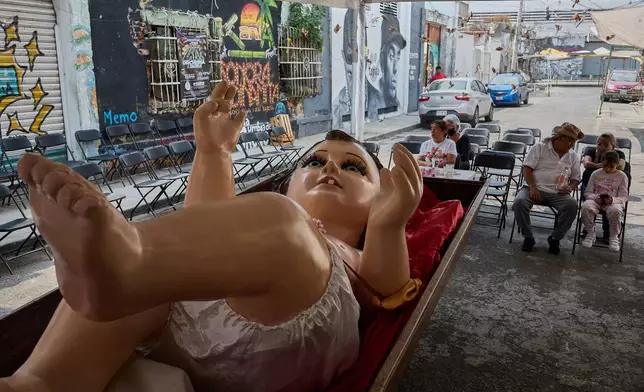
A parishioner crosses herself in front of a giant Baby Jesus in Mexico City, Tuesday, March 10, 2026. (AP Photo/Ginnette Riquelme)

Parishioners take part in an offering to a giant Baby Jesus in Mexico City, Tuesday, March 10, 2026. (AP Photo/Ginnette Riquelme)

Parishioners take part in an offering to a giant Baby Jesus in Mexico City, Tuesday, March 10, 2026. (AP Photo/Ginnette Riquelme)

“The Baby Jesus means everything to me and my family because we are very Catholic,” said Guillermo Ramírez, a local resident who coordinated logistics for the statue’s visit. “By bringing it here, I want to show that there are good people in Tepito.”

The 49-year-old musician first saw the giant Baby Jesus in 2024 in a nearby neighborhood. Seeing the devotion it drew from worshippers, he thought his own community could benefit too. So he reached out to the family who owns the statue, which made its first visit to Tepito later that year.

“Since it represents peace, we hope for peace in our neighborhood, in our family,” said Ramírez’s wife, Alma Cravioto.

Mexican artist Abraham Gómez created the Baby Jesus figure with his brother in 2013.

“This began as a project called ‘Walk for Peace and Good,’ intended to promote and spread values in families, towns and neighborhoods through sacred art,” Gómez said.

The statue has traveled to communities in the Mexican states of Puebla, Tlaxcala and Jalisco, including places where violence stemming from drug trafficking affects local communities.

“Insecurity has complicated our visits lately,” Gómez said. “But that’s why we think these activities are more necessary than ever.”

Made with a steel frame and layers of polyurethane foam and resin reinforced with fiberglass, the statue weighs about half a ton. Gómez said he found inspiration in the smaller Baby Jesus figures cherished among Mexican Catholics, who traditionally dress them ahead of Candlemas on Feb. 2.

He and his brother transport the image in a massive basket placed on top of a flatbed truck. For each of the Baby Jesus’ journeys, they lead a procession that heads to a local church or meeting point, where devotees can make offerings and a priest celebrates Mass.

After its arrival in Tepito on Monday night, dozens of residents gathered around the towering statue as music and prayers filled the street. Neighbors also shared “atole,” a traditional warm corn drink.

“For us, the important thing is not just bringing the statue so visitors can take photos,” Gómez said. “It’s that they leave with a message that stays in their hearts.”

The giant Baby Jesus left his sleeping position on Tuesday and was seated upright. Following the Mexican custom of dressing him up, locals clothed the statue with traditional textiles inspired by Huichol art, a colorful Indigenous tradition from western Mexico.

“We want to reclaim the traditions of our ancestral communities,” Gómez said. “To show that Mexico is a blend of cultures, shaped by both Spanish heritage and Indigenous roots.”

María Concepción Franco, who lives in Tepito, said she had previously seen the figure and was excited about having him visit her neighborhood.

“This is a blessing for me,” she said. “He has granted me miracles and I have asked much of him.”

Friends and loved ones have given her images of the Baby Jesus throughout the years. She keeps some at home and carries one in her purse.

“He helps me stay strong despite all difficulties,” Franco said. “I don’t have any children, but I am really devoted to him.”

Associated Press religion coverage receives support through the AP’s collaboration with The Conversation US, with funding from Lilly Endowment Inc. The AP is solely responsible for this content.
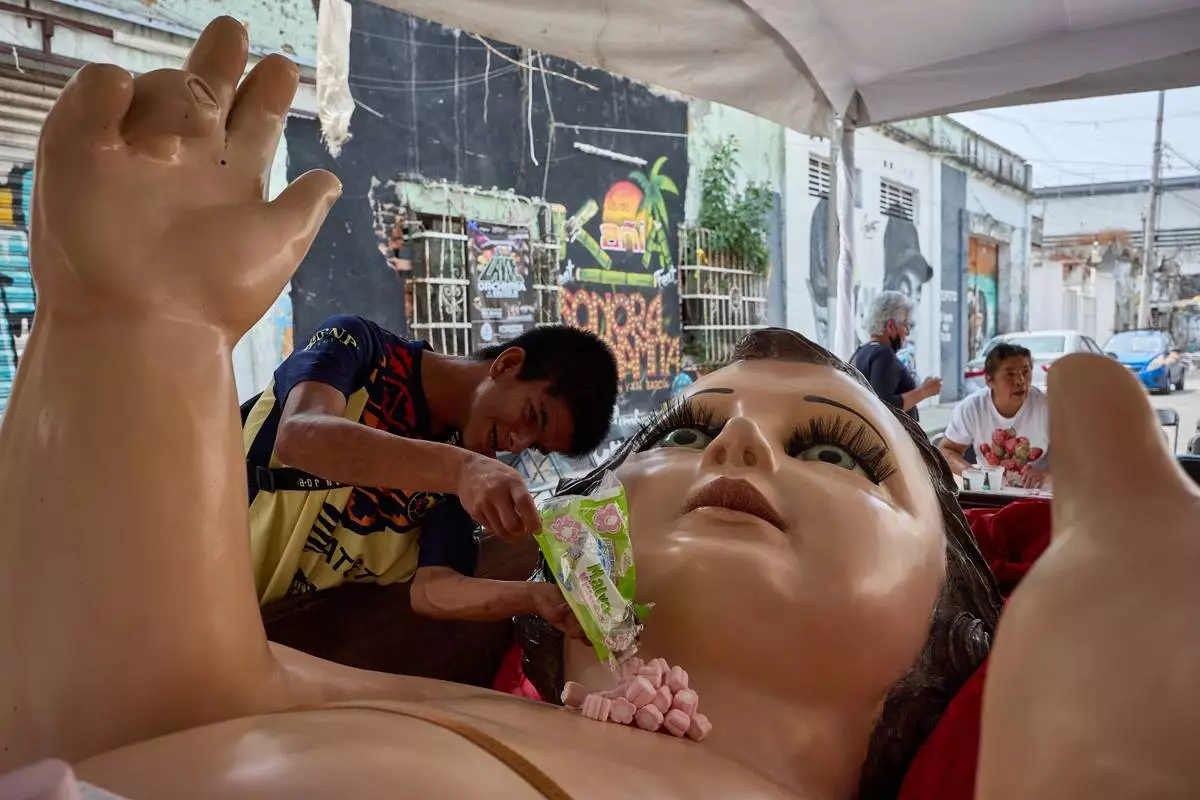
A parishioner offers candy to a giant Baby Jesus in Mexico City, Tuesday, March 10, 2026. (AP Photo/Ginnette Riquelme)
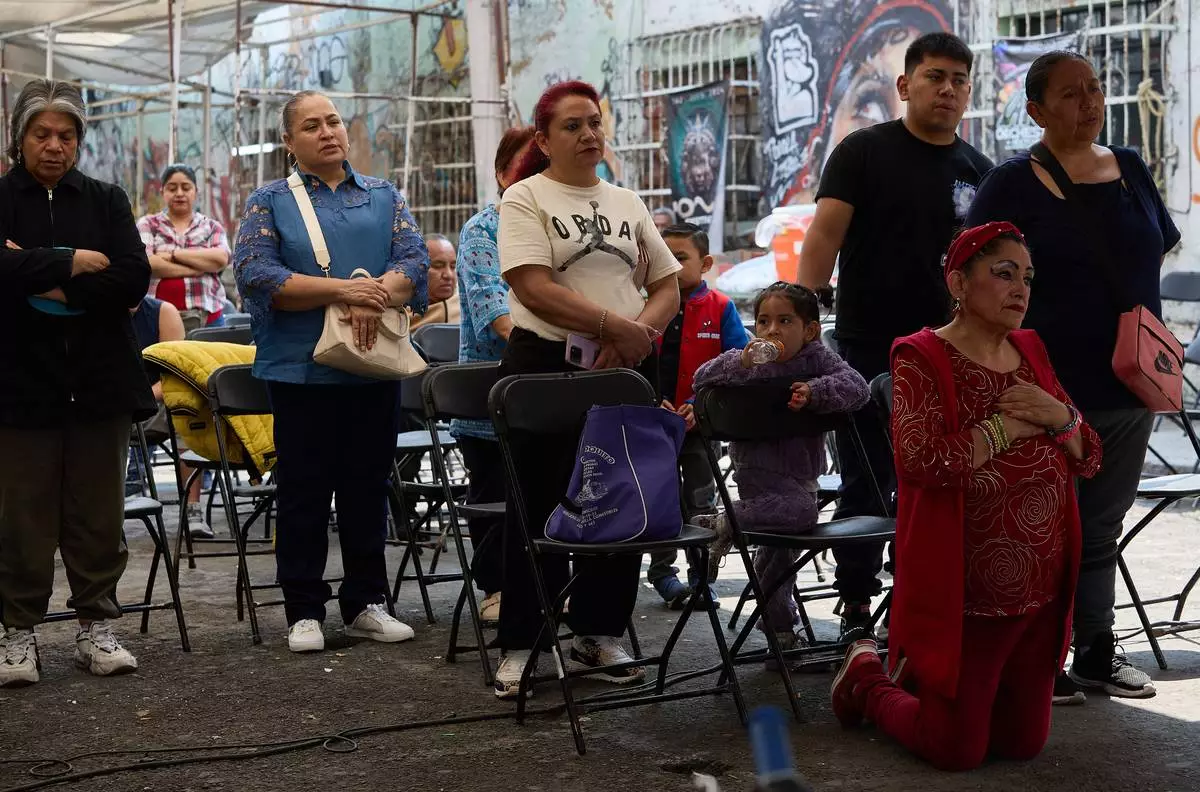
A parishioner offers candy to a giant Baby Jesus in Mexico City, Tuesday, March 10, 2026. (AP Photo/Ginnette Riquelme)

Parishioners pray to a giant Baby Jesus in Mexico City, Tuesday, March 10, 2026. (AP Photo/Ginnette Riquelme)
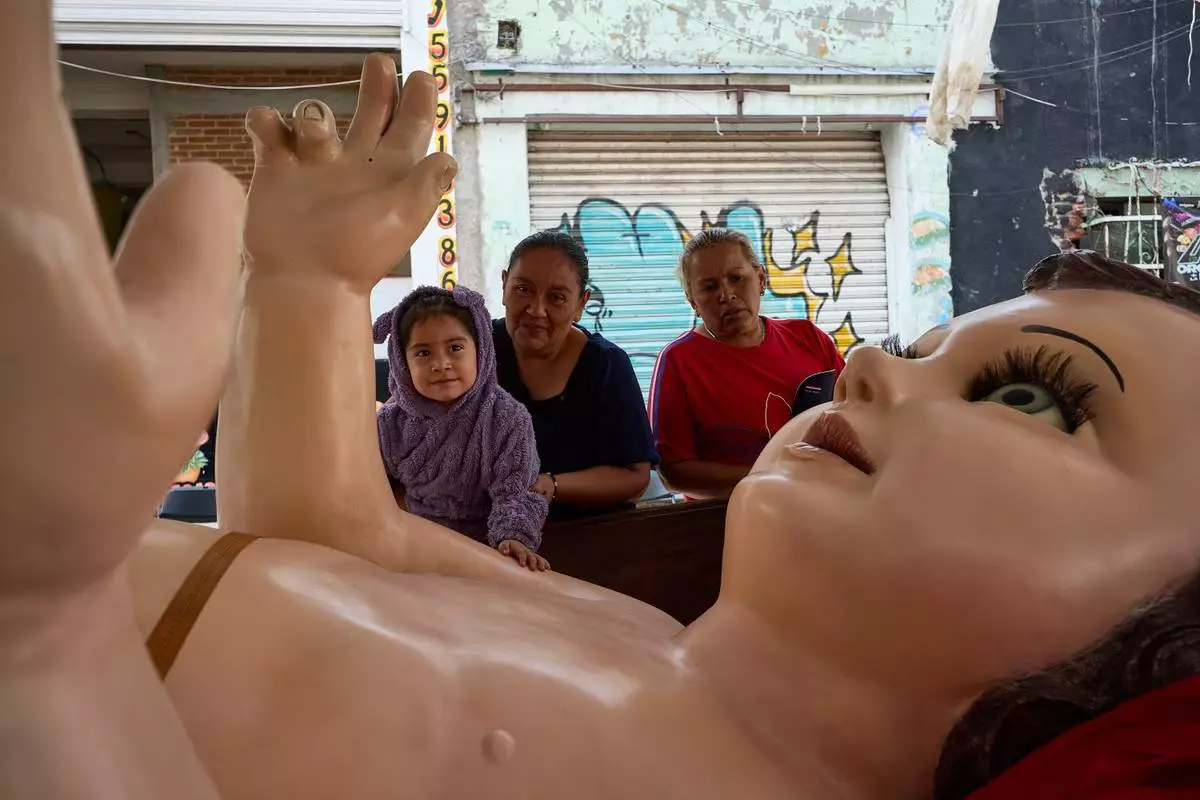
Parishioners pray to a giant Baby Jesus in Mexico City, Tuesday, March 10, 2026. (AP Photo/Ginnette Riquelme)

Parishioners take part in an offering to a giant Baby Jesus in Mexico City, Tuesday, March 10, 2026. (AP Photo/Ginnette Riquelme)
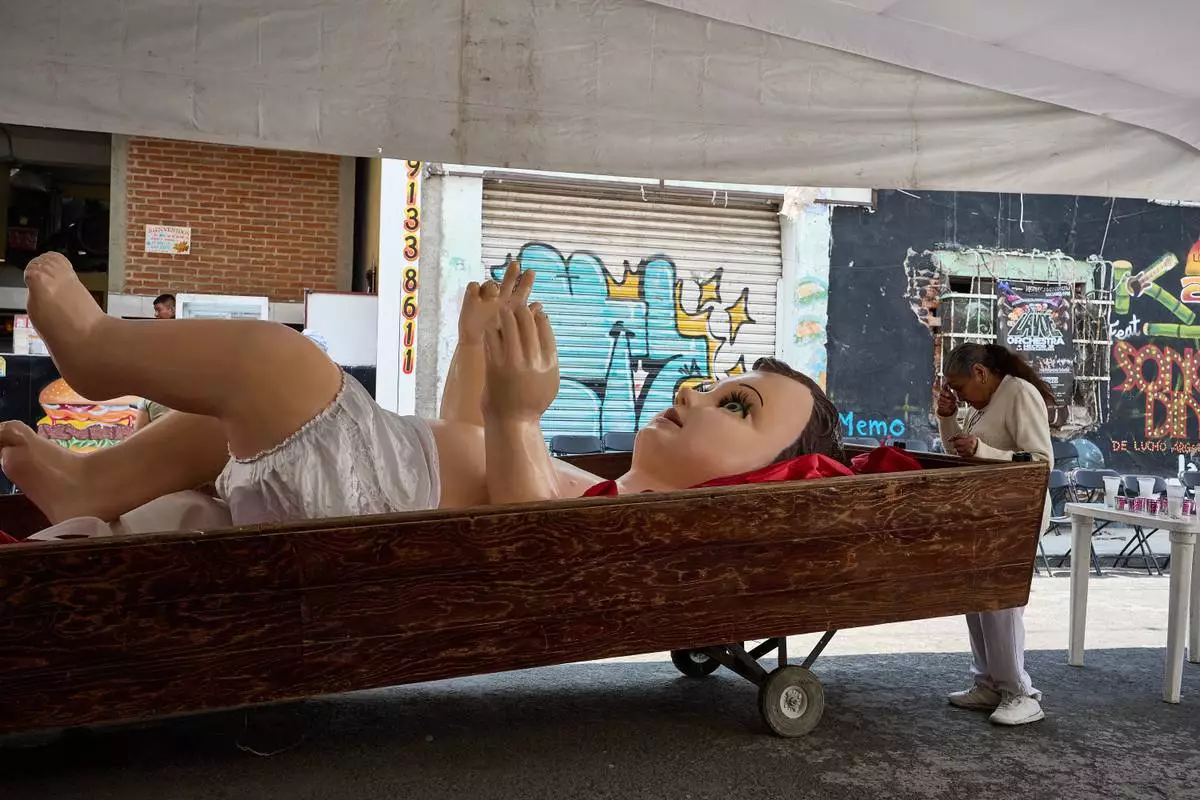
Parishioners take part in an offering to a giant Baby Jesus in Mexico City, Tuesday, March 10, 2026. (AP Photo/Ginnette Riquelme)

A parishioner crosses herself in front of a giant Baby Jesus in Mexico City, Tuesday, March 10, 2026. (AP Photo/Ginnette Riquelme)
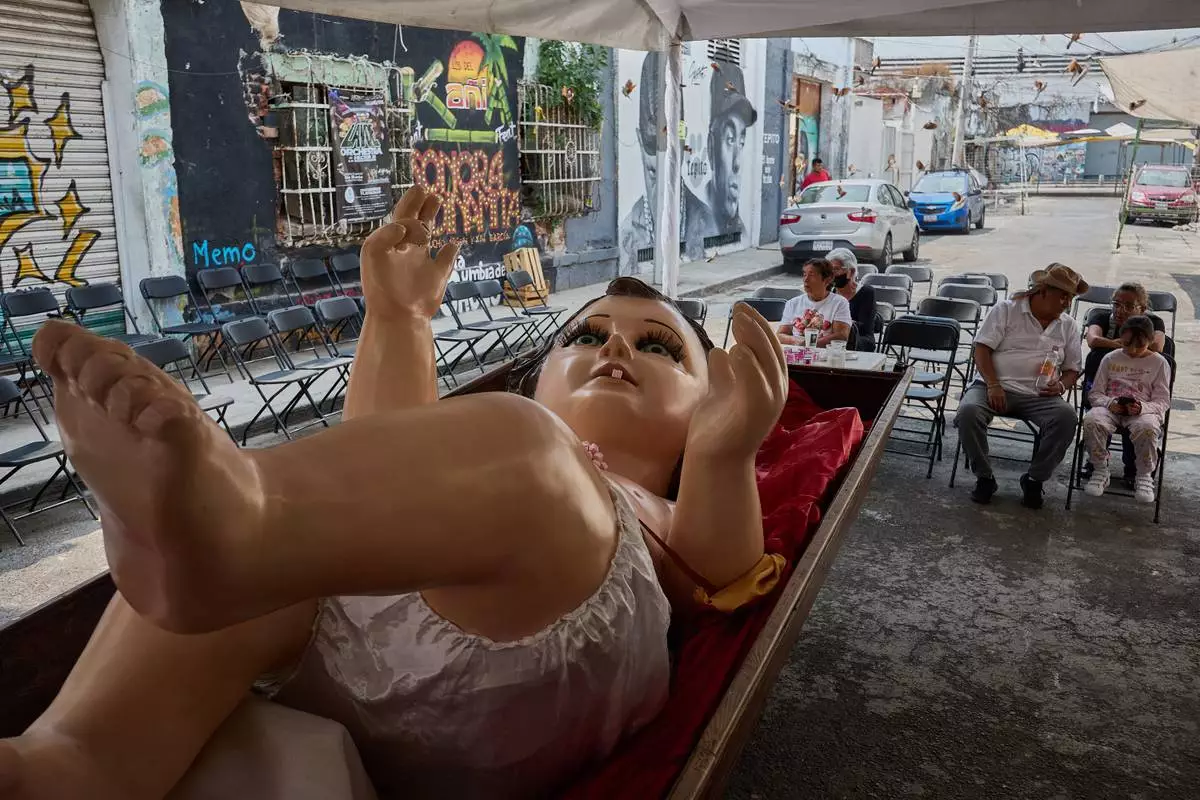
A parishioner crosses herself in front of a giant Baby Jesus in Mexico City, Tuesday, March 10, 2026. (AP Photo/Ginnette Riquelme)

Parishioners take part in an offering to a giant Baby Jesus in Mexico City, Tuesday, March 10, 2026. (AP Photo/Ginnette Riquelme)
Parishioners take part in an offering to a giant Baby Jesus in Mexico City, Tuesday, March 10, 2026. (AP Photo/Ginnette Riquelme)

WASHINGTON (AP) — Facing jittery global markets and drooping poll numbers since launching a war with Iran, President Donald Trump has cycled from calls for “unconditional surrender” to sounding amenable to an end state in which Iran trades one hard-line ayatollah for another.

Shifting comments from the Republican president and his top aides are adding to the precariousness of the 12-day-old conflict, which is impacting nearly every corner of the Middle East and causing economic tremors around the globe. With neither side budging, the war is now on an unpredictable path and a credible endgame is unclear.

Defense Secretary Pete Hegseth said Tuesday it was up to Trump “whether it’s the beginning, the middle or the end” of the war. Trump, during the course of one speech at a House Republican gathering Monday, went from calling the war a “short-term excursion” that could end soon to proclaiming “we haven’t won enough."

“We have hit them harder than virtually any country in history has been hit, and we’re not finished yet,” Trump told reporters at the White House on Wednesday.

The vacillation has fueled criticism from those who say Trump lacks a clear goal. “They didn’t have a plan," Sen. Mark Kelly, D-Ariz., told reporters. "They have no timeline. And because of that, they have no exit strategy.”

Since ordering the Iran bombardment, Trump has continually shifted his timelines and goals for the war.

Over the past few days, Trump has called for the “unconditional surrender" of Iran's leaders, while suggesting he was already succeeded in achieving his objective of decimating Iran’s military.

At the same time, Trump's team has sought to soothe anxious Americans that the war will not be long and drawn out even as the president has insisted he has not ruled out the option of using U.S. ground troops.

The U.S. military says it has effectively destroyed the Iranian navy and made huge strides in defanging Iran’s ability to launch missiles and drones at its neighbors. Yet the critical Strait of Hormuz, through which roughly 20% of the world’s oil passes on a typical day, remains essentially closed to business, and Iranian leaders are unbowed.

The Revolutionary Guard said Iran would not allow “a single liter of oil” through the vital waterway until the United States stopped its bombing campaign. Ali Larijani, Iran’s top national security official, offered a menacing message on Tuesday after Trump had threatened to attack Iran “TWENTY TIMES HARDER” if Tehran stopped oil flowing through the strait.

“The sacrificial nation of Iran doesn’t fear your empty threats,” Larijani wrote on X. “Even those bigger than you couldn’t eliminate Iran. Be careful not to get eliminated yourself.”

Trump ally Newt Gingrich, a former Republican House speaker, said the administration should have moved on securing the strait on Day One of the conflict.

“If they can’t keep it open, this war will in fact be an American defeat before very long, because the entire world, including the American people, will react to the price of oil if the strait stay closed very long,” Gingrich said in an appearance on Fox Business.

Trump has struggled to make his case to Americans about why preemptive action against Iran was necessary and how it squared with his pledge to keep the United States out of the “forever wars” of the past two decades. Thus far, seven U.S. troops have been killed and about 140 injured in the retaliatory salvos from Iran.

One of several reasons Trump has offered to justify launching the war was that he had a “feeling” that Iran was getting set to attack the U.S.

White House press secretary Karoline Leavitt slightly amended that position, telling reporters that the president “had a feeling” that was “based on fact.”

But Pentagon officials have told congressional staffers in private briefings that the U.S. does not have intelligence indicating that Iran was planning to preemptively attack the U.S.

Recent polling shows Trump's decision to attack Iran has not come with the rallying-around-the-flag effect that has typically accompanied the start of recent U.S. wars.

About half of voters in Quinnipiac and Fox News polls said the U.S. military action in Iran makes the U.S. “less safe,” while only about 3 in 10 in each poll said it made the country safer. A CNN poll found about half of U.S. adults thought the military action would make Iran “more of a threat” to the U.S., while only about 3 in 10 thought it would lessen the danger.

In that CNN poll, about 6 in 10 U.S. adults said they trusted Trump “not much” or “not at all” to make the right decisions about the U.S. use of force in Iran.

European allies are treading carefully after British Prime Minister Keir Starmer and Spanish Prime Minister Pedro Sánchez faced the wrath of Trump, who deemed them not sufficiently supportive in backing his war of choice.

Trump on Wednesday lashed out again at Spain, which has said it will not allow the U.S. to use jointly operated bases in southern Spain in any strikes not covered by the U.N. charter.

“I think they've been very bad — not good at all,” Trump said. “We may cut off trade with Spain.”

Even German Chancellor Friedrich Merz, who has been broadly supportive of the U.S.-Israeli campaign against Iran, said on Tuesday that “more questions arise with every day of war.”

Trump has chosen to deflect responsibility for the bombing of a girl's school in southern Iran on the first day of the conflict, killing at least 165 people.

Trump on Saturday blamed the attack on Iran, saying its security forces are "very inaccurate" with munitions.

On Monday, after the investigative group Bellingcat posted verified video that showed a U.S. Tomahawk cruise missile hitting a Revolutionary Guard facility near the school, causing the explosion, Trump again insisted it could have been Iran's fault but said that he would accept whatever a U.S. investigation into the matter might find.

The president erroneously claimed that Tehran had access to Tomahawks, a U.S.-manufactured weapon system that is only available to the U.S. and a few close allies.

Asked by a reporter, Leavitt did not directly answer why Trump falsely asserted that Iran has access to the U.S.-made missile.

Instead, she responded in part that “the president has a right to share his opinions with the American public” while noting “he has said he’ll accept the conclusion of that investigation.”

Senate Minority Leader Chuck Schumer, D-N.Y., told reporters that Trump's claim “is beyond asinine.”

“Again, he says whatever pops into his head no matter what the truth is," Schumer said. “And we all know he lies, but on something as formidable as this, it’s appalling.”

Sen. Kevin Cramer, R-N.D., was among Trump allies gently making the case that it was important for the administration to clarify what happened to the school.

Cramer said the military must “do everything you can to eliminate those mistakes going forward.”

“But you also can’t undo it," he added.

This story has been corrected to show seven, not eight, U.S. troops have been killed.

Associated Press writers Geir Moulson in Berlin and Joey Cappelletti, Ben Finley and Linley Sanders contributed to this report.

President Donald Trump speaks with reporters before departing on Marine One from the South Lawn of the White House, Wednesday, March 11, 2026, in Washington. (AP Photo/Alex Brandon)

President Donald Trump speaks with reporters before departing on Marine One from the South Lawn of the White House, Wednesday, March 11, 2026, in Washington. (AP Photo/Alex Brandon)

President Donald Trump speaks with reporters before departing on Marine One from the South Lawn of the White House, Wednesday, March 11, 2026, in Washington. (AP Photo/Alex Brandon)

President Donald Trump speaks with reporters before departing on Marine One from the South Lawn of the White House, Wednesday, March 11, 2026, in Washington. (AP Photo/Alex Brandon)

White House press secretary Karoline Leavitt speaks with reporters in the James Brady Press Briefing Room at the White House, Tuesday, March 10, 2026, in Washington. (AP Photo/Julia Demaree Nikhinson)

White House press secretary Karoline Leavitt speaks with reporters in the James Brady Press Briefing Room at the White House, Tuesday, March 10, 2026, in Washington. (AP Photo/Julia Demaree Nikhinson)

Mark Kelly, D-Ariz., leaves after a closed door briefing on the Iran war before the Senate Armed Services Committee at the Capitol Tuesday, March 10, 2026, in Washington. (AP Photo/Jose Luis Magana)

Mark Kelly, D-Ariz., leaves after a closed door briefing on the Iran war before the Senate Armed Services Committee at the Capitol Tuesday, March 10, 2026, in Washington. (AP Photo/Jose Luis Magana)

Defense Secretary Pete Hegseth listens as President Donald Trump speaks to reporters while traveling aboard Air Force One en route from Dover Air Force Base, Del., to Miami, Saturday, March 7, 2026. (AP Photo/Mark Schiefelbein)

Defense Secretary Pete Hegseth listens as President Donald Trump speaks to reporters while traveling aboard Air Force One en route from Dover Air Force Base, Del., to Miami, Saturday, March 7, 2026. (AP Photo/Mark Schiefelbein)

President Donald Trump speaks at the Republican Members Issues Conference, Monday, March 9, 2026, at Trump National Doral Miami in Doral, Fla. (AP Photo/Mark Schiefelbein)

President Donald Trump speaks at the Republican Members Issues Conference, Monday, March 9, 2026, at Trump National Doral Miami in Doral, Fla. (AP Photo/Mark Schiefelbein)

Recommended Articles