
Skip to Content Facebook Feature Image

Smart home appliances allow people to enjoy life while machines do household chores in China

China

Smart home appliances allow people to enjoy life while machines do household chores in China
China

China

Smart home appliances allow people to enjoy life while machines do household chores in China

2026-03-11 15:53 Last Updated At:19:07

People's lifestyles in China are being transformed for a new era as technology turns the vision of a hands-free home into reality.

Smart home products have been included in China's consumption subsidy policy for the first time in 2026 as part of the country's broader efforts to boost domestic consumption.

In a home equipped with smart home appliances, AI housekeeper is working to upgrade people's life, such as automatically unlocking door, turning on lights and adjusting air conditioners and curtains to people's comfort.

In such a smart home, the robot handles cleaning, the washing machine automatically schedules wash and dry cycles, and the stove adjusts heat independently. Beyond entertainment, the television serves as a central home control hub.

Take the fridge as an example, with AI, it now can be an all-day nutritionist.

"Users don't really understand how to regulate the freshness environment after putting food in the fridge. With AI vision, the fridge becomes an appliance that can listen, speak and think," said Kong Linglei, global director of intelligent research and development with Haier Refrigeration.

The information on the fridge is also synchronized on phone, so people can check what groceries they want to refill in fridge anywhere they go.

Recognizing the groceries is just the first step, and how to keep them fresh is the goal.

These smart home appliances do not just upgrade people's lifestyles, but also transform entire industries.

"This mainly stems from consumers' growing pursuit of a better life. They're no longer satisfied with single-function products -- they want more multi-dimensional experiences. So, around consumer needs, we're gradually adding on services, which aren't necessarily about manufacturing itself -- more at software level. These services ultimately feed back into manufacturing. The next generation of products will optimize their manufacturing based on this," said Ma Liangdong, deputy chief economist with the Institute of Service-Oriented Manufacturing.

According to the 2026 Home Appliance Service Industry and Emerging Market Trends Forecast report, the policy support, technological empowerment and consumption upgrading will boost Chinese smart home market to 280 billion yuan (around 41 billion U.S. dollars dollars) by 2026 and establish it as one of the core growth engines for the home appliance sector.

This dynamic will catalyze a profound industrial transformation, a shift from product sales to integrated and scenario-based services.

Smart home appliances allow people to enjoy life while machines do household chores in China

Smart home appliances allow people to enjoy life while machines do household chores in China

Smart home appliances allow people to enjoy life while machines do household chores in China

Smart home appliances allow people to enjoy life while machines do household chores in China

Smart home appliances allow people to enjoy life while machines do household chores in China
Smart home appliances allow people to enjoy life while machines do household chores in China

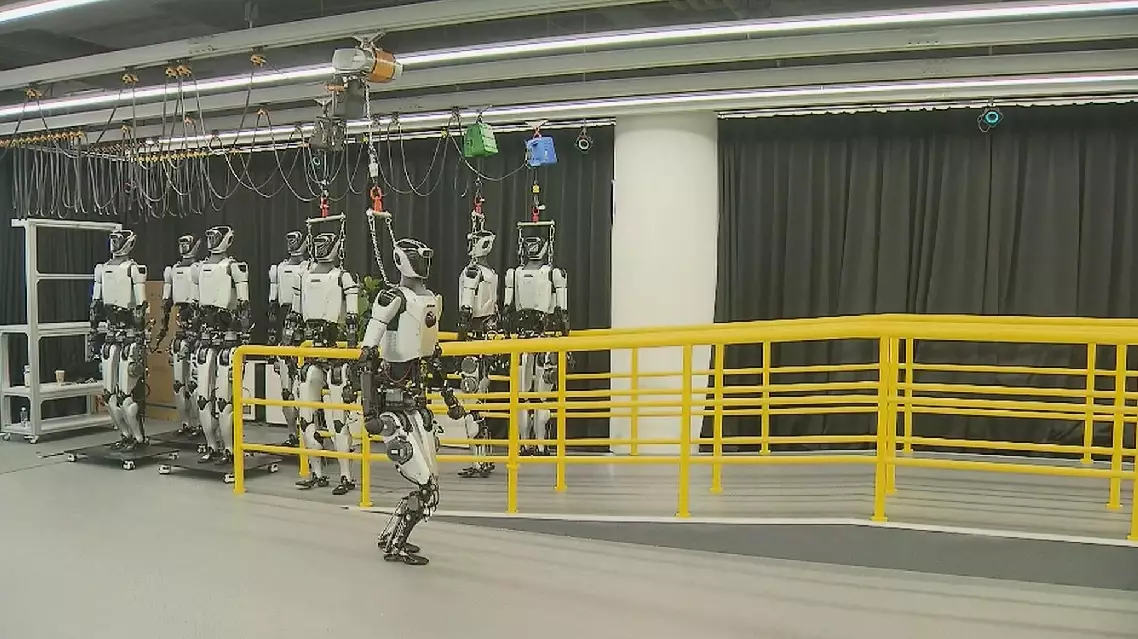
China has stepped up efforts to optimize the layout of its future industries since the beginning of the year, with breakthroughs accelerating in frontier technologies from advanced robotics to orbiting data centers.

In 2026, a series of landmark projects have taken shape across the country. In Beijing, preparations are underway for the country's first space computing innovation center. The areas of research at the center will aim to gradually relocate ground-based data centers to outer space to enable data collection, processing and output in orbit. China has also issued plans to accelerate the development and improvement of the space computing industrial ecosystem this year.

In Shanghai, the world's first pilot platform for humanoid robot components is taking shape. By establishing small-scale trial production lines for five categories of components, including reducers, the platform offers 72 testing and verification services, significantly lowering the development threshold for humanoid robots.

Since the beginning of 2026, China has launched over 100 innovation and research tasks for future industries through its open competition mechanism, focusing on general artificial intelligence, quantum technology, atomic-level manufacturing and clean low-carbon hydrogen energy. Key areas of application have been identified, while manufacturing innovation centers and pilot platforms in priority fields have been established to speed up the translation of cutting-edge technologies from laboratories to production lines.

The momentum is also evident in the clean energy sector. In north China's Shanxi Province, hydrogen-powered shared bicycles have hit urban streets, while more than 15,000 hydrogen heavy-duty trucks operate on logistics routes. Local authorities are also planning several cross-provincial hydrogen logistics corridors.

To sustain this growth, China will implement tiered nurturing for unicorn enterprises and specialized, sophisticated small and medium-sized enterprises in key sectors this year. The country will also advance the development of future industry pilot zones based on local industrial strengths. To date, some 54,000 innovative businesses nationwide have settled into the country's 193 innovative industrial clusters.

China accelerates layout of future industries in 2026

China accelerates layout of future industries in 2026

Recommended Articles