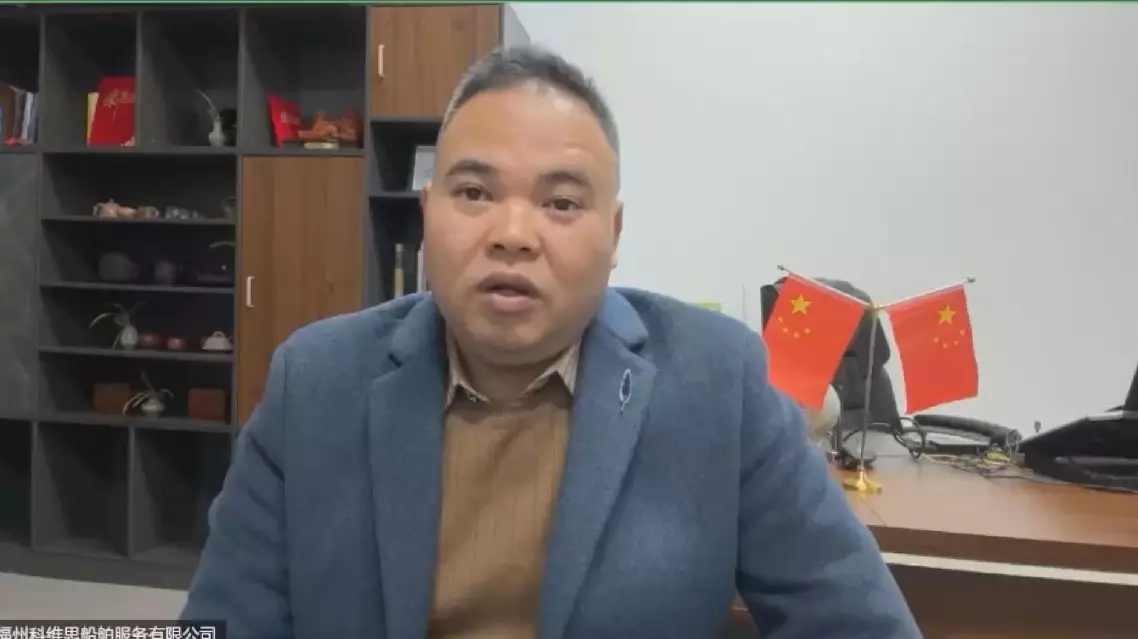
A Chinese ship engineer detailed how the Chinese diplomatic missions worked tirelessly and timely to secure his team's evacuation after the United States and Israel launched air strikes against Iran.
Ye Yungui, general manager of Fuzhou Keweisi Shipping Services Co., Ltd., was repairing a vessel off the Iranian coast near Bandar Abbas, home to Iran's most important container port in the Strait of Hormuz, when the attacks started on Feb. 28.
"I heard explosions in the distance, and I felt the air around me was shaking. I thought, 'Oh no, the war is here,'" Ye recalled.
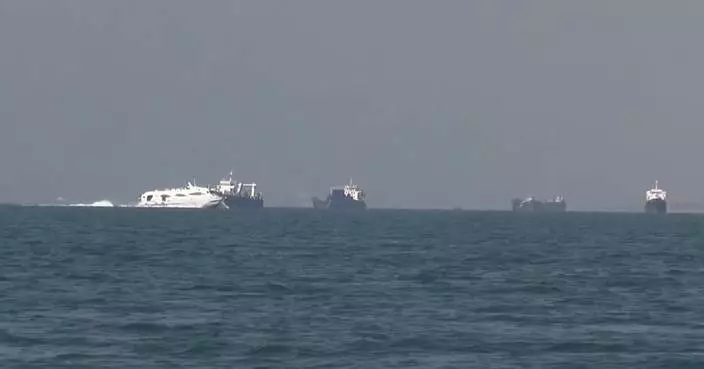
The ship was anchored about 10 km from the port, but the strikes came dangerously close.
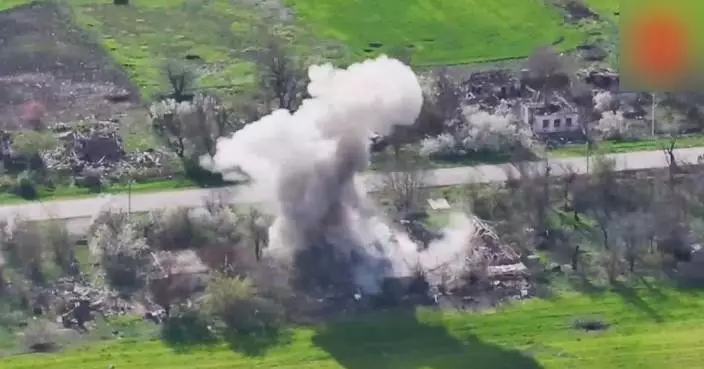
"We were about 10 km from the port, but we could still feel the shockwaves and see the flashes from the blasts. The strikes just kept hitting the shore, one after another," he said.
Ye and his crew remained stranded on the vessel for five days before a local contact arranged a small boat to take them ashore under the cover of darkness.
"We boarded the boat under the cover of darkness. Before we'd even made it halfway, strikes on the port began again. We were so scared. The shockwaves were rocking our little boat. It took about 40 minutes before we reached a fishing port nearby," Ye said.
From Bandar Abbas, the group embarked on a grueling 16-hour overland journey of over 1,500 km across eastern Iran, reaching Mashhad near the Turkmen border. There, the Chinese embassies in Iran and Turkmenistan coordinated efforts to facilitate their crossing.
"Entering Turkmenistan took us around four hours. There were over 40 Chinese and the procedures were complicated. The fact that we all made it through was remarkable. The Chinese embassy in Turkmenistan did an enormous amount of work to make that happen," Ye said.
Once across, embassy staff escorted them to the airport under Turkmenistan police protection. From Ashgabat, the group flew back to China.
"The moment I landed back in China, my whole body just relaxed. I thought to myself, this year, forget about business targets. Getting everyone home safe, that's already the biggest profit we made," Ye said.
Since the U.S. and Israel launched large-scale strikes on Iran on Feb. 28, Iran has responded with multiple waves of missile and drone attacks targeting Israel and U.S. assets across the region, hitting many countries in the Gulf. The U.S.-Israeli attacks, now in their 12th day, have killed more than 1,300 people across Iran, according to the Iranian authorities.
Chinese ship engineer recounts narrow escape from Iran amid US-Israeli strikes
South Africa's sugarcane sector, a cornerstone of the country's agriculture, stands ready to further integrate into the vast Chinese market as the zero-tariff policy for African countries officially takes effect.
China's Customs Tariff Commission of the State Council announced Tuesday that from May 1, 2026 to April 30, 2028, the country will grant zero-tariff treatment to 20 African countries that have established diplomatic ties with China and are not classified as the least developed countries.
This follows the country's earlier decision to grant zero-tariff treatment on 100 percent of tariff lines, effective from Dec 1, 2024, for the 33 least developed African countries with which it maintains diplomatic relations.
In effect, the zero-tariff treatment has been expanded to cover all 53 African countries that maintain ties with China.
In KwaZulu-Natal province, one of South Africa's traditional agricultural powerhouses, local farmers are hopeful that their sugarcane products will soon reach Chinese consumers.
Pratish Sharma, a sugarcane grower in the province, has witnessed the industry endure an unprecedented winter of challenges, including volatile international prices and trade barriers. When he heard of China's zero-tariff policy, however, his hope returned.
"It'll make trading in China a lot easier. It will create a better revenue stream for exports of sugar to China. And agreements like these assist in rejuvenating our economy within the industry and making us more viable," the farmer said.
Official data shows that China has been South Africa's largest trading partner for 17 consecutive years, with bilateral trade exceeding 53.5 billion U.S. dollars.
Yet, the country's agricultural products currently account for only 0.4 percent of China's total agricultural imports, indicating huge growth potential.
Kulani Siweya, market and trade policy director at the South African Sugar Association, sees greater opportunity ahead for the country's roughly 25,000 registered sugarcane growers.
"Main regions or destinations are the U.S., Europe. [We are] exporting about between 35,000 to 70,000 tonnes to the China market. South Africa stands ready to give you quality sweet sugar that will satisfy the Chinese palate," said Siweya.
Beyond sugar, South African specialties such as citrus, macadamia nuts, wine, and other high-quality agricultural products are also expected to gain broader market access in China. This has encouraged farmers like Sharma to experiment with a wider range of crops.
"I've converted 18 hectares of sugar cane into macadamias. So that process of diversification has already begun. And with trade initiatives such as the zero-rated making all of us more sustainable and viable," Sharma said.
John Steenhuisen, South African Minister of Agriculture, said China's zero-tariff initiative will help reshape the agricultural sector.
"The tariff-free access that's been granted us is going to be a game changer for not only citrus but also for the entire agricultural sector. We're now going to be able to compete with excellent quality wines and other agricultural goods in that market in a far more competitive basis," said the minister.
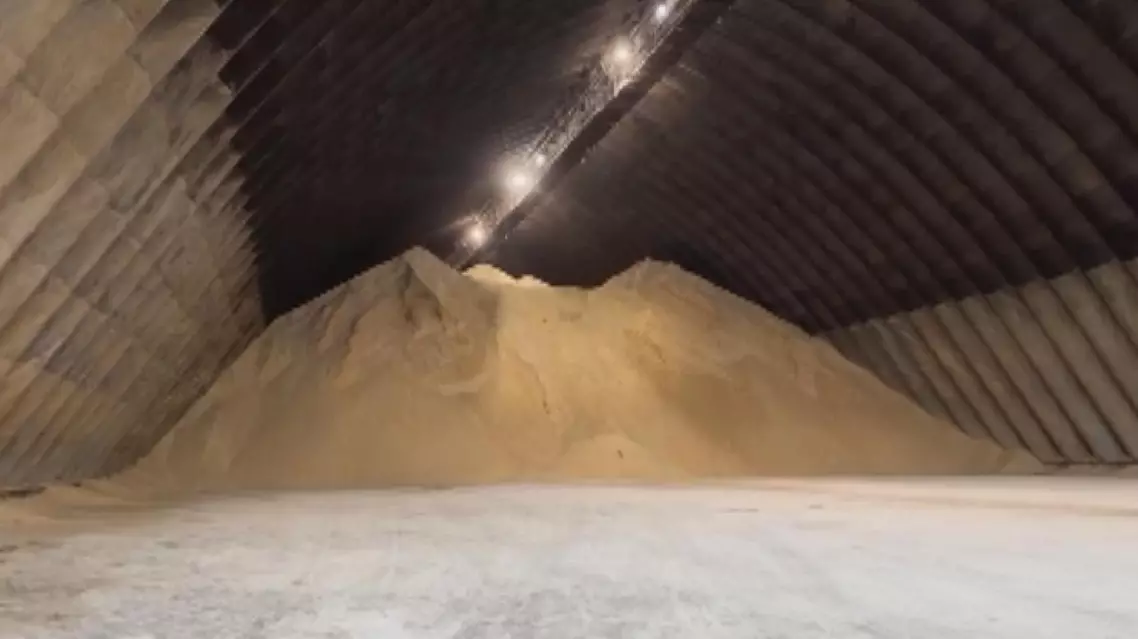
South African sugarcane growers eye sweeter exports as China's zero-tariff policy for Africa takes effect