QUITO, Ecuador (AP) — Ecuador will launch a major offensive against criminal organizations in three western provinces this weekend with logistical support from the United States, the interior minister said Wednesday.
Speaking to a local radio station, Interior Minister John Reimberg urged citizens to observe an 11 p.m. to 5 a.m. curfew from March 15-30 in the provinces of Guayas, Los Ríos and Santo Domingo de los Tsáchilas — three of the most violent in the South American country.
Residents under curfew need to stay in their homes and keep the roads clear to facilitate the movement of troops and equipment, he said.
“We do not want collateral victims from the attacks we are about to launch,” Reimberg said. “We have significant support from U.S. forces for the operations we are about to carry out."
The U.S. Embassy in Ecuador didn't immediately respond to an emailed request for comment from The Associated Press.
Asked for a comment Wednesday afternoon, the U.S. Southern Command only reiterated the comments offered by Marine Gen. Francis L. Donovan following the March 3 strikes: "We commend the men and women of the Ecuadorian armed forces for their unwavering commitment to this fight, demonstrating courage and resolve through continued actions against narco-terrorists in their country.”
The announcement came days after Ecuador and the U.S. began joint military operations against organized crime groups in the South American country, although at the time neither government gave details of the location and scope of the operation.
The attacks against violent criminal groups are aimed at “destroying what they have built in various parts of the country,” Reimberg said, although he declined to provide specific details, citing security concerns.
Later Wednesday, Ecuador and the U.S. announced an agreement to establish the first-ever FBI office in Ecuador, a move described by U.S. Embassy Chargé d’Affaires Lawrence Petroni as “a very important milestone” in strengthening the operational bond between the FBI and Ecuadorian police.
The FBI office will start operations inside the U.S. Embassy in Quito, according to the police. Vice President María José Pinto praised the initiative as essential for “better investigating and understanding criminal threats."
Since early 2021, Ecuador has faced a relentless offensive by organized crime groups which, according to police, maintain close ties with drug trafficking cartels in Colombia and Mexico.
Follow AP’s coverage of Latin America and the Caribbean at https://apnews.com/hub/latin-america
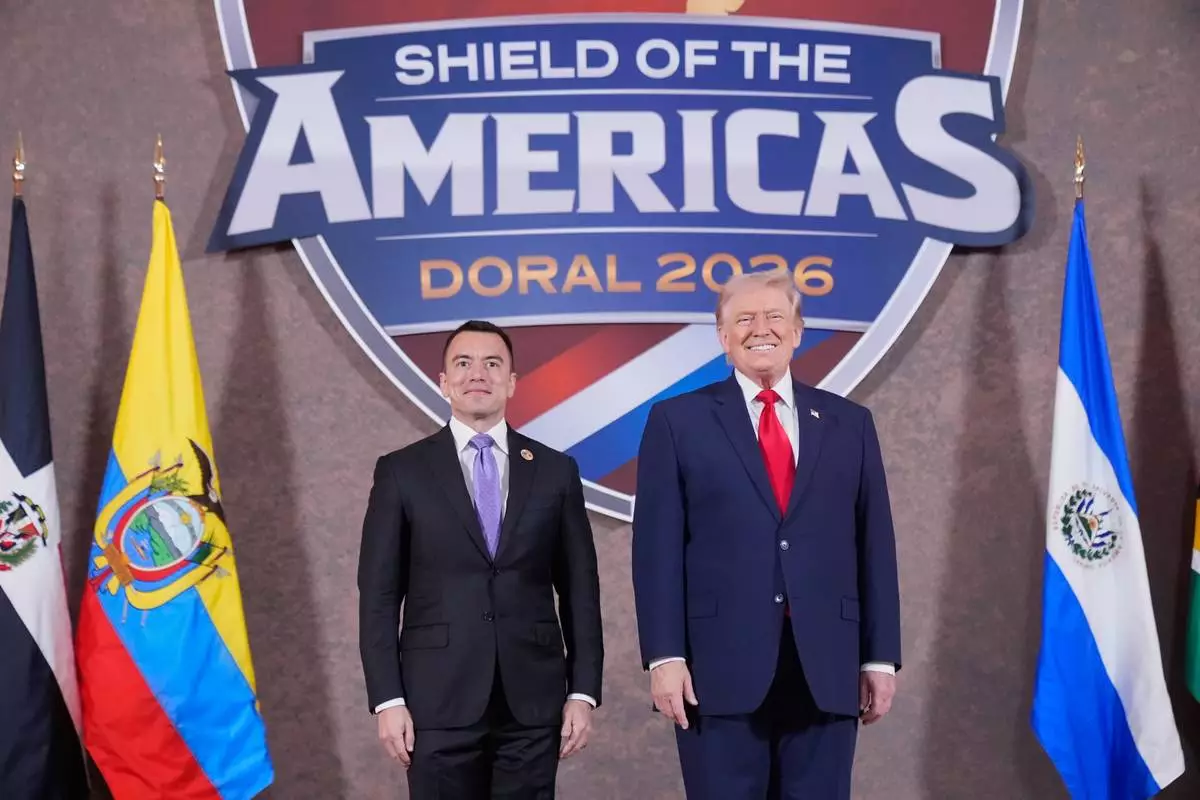
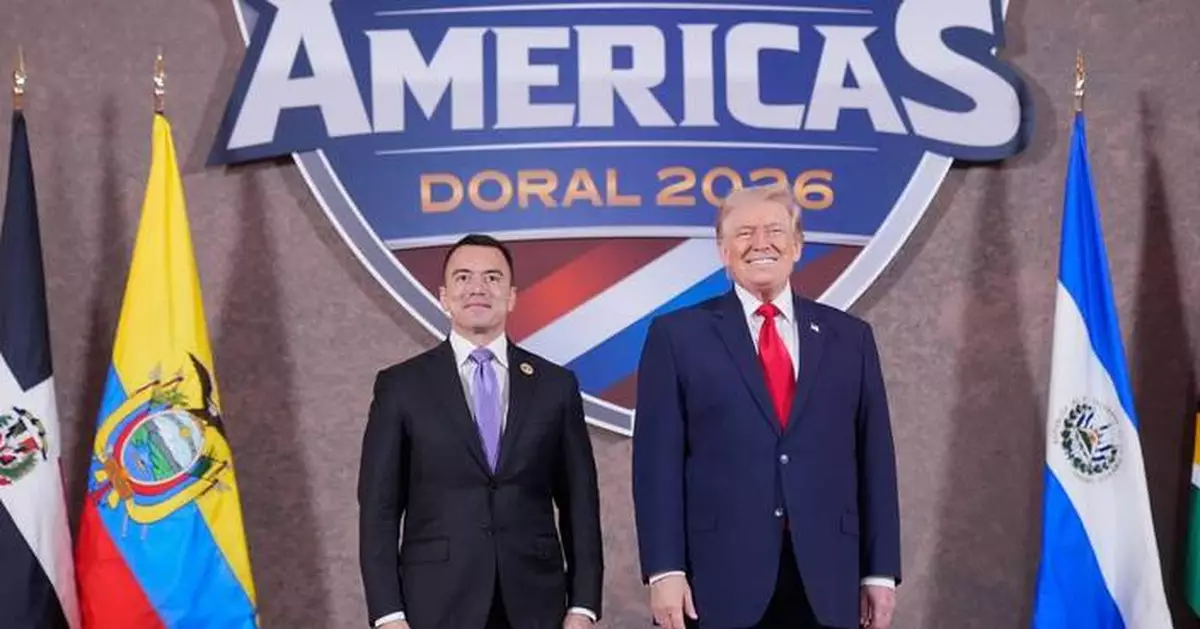
President Donald Trump greets President of Ecuador Daniel Noboa at the Shield of the Americas Summit, Saturday, March 7, 2026, at Trump National Doral Miami in Doral, Fla. (AP Photo/Mark Schiefelbein)
HUNTSVILLE, Texas (AP) — A North Texas man who claimed he wasn’t the shooter in a fatal robbery that killed two people nearly 18 years ago and who said prosecutors misused rap lyrics he wrote to secure his death sentence was executed Thursday evening.
James Broadnax was pronounced dead at 6:47 p.m. after receiving a lethal injection at the state penitentiary in Huntsville, about 70 miles (113 kilometers) north of Houston.
He was condemned for the 2008 shooting deaths of two men outside a suburban Dallas music studio. Prosecutors say Broadnax and his cousin, Demarius Cummings, fatally shot and robbed Stephen Swan and Matthew Butler in the parking lot of Butler’s recording studio in Garland. Cummings was sentenced to life without parole.
Broadnax was defiant in a final statement in which he also sought forgiveness from relatives of the victims in the crime.
The execution also was punctuated by screams of “I love you” from his wife, who also was among witnesses to the punishment.
Prosecutors said Broadnax, 37, confessed to the shooting, telling reporters during jailhouse interviews that “I pulled the trigger” and that he had no remorse.
Earlier Thursday, the U.S. Supreme Court denied a request by Broadnax’s attorneys to stop his execution.
His lawyers had focused his final appeals on two issues: Cummings had recently confessed to being the shooter; and Broadnax’s constitutional rights were violated because prosecutors eliminated potential jurors during his trial on the basis of race.
“I’m really gonna tell it like it’s supposed to be told, that it was me, that I was the killer. I shot Matthew Bullard, Steve Swann,” Cummings said recently from prison in a video created as part of the efforts to stop Broadnax’s execution.
Broadnax’s attorneys said in court filings with the high court that Cummings’ confession is “corroborated by the fact that his DNA, and not Mr. Broadnax’s, was found on the murder weapon and in the pocket of one of the victims.”
In the film, Broadnax said his confession was false because at the time he didn’t care about his life. Broadnax’s lawyers say he was under the influence of drugs during the television interviews.
He also apologized to the families of Butler and Swan for taking part in the robbery.
“I wish I could show them my soul, so they could see just how sorry I am. I am very much remorseful for everything that happened,” Broadnax said.
His attorneys also alleged prosecutors dismissed all seven potential Black jurors on the basis of their race, “utilizing a spreadsheet during jury selection that bolded only the names of every Black juror,” according to court documents. One Black juror was later reinstated to the jury. Broadnax was Black.
In a 1986 ruling known as Batson v. Kentucky, the U.S. Supreme Court determined that excluding jurors because of their race violated the Equal Protection Clause of the 14th Amendment.
Broadnax’s attorneys had argued in an earlier appeal that prosecutors had violated his constitutional rights by using some of the rap lyrics he wrote to portray him as a violent and dangerous person in order to secure a death sentence. A number of A-list rappers, including Travis Scott,T.I. and Killer Mike, had filed briefs at the Supreme Court in support of Broadnax’s appeal.
But the high court rejected that appeal as well as another that focused on how forensic evidence was presented at his trial.
The Texas Board of Pardons and Paroles on Tuesday denied Broadnax’s request for a 180-day reprieve or to commute his death sentence.
The Texas Attorney General’s Office described Cummings’ confession as the shooter as “questionable new evidence.” It also said in court documents Broadnax’s claims that potential Black jurors were targeted for removal are “entirely meritless” as these jurors were stricken not because of race but because of their answers during questioning, including that some opposed the death penalty.
Theresa Butler, Matthew Butler’s mother, had asked that the execution proceed.
“This so called confession from cummings is just a stall tactic by Broadnax’s desperate defense team. Its all a lie,” Butler wrote in a post on social media.
Broadnax was the third person put to death this year in Texas and the 10th in the country. Texas has historically held more executions than any other state.
About an hour before Broadnax’s execution on Thursday, Florida put to death James Ernest Hitchcock, 70, for beating and choking his 13-year-old step-niece to death.
Lozano reported from Houston. Follow Juan A. Lozano: https://x.com/juanlozano70
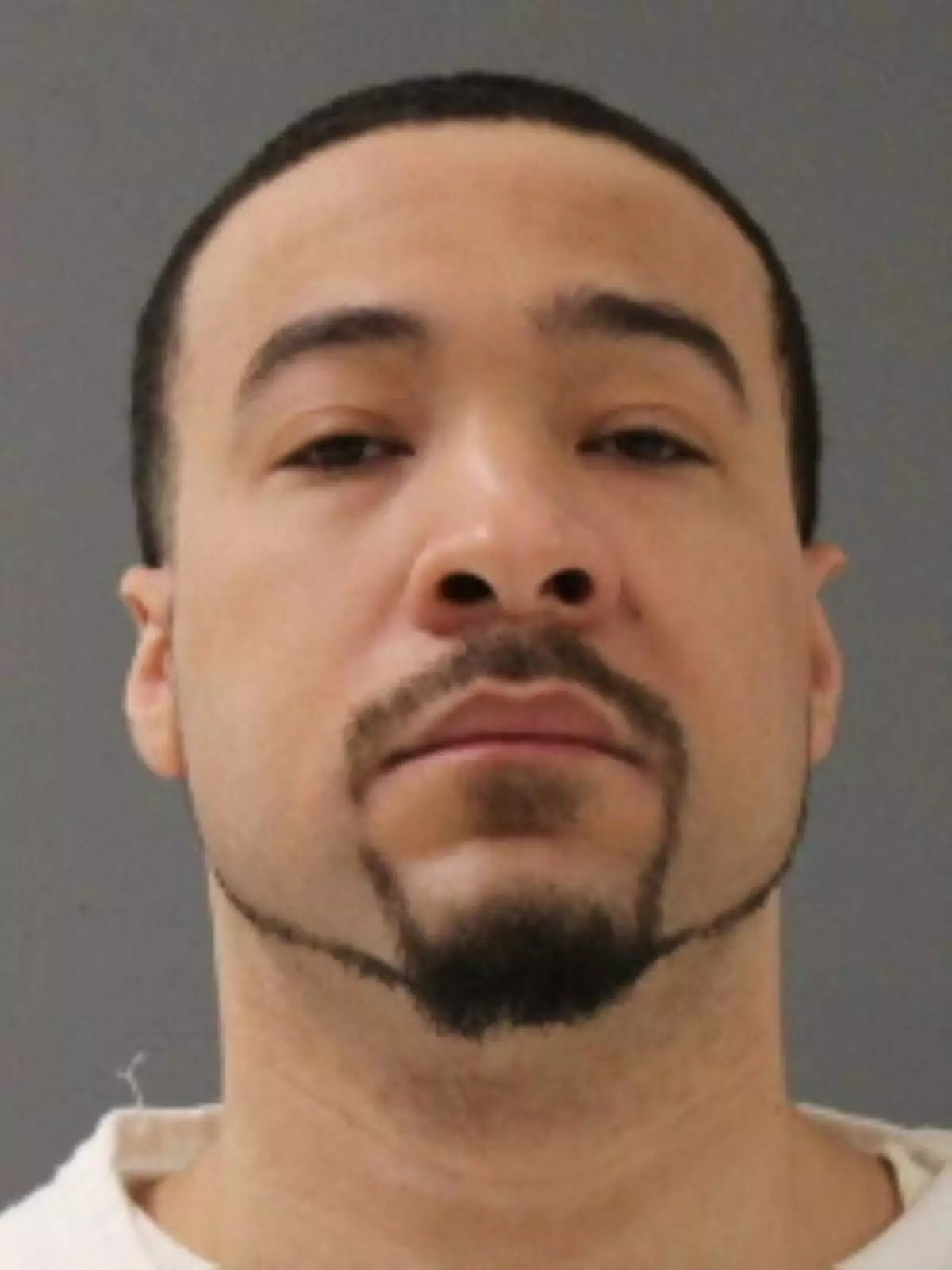
This undated photo provided by the Texas Department of Criminal Justice on Wednesday, April 29, 2026, shows Texas death row inmate James Broadnax. (Texas Department of Criminal Justice via AP)
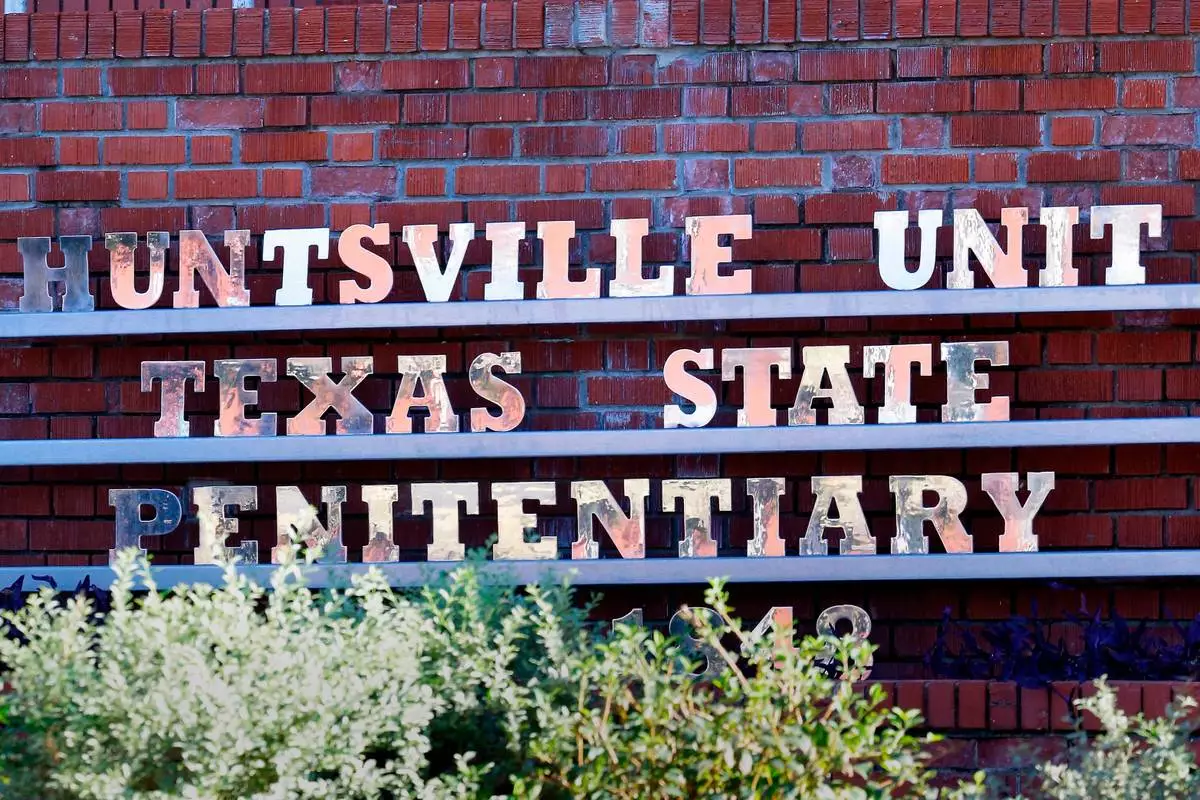
FILE - The main entrance of the building housing the execution chamber at the Huntsville Unit of the Texas State Penitentiary is seen, Oct. 17, 2024, in Huntsville, Texas. (AP Photo/Michael Wyke, File)