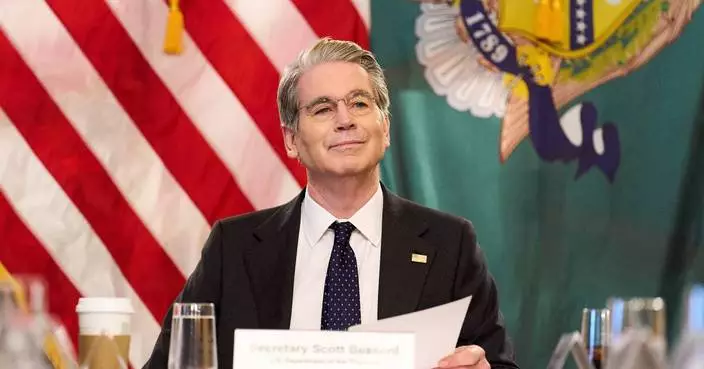
WASHINGTON (AP) — House lawmakers were digging into Jeffrey Epstein's sprawling financial portfolio on Wednesday as a committee deposed his former accountant and tried to understand his connections to some of the world's wealthiest men.
Richard Kahn, who worked closely with Epstein for years and now serves as an executor of his estate, appeared for the closed-door deposition on Capitol Hill. He told lawmakers that he had not personally seen evidence of Epstein's sexual abuse, but provided a fuller picture of how Epstein acquired his wealth. The wealthy financier made hundreds of millions of dollars over two decades, during which he struck up friendships with some of the world's most powerful men.
Kahn “was under the impression that Epstein made his money as a tax advisor and a financial planner,” said Rep. James Comer, the Republican chair of the House Oversight Committee. Lawmakers argued that a fuller picture of Epstein's finances could help the public understand how, for years, he was able to get away with trafficking and sexually abusing underage girls.
“Jeffrey Epstein's sex trafficking ring would not have been possible without Richard Kahn, who managed Epstein's money for years, authorized payments, including payments to victims and survivors,” said Rep. James Walkinshaw, D-Va., who added that Kahn told them he was unable to recall details of some of the transactions and communications that he was asked about.
Kahn has said that he was unaware of Epstein's sexual abuse and had not seen any of his victims.
Comer, R-Ky., also said that lawmakers confirmed during the deposition that Epstein received significant amounts of money from former retail shopping chain executive Les Wexner, hedge fund manager Glenn Dubin, tech entrepreneur Steven Sinofsky, investor Leon Black and the Rothschilds, a wealthy banking family.
None of those people have been accused of wrongdoing in their relationships with Epstein, but Democrats on the committee argued that anyone with ties to the wealthy financier should be scrutinized. Wexner was deposed by the committee last month, and Comer has also called on Black, among several others, to appear for transcribed interviews.
Kahn also told lawmakers that Epstein had financial ties to Ehud Barak, who was the prime minister of Israel from 1999 to 2001, according to Democratic Rep. Suhas Subramanyam. Barak has not been accused of wrongdoing and has said he regrets his friendship with Epstein.
Comer also said Wednesday that the committee has reviewed over 40,000 documents that it subpoenaed from JPMorgan Chase and Deutsche Bank. Epstein was connected to at least 64 business entities, according to Comer.
Republican President Donald Trump has strongly denied any wrongdoing in his own ties to Epstein, and Comer said that Kahn had never seen any financial transactions between Epstein and Trump. Comer said that Kahn is the latest witness to testify that they had never seen Trump doing anything wrong with Epstein.
“The investigation's about getting the truth to the American people, trying to figure out how the government failed, answer questions we all have,” Comer said.

Richard Khan, right, Jeffrey Epstein's accountant and co-executor of his estate, arrives for his deposition before the House Oversight Committee on Capitol Hill, Wednesday, March 11, 2026, in Washington. (AP Photo/Jose Luis Magana)

Richard Khan, center, Jeffrey Epstein's accountant and co-executor of his estate, arrives for his deposition before the House Oversight Committee on Capitol Hill, Wednesday, March 11, 2026, in Washington. (AP Photo/Jose Luis Magana)

Richard Khan, Jeffrey Epstein's accountant and co-executor of his estate, arrives for his deposition before the House Oversight Committee on Capitol Hill, Wednesday, March 11, 2026, in Washington. (AP Photo/Jose Luis Magana)
McCOYSVILLE, Pa. (AP) — Conrad Fisher's musical journey has taken him from an Amish country upbringing in Pennsylvania to Nashville and back. These days the singer-songwriter has been making videos and recordings of musicians with Amish and Mennonite roots — building audiences well beyond the conservative religious communities.
Last weekend Fisher took the stage in a former Presbyterian church that he bought for a song and converted into a performance space and recording studio he calls Ragamuffin Hall, in the rural Pennsylvania community of McCoysville.
Fisher performed two sold-out concerts with Ben and Rose Stoltzfus, a married couple whose Amish background and church choir harmonies have drawn millions of YouTube clicks. It was a sort of warmup for shows they're playing together in the coming months at much larger theaters in Pennsylvania and Indiana.
“Ragamuffin Hall,” Fisher said, "is supposed to be a place where those weird things that'll get you ostracized everywhere else, we're like, 'Oh, no, that's a gift. And here's how you use it.'”
Fisher's parents were both raised in Amish families but his father joined a Mennonite congregation as a young adult. Among the Mennonite churches Fisher attended as a boy, musical instruments were rarely used.
Nonetheless, his father was a fan of Johnny Cash and didn't look too closely at what was on Fisher's MP3 player. When Fisher's brother came home from a camping trip with a mix CD featuring Chuck Berry, Buddy Holly, the Everly Brothers and the Beach Boys, it changed his life.
“It blew my mind, right?” Fisher, now 31, recalled. He started learning keyboards and then guitar, bass and drums before adding music production — “mostly because I was dead set on making a living with music.”
“My buddies would be like, ‘Hey, I wrote a song for my girlfriend. Can you do a track?' And I’m like, sure.”
He moved to Tennessee as a young adult and for three years immersed himself in the songwriting industry — the Oak Ridge Boys even recorded one of his tunes. But the road life didn't suit him — particularly bar gigs.
“There's drinking and carrying on,” Fisher said. “It's just not me. I'm not a prude, but I just don't enjoy that scene.”
Fisher considers his wife and three children his main priority and he remains a faithful Mennonite — his pastor once asked him why he didn’t just start a cabinetry business and launch a prison ministry. Yet his music production work eventually grew to the point three years ago that he could stop working as a carpenter.
In 2022, Fisher learned an old brick church several miles from his home was up for sale. After he laid out his vision for making it into a music incubator, they sold it to him below market value.
Musicians now regularly find their way to Ragamuffin Hall, mostly to record “clean country music" and rootsy bluegrass with a heavy dose of gospel. The acts he's recorded include an Amish man who played steel guitar with his son's band, a musician who drove for hours from Missouri and an Amish band from Ohio.
Last Saturday, he sprinkled his own songs between tunes made popular by Waylon Jennings, Alison Krauss and Don Williams. After a short set by Fisher's five-piece band, they stayed on stage to back up Ben and Rose. Fisher used an electric guitar fashioned from a beam recovered during his renovations of a church stairwell.
The overwhelmingly white matinee crowd consisted mostly of older people and included several of the musicians' family members. Downstairs, Ragamuffin Hall T-shirts were for sale alongside $3 homemade whoopie pies, a regionally ubiquitous Pennsylvania Dutch dessert.
The insular culture and unadorned lives of conservative Anabaptist people aren't often associated with music, but Amish sacred music dates back half a millennium. Their 900-page hymnal — the “Ausbund” — was composed in part by Anabaptist prisoners in 16th century Germany and is still used today.
Fisher’s Amish roots and ability to speak Pennsylvania Dutch, the Old Order Amish dialect, has helped build rapport with likeminded musicians.
But Amish church music is almost always group singing only, without instruments or soloists. And the community generally discourages public performances and other “acts of pride.”
“There's a lot of great talent in that community that goes undeveloped because," Fisher said — using a Pennsylvania German phrase — "that's just, ‘we don’t do that,' you know.”
That's the sort of pushback he received in February after uploading a rollicking, live version of “Swing Low, Sweet Chariot” to YouTube. Fisher felt compelled to respond.
“I'm a believer, I'm a man of faith, and I'm not ashamed of that,” he replied in a video message. “But I do play a lot of different kinds of music, just like, you know, if you're a shed builder you build sheds for all kinds of people, not just churches and schools.”
Elam Stoltzfus, director of the Nicholas Stoltzfus Homestead in Wyomissing, Pennsylvania, said it was “one of the shocks of my life” to attend a charity fundraiser last year at a farm where Ben and Rose performed. (Stoltzfus is a common name among the Amish.) There were bright lights, a video screen, barbecued chicken and vendors selling T-shirts, CDs and books.
Stoltzfus, whose family left the Old Order in the mid-1960s when he was 10, said the gathering was packed with Mennonite and Amish people. They weren’t dancing, but they did clap.
“I was thrilled to see this happen, because I knew this was a paradigm shift," he said. “When I was a teenager, it would never have happened.”
Amos Raber, of Goshen, Indiana, also grew up in a “horse and buggy” Amish family and considered himself Amish until he turned 22. Nowadays, he supports his family with concert performances and revenues garnered from what he says are millions of clicks a month on YouTube, Spotify, Apple Music and Facebook.
In recent decades, Raber said, he's seen Amish youth increasingly come together with guitars to sing. But they can still run up against prohibitions on public performances.
“Most times, if you see someone who's really Amish doing that kind of thing, they're probably not going to be Amish long,” Raber said. Since they began recording and performing music, Ben and Rose have left their Amish church and joined a different Christian congregation. They declined comment for this story.
LeRoy Stoltzfus, a singer-songwriter living near Lancaster, was 13 when his family left the Amish church. He said changes in the Lancaster Amish settlement in recent years have made it easier for people to leave without losing contact with families and friends, a process called “shunning” that has long fascinated outsiders.
After years of playing guitar as a church worship leader and after spending four years at a Colorado Bible college, he's now making a living as a musician, stitching together concerts with online ad revenue and recordings for a fan base that includes many Amish and formerly Amish people.
“Ever since I can remember I wanted to be a star,” LeRoy Stoltzfus said. “But the older I got, I realized it wasn't about me — it was about putting out music and helping people.”
Justin Hiltner, a Nashville-based banjo player and songwriter who serves as managing editor of the roots music blog “The Bluegrass Situation,” said after delving into the music he was impressed with its quality. He said he also got the sense that Ben and Rose and Conrad Fisher and the others are building a musical community.
“This is clearly not just insular music that’s just facing other Amish folks or other Mennonite folks,” Hiltner said. “Clearly it’s ‘broken containment’ here.”
Hiltner called the music -- and Fisher’s videos -- “really compelling.”
“To kind of an outsider, this is the performance of American essentialism, the rural American ideal, right?” said Hiltner. “I did hear a level of talent that’s very clearly pushing and pulling these folks towards bringing their music to a wider audience.”
Religiously conservative musicians can market their recordings through a network of bookstores across the U.S. and Canada. At one of them, Ken’s Educational Joys in Ephrata, Pennsylvania, racks of CDs are sold alongside a floor-to-ceiling selection of Bibles.
Proprietor Lydell Zimmerman said his biggest music sellers are a cappella recordings, but he's noticed Ben and Rose have drawn a real following.
“I think their presence as an Amish couple singing online is what brought people’s attention to them,” Zimmerman said.
Ben and Rose came to Fisher's studio when Ben's brother, a friend of Fisher's from Lancaster, booked a session there.
He realized right away Ben and Rose had talent. Tapping into Fisher’s production skills, they've amassed more than 30 million views for their videos on YouTube. Eventually he proposed some live shows and the couple agreed.
“I started recording when I was 14,” Fisher said. “If you would have told me two years ago that what's going to put me on the map or boost my business in a big way, it's going to be an Old Order Amish couple, I would have laughed at you.”
Associated Press religion coverage receives support through the AP’s collaboration with The Conversation US, with funding from Lilly Endowment Inc. The AP is solely responsible for this content.
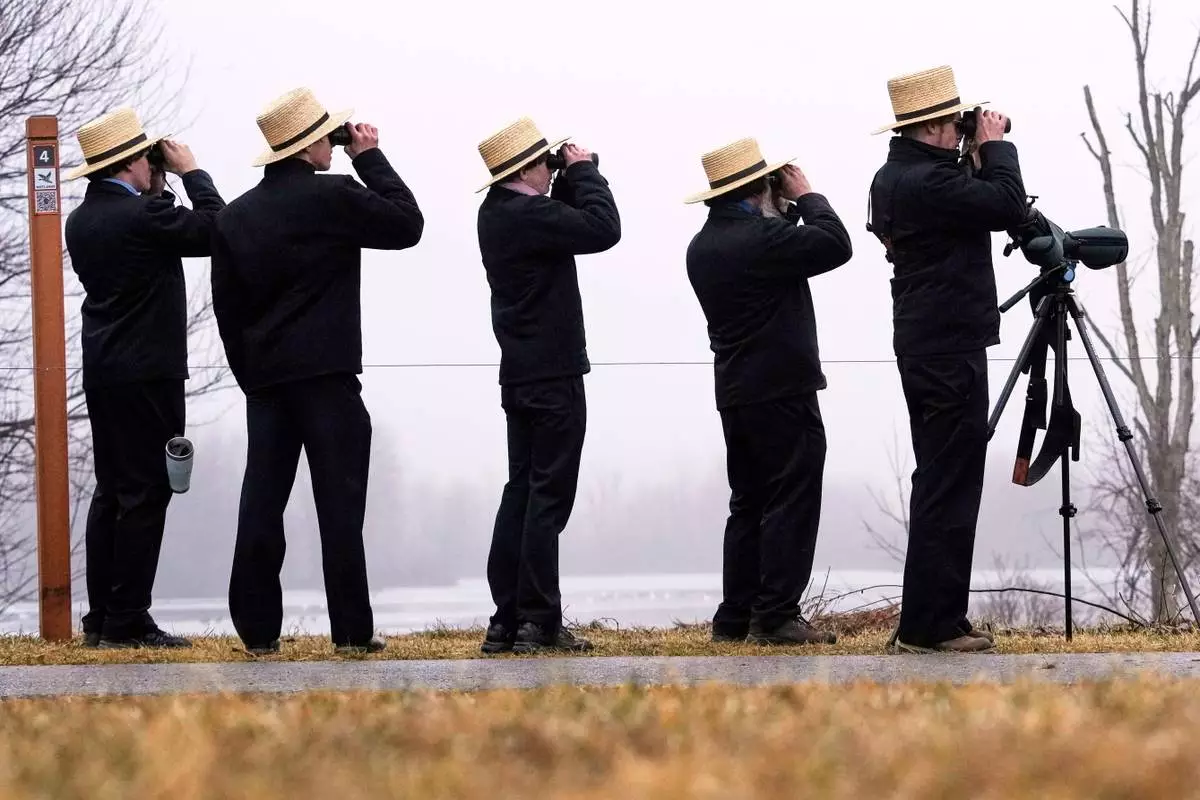
Amish birders focus their binoculars on waterfowl at Middle Creek Wildlife Management Area, Saturday, March 7, 2026, in Kleinfeltersville, Pa. (AP Photo/Robert F. Bukaty)

Amish youngsters ride in the kid box of a buggy Sunday, March 8, 2026, in Lancaster County, Pa. (AP Photo/Robert F. Bukaty)
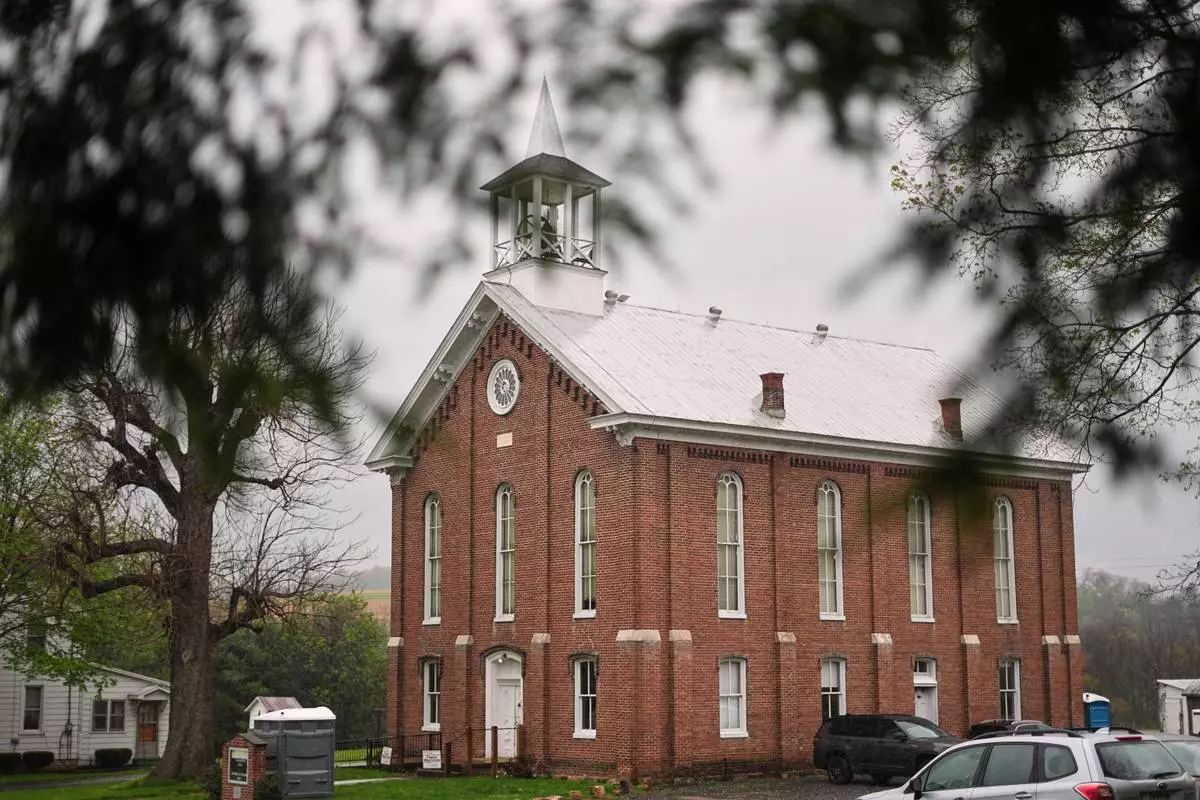
The former Presbyterian church converted into Ragamuffin Hall is seen in McCoysville, Pa., Saturday, April 25, 2026. (AP Photo/Matt Rourke)
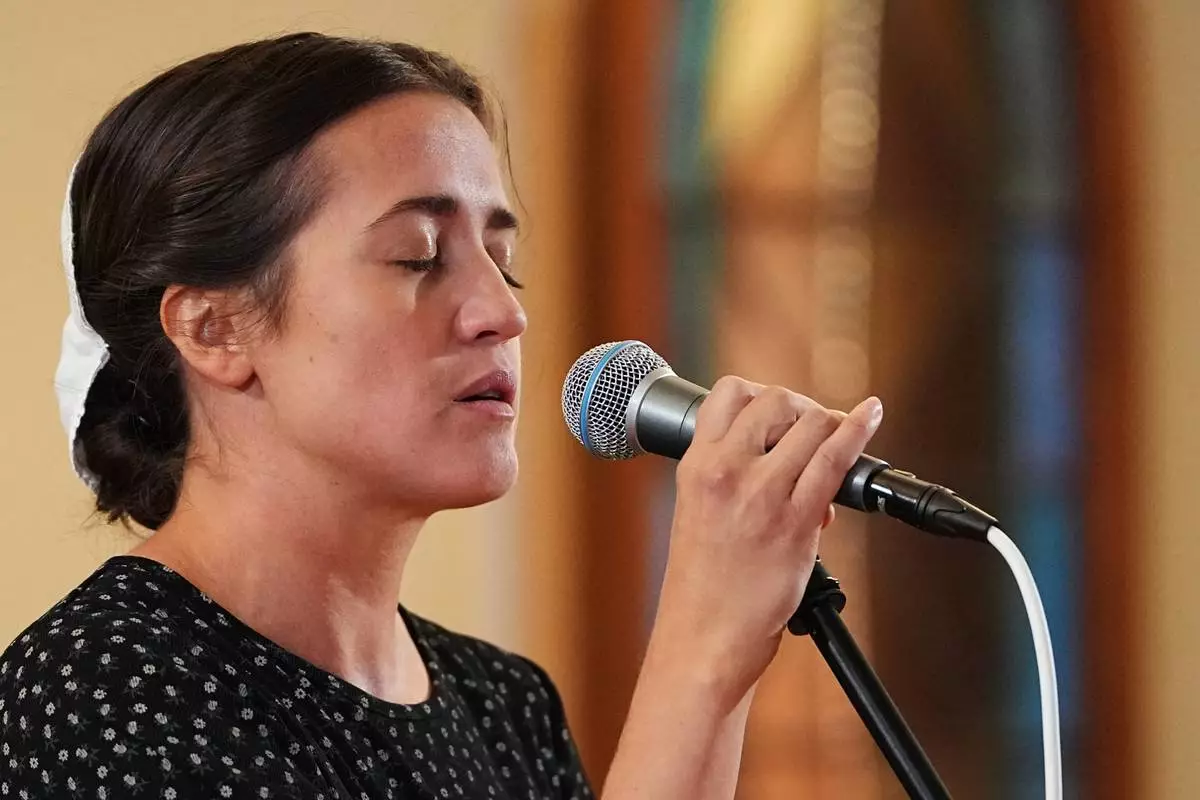
Rose Stoltzfus performs at Ragamuffin Hall in McCoysville, Pa., Saturday, April 25, 2026. (AP Photo/Matt Rourke)
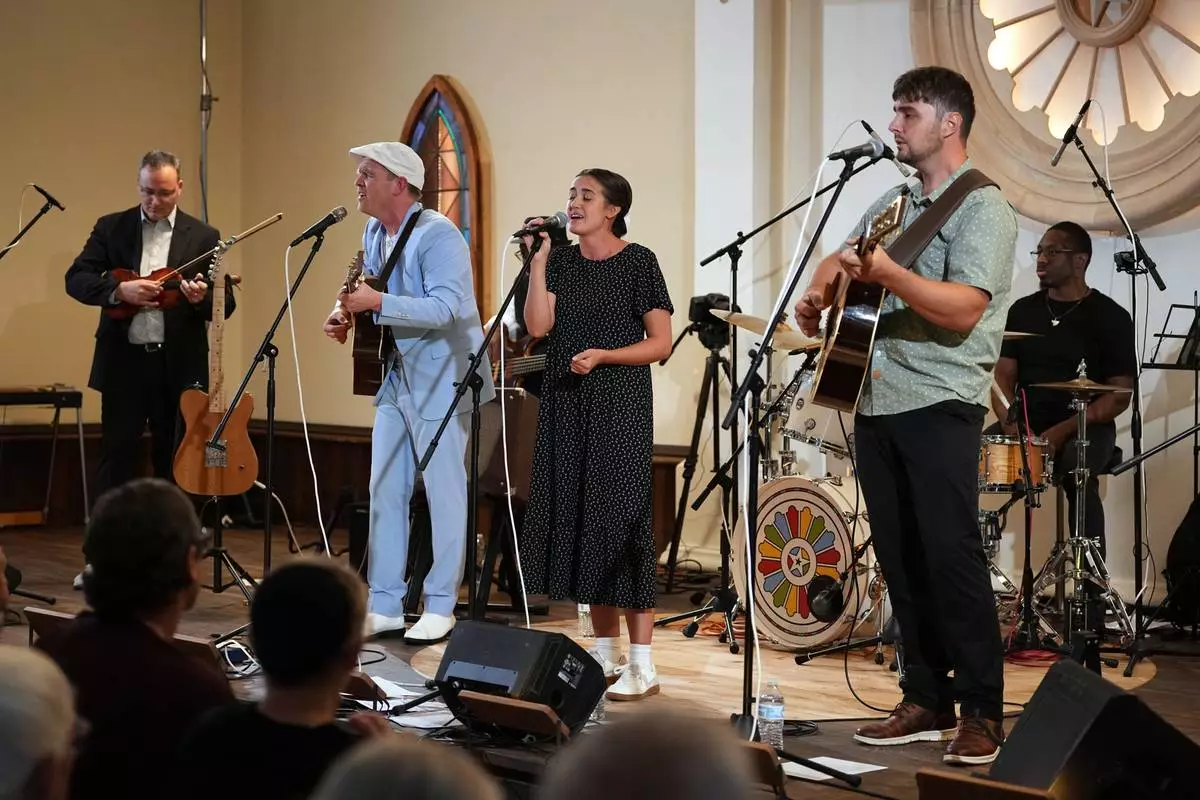
Conrad Fisher, Rose Stoltzfus and Ben Stoltzfus perform at Ragamuffin Hall in McCoysville, Pa., Saturday, April 25, 2026. (AP Photo/Matt Rourke)
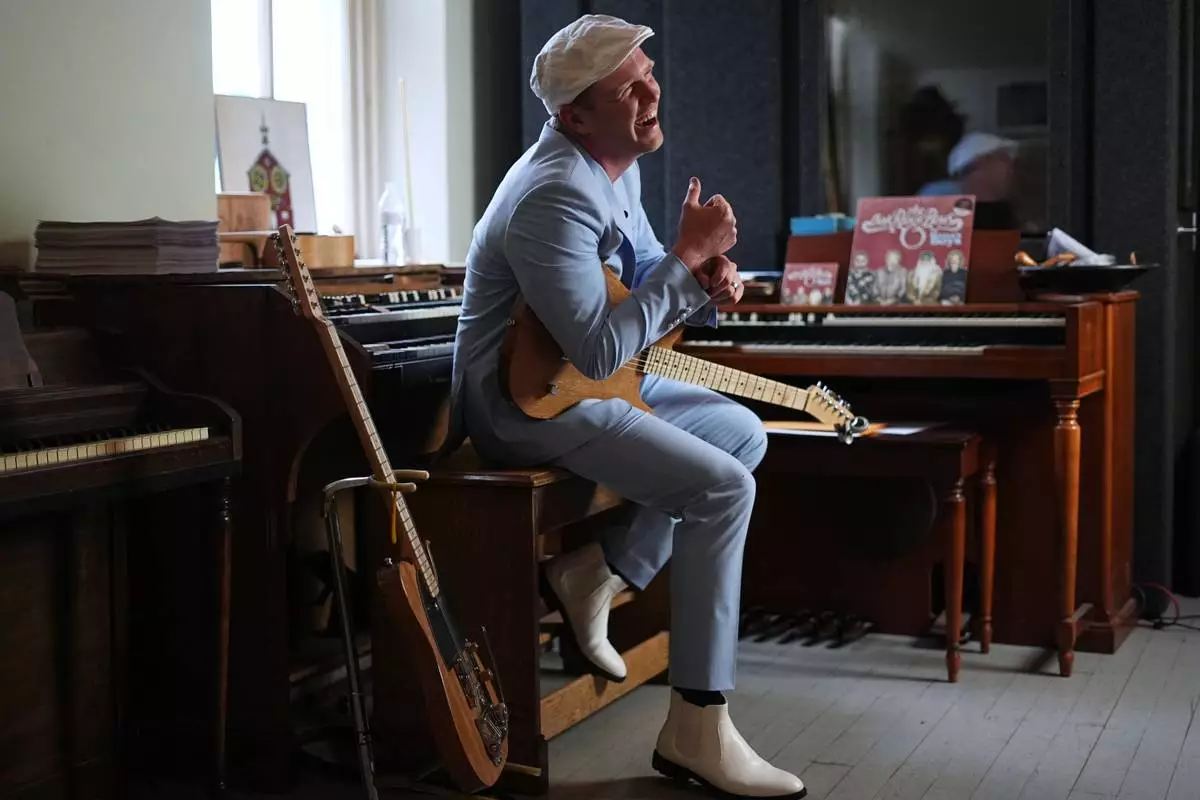
Conrad Fisher laughs during an interview with the Associated Press ahead of his performance at Ragamuffin Hall in McCoysville, Pa., Saturday, April 25, 2026. (AP Photo/Matt Rourke)