Winning free agency doesn’t guarantee success.
It’s still a good start.
NFL teams have committed billions of dollars in free agency, hoping the players they’ve added can help them win a Super Bowl.
Some of the more aggressive teams — the Raiders and Titans — would be happy if new players just make them more competitive after futile seasons.
There have been several surprises, including a voided blockbuster trade that sent star edge rusher Maxx Crosby back to the Raiders.
Here’s some early winners and losers:
The NFC South champion Panthers added edge rusher Jaelan Phillips ($120 million) and linebacker Devin Lloyd ($45 million), two of the best players available at their positions. Phillips and Lloyd join interior lineman Derrick Brown and cornerback Jaycee Horn to give Carolina top players at each level on defense.
The Panthers lost defensive lineman A’Shawn Robinson, running back Rico Dowdle and center Cade Mays.
The 49ers snagged six-time Pro Bowl receiver Mike Evans from Tampa Bay on a three-year deal that could be worth $60.4 million but only includes $16.3 million guaranteed over one year, according to a person who spoke to The Associated Press on condition of anonymity because the details weren't public. San Francisco also acquired defensive tackle Osa Odighizuwa from Dallas for a third-round pick; added swing tackle Vederian Lowe and center Brett Toth; and re-signed tight end Jake Tonges and kicker Eddy Piniero.
The 32-year-old Evans can still be an elite player in coach Kyle Shanahan’s system, giving Brock Purdy a top target.
The Niners lost wideout Kendrick Bourne.
An excellent offseason last year helped the Patriots win 10 more games and reach the Super Bowl. They’ve followed up with another strong spending spree, adding wideout Romeo Doubs ($70 million), guard Alijah Vera-Tucker ($42 million), Pro Bowl safety Kevin Byard ($9 million), edge rusher Dre’Mont Jones ($39.5 million), fullback Reggie Gilliam, tight end Julian Hill, safety Mike Brown and linebacker K.J. Britt.
They traded center Garrett Bradbury and lost defensive lineman Khyiris Tonga, tight end Austin Hooper and safety Jaylinn Hawkins.
Geno Smith is back in New York and the Jets strengthened their defense by acquiring veteran safety Minkah Fitzpatrick and defensive lineman T’Vondre Sweat in other trades and signing two-time Pro Bowl linebacker Demario Davis and edge rusher Joseph Ossai ($34.5 million).
They also signed defensive tackle David Onyemata, edge Kingsley Enagbare, safety Dane Belton and cornerback Nashon Wright, giving Aaron Glenn several new players to bolster the defense. Left guard Dylan Parham fills a vacancy on the offensive line and backup tackle Max Mitchell returns.
The Jets lost linebacker Quincy Williams, guards Vera-Tucker and John Simpson and kicker Nick Folk.
After trading for cornerback Trent McDuffie, the Rams signed cornerback Jaylen Watson and re-signed safety Kam Curl to further boost the secondary.
Tight end Tyler Higbee returns to provide depth and long snapper Joe Cardona arrives to help on special teams.
They lost Evans not over money but because he wanted a new challenge and views the 49ers as closer to winning. The defense lost a pair of starters in cornerback Jamel Dean and defensive lineman Logan Hall.
The Buccaneers signed Robinson to improve the defensive line, linebacker Alex Anzalone, running back Kenneth Gainwell and backup quarterback Jake Browning.
The two-time defending NFC East champions make this list because they lost three starters on defense: Phillips, linebacker Nakobe Dean, safety Reed Blankenship.
The Eagles signed cornerback Riq Woolen and tight end Johnny Mundt and re-signed tight end Grant Calcaterra.
They gave defensive tackle Jordan Davis a contract extension and have to extend several young stars on a defense that dominated Kansas City in the Super Bowl two years ago. Philadelphia can’t pay everyone, and general manager Howie Roseman always finds a way to compensate for losing talented players.
The AFC South champions lost Lloyd, running back Travis Etienne and cornerback Greg Newsome.
They’ve signed backup running back Chris Rodriguez Jr. and retained cornerback Montaric Brown and linebacker Dennis Gardeck.
The Jaguars have more work to do in the offseason.
On Football analyzes the biggest topics in the NFL from week to week. For more On Football analysis, head here.
AP NFL: https://apnews.com/hub/nfl
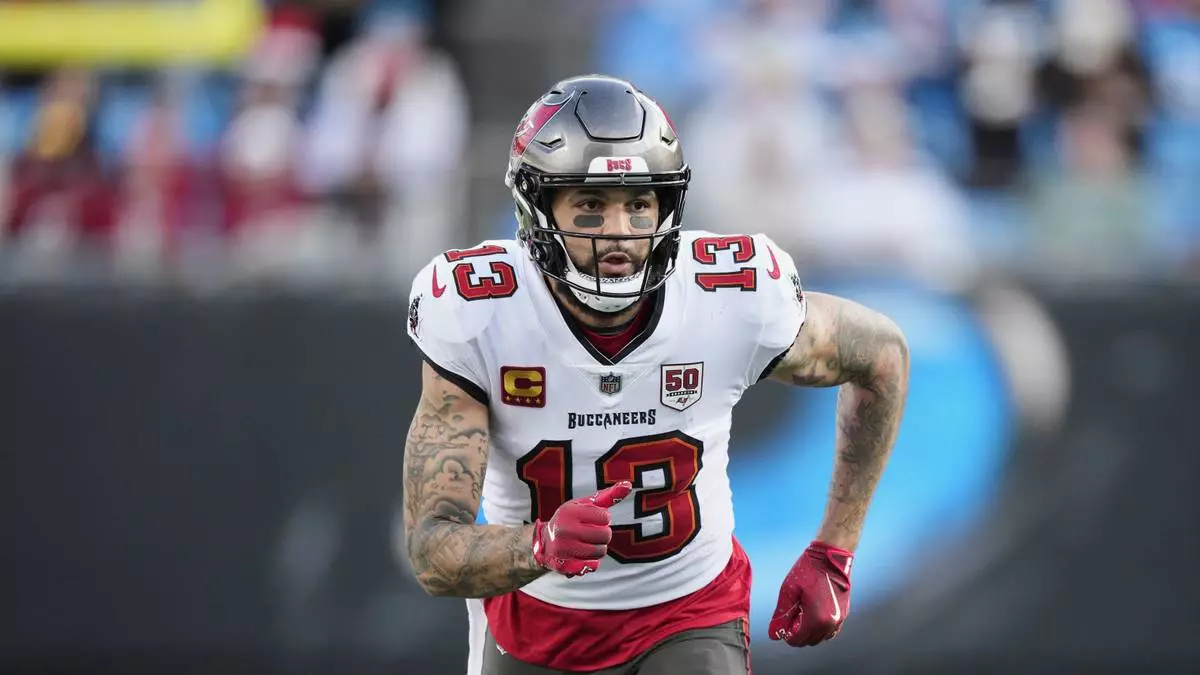
FILE - Tampa Bay Buccaneers wide receiver Mike Evans runs during an NFL football game between the Carolina Panthers and the Tampa Bay Buccaneers on Dec. 21, 2025, in Charlotte, N.C. (AP Photo/Jacob Kupferman, file)

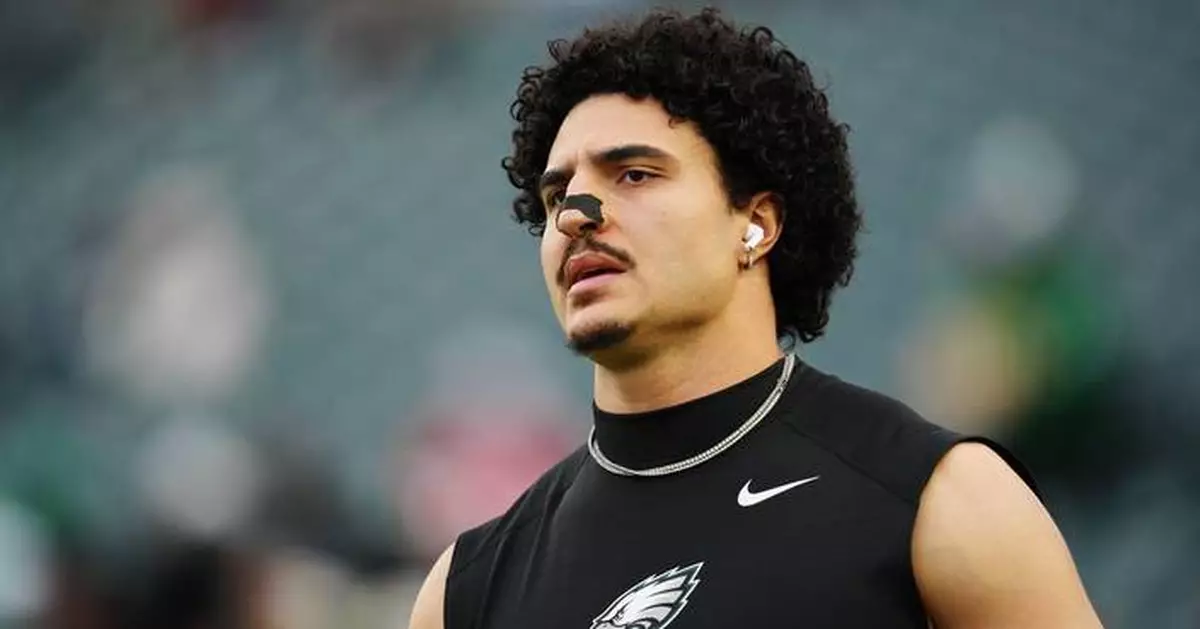
FILE - Philadelphia Eagles linebacker Jaelan Phillips warms up before an NFL wild-card playoff football game against the San Francisco 49ers on Jan. 11, 2026, in Philadelphia. (AP Photo/Derik Hamilton, file)
WASHINGTON (AP) — President Donald Trump asserted on Wednesday that Iran's “negotiating on fumes” and insisted November's midterm elections won't factor in shaping his approach to the nearly three-month-old conflict that's spurred unease across the global economy.
Speaking at the start of a Cabinet meeting at a precarious moment for talks aimed at ending the war, Trump expressed confidence that a deal is near. Over the weekend, he even declared that his administration and Tehran had “largely negotiated” a settlement, but the negotiations were still in flux.
The president is looking for a settlement that will reopen the Strait of Hormuz and provide him a credible argument that Iran’s nuclear capability has been diminished enough to declare victory, winding down a conflict that's been politically unpopular for Republicans.
But as things stand, Trump also risks finding that closure to his war of choice comes with an unsatisfactory ending.
The emerging deal puts off many critical issues to be resolved later and has already exposed the Republican president to fierce criticism — even from some of his own supporters — that Iran's hard-line leaders will emerge from the conflict battered but emboldened. It all comes to a head just as the midterm elections to determine control of Congress come into focus and as Republicans worry that rising costs and fuel prices are darkening the American electorate's mood.
But Trump on Wednesday dismissed the idea that the upcoming elections would carry any weight in shaping his Iran strategy.
“They thought they were gonna outwait me. You know, 'We’ll outwait him. He’s got the midterms,'” Trump said. “I don’t care about the midterms.”
Trump acknowledged there's still work to do, but he spoke with a measure of certainty that the two sides would get there.
“They want very much to make a deal,” Trump said. “So far, they haven’t gotten there. We’re not satisfied with it, but we will be — either that or we’ll have to just finish the job.”
Talks were further complicated after U.S. forces carried out what the Pentagon called “defensive” strikes on missile launch sites and minelaying boats in southern Iran on Monday. The U.S. said it acted with “restraint” in light of the weekslong ceasefire, while Iran decried the action as a sign of “bad faith and unreliability.”
While Trump insists a deal is within reach, there appears to be daylight between the U.S. and Iran on several key issues. The president is also facing scrutiny from Republican allies, including Sens. Roger Wicker of Mississippi, Lindsey Graham of South Carolina and Ted Cruz of Texas, who have said the terms seem too favorable to Tehran.
They're balking at aspects of the deal that have emerged publicly that they say too closely resemble the nuclear agreement reached with Iran by Democratic President Barack Obama, which Trump scrapped during his first term.
Under the potential deal, Tehran would agree to give up its stockpile of highly enriched uranium — a key Trump demand — in return for sanctions relief. That's according to two regional officials and one senior Trump administration official, all of whom spoke on the condition of anonymity to discuss the sensitive negotiations.
One regional official, with direct knowledge of the negotiations, said how Iran would give up the uranium would be subject to further talks during a 60-day period. Some would likely be diluted, while the rest would be transferred to a third country, the official said.
Iran has 440.9 kilograms (972 pounds) of uranium that is enriched up to 60% purity, a short, technical step from weapons-grade levels of 90%, according to the International Atomic Energy Agency. Iran has not publicly committed to giving up its uranium.
Trump on Monday said in a Truth Social post that the uranium, which is believed to be buried under nuclear sites battered by U.S. airstrikes last year, would either be turned over to the U.S. or “destroyed in place or, at another acceptable location, with the Atomic Energy Commission, or its equivalent, being witness to this process and event.” The comment signals a softening of Trump's previous insistence that the U.S. take control of Iran's uranium stockpile.
Trump said that he “wouldn’t be comfortable” with either Russia or China taking Iran’s stockpile of highly enriched uranium. The two countries have the closest relations with Tehran, and nuclear analysts have said they could be a potential acceptable third party to the Iranian Republic to take possession of the enriched uranium as part of a potential deal.
Another key issue unresolved is whether the ceasefire will also cover Israel’s operations against Hezbollah, the Iranian-backed militant group in Lebanon. Iran has insisted that Lebanon must be covered by any ceasefire agreement negotiated with the United States.
The administration appears to leave some wiggle room on the Lebanon question. The emerging memorandum of understanding calls for a ceasefire between the U.S. and its allies against Iran and its proxies, such as Hezbollah, but also underscores Israel's right to act against imminent threats and in self-defense.
Prime Minister Benjamin Netanyahu on Tuesday announced that the Israeli military is “deepening its operation” in Lebanon. Overnight, Israel's military clashed with the Iran-backed militant Hezbollah group along a strategic river in southern Lebanon as Israeli troops pushed farther north.
Jonathan Conricus, a former spokesperson for the Israel Defense Forces, said Israel expects that Iran would quickly move to direct any sanctions relief to restore its military capability and boost proxy groups, including Hezbollah and Hamas in Gaza.
“We’re not done fighting, because the Iranian regime isn’t done,” said Conricus, who is a senior fellow with the Foundation for Defense of Democracies, a hawkish Washington think tank.
Trump on Monday said any agreement to end the Iran war should include a requirement for several additional countries, including Saudi Arabia, Qatar and Pakistan, to join the Abraham Accords, the U.S.-brokered agreements from Trump’s first term aimed at normalizing diplomatic and economic relations with Israel.
Trump’s optimism that the other Middle Eastern and majority Muslim countries could soon sign on to the accords might be overly ambitious.
For example, Saudi Arabia, the most significant power in the Arab world and long seen as the biggest prize for the normalization effort, has insisted that establishing a guaranteed path to a Palestinian state remains a precondition. It's something that Israel vehemently opposes.
Trump made the Abraham Accords push during a call with leaders of Mideast allies over the weekend.
Barbara Leaf, a retired U.S. ambassador to the United Arab Emirates and senior State Department official during President Joe Biden's Democratic administration, said officials from Gulf countries who were on the call told her that Trump's pitch was greeted by “stunned silence.” A person familiar with the call disputed that characterization and said that some regional allies responded positively to the president’s call to join the accords. The person spoke on the condition of anonymity about the private conversation.
Leaf, a distinguished diplomatic fellow at the Middle East Institute, said that Middle Eastern allies of the United States recognize that Iran will likely use any money from sanctions relief to bolster its military capabilities. Still, they have been supportive of Trump pursuing an end to the conflict.
“They see no other way out,” Leaf said of American allies in the region. “And they see no other way out because of many of these early mistakes that the president and the administration made in conducting the war.”
AP writers Matthew Lee, Michelle L. Price and Darlene Superville in Washington, Bill Barrow in Atlanta, Samy Magdy in Cairo and Melanie Lidman in Jerusalem contributed to this report.
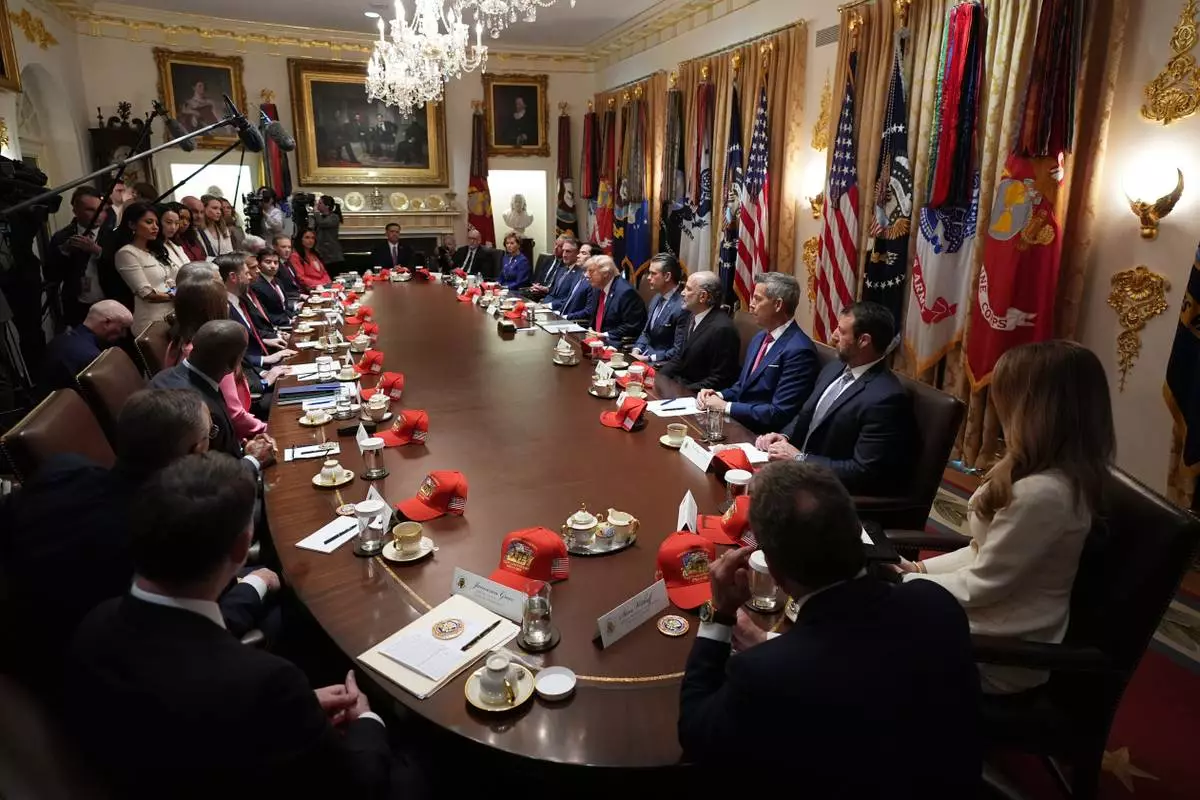
President Donald Trump, center right, attends a Cabinet meeting in the Cabinet Room, at the White House, Wednesday, May 27, 2026, in Washington. (AP Photo/Jacquelyn Martin)
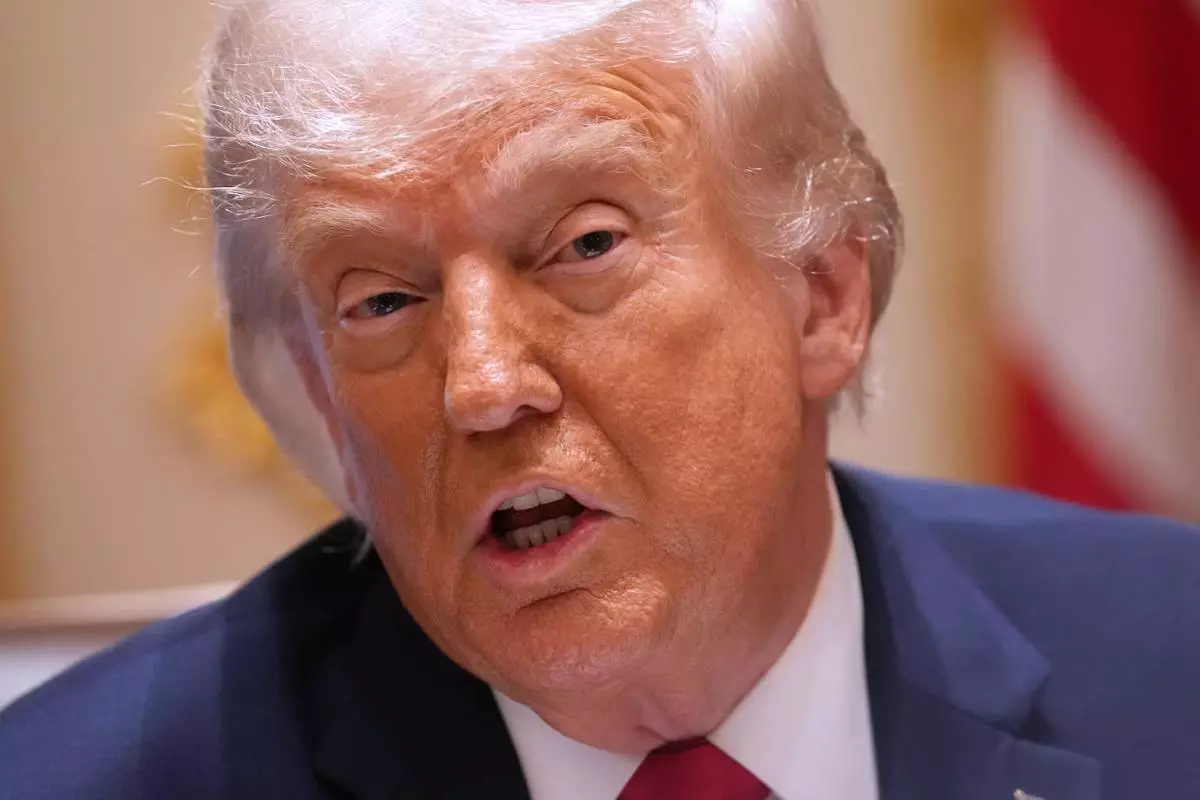
President Donald Trump speaks during a Cabinet meeting at the White House, Wednesday, May 27, 2026, in Washington. (AP Photo/Jacquelyn Martin)
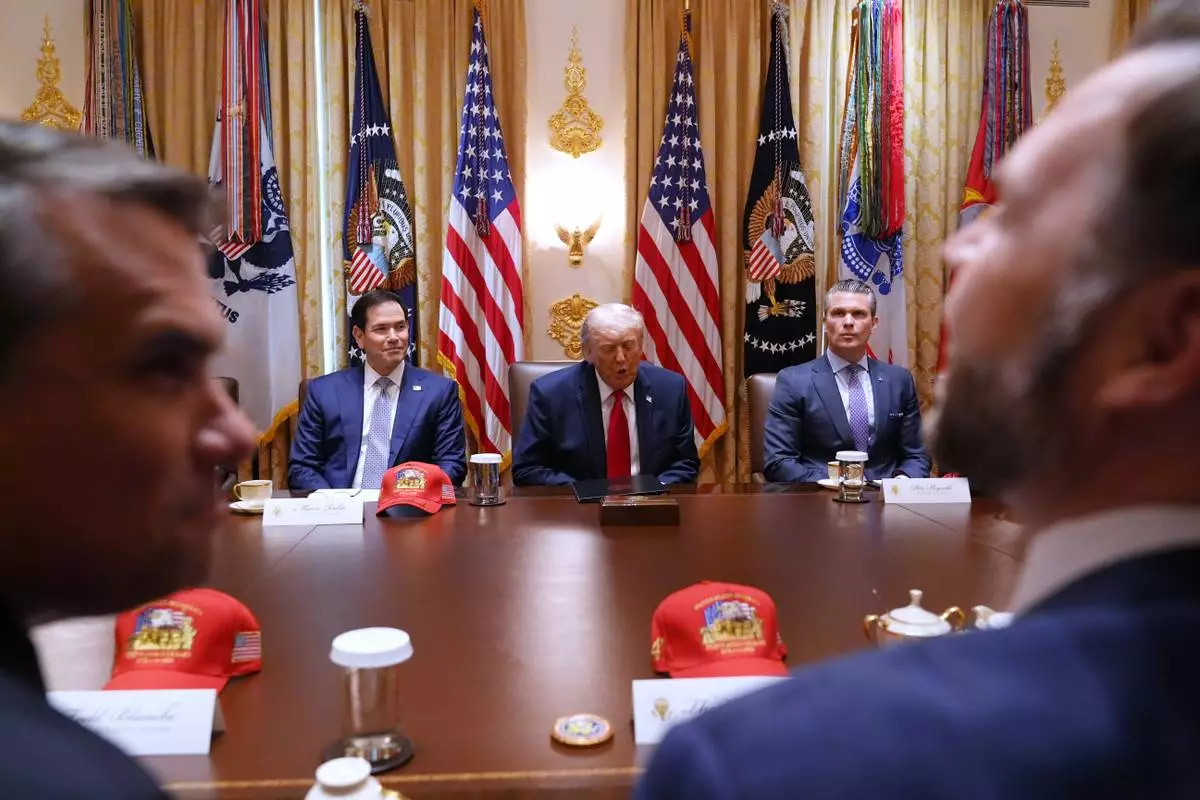
President Donald Trump, next to Secretary of State Marco Rubio, left, and Secretary of Defense, Pete Hegseth, right, speaks during a Cabinet meeting at the White House, Wednesday, May 27, 2026, in Washington, as Acting Attorney General Todd Blanche, front left, and Vice President JD Vance, front right, look on. (AP Photo/Jacquelyn Martin)
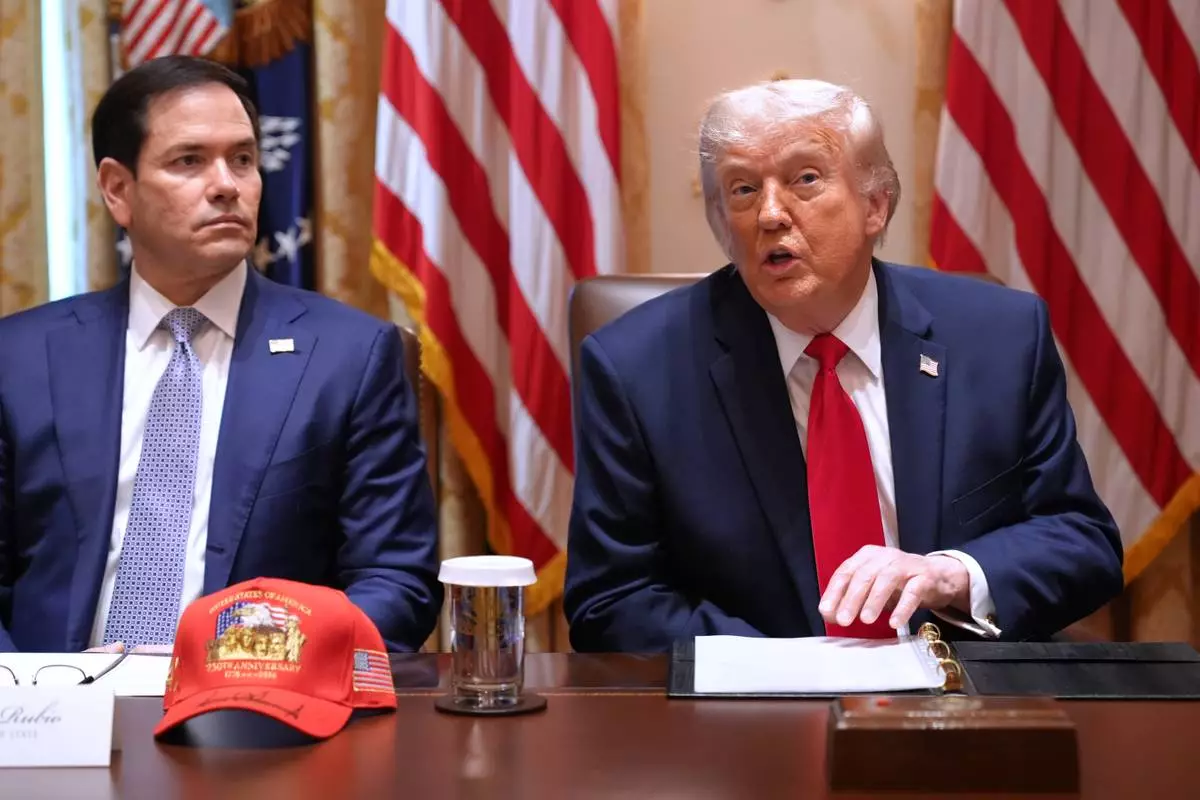
President Donald Trump, next to Secretary of State Marco Rubio, speaks during a Cabinet meeting at the White House, Wednesday, May 27, 2026, in Washington. (AP Photo/Jacquelyn Martin)
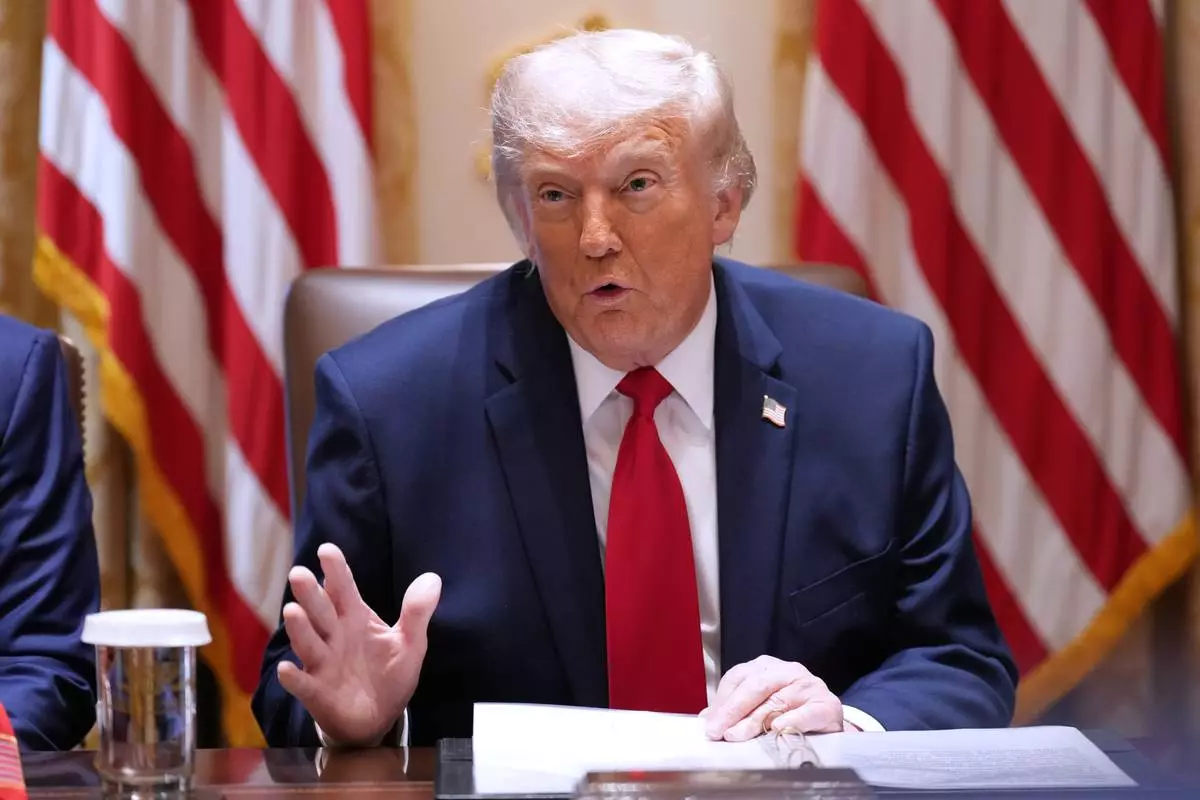
President Donald Trump speaks during a Cabinet meeting at the White House, Wednesday, May 27, 2026, in Washington. (AP Photo/Jacquelyn Martin)
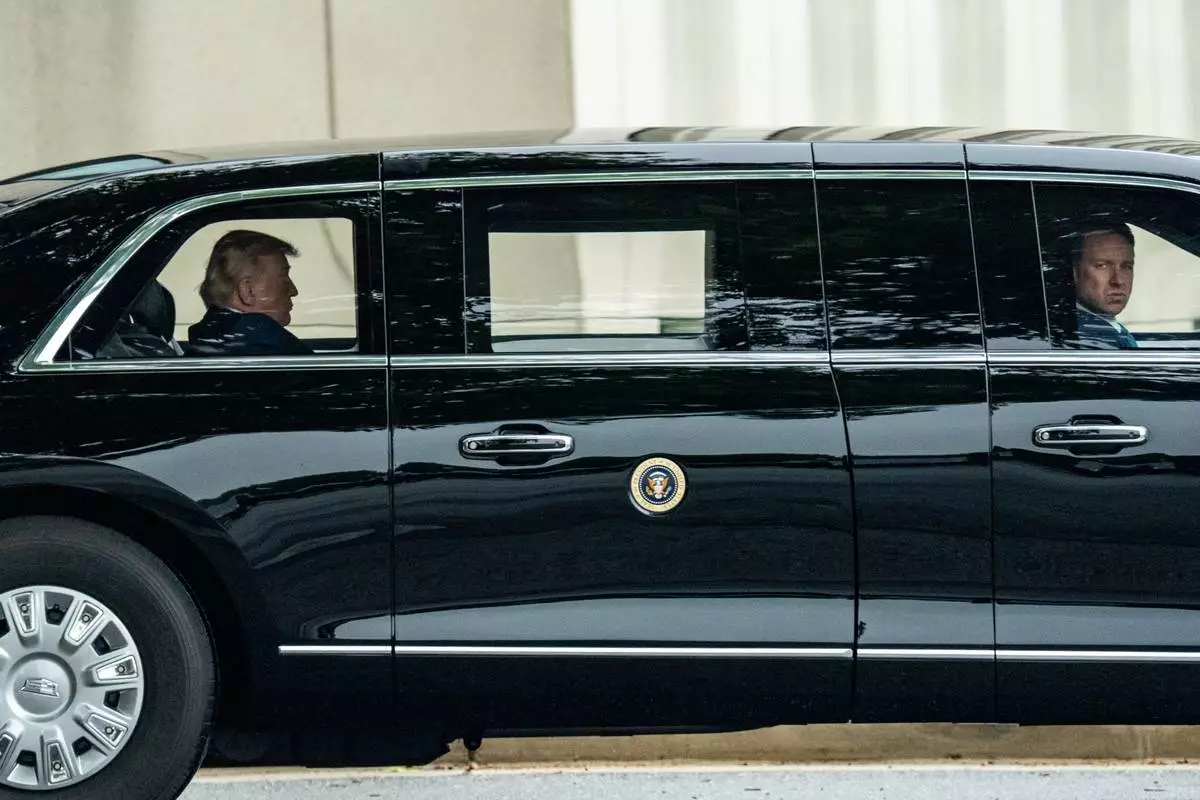
President Donald Trump departs Walter Reed National Military Medical Center, Tuesday, May 26, 2026, in Bethesda, Md. (AP Photo/Alex Brandon)