An international passenger train from the city of Dandong in northeast China's Liaoning Province to the Democratic People's Republic of Korea (DPRK) arrived in Pyongyang on Thursday.
At 18:07, the train arrived at a railway station in central Pyongyang, the capital of the DPRK, marking the official resumption of two-way international passenger train services after a six-year hiatus.
Chinese Ambassador to the DPRK Wang Yajun, some other Chinese diplomats, and an official in charge of external affairs at the DPRK railway ministry came to the platform of the station to greet the passengers aboard the train.
Extending a warm welcome, Wang described the resumption of the rail link as "a good development the peoples from both countries have been looking forward to and a significant event in bilateral relations."
China State Railway Group Co., Ltd. announced Tuesday that international passenger trains connecting China and the DPRK would begin operating in both directions on Thursday.
The services will connect Beijing and Dandong with Pyongyang, helping facilitate cross-border travel and boost economic, trade and cultural exchanges between the two countries, the Chinese railway operator said.
Trains between Beijing and Pyongyang will run four days a week, with two-way services scheduled on Mondays, Wednesdays, Thursdays and Saturdays, while the Dandong-Pyongyang train service will operate daily in both directions, the operator said.
The train link, first launched in 1954, was suspended in January 2020.

Int'l passenger train from China to DPRK arrives in Pyongyang
The Japanese society should do soul-searching regarding its history of aggression and adhere to the pacifist constitution, said Shiradori Hiroshi, a professor of the Hosei University, in an interview with China Central Television (CCTV) in Tokyo on April 30.
He said the government's recent move to discuss revising the three security documents deserve particular attention as the country's foreign and security policies have already witnessed major changes.
"People outside of the country hold that Japan's post-war image as a 'peace state' is now facing a major shift. Against the backdrop of tremendous changes in its foreign and security policies, the revision of the three security documents deserves particular attention. There lacks public debate in terms of the procedure, with policy changes decided unilaterally at Cabinet meetings. It is necessary to fully explain to the public as to whether such a practice is proper," said Hiroshi.
The Japanese government held its first expert panel meeting to discuss revisions to the three security documents at the Prime Minister's Office on April 27, local media reported.
Japan's current National Security Strategy and two related documents, formulated in 2022, were designed to cover the next 10 years, but the government led by Prime Minister Sanae Takaichi has decided to move up the timetable to accelerate the revision process.
Increasing defense spending is one of the key topics of the meeting, according to Kyodo News.
Hiroshi said this year marks the 80th anniversary of the opening of the International Military Tribunal for the Far East, or Tokyo Trials, and the Japanese society must do soul-searching regarding its history of aggression in WWII, when it brought enormous catastrophes on Asian countries.
"Eighty years have passed since the opening of the Tokyo Trials. Japan inflicted enormous suffering on Asian countries during WWII, which should serve as an opportunity for the soul-searching. It is exact on the basis of countless sacrifices that Japan's post-war pacifism and its identity as a 'peace state' took shape. On this 80th anniversary, it is necessary for Japan to re-examine and do soul-searching regarding its history," said Hiroshi.
The Japanese government's effort to revise the pacifist constitution is widely opposed by the public.
On Sunday, around 50,000 people gathered at Tokyo Rinkai Disaster Prevention Park, chanting slogans and holding banners against the government's push for constitutional revision and military expansion, the largest turnout of its kind in recent years.
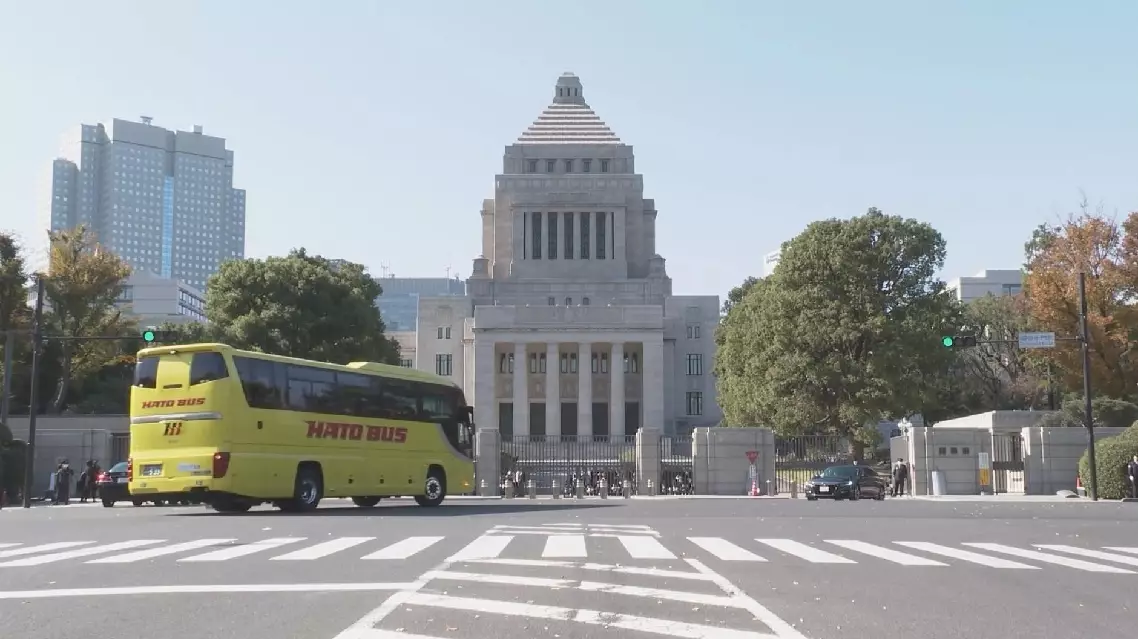
Japan should adhere to pacifist constitution: scholar