Multiple airlines across the globe have raised fares and increased fuel surcharges as the Middle East conflict is driving up jet fuel costs and disrupting travel.
The war has disrupted traffic through the Strait of Hormuz, a key oil export corridor, pushing fares higher on some routes and deepening concerns about a broader hit to travel demand.
Hong Kong's flag carrier Cathay Pacific Airways has announced that it is increasing passenger fuel surcharges starting from March 18. For example, on long haul routes, the airline says there will be around a 100 percent increase. In a statement, the airline says that "the price of jet fuel has approximately doubled since March amid the latest developments in the Middle East". Hong Kong Airlines also says it is raising fuel surcharges, including a 35-percent increase on some routes.
South Africa's airlines are also introducing fuel-related price adjustments after the sharp spike in aviation fuel costs.
Cape Town International Airport and King Shaka International Airport in Durban have both raised the cost of Jet A1 fuel in response to the rising oil prices.
In a statement released on Wednesday, South Africa's largest airline FlySafair said Jet A1 aviation fuel prices at South African airports increased by roughly "70 percent in just one week", forcing airlines to reconsider their pricing structures.
Australia's Qantas Airways and Air New Zealand are among carriers that announced price increases as fuel costs have skyrocketed.
The Middle East is home to five of the world's top 10 oil producers. Shipping through the Strait of Hormuz, a narrow waterway between Iran and Oman which carries about one-fifth of the world's oil consumption and roughly 20 percent of global liquefied natural gas trade, has nearly come to a halt following the outbreak of war between Iran and the United States and Israel on Feb. 28.
The region is also a crucial hub for global aviation, and volatility in the region has direct implications for airlines and travelers alike.
The war has caused restrictions on operations at key transfer hubs in the Middle East amid airspace closures, affecting passengers as flights are rerouted or diverted.
There are also fewer seats available after major Gulf carriers suspended flights, which is contributing to rising ticket prices between Asia and Europe.
Cathay Pacific says it is adding flights to London and Zurich, with services to Riyadh and Dubai remaining suspended until the end of March.
Emirates said on Saturday that it would be operating a reduced flight schedule.
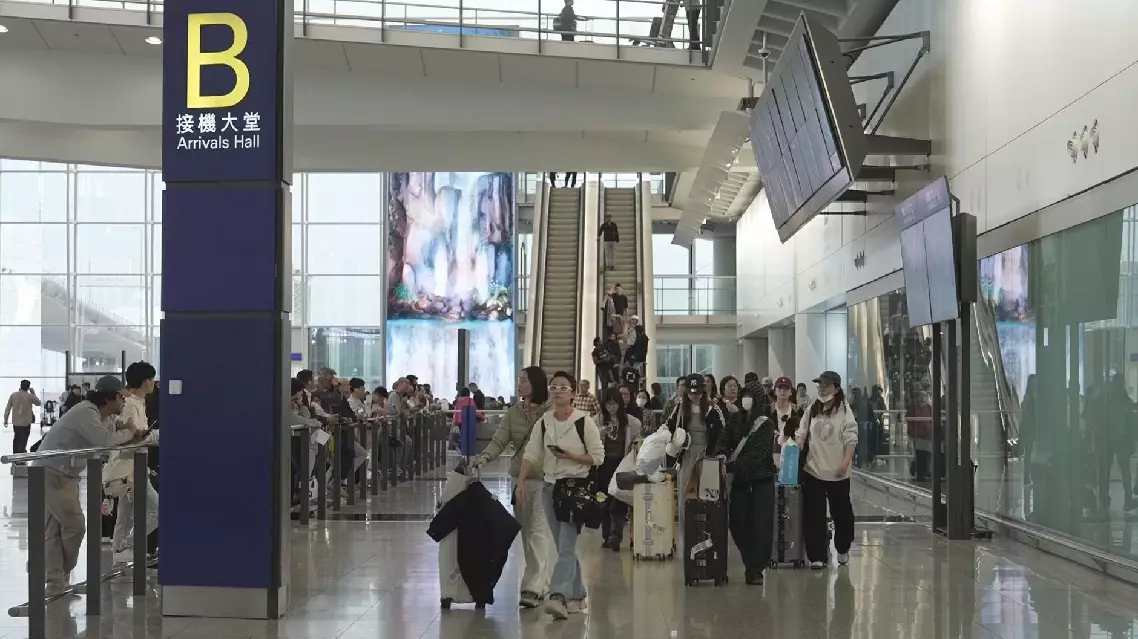
Multiple airlines increase fuel surcharges as Middle East conflict drives up fuel cost
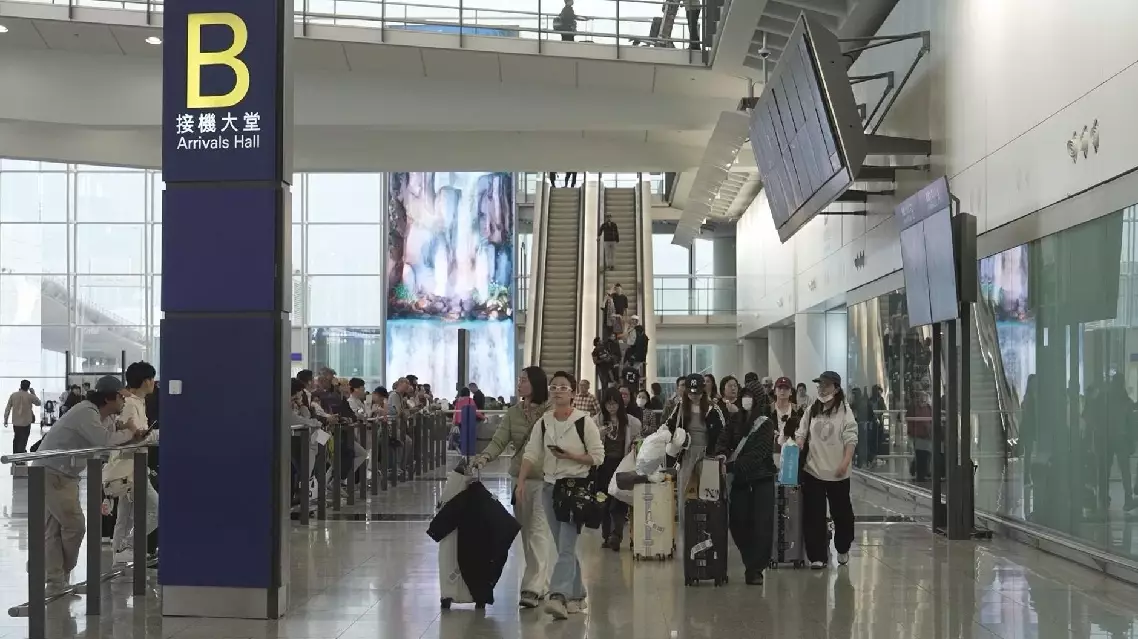
Multiple airlines increase fuel surcharges as Middle East conflict drives up fuel cost
A new Type 055 guided-missile destroyer, the Dongguan (Hull 109), recently completed its first maritime training at the waters of the East China Sea after commissioning to the Chinese People's Liberation Army (PLA) Navy.
During this combat-oriented training exercise, the Dongguan not only completed single-vessel training subjects such as navigating through narrow waterways and damage control, but also coordinated with other warships in the formation to conduct joint operation drills, including maritime assault missions, at-sea replenishment, and multi-domain coordinated strikes.
With the improved performance of weaponry and equipment, the software and hardware of the Dongguan are vastly different from those of previous vessels. Sailors onboard the warship said that it's much more well-equipped and responsive.
"The Dongguan can now observe farther and hear more clearly. From detecting the target to launching strikes, it may take only a few seconds. However, seeing farther and wider also brings exponentially more interference factors. This requires us to practice and observe more frequently to accumulate experience, so as to enable rapid identification and efficient response," said Guo Tian, a lieutenant onboard the Gongguan.
In addition to diversified subjects with a clear combat focus, the Dongguan also faced challenges posed by harsh weather conditions during the training exercise. The crew remained at their posts throughout the process, demonstrating exceptional skills in maneuvering the vessel.
"To accelerate the combat readiness of the vessel, we participated fully in the testing and trial navigation missions from the very beginning of taking over the ship. The very first power trial navigation was independently completed by our own crew. Throughout this process, we not only learned how to operate the ship, but also understood the working principles behind its operation. This has laid a solid foundation for our combat-oriented training and equipment maintenance," said Zhang Chen, a helmsman onboard the Dongguan.
"During this maritime training exercise, we adhered to a problem-oriented approach. By creating complex settings and simulating real combat scenarios, we thoroughly tested the quality and effectiveness of the integration of trial and training during the equipment handover period, while systematically validating the combat effectiveness of the new equipment. Next, we will further optimize deployment, consolidate our foundation, strengthen coordination and cooperation, actively integrate into formation and group training, and continuously enhance the vessel’s comprehensive combat capabilities," said Shen Kai, commanding officer onboard the Dongguan.
The Type 055 destroyer is the fourth-generation destroyer independently developed and built by China. As one of the Chinese PLA Navy's most advanced surface warships, it carries advanced radar, universal vertical launch systems, and comprehensive radio frequency system, serving as the core the naval fleets for far-sea missions.
The Dongguan was commissioned to the PLA Navy together with another Type 055, the Anqing (Hull 110). With these additions, the number of China's Type 055 10,000-ton-class destroyers has risen to 10 since the first Type 055 destroyer Nanchang (Hull 101) was commissioned in 2020.
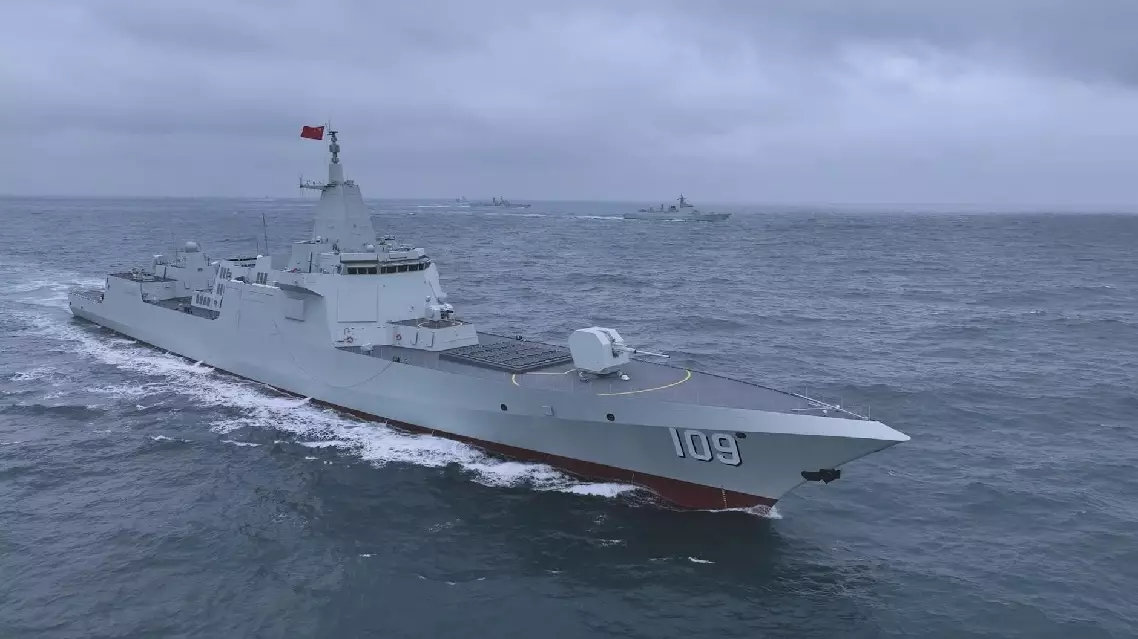
China's newly commissioned Type 055 destroyer Donggaun completes 1st maritime training