Skip to Content Facebook Feature Image

AWE 2026 showcases AI innovations for future smart living for global market

China

China

China

AWE 2026 showcases AI innovations for future smart living for global market

2026-03-13 17:34 Last Updated At:21:27

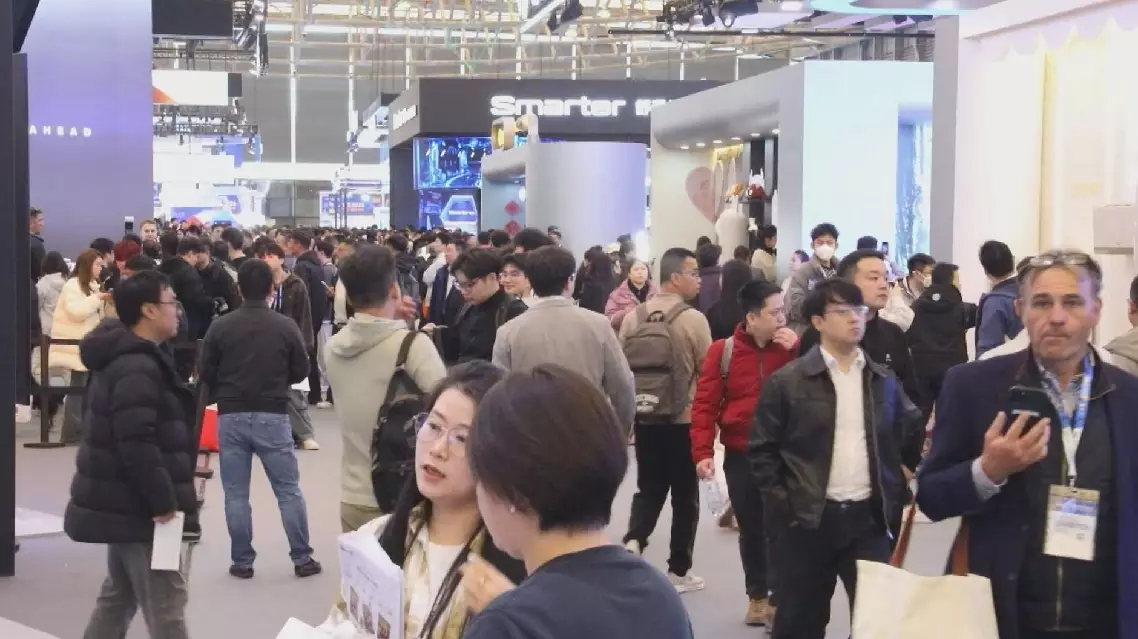
China's flagship expo for global appliance and electronics industry, the 2026 Appliance and Electronics World Expo (AWE2026), opened in Shanghai on Thursday, spotlighting a host of AI-powered innovations and technologies shaping the future of smart living for worldwide markets.

For the first time, the expo features a "one exhibition, two zones" format. In addition to the core main exhibition area at the Shanghai New International Expo Center, a parallel sub-exhibition zone has been established for the first time at the Shanghai Eastern Hub International Business Cooperation Zone.

Leveraging the hub's strategic location and policy advantages, invited overseas participants can enjoy visa-free entry and a 30-day stay, enabling a "visit upon arrival" experience that significantly reduces communication costs for international merchants and provides a higher-level platform for global industry cooperation. The event has so far attracted over 1,200 domestic and international companies.

"As a top-tier global event in the field of home appliances and consumer electronics, AWE has adopted the 'one exhibition, two zones' model for the first time this year. In particular, using the business cooperation zone as a new platform for high-level opening-up deeply connects global resources and helps AWE achieve a new leap in both its functional capacity and scale," said Chen Jie, vice mayor of Shanghai.

The main exhibition area spans 13 halls covering 170,000 square meters. It encompasses core sectors such as intelligent terminals, smart mobility, health technology, embodied intelligence, and computing power infrastructure. From advanced display technologies and AI-powered wearable devices to domestic service robots and whole-house smart solutions, the innovations on display outline a comprehensive new blueprint for intelligent life.

"At this year's AWE, new display technologies are breaking the boundaries of interaction and becoming vital carriers connecting the digital and physical worlds. AI smartphones and AI glasses are accelerating their roles as the next generation of personal intelligent portals. With more tech companies joining, more cutting-edge applications have debuted in terms of embodied AI products, such as humanoid and service robots. As a result, AWE is becoming a crucial window for observing the future technology of China's consumer electronics and smart living," said Tao Xiaonian, chairman of the China Household Electrical Appliances Association.
AWE 2026 showcases AI innovations for future smart living for global market

AWE 2026 showcases AI innovations for future smart living for global market

A growing number of children in Gaza are now working to help support their families as schools are damaged and people are struggling to survive due to the war's impact.

In Gaza City, children once seen carrying school bags are now working amid the rubble of destroyed neighborhoods.

With cement in short supply, many residents have begun reusing stones recovered from homes destroyed during the war.

Thirteen-year-old Zakaria Abu Asr is one of the children working among the rubble. He spends long hours among the ruins of destroyed homes and the dangers of unexploded ordnance.

"I no longer go to school at all. My mother and my three siblings were killed, so I have to work. I start at six in the morning and work until sunset so I can earn money for my family," he said.

Extracting stones from destroyed homes has become a source of income for some families. The work is exhausting and risky, especially for children who spend long hours lifting heavy rocks.

"These children's fathers used to work with me before. Their fathers were killed during the displacement. I tried to help them, but the boys came to work on their own. I also have children as young as 10 asking to work, but I refused, and try to help them," said Wajih al-Khor, a workshop owner.

According to the Palestinian Central Bureau of Statistics, around 39,000 children in Gaza have lost one or both parents since the war began. Nearly 17,000 have lost both and were forced to care for themselves and what remains of their families.

"But also we are talking about children who can't go to school or can't go to learning because they need to help and support their families financially. And this is an issue that affects so many families and so many children. The other problem with it is the kind of work that they are doing to support their families is usually dangerous, it's usually very straining and really affects their health now but also their future prospects," said UNICEF Spokesperson Salim Oweis.

The United Nations Relief and Works Agency for Palestine Refugees said about 660,000 children in Gaza have been out of school for a third year, with nearly 90 percent of schools destroyed or damaged.

War robs Gaza children of childhood as they become family breadwinners

War robs Gaza children of childhood as they become family breadwinners

Recommended Articles