LONDON (AP) — Over six decades of “Doctor Who,” the intergalactic adventurer’s adversaries have included evil robots, rampaging Yeti — and the BBC, which erased many early episodes of the now-iconic sci-fi TV series.
A film charity announced Friday that it has found two previously lost 1960s episodes in film cans wrapped in plastic bags among the possessions of a deceased collector. They have been restored by BBC archivists and will be available next month on the broadcaster’s streaming service.
The discovery leaves 95 episodes still missing from the adventures of a galaxy-hopping alien known as the Doctor that debuted in 1963.
“Doctor Who” — the “who” is an existential question, rather than the character's name — has become a television institution with millions of fans around the world. But the BBC’s attitude to the show in its early years was careless. Scores of episodes were lost because the broadcaster threw out film recordings or wiped video tapes for re-use.
“The main broadcasters in the U.K. in the 1960s, 70s, up to the 80s really, junked quite a lot of content," said Justin Smith, a cinema professor at England’s De Montfort University and chair of trustees of Film is Fabulous!, which works to preserve cinema and television history.
“In some ways finding missing ‘Doctor Whos’ is the holy grail" of classic TV discoveries, Smith told The Associated Press.
Smith said the charity found film cans containing the two rediscovered black-and-white episodes, “The Nightmare Begins” and “Devil’s Planet,” among the collection of a film aficionado who had died. The collector’s estate wishes to remain anonymous.
The episodes aired during the show’s third series in 1965 and feature William Hartnell, the first of more than a dozen actors to play the Doctor, in a story involving archvillains the Daleks – pepperpot-shaped metal aggressors whose favorite word is “Exterminate!”
Smith said that for “Who” fans, “it’s got it all, it really has. It is intergalactic, it’s got some great performances. It stands up really, really well.”
The newfound episodes feature Peter Purves, who played the Doctor’s sidekick Steven Taylor in 46 installments of the show.
“Twenty-seven of mine still are missing, but I’m delighted that two have been found,” 87-year-old Purves told the BBC. “It’s rather sad, but it’s great when some turn up.”
The discovery is the first since 2013, when nine missing “Doctor Who” episodes were found in the storeroom of a television relay station in Nigeria.
The newly recovered episodes form part of a 12-part storyline, much of which is still missing. Smith said he is hopeful more instalments might turn up.
“We know that other episodes are in existence," he said. “We don’t know where they are or who’s got them — otherwise we’d be knocking on doors. But, yeah, I think there are more. The only question is when and where they will come to light."
“Doctor Who” ran from 1963 to 1989 and was revived in 2005. Its longevity is due partly to the flexibility of the premise. The Doctor, a Time Lord from the planet Gallifrey, can travel to any point in space or time and can regenerate into new bodies, allowing the character to outlive any particular star.
The most recent series, starring Ncuti Gatwa as the Doctor, aired in 2025. The show is due to return with an as-yet undisclosed actor in the role.

FILE - Two full size Daleks from the BBC TV series Doctor Who, dating from the late 1970,s to 1988 and used in the series 'Remembrance of the Daleks' at Bonhams auction house in London, Monday, Aug. 2, 2010. (AP Photo/Alastair Grant, file)
LEWISTON, Maine (AP) — Maine Gov. Janet Mills on Thursday dropped her bid for the U.S. Senate, pointing to a lack of campaign funds to keep up in one of the most competitive races in the country that quickly became a reflection of an internal party debate over which candidates can win in high-profile contests.
The move now thrusts political newcomer Graham Platner, an oyster farmer almost no one knew a year ago, as the expected Democratic front-runner against longtime Republican Sen. Susan Collins, whose seat Democrats are targeting in their effort to win control of the closely divided Senate.
“While I have the drive and passion, commitment and experience, and above all else – the fight – to continue on, I very simply do not have the one thing that political campaigns unfortunately require today: the financial resources," Mills said in a statement. “That is why today I have made the incredibly difficult decision to suspend my campaign for the United States Senate.”
Mills, a two-term governor and longtime Maine politician, was seen as one of Democrats' top 2026 recruits when she entered the Senate race last year. She had the backing of Senate Minority Leader Chuck Schumer and prominent left-leaning advocacy groups hoping to unseat Collins in the chamber, which has 53 Republicans, 45 Democrats and two independents who caucus with the Democrats.
But Mills struggled to outshine first-time candidate Platner, her opponent in the June 9 Democratic primary. Platner has maintained strong popularity despite facing controversy over past comments he made online and a tattoo he had that is widely recognized as a Nazi symbol.
Mills did not endorse Platner in her campaign suspension announcement, but she said in a follow-up statement that she would “continue to hear and watch how Graham Platner works to earn the support of Maine voters.”
Meanwhile, Schumer and Democratic Senatorial Campaign Committee Chair Sen. Kirsten Gillibrand, both of New York, said they would work with Platner to defeat Collins.
“Our North Star is winning a Democratic Senate majority, and over the past year, Senate Democrats have carved out multiple paths to do that,” their statement said.
The contest between Platner and Mills was part of a broader debate within the Democratic Party over how best to defeat Republicans and win back some power in President Donald Trump's Washington, where the GOP controls the White House and both chambers of Congress.
While Schumer backed Mills, his caucus did not fall in line.
Platner is backed by Vermont Sen. Bernie Sanders, an independent who caucuses with Democrats, and Democratic Sens. Elizabeth Warren of Massachusetts, Ruben Gallego of Arizona and Martin Heinrich of New Mexico.
Platner held a series of events Thursday thanking Mills for her service and acknowledging he's going to face potentially millions of dollars in attack ads from Republicans in the coming months.
"The Republican Party is going to come after us with everything they’ve got,” Platner said. “The way we break through that is by connecting with people directly.”
Mills had tried to convince voters that she was the best candidate to stand up to Trump, repeatedly noting she told the president she would see him in court, a reference to Maine officials' lawsuit against the Trump administration over federal funding and a dispute over transgender athletes in sports.
Yet the message appeared at times drowned out by the popularity Platner attracted on the campaign trail. His events have attracted thousands of supporters as he pitched his populist message and flooded airwaves with his ads. He consistently outraised Mills every step of the way, raising $4 million while Mills raised $2.6 million in the latest fundraising quarter. Collins raised $3.1 million but has $10 million in the bank.
Age also became an issue in the race, as some Democrats want younger candidates to lead the party going forward. Mills is 78, while Plater is 41. Collins is 73.
“I’m sure this was a difficult decision for Governor Mills, and I thank her for her decades of service to the people of Maine,” Collins said in a statement.
So far this year, Democrats have largely avoided messy internal fights in their bid to retake the Senate. The Maine race was an exception, and with Mills’ decision, the Michigan Democratic primary could be the most heated campaign this year. Abdul El-Sayed, U.S. Rep. Haley Stevens and state Sen. Mallory McMorrow are locked in a competitive race there ahead of the August primary.
Many political observers initially anticipated that it would be Platner, not Mills, who would be forced to bow out of the race.
Platner has been dogged by questions about the skull-and-crossbones tattoo recognized as a Nazi symbol that he said he got on his chest during a night of drinking while on military leave in Croatia. He has said the tattoo has been covered to no longer reflect that image. Additionally, there have been lingering questions about inflammatory comments he made in old online postings, which he has since disavowed.
Yet, Platner's willingness to talk about his past mistakes has helped propel his favorability.
Republicans had already begun attacking Platner ahead of Mills' campaign suspension announcement, pointing to his old social media posts that were dismissive of sexual assault. Among the posts, Platner once wrote on Reddit that people shouldn’t get so drunk “they wind up having sex with someone they don’t mean to.”
“Now with Chuck Schumer‘s reluctant support, Platner’s attempt at the Senate will be yet another fantasy that will end when Susan Collins grinds this fraudster into dust,” said Alex Latcham, executive director of the Senate Leadership Fund, in a statement.
Kruesi reported from Providence. R.I. Associated Press writer Steven Sloan contributed from Washington.
Follow the AP’s coverage of the 2026 election at https://apnews.com/projects/elections-2026/.
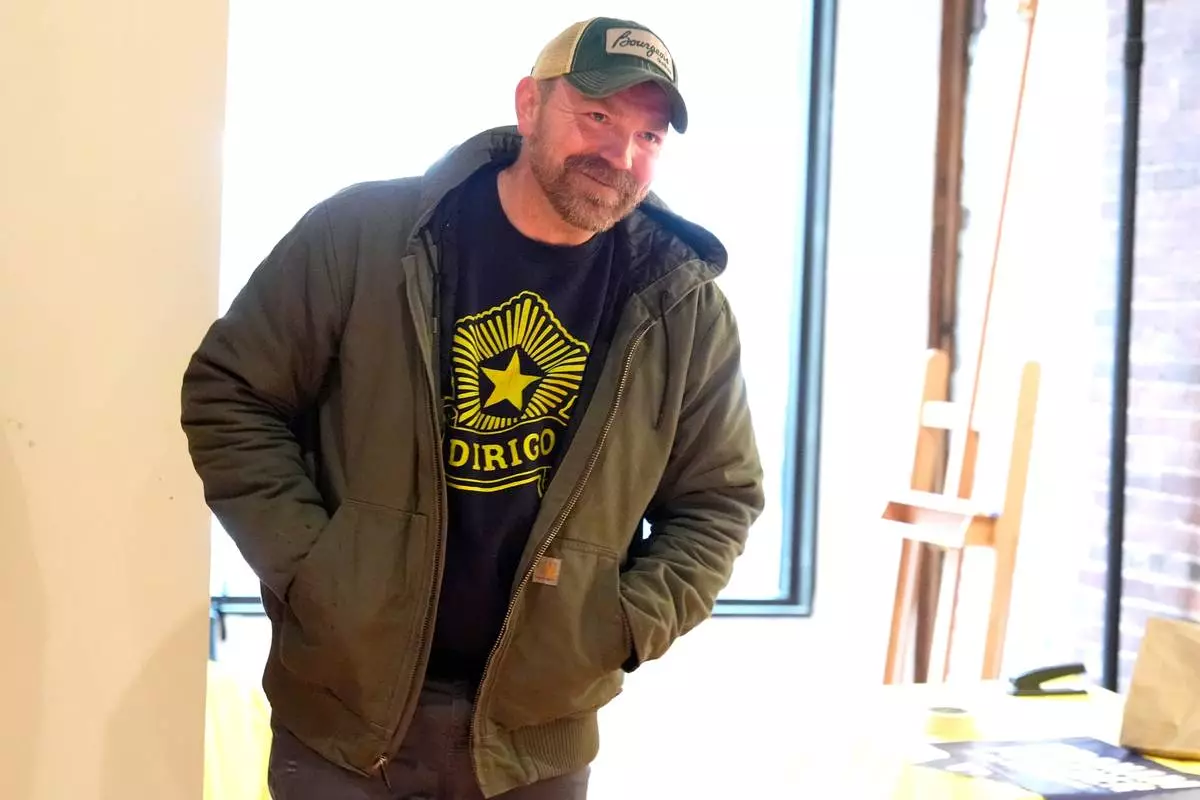
Graham Platner, Democratic candidate for U.S. Senate, arrives at a news conference Thursday, April 30, 2026, in Lewiston, Maine. (AP Photo/Robert F. Bukaty)
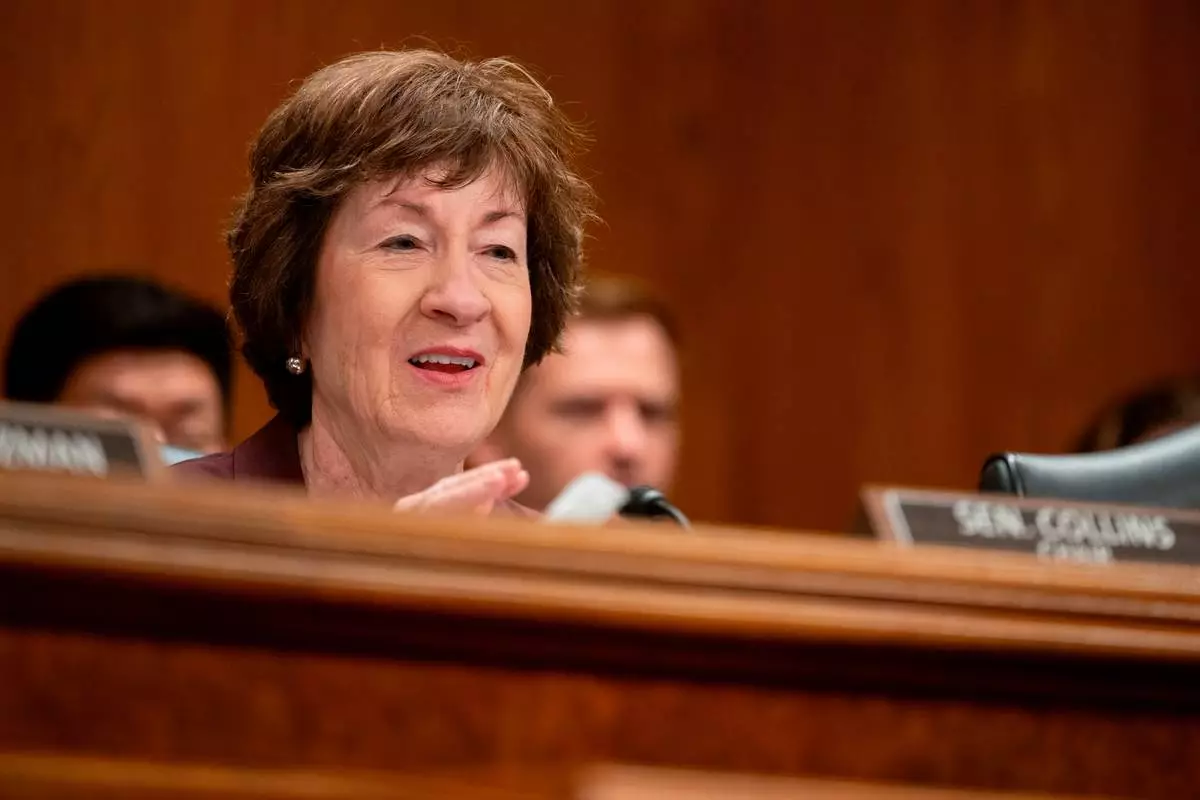
Sen. Susan Collins, R-Maine, questions Veterans Affairs Secretary Doug Collins during a Senate Committee on Appropriations, Subcommittee on Military Construction, Veterans Affairs, and Related Agencies hearing on the President's Fiscal Year 2027 Budget Request for the Department of Veterans Affairs, Thursday, April 30, 2026 in Washington. (AP Photo/Kevin Wolf)
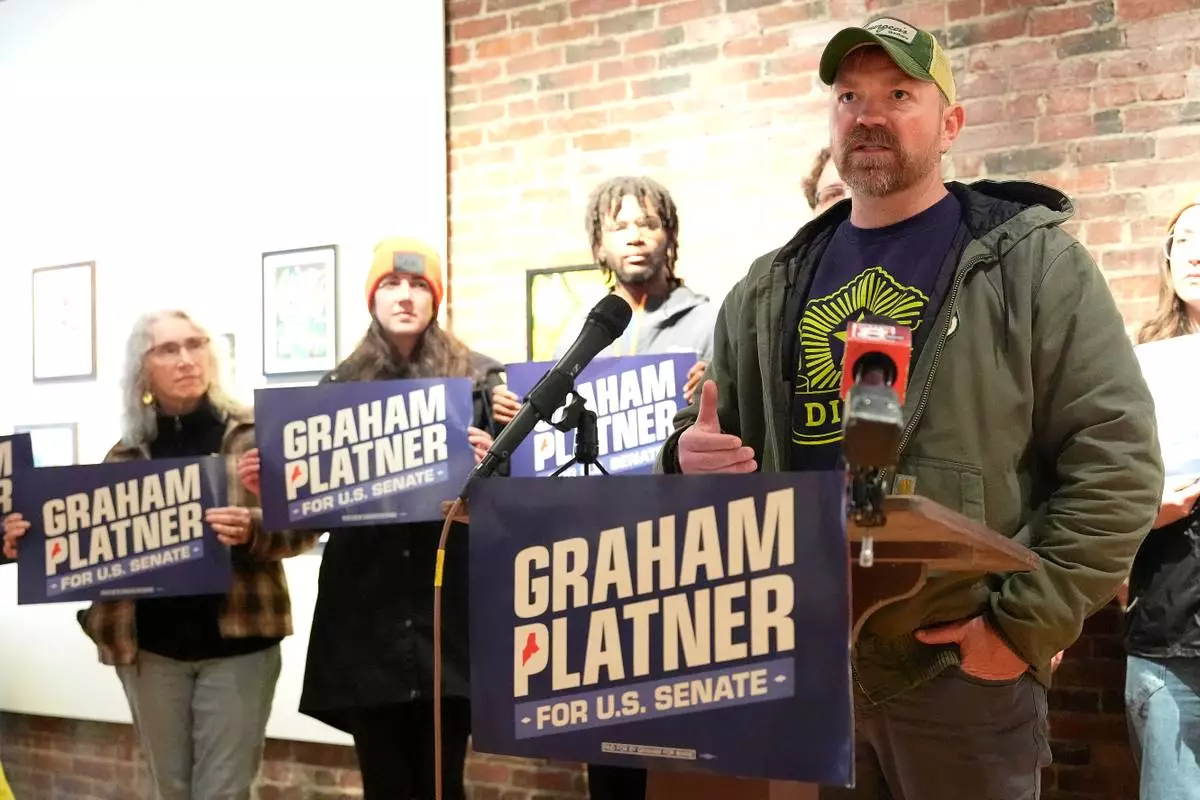
Graham Platner, Democratic candidate for U.S. Senate, speaks at a news conference Thursday, April 30, 2026, in Lewiston, Maine. (AP Photo/Robert F. Bukaty)
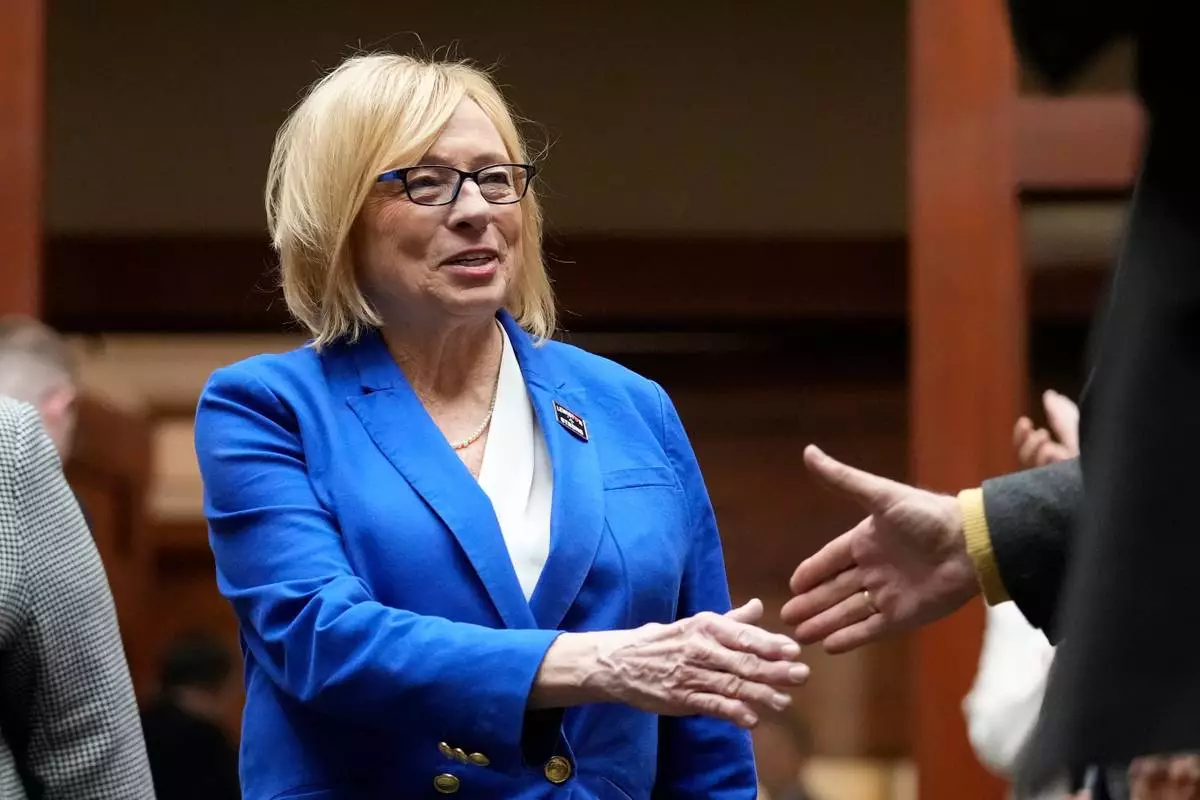
FILE - Democratic Gov. Janet Mills, greets lawmakers prior to delivering her State of the State address, Jan. 30, 2024, at the State House in Augusta, Maine. (AP Photo/Robert F. Bukaty, FIle)