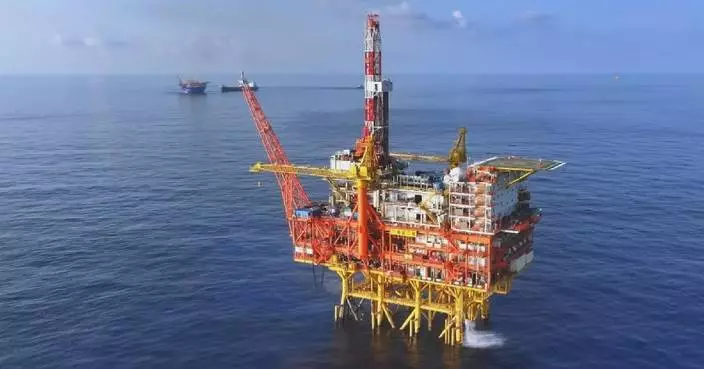
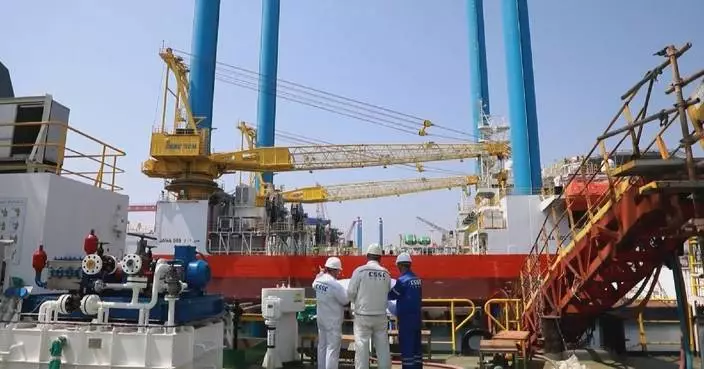
Several countries have announced plans to release oil stocks to help calm surging energy prices amid escalating tensions in the Middle East.
Canada's Energy Minister Tim Hodgson Friday said that Canada will support the International Energy Agency (IEA)'s oil release with 23.6 million barrels from its domestic producers.
Click to Gallery

Multiple countries to release oil reserves as Middle East conflict rattles energy markets

Multiple countries to release oil reserves as Middle East conflict rattles energy markets

Multiple countries to release oil reserves as Middle East conflict rattles energy markets

Multiple countries to release oil reserves as Middle East conflict rattles energy markets
The IEA on Wednesday agreed to release 400 million barrels of oil from stockpiles, the largest such move in IEA history, to combat the spiking oil prices triggered by the conflict in the Middle East.
Hodgson said that Canada, as a member state of the 32 IEA member countries, agreed to the IEA's decision to help stabilize the global energy market and supply.
He added that Canada's natural gas exports will expand in the coming months, providing more fuel to allies around the world and bolstering global market supply.
On the same day, Australia's Energy Minister Chris Bowen announced that the federal government will release up to 762 million liters of petrol and diesel from its domestic reserves to help address fuel supply chain disruption.
The move would constitute Australia's response to a request from the IEA to release fuel reserves.
One day earlier, the Australian government announced a plan to inject millions of liters of additional petrol into supply chains, allowing higher sulfur levels for 60 days to increase the domestic fuel supply.
Starting March 16, Japan will release its national oil reserves to prevent problems in the supply of domestic petroleum products, according to the Japanese government on Friday.
Affected by the turmoil in the Middle East, oil prices in South Korea have been rising continuously recently.
To stabilize the oil prices, the South Korean government said in the early morning of Friday that it will officially implement a system to cap domestic fuel prices for the first time in almost 30 years.
Under the plan, the government sets price caps on petroleum products supplied by refineries to gas stations and distributors, adjusting them once every two weeks in line with international oil price trends.
According to data from the Korea International Trade Association, the country relies almost entirely on imports for its energy, with approximately 70 percent of its oil and about 20 percent of its liquefied natural gas coming from the Middle East.
On Friday, oil prices continued to climb.
The West Texas Intermediate for April delivery increased by 2.98 U.S. dollars, or 3.11 percent, to settle at 98.71 U.S. dollars a barrel on the New York Mercantile Exchange.
Brent crude futures for May delivery gained 2.68 dollars, or 2.67 percent, to settle at 103.14 U.S. dollars a barrel on the London ICE Futures Exchange.
Multiple countries to release oil reserves as Middle East conflict rattles energy markets
Multiple countries to release oil reserves as Middle East conflict rattles energy markets
Multiple countries to release oil reserves as Middle East conflict rattles energy markets
Multiple countries to release oil reserves as Middle East conflict rattles energy markets