CHELTENHAM, England (AP) — The deaths of four horses at the Cheltenham Festival — including one after the prestigious Gold Cup — underline the need for the racing industry to provide better equine care, a leading animal welfare charity said Saturday.
Hansard suffered a fatal injury when pulled up in a race on Tuesday, HMS Seahorse and Saint Le Fort died following falls on Wednesday and Friday, respectively, while 12-year-old Envoi Allen collapsed and died after competing in the grueling Gold Cup on Friday.
The Royal Society for the Prevention of Cruelty to Animals said the four deaths took the number of horses to have lost their lives in competitive racing in Britain this year to 24.
“The scale of fatalities reiterate the urgency that lessons must be learned, including what caused the loss of life, decision-making during the race, and any future means of prevention,” the RSPCA said.
“We continue to engage,” it added, “with the industry to advocate for further improvements, including the introduction of greater safety measures, and improvements for equine welfare both on and off the track. Given the wealth and expertise within the sector, we remain hopeful that there remains significant scope to do more to meaningfully improve equine welfare.”
The RSPCA said horses deserve "to have every possible step taken to improve their safety and welfare” given the money events like the Cheltenham Festival and the upcoming Grand National generate.
“We will keep engaging with the racing industry to encourage continual welfare improvements,” the charity said, “and explore further measures to protect horses from injury and death, and promote good welfare throughout their lives.”
James Given, the British Horseracing Authority’s director of equine regulation safety and welfare, described the latest deaths as devastating and said all would be subject to in-depth examination as part of the regulator’s standard procedure.
AP sports: https://apnews.com/sports

Apolon De Charnie, ridden by Paul Townsend, goes past the winning post to win the JCB Triumph Hurdle on the 2026 Cheltenham Festival in Cheltenham, England, Friday, March 13, 2026. (AP Photo/Dave Shopland)
LJUBLJANA, Slovenia (AP) — Slovenia’s parliament on Friday appointed right-wing populist politician Janez Jansa as the new prime minister, in a shift for the small European Union country that was previously run by a liberal government.
Lawmakers backed Jansa in a 51-36 vote in the 90-member assembly. The new prime minister will need to come back to Parliament within the next 15 days for another vote to confirm his future Cabinet.
Jansa's appointment concludes a postelection stalemate in Slovenia after a parliamentary ballot two months ago ended practically in a tie. Former liberal Prime Minister Robert Golob's Freedom Movement won by a thin margin but he was unable to muster a parliamentary majority.
Jansa and his populist Slovenian Democratic Party signed a coalition agreement this week with several right-wing groups. The new government also has the backing of a nonestablishment Truth party that first emerged as an anti-vaccination movement during the COVID-19 pandemic.
The new term in office will be the fourth for the veteran Slovenian politician. Jansa, 67, is an admirer of U.S. President Donald Trump and was a close ally of former populist Hungarian Prime Minister Viktor Orbán, who was defeated in a landslide election last month.
Jansa in a speech listed the economy, fight against corruption and red tape, and decentralization as key goals of the future government. He has promised to lower taxes for the rich and support private education and healthcare.
Critical of the previous government's alleged “inefficiency," Jansa said the new government will turn Slovenia into “a country of opportunity, prosperity and justice, where each responsible citizen will feel safe and accepted."
Like Orban, Jansa was staunchly anti-immigrant during the huge migration wave to Europe in 2015. Also like Orban, Jansa has faced accusations of clamping down on democratic institutions and press freedoms during a previous term in 2020-2022. This led to protests at the time, and scrutiny from the European Union.
Golob in his speech described Jansa as “the greatest threat to Slovenia’s sovereignty and democracy."
Alleging that Jansa had threatened to arrest him, Golob said Jansa's "idea of democracy is that anyone who dares speak a word against you deserves only the worst.”
Jansa, a supporter of Israel, also has been a stern critic of the Golob government's 2024 recognition of a Palestinian state.
The vote on March 22 was marred by allegations of foreign influence and corruption. The around 2 million people in the Alpine nation are deeply divided between liberals and conservatives.
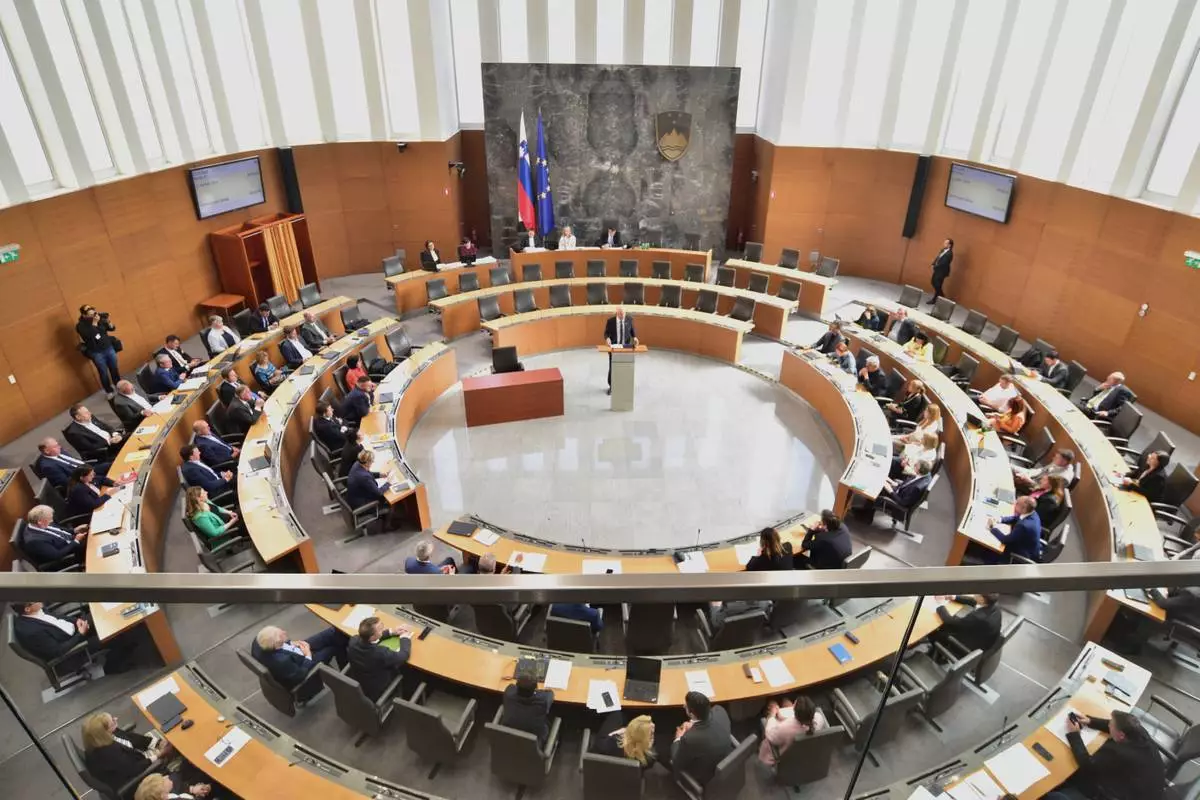
Janez Jansa, center, addresses the Slovenian Parliament during a session in Ljubljana, Slovenia, Friday, May 22, 2026, before appointing him as prime minister, ending a political deadlock after tight elections in March. (AP Photo/Igor Kupljenik)

Janez Jansa arrives for a session of the Slovenian Parliament in Ljubljana, Slovenia, Friday, May 22, 2026, before appointing him as prime minister, ending a political deadlock after tight elections in March. (AP Photo/Igor Kupljenik)
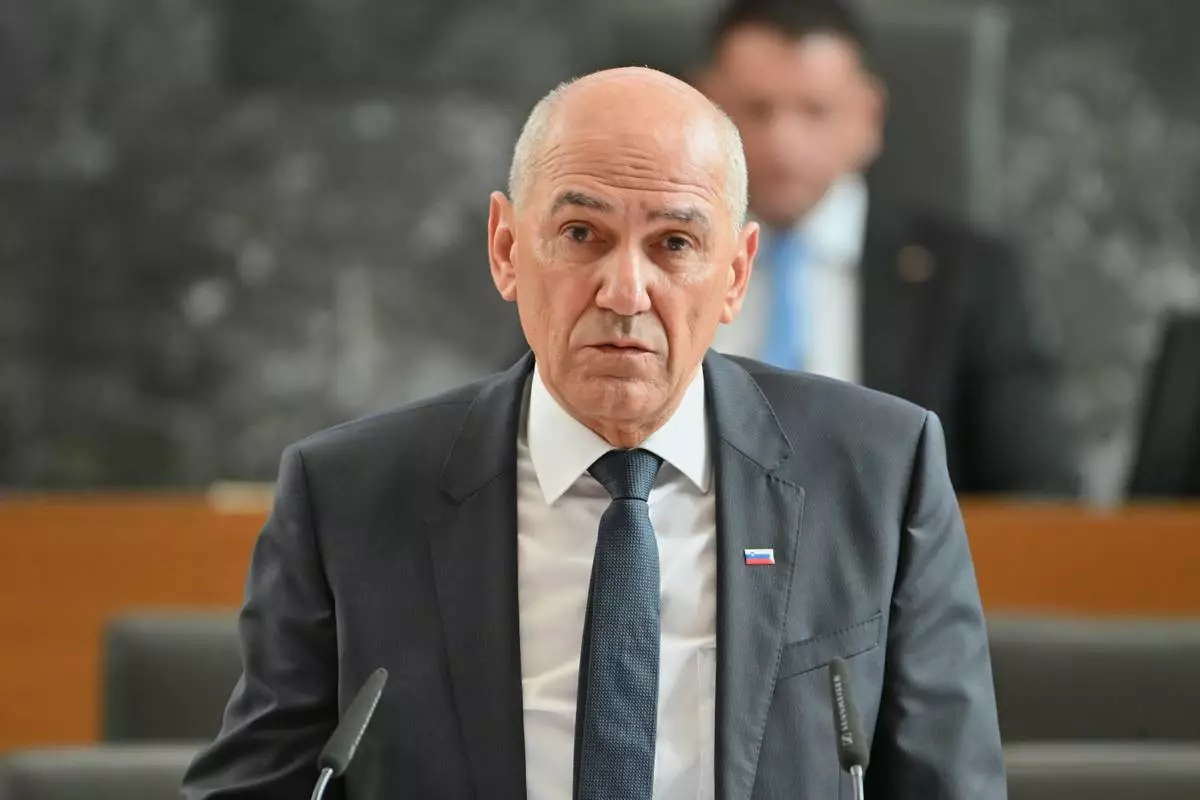
Janez Jansa addresses the Slovenian Parliament during a session in Ljubljana, Slovenia, Friday, May 22, 2026, before appointing him as prime minister, ending a political deadlock after tight elections in March. (AP Photo/Igor Kupljenik)