Skip to Content Facebook Feature Image

Construction finishes on a major offshore wind farm, the first during Trump's tenure

News

Construction finishes on a major offshore wind farm, the first during Trump's tenure
News

News

Construction finishes on a major offshore wind farm, the first during Trump's tenure

2026-03-14 23:02 Last Updated At:23:10

Construction is finished on a major Massachusetts offshore wind farm, the first project to reach this stage during President Donald Trump's time in office.

Offshore construction was completed Friday night on Vineyard Wind with the installation of the final blades, Craig Gilvarg, a spokesperson for the project, said Saturday.

Trump, who often talks about his hatred of wind power, has said his goal is to not let any “windmills” be built. Vineyard Wind was one of five major East Coast offshore wind projects the Trump administration halted construction on days before Christmas, citing national security concerns. Developers and states sued, and federal judges allowed all five to resume construction, essentially concluding that the government did not show that the national security risk was so imminent that construction must halt.

Another one of the five, Revolution Wind, began sending power for the first time to New England’s electric grid on Friday and will scale up in the weeks ahead until it is fully operational.

While Revolution Wind just began delivering power, Vineyard Wind has been doing so for over a year as more turbines were finished. Vineyard Wind is a joint venture between Avangrid and Copenhagen Infrastructure Partners, located 15 miles (24 kilometers) south of Martha’s Vineyard and Nantucket, Massachusetts. It has 62 turbines that will generate a total of 800 megawatts. That is enough clean electricity to power about 400,000 homes.

Massachusetts Attorney General Andrea Joy Campbell has said the completion of this project is essential to ensuring the state can lower costs, meet rising energy demand, advance its climate goals and sustain thousands of good-paying jobs.

The Trump administration has been particularly critical of the Vineyard Wind project because of a blade failure. Fiberglass fragments of a blade broke apart and began washing onto Nantucket beaches in July 2024 during the peak of tourist season. Manufacturer GE Vernova agreed to pay $10.5 million in a settlement to compensate island businesses that suffered losses.

Vineyard Wind submitted state and federal project plans to build an offshore wind farm in 2017. Massachusetts had committed to offshore wind by requiring its utilities to solicit proposals for up to 1,600 megawatts of offshore wind power by 2027. In what might have been a fatal blow, federal regulators delayed Vineyard Wind by holding off on issuing a key environmental impact statement in 2019. Massachusetts Democratic Rep. William Keating said at the time the Trump administration was trying to stymie the renewable energy project just as it was coming to fruition.

The Biden administration signed off on it in 2021, as it sought to ramp up offshore wind as a climate change solution. Construction began onshore in Barnstable, Massachusetts.

The first U.S. offshore wind farm opened off Rhode Island’s Block Island in 2016, at the end of President Barack Obama's tenure. But with just five turbines, it’s not a commercial-scale wind farm. The nation's first commercial-scale offshore wind farm officially opened in March 2024, when President Joe Biden was in office. Danish wind energy developer Orsted and the utility Eversource built that 12-turbine wind farm, called South Fork Wind, 35 miles (56 kilometers) east of Montauk Point, New York.

Trump began reversing the country’s energy policies his first day in office with a spate of executive orders aimed at boosting oil, gas and coal. White House spokesperson Taylor Rogers said Friday night that Trump “reversed course on Joe Biden’s costly green energy agenda that gave preferential treatment to intermittent, unreliable energy sources and instead is aggressively unleashing reliable and affordable energy sources to lower energy bills, improve our grid stability and protect our national security.”

The Associated Press’ climate and environmental coverage receives financial support from multiple private foundations. AP is solely responsible for all content. Find AP’s standards for working with philanthropies, a list of supporters and funded coverage areas at AP.org.
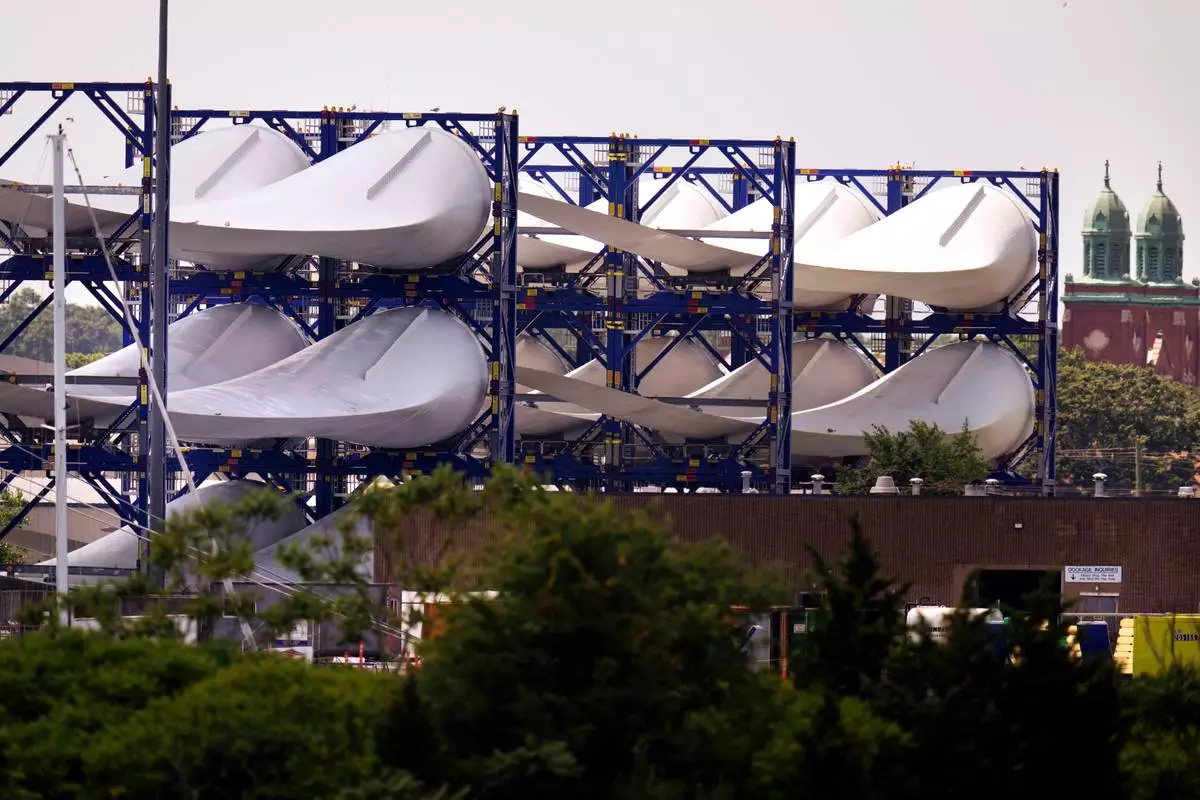
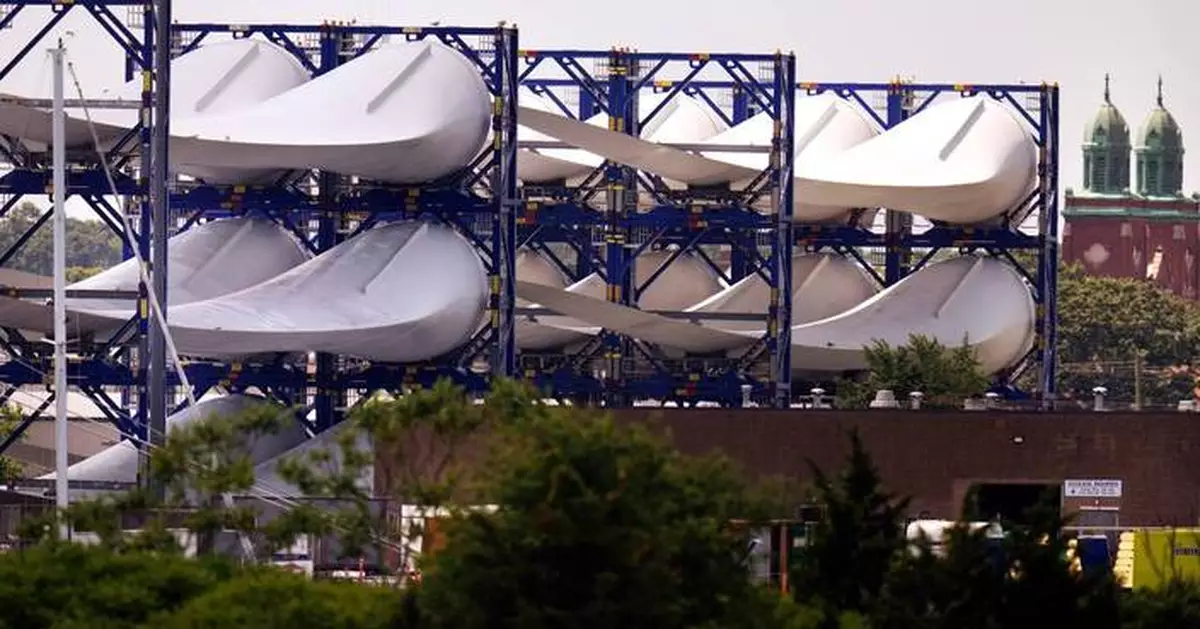
FILE - Giant wind turbine blades for the Vineyard Winds project are stacked on racks in the harbor, July 11, 2023, in New Bedford, Mass. (AP Photo/Charles Krupa, File)
FILE - Giant wind turbine blades for the Vineyard Winds project are stacked on racks in the harbor, July 11, 2023, in New Bedford, Mass. (AP Photo/Charles Krupa, File)
BERLIN (AP) — Jürgen Habermas, whose work on communication, rationality and sociology made him one of the world’s most influential philosophers and a key intellectual figure in his native Germany, has died. He was 96.

Habermas’ publisher, Suhrkamp, said he died on Saturday in Starnberg, near Munich.

Habermas frequently weighed in on political matters over several decades. His extensive writing crossed the boundaries of academic and philosophical disciplines, providing a vision of modern society and social interaction. His best-known works included the two-volume “Theory of Communicative Action.”

Habermas, who was 15 at the time of Nazi Germany’s defeat, later recalled the dawn of a new era in 1945 and his coming to terms with the reality of Nazi crimes as something without which he wouldn’t have found his way into philosophy and social theory. He recalled that “you saw suddenly that it was a politically criminal system in which you had lived.”

He had an ambivalent relationship with the left-wing student movement of the late 1960s in Germany and beyond, engaging with it but also warning at the time against the danger of what he called “left-wing fascism” — a reaction to a firebrand speech by a student leader that he later said was “slightly out of place.” He would later recognize the movement as having driven a “fundamental liberalization” of German society.

In the 1980s, Habermas was a prominent figure in the so-called Historians’ Dispute, in which Berlin historian Ernst Nolte and others called for a new perspective on the Third Reich and German identity. They tended to compare what happened under Adolf Hitler to atrocities carried out by other governments, such as the deaths of millions in the Soviet Union under Stalin. Habermas and other opponents contended that the conservative historians were trying to lessen the magnitude of Nazi crimes through such comparisons.

Habermas supported the rise to power of center-left Chancellor Gerhard Schröder in 1998. He was critical of the “technocratic” approach and perceived lack of political vision of Schröder’s conservative successor, Angela Merkel, complaining in 2016 of the paralyzing effects on public opinion of “the foam blanket of Merkel’s policy of sending people to sleep.”

He was particularly critical of the “limited interest” shown by German politicians, business leaders and media in “shaping a politically effective Europe.” In 2017, he praised newly elected French President Emmanuel Macron for laying out of plans for European reform, saying that “the way he speaks about Europe makes a difference.”

Habermas was born on June 18, 1929, in Duesseldorf and grew up in nearby Gummersbach, where his father headed the local chamber of commerce. He became a member of the Deutsches Jungvolk, a section of the Hitler Youth for younger boys, at 10.

He was born with a cleft palate that required repeated operations as a child, an experience that helped inform his later thinking about language.

Habermas said he had experienced the importance of spoken language as “a layer of commonality without which we as individuals cannot exist” and recalled struggling to make himself understood. He also spoke of the “superiority of the written word,” and said that “the written form conceals the flaws of the oral.”

His wife, Ute Habermas-Wesselhoeft, died last year. The couple had three children: Tilmann; Rebekka, who died in 2023; and Judith.

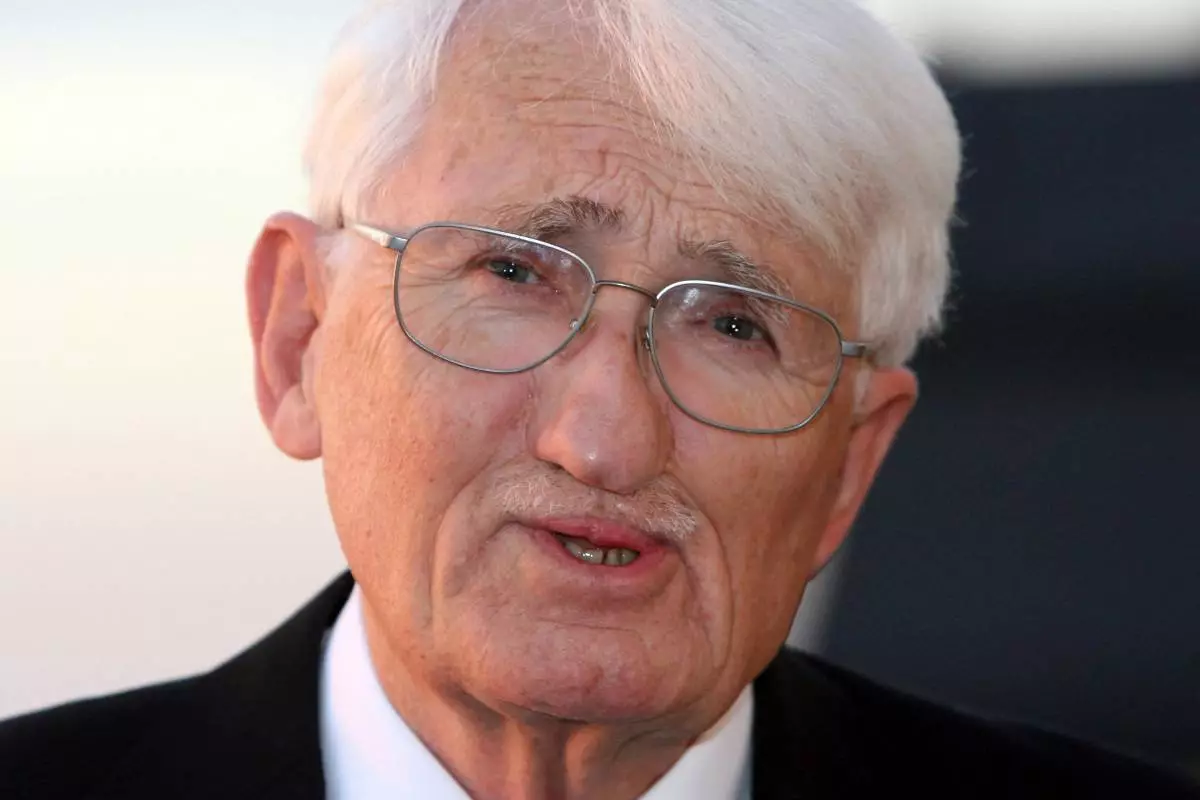
FILE - In this Nov. 7, 2006 photo German philosopher Juergen Habermas is seen in Koenigswinter near Bonn, Germany. (AP Photo/Hermann J. Knippertz, File)

FILE - In this Nov. 7, 2006 photo German philosopher Juergen Habermas is seen in Koenigswinter near Bonn, Germany. (AP Photo/Hermann J. Knippertz, File)

Recommended Articles