Europe is facing mounting economic pressure as tensions in the Middle East escalate, causing significant fluctuations in global energy markets, a European energy expert has said.
The region's heavy reliance on energy imports has left it vulnerable to soaring oil and gas prices, raising concerns over inflation and economic stability, said Simone Tagliapietra, a senior fellow at Bruegel, a Brussels-based think tank devoted to policy research on economic issues.
"This is putting very tough pressure on the European gas markets. Also, we see rising cost of the gasoline at the pump. So, higher energy costs, which will again have huge impact on the European citizens and which risk to ignite an inflation spiral where all prices rise as a consequence of the rising energy prices," said Tagliapietra, who specializes in EU climate, energy and industrial policy.
Despite Europe's substantial imports of liquefied natural gas (LNG) from the United States, the expert cautioned, U.S. supply remains unstable, which further complicates Europe's energy security outlook.
"Given the volatility in the decisions of the Trump administration and given the trade war that the Trump administration has started against all other countries including the European Union in the past year, we are also very much attentive at any possible attempt by the U.S. administration to limit the exports of this LNG. We do not see this as an imminent risk, but this is something that Europe certainly needs to watch out with great degree of care in the coming months and weeks," he said.
Tagliapietra agrees that Europe must accelerate its energy transition to reduce dependency on single import sources and fossil fuels.
"There is nothing that Europe can do to decouple itself from this vulnerability of fossil fuel dependency, then accelerating the deployment of solar and wind energy sources in Europe. And we need to continue to do a lot of efforts amid this new energy crisis," said Tagliapietra.

Rising tensions in Middle East trigger energy market volatility in Europe: expert
Iran's Persian Gulf Strait Authority (PGSA), the body responsible for maritime traffic in the Strait of Hormuz, announced on Friday new procedures for vessels seeking passage through the waterway, including a requirement that transit requests be submitted at least 48 hours in advance.
In a post on social media platform X, the PGSA stressed that only vessels that comply with the requirements will be "cleared for passage promptly."
The PGSA said passage requests must be submitted exclusively through its website and email address, and must include vessels' "valid and accessible" contact information. To avoid delays, vessels are required to submit passage requests and necessary information "at least 48 hours prior to arrival at the strait area," it said.
The PGSA also announced that, during the 60-day period specified in the newly signed peace memorandum of understanding (MoU) between Iran and the United States, ships will be exempt from charges related to passage through the strait. Costs associated with security, safety and environmental services, as well as related Iranian insurance requirements, will be covered by the Iranian government.
Vessels must coordinate with Iranian authorities in advance regarding the designated route and time of crossing the Strait of Hormuz, it said, adding that vessel owners will bear responsibility for any failure to comply with the regulation.
The announcement came a day after Iran's Supreme National Security Council (SNSC) issued an order for the swift handling of requests by vessels for passage through the Strait of Hormuz in line with the Iran-U.S. MoU.
According to the SNSC, under the MoU, no fee will be charged for 60 days for passage by ships requesting to cross the Strait of Hormuz, and all the expenses will be covered by the Iranian government.
On Feb. 28, Israel and the United States launched joint attacks on Tehran and other Iranian cities. Iran responded with waves of missile and drone attacks targeting Israel and U.S. bases and assets in the region, and tightened its grip on the Strait of Hormuz, barring safe passage of vessels belonging to or affiliated with Israel and the United States.
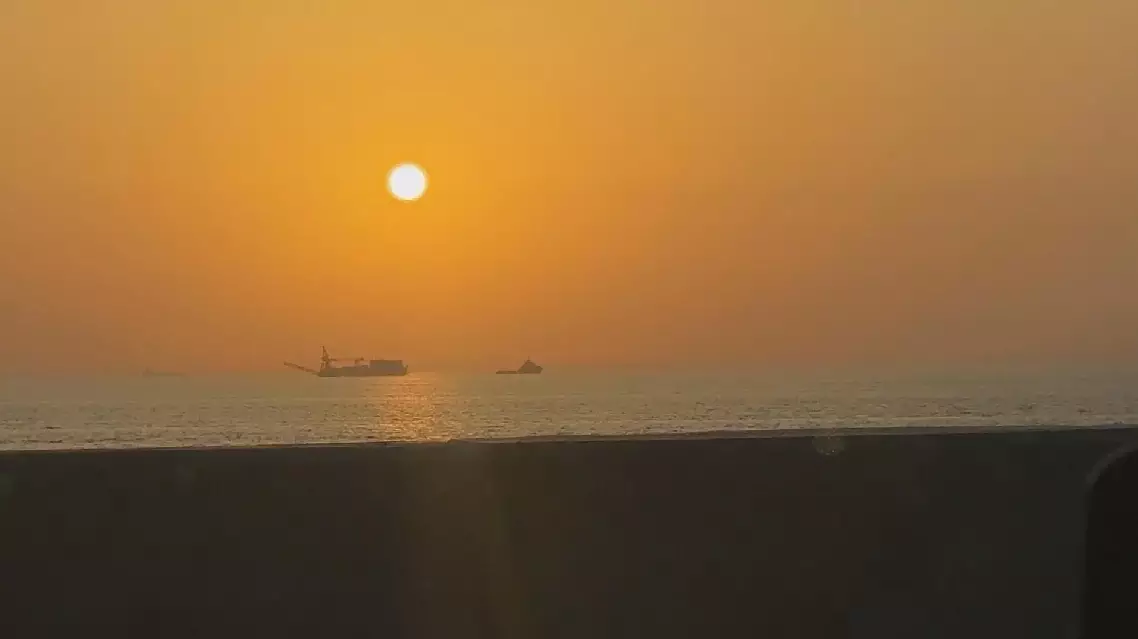
Iran issues new procedures for vessels requesting passage through Strait of Hormuz