ABOARD AIR FORCE ONE (AP) — In the two weeks since the U.S. and Israel launched strikes on Iran, President Donald Trump increasingly has been knocked on his political heels.
He's grown more agitated with news coverage and has failed to find a way to explain why he started the war — or how he will end it — that resonates with a public concerned by American deaths in the conflict, surging oil prices and dropping financial markets. Even some of his supporters are questioning his plan and his overall poll numbers are declining.
Click to Gallery
An Army carry team moves a flag-draped transfer case with the remains of Sgt. Declan Coady, 20, of West Des Moines, Iowa, who was killed in a drone strike at a command center in Kuwait after the U.S. and Israel launched its military campaign against Iran, past President Donald Trump and first lady Melania Trump during a casualty return, Saturday, March 7, 2026, at Dover Air Force Base, Del. (AP Photo/Mark Schiefelbein)
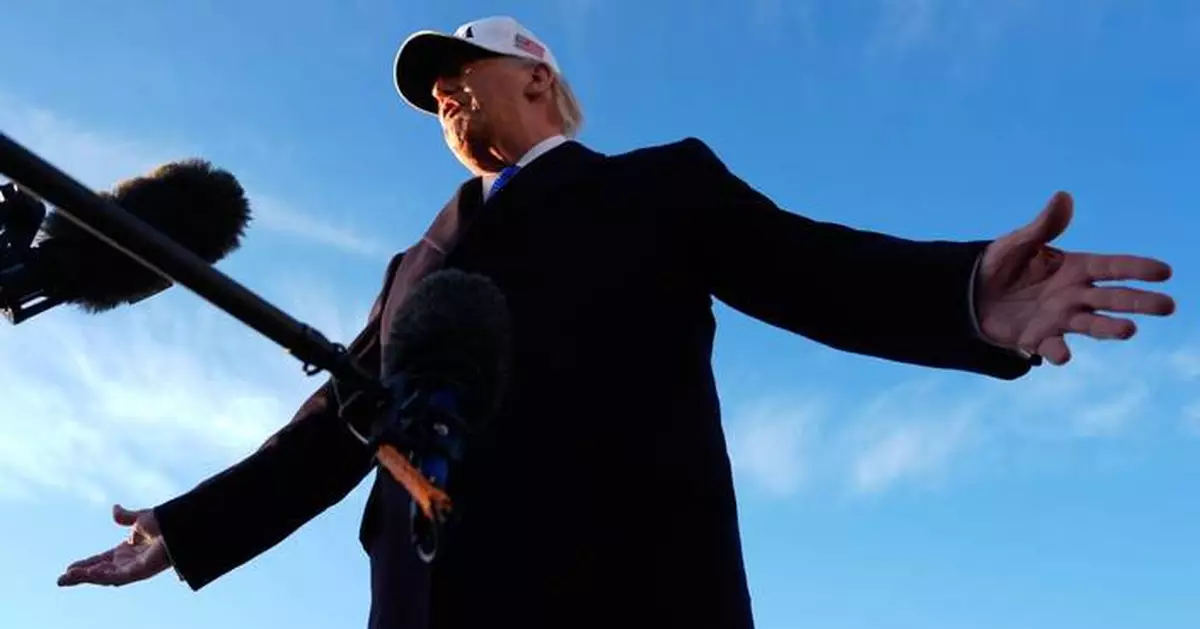
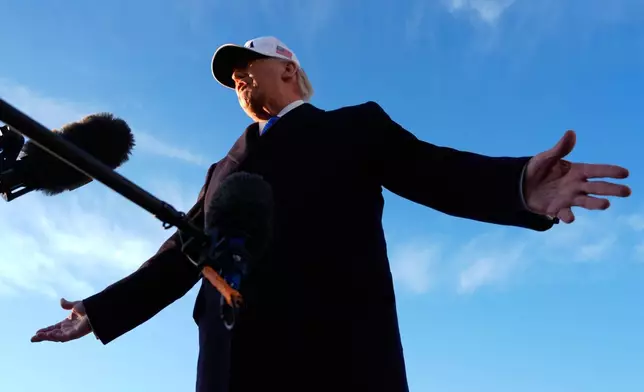
President Donald Trump gesture to the media as he walks on the South Lawn upon his arrival to the White House, Sunday, March 15, 2026, in Washington. (AP Photo/Jose Luis Magana)
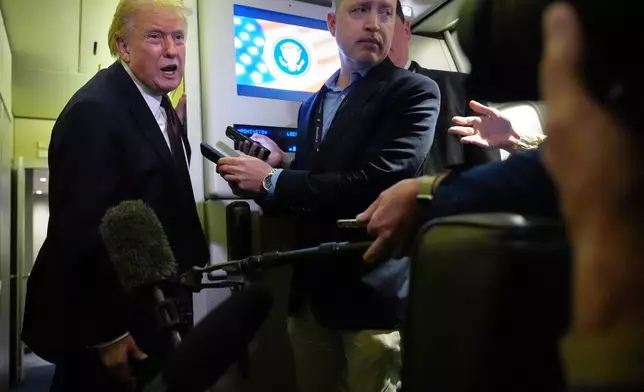
President Donald Trump speaks to reporters aboard Air Force One, Sunday, March 15, 2026, en route from West Palm Beach, Fla. to Joint Base Andrews, Md. (AP Photo/Mark Schiefelbein)
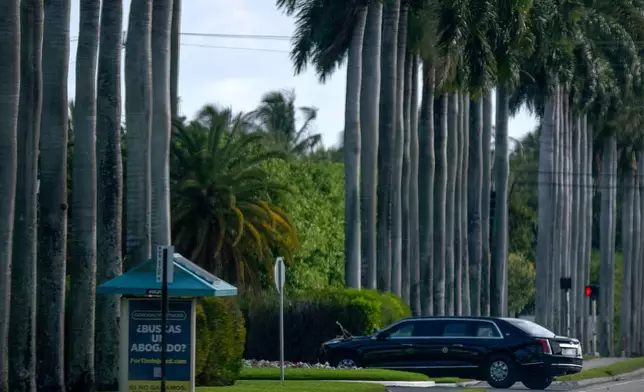
President Donald Trump's limousine arrives at the Trump International Golf Club West Palm Beach in West Palm Beach, Fla., Sunday, March 15, 2026. (AP Photo/Mark Schiefelbein)
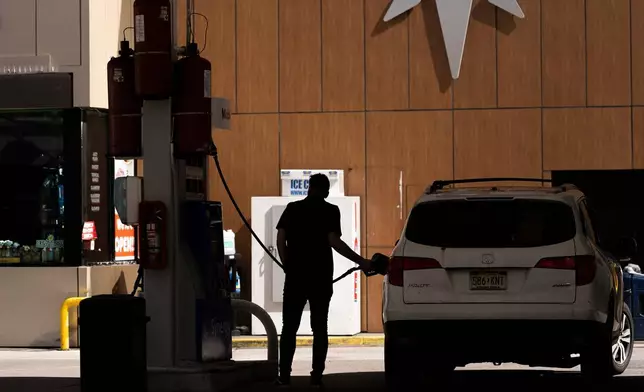
FILE - A person fuels up a vehicle at a gas station, Tuesday, March 10, 2026, in New York. (AP Photo/Yuki Iwamura, File)
An Army carry team moves a flag-draped transfer case with the remains of Sgt. Declan Coady, 20, of West Des Moines, Iowa, who was killed in a drone strike at a command center in Kuwait after the U.S. and Israel launched its military campaign against Iran, past President Donald Trump and first lady Melania Trump during a casualty return, Saturday, March 7, 2026, at Dover Air Force Base, Del. (AP Photo/Mark Schiefelbein)
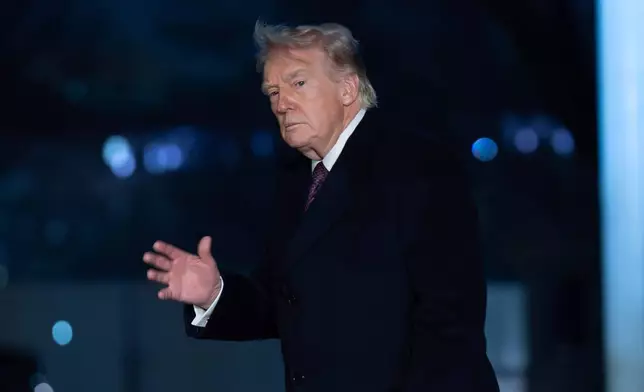
President Donald Trump speaks to reporters before he boards Air Force One, Friday, March 13, 2026, at Joint Base Andrews, Md., for a trip to Florida. (AP Photo/Mark Schiefelbein)
Meanwhile, Moscow is getting a boost from the war's early days after Trump eased sanctions on some Russian oil shipments. That, combined with rising oil prices, undercut the yearslong push to crimp President Vladimir Putin's ability to wage war in Ukraine.
Then there are Democrats, who were left reeling after Trump won the 2024 election. With control of Congress at stake in November's midterms, the party has come together to oppose Trump's Iran policy and point to the economic turmoil as proof that Republicans haven't kept their promises to bring down everyday costs.
“I think Democrats are well-positioned for this November and the midterms,” said Kelly Dietrich, CEO of the National Democratic Training Committee, which trains party backers to run for office and staff campaigns.
Dietrich said the past two weeks show the Trump administration has failed at long-term planning. “They’re flying by the seat of their pants, and the rest of us are paying the price,” he said.
Trump let some of his frustrations show on Air Force One as he flew back from a weekend at his Mar-a-Lago estate in Florida, lashing out at allies and other countries dependent on Middle Eastern oil for not doing more to counter Iran and specifically name-checking British Prime Minister Keir Starmer, who he said initially declined to put British aircraft carriers “into harm’s way.”
“Whether we get support or not," Trump said, “I can say this, and I said to them: We will remember.”
The president spent much of his weekend at his golf club in West Palm Beach, Florida. He also attended a closed-door fundraiser for his MAGA Inc. super PAC at Mar-a-Lago on Saturday night.
Last weekend, Trump played golf at another of his South Florida properties a day after witnessing the dignified transfer for six U.S. soldiers killed in the Iran war. A political action committee used a photo of the solemn event in a fundraising email, but Trump brushed off a question about whether it was appropriate, saying “there's nobody that's better to the military than me.”
Trump and his White House have increasingly complained about media coverage of the conflict. On Saturday, he cheered on his broadcast regulator for threatening to pull broadcast licenses unless they “correct course.”
He angrily told reporters flying with him on Air Force One that coverage of the war had been influenced by Iranian propaganda, which exaggerated the military and political strength of Iran's leaders and their support among the country's people.
The president — who kept allies other than Israel in the dark about his war plans for Iran — this weekend began suggesting the U.S. would need to lean on the international community to help oil tankers move through the Strait of Hormuz, where transportation has been severely disrupted, throwing global energy markets into a tailspin.
Iran has said it plans to keep up attacks on energy infrastructure and use its effective closure of the strait as leverage against the United States and Israel. A fifth of the world’s traded oil flows through the waterway.
Trump said the U.S. was talking to “about seven” countries about providing military support to help reopen the strait. But he wouldn't say which ones and gave no indication of when such a coalition might be formed.
“It's something that we don't need and these countries do need,” the president said, adding “I think it's a good thing for other countries to come in.”
Singling out allies in Europe, Trump also said, “We’re always there for NATO” and “It’d be interesting to see what country wouldn’t help us with a very small endeavor.”
“Really I'm demanding that these countries come in and protect their own territory,” Trump said.
But other countries have reacted to that call only cautiously so far.
South Korea plans to “closely coordinate and carefully review” Trump's comments, while Japan is closely watching developments. Britain’s defense ministry said it was "discussing with our allies and partners a range of options to ensure the security of shipping in the region.”
A spokesperson for the Chinese Embassy in Washington said keeping the strait “safe and stable serves the common interests of the international community” and that "as a sincere friend and strategic partner of Middle Eastern countries, China will continue to strengthen communication with relevant parties.” Trump — who is slated to visit Beijing later this month — declined to say whether China would join the effort.
Trump had pledged at the beginning of the war that U.S. naval ships would escort tankers through the waterway. But that hasn’t happened yet.
In the meantime, questions about the strait continue to undermine Trump's recent pronouncement during a Kentucky rally that, “We’ve won.”
“You know, you never like to say too early you won. We won,” he said. “We won the, in the first hour, it was over.”
The U.S. Treasury Department announced this past week a 30-day waiver on Russian sanctions, aiming to free up Russian oil cargoes stranded at sea to help ease supply shortages caused by the Iran war.
That's despite analysts saying that spiraling oil prices due to Persian Gulf production blockages are benefiting the Russian economy. Moscow relies heavily on oil revenue to finance its war on Ukraine, and sanctions were a growing handicap.
Some of Washington's key allies have decried the move as empowering Putin. Ukrainian President Volodymyr Zelenskyy called easing sanctions “not the right decision” and said it “certainly does not help peace” because it leads to a “strengthening of Russia’s position.”
With midterm races now starting to heat up, Trump was asked about the potential political impact of voters seeing gas prices jump.
“Politically, sure, everybody has concern — I have to do what's right," Trump said Sunday night. "I can't say that ‘Gee, I don’t want to have any impact on oil prices for three or four weeks, or two months, and we're going to let Iran have a nuclear weapon.'"
Energy Secretary Chris Wright said of higher energy prices on NBC’s “Meet the Press" that “Americans are feeling it right now" and would "for a few more weeks.”
Iran also has even divided Trump’s “Make America Great Again” base, between those who support the action and others who say that Trump expressly campaigned on ending wars.
The political turbulence has some Democrats predicting their party could see midterm gains rivaling 2018’s “blue wave” election during Trump’s first term.
“Democrats just have to keep reminding people that he made a promise to bring prices down, and they’re still going up,” Democratic strategist Brad Bannon said of Trump. “And now they’re going to go up even more because prices in gasoline can increase prices of everything else, including at the grocery store.”
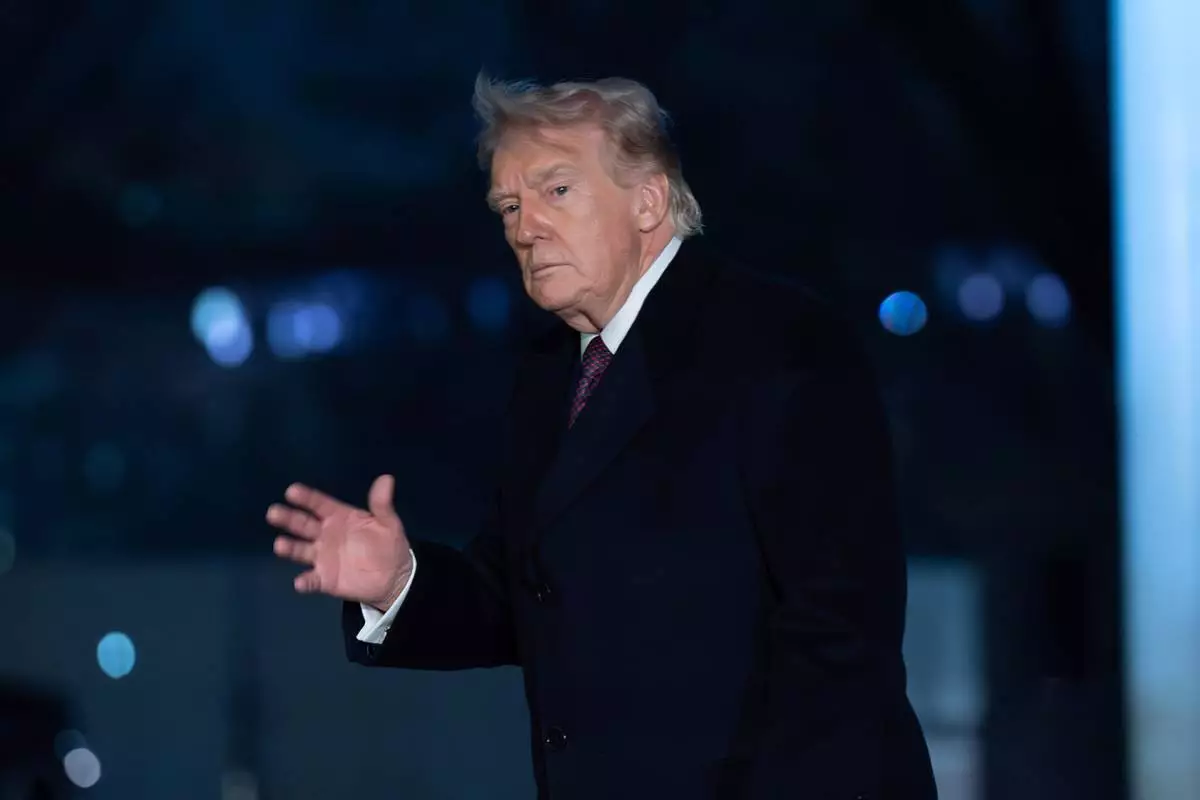
President Donald Trump gesture to the media as he walks on the South Lawn upon his arrival to the White House, Sunday, March 15, 2026, in Washington. (AP Photo/Jose Luis Magana)
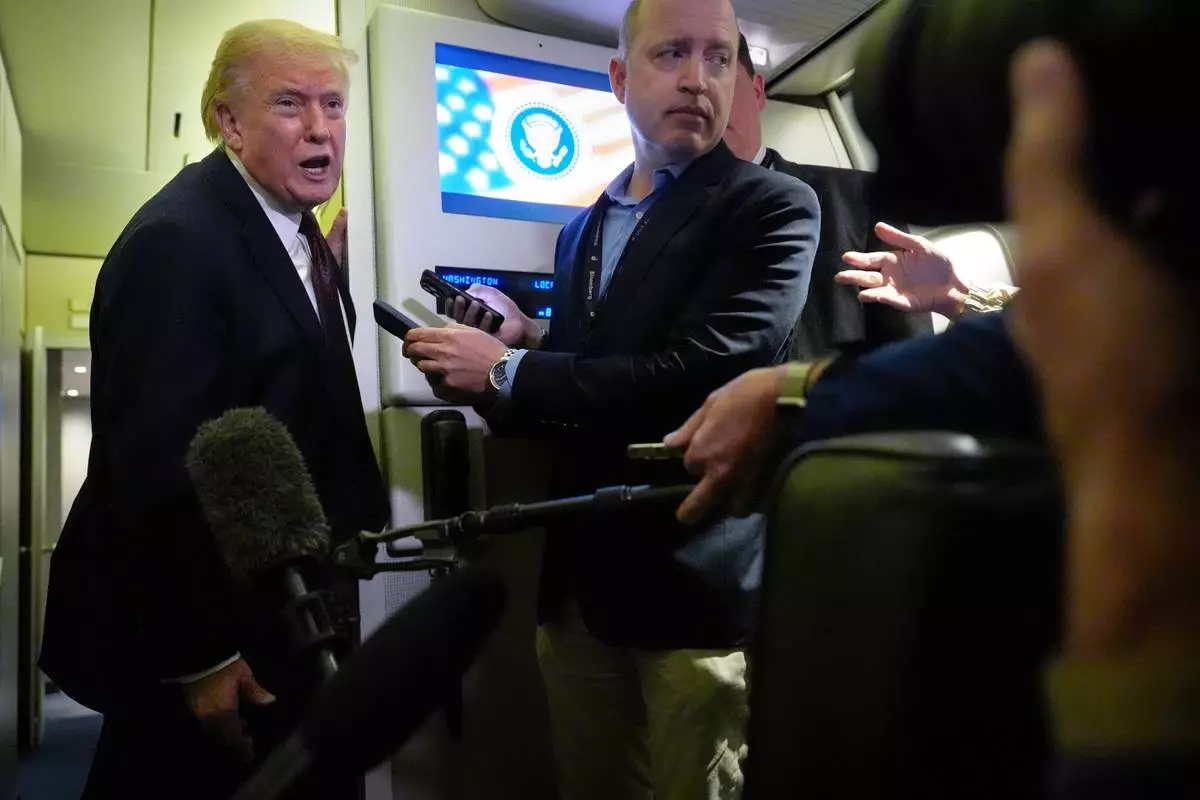
President Donald Trump speaks to reporters aboard Air Force One, Sunday, March 15, 2026, en route from West Palm Beach, Fla. to Joint Base Andrews, Md. (AP Photo/Mark Schiefelbein)
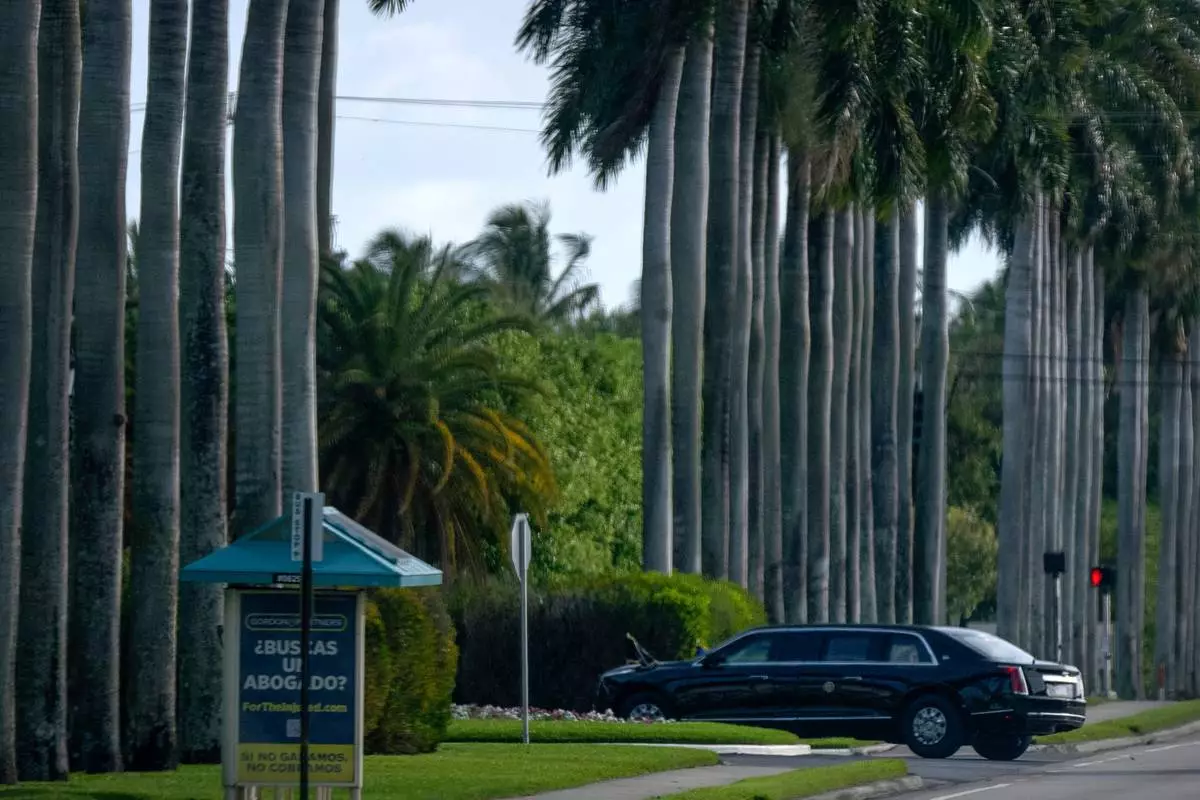
President Donald Trump's limousine arrives at the Trump International Golf Club West Palm Beach in West Palm Beach, Fla., Sunday, March 15, 2026. (AP Photo/Mark Schiefelbein)
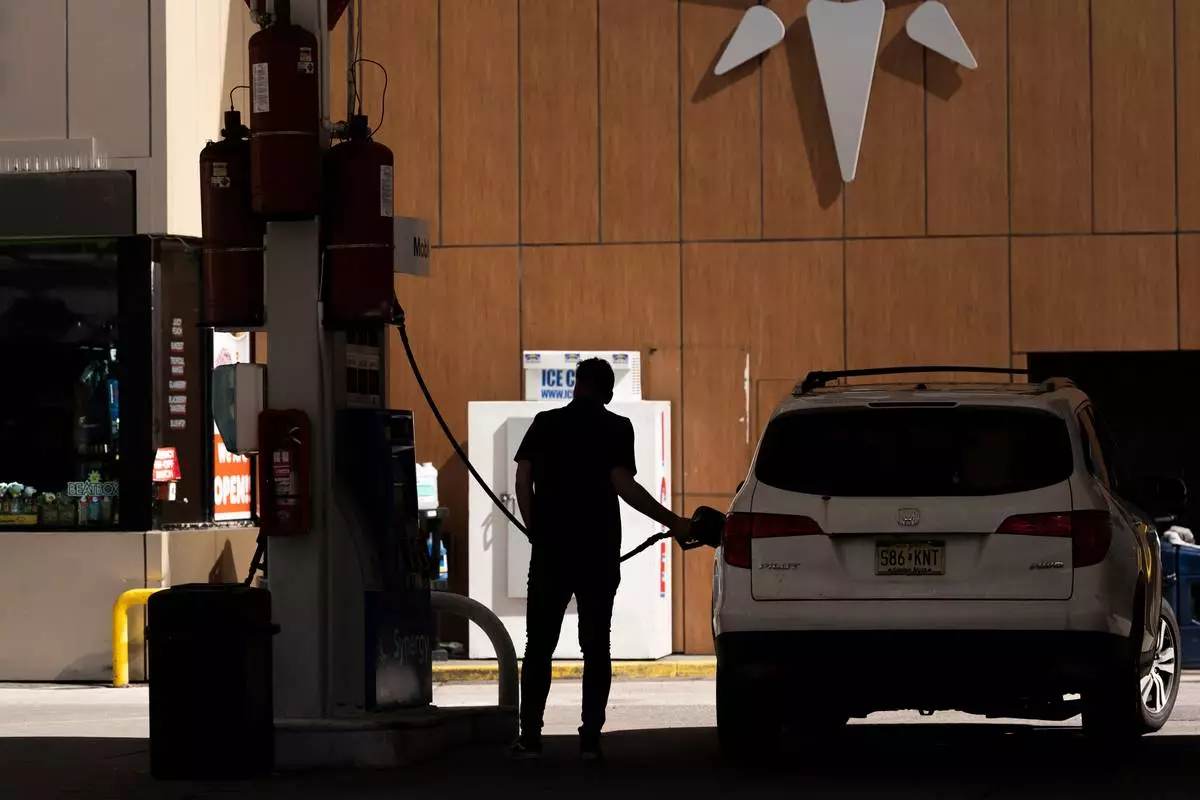
FILE - A person fuels up a vehicle at a gas station, Tuesday, March 10, 2026, in New York. (AP Photo/Yuki Iwamura, File)

An Army carry team moves a flag-draped transfer case with the remains of Sgt. Declan Coady, 20, of West Des Moines, Iowa, who was killed in a drone strike at a command center in Kuwait after the U.S. and Israel launched its military campaign against Iran, past President Donald Trump and first lady Melania Trump during a casualty return, Saturday, March 7, 2026, at Dover Air Force Base, Del. (AP Photo/Mark Schiefelbein)
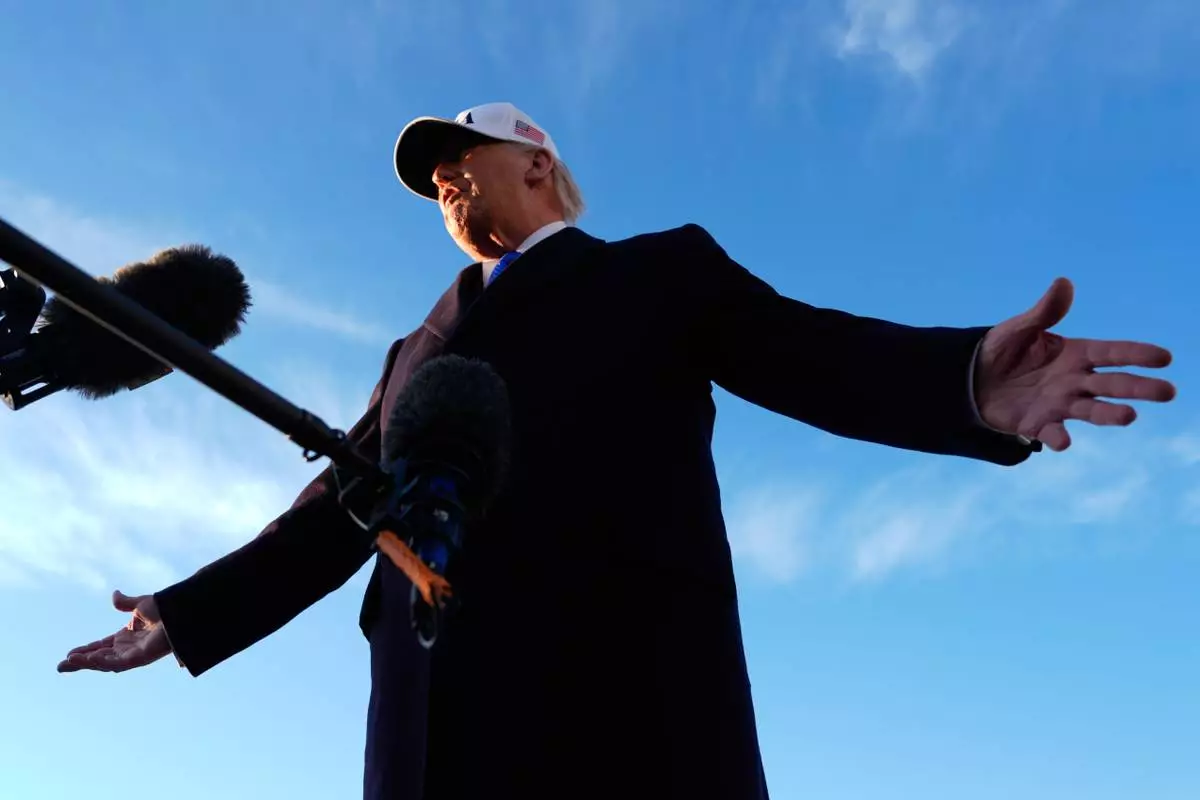
President Donald Trump speaks to reporters before he boards Air Force One, Friday, March 13, 2026, at Joint Base Andrews, Md., for a trip to Florida. (AP Photo/Mark Schiefelbein)
OMAHA, Neb. (AP) — The folksy wisdom and jokes that were a staple of the Berkshire Hathaway annual meeting for decades when Warren Buffett was leading the show will be missing Saturday, but shareholders still started lining up at midnight outside a Nebraska arena to listen to new CEO Greg Abel.
Attendance is down significantly this year with the arena only a little over half full as the meeting unfolded. That’s much different from the past few years when more than 40,000 attended to listen to the 95-year-old Buffett and — before his death in 2023, Buffett’s longtime partner Charlie Munger was always part of the fun. Buffett gave up the CEO title in January, but he remains chairman and did make a few comments during the meeting.
Saturday’s meeting began with a video tribute to Buffett and the company's history beginning with a clip showing the standing ovation Buffett received last year after he surprised shareholders by announcing that he would step down.
Abel then announced the symbolic move of retiring jerseys with Buffett’s and Munger’s names on them that will hang in the rafters of the arena.
Buffett took the microphone briefly to praise Abel and recognize Apple CEO Tim Cook, who attended the meeting. Buffett said Abel has done a tremendous job so far, and Cook helped Berkshire's initial $35 billion investment in Apple grow to be worth $185 billion today.
“Greg is doing everything I did and then some,” Buffett said, so his decision to step down has worked out great so far.
Abel has been on stage next to the legendary investor for several years, but this is his first time running the show. Investors expect the conversation to focus more on how the dozens of companies Berkshire owns are doing. The conglomerate owns major insurers like Geico, several major utilities like Pacificorp, BNSF railroad and an assortment of manufacturers, retail and service businesses.
Signs of the transition are peppered throughout the 200,000-square-foot exhibit hall where shareholders buy products from Berkshire companies. A caricature of Abel playing his favorite sport of hockey is front and center on commemorative boxes of See’s Candy. At the Pilot Travel Center booth, pictures of Abel and Buffett are plastered on a semitrailer truck windshield, but Abel is in the driver’s seat. And this year Jazwares created a Squishmallow version of Abel to go with the latest versions of Buffett and Munger as stuffed dolls that shareholders lined up to buy.
“Sadly we miss Warren and Charlie and that show which was fun, but it’s a business meeting for a lot of us and hearing what the businesses are doing is what it’s all about,” investor Chris Bloomstran, who is president of Semper Augustus Investments Group said.
But also many people travel to Omaha primarily to meet up with like-minded value investors, who practice the approach that Buffett employed, and attend some of the investment conferences and meetings that are scheduled around Berkshire’s shareholder meeting.
“That’s why I’m really here, really here is to network with other people,” said Bob Robotti, who runs his own investment company. He doesn’t expect surprises from Abel and the other Berkshire executives at the meeting. “They shouldn’t say anything that would be shocking and surprising because they’re consistent with what they do.”
Abel opened the meeting with a detailed discussion of how Berkshire's biggest businesses are performing. He gave a granular explanation about the performance of Berkshire’s insurers, its railroad and its utilities. He talked about how Berkshire is using artificial intelligence “to solve problems at our companies.” But he stressed over and over that Berkshire's basic approach will not change, and he won't feel pressured to spend the company's nearly $400 billion in cash prematurely.
“One of our greatest strengths at Berkshire is patience and being disciplined at allocating our capital,” Abel said. “We’re not anxious to deploy capital into subpar opportunities.”
Vice Chairman Ajit Jain said Berkshire would be willing to insure ships crossing the Strait of Hormuz, but “the short answer is it depends on the price.” He said Berkshire must get the right rate and the U.S. Navy will have to escort those ships.
Many investors are watching closely for any changes Abel might make, but there’s not a lot of reason expect anything big. After all, Abel has been with Berkshire for more than 25 years, and he had already been managing all of the conglomerate’s noninsurance businesses for nearly eight years by the time he was promoted. Abel has promised to maintain Berkshire’s culture that trusts the CEOs of all of its businesses to largely run their day-to-day operations.
The CEOs of Dairy Queen, See’s Candy, Jazwares and Brooks Running all said very little has changed since Abel was promoted other than they now report to NetJets CEO Adam Johnson who is overseeing 32 retail and service businesses.
“I think this is a very deeply rooted culture that Warren has created, and I believe the transition to Greg is going to be rooted in those values that Warren has for 60 years instituted and will continue,” Brooks CEO Dan Sheridan said.
For years Buffett always said he was having too much fun running Berkshire to ever retire, but once the shock of his announcement in the final minutes of last years meeting wore off the company’s executives quickly agreed this plan for the transition was better so Buffett can still be around to advise Abel.
“Berkshire is as strong today as it’s ever been and Warren is still part of it,” DQ CEO Troy Bader said as his staff sold Dilly Bars to shareholders. “Warren is still present. So that’s the greatest combination right now, to be able to have that transition in leadership where Greg and Warren can still work together.”
Abel is known to be a more demanding and hands-on boss than Buffett ever was, but he does that by challenging Berkshire’s CEOs to strengthen their competitive advantages while taking care of their customers. Abel asks tough questions and offers advice that his CEOs appreciate, but he doesn’t tell them exactly what to do.
And with Buffett remaining Berkshire’s chairman and its largest shareholder it’s unlikely that Abel will make any drastic changes. So shareholders shouldn’t expect Berkshire to start paying a dividend or that Abel will suddenly split the company up.
Robotti said the performance of Berkshire’s businesses should be much more important to shareholders than the entertainment value of the annual meetings.
“My hope and expectation are they’re picking people who have competency in running a business and not necessarily public speakers and presenters,” Robotti said.
Berkshire said Saturday morning that its profits more than doubled in the first-quarter to $10.1 billion, or $7,027 per Class A share, as the value of its investments grew and most of its businesses improved.
The paper value of Berkshire’s investments always has a major impact on its bottom line, and it did record a $5.8 billion gain on the stocks it did sell. The value of the portfolio did slip to just over $288 billion.
Berkshire’s massive cash pile continues to grow, and it hit $397.4 billion at the end of the first quarter.
Most of Berkshire’s varied businesses reported better operating earnings this year. The insurance unit that includes Geico and a number of other companies reported an underwriting profit of $1.7 billion, up from $1.34 billion last year. Profits also grew somewhat at BNSF railroad and Berkshire’s utility and manufacturing companies.
But Abel acknowledged there is more improvement needed — especially at BNSF.
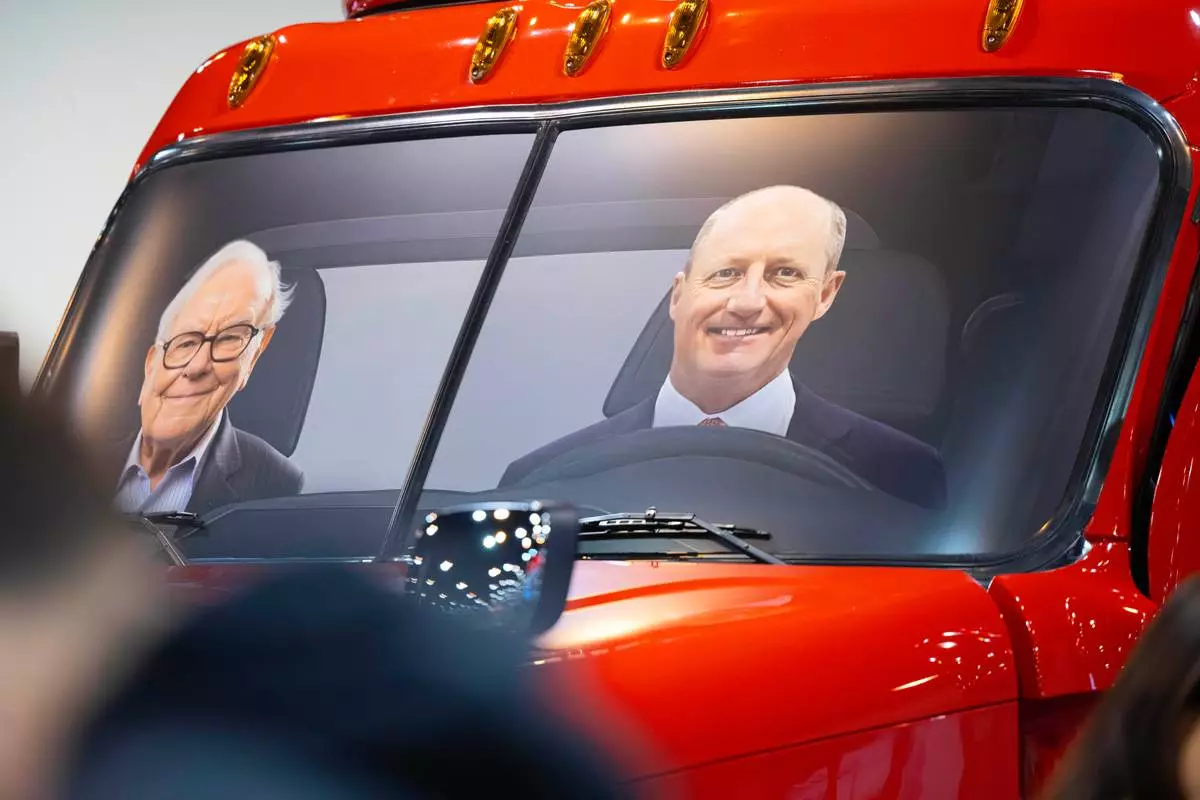
Portraits of Berkshire Hathaway's Warren Buffett, left, and CEO Greg Abel sit in a semi truck at the Pilot display in the Berkshire Hathaway annual meeting on Saturday, May 2, 2026, in Omaha, Neb. (AP Photo/Rebecca S. Gratz)
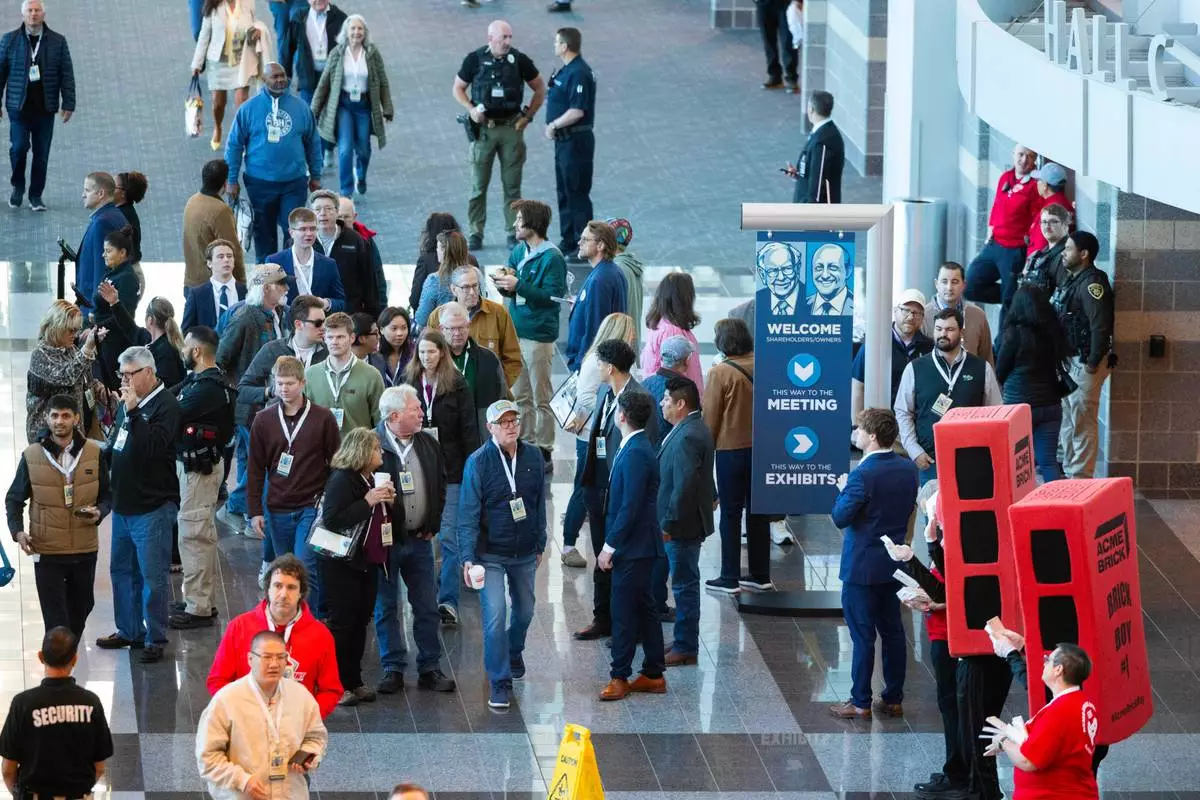
Shareholders arrive inside the CHI Health Center Omaha for the Berkshire Hathaway annual meeting on Saturday, May 2, 2026, in Omaha, Neb. (AP Photo/Rebecca S. Gratz)
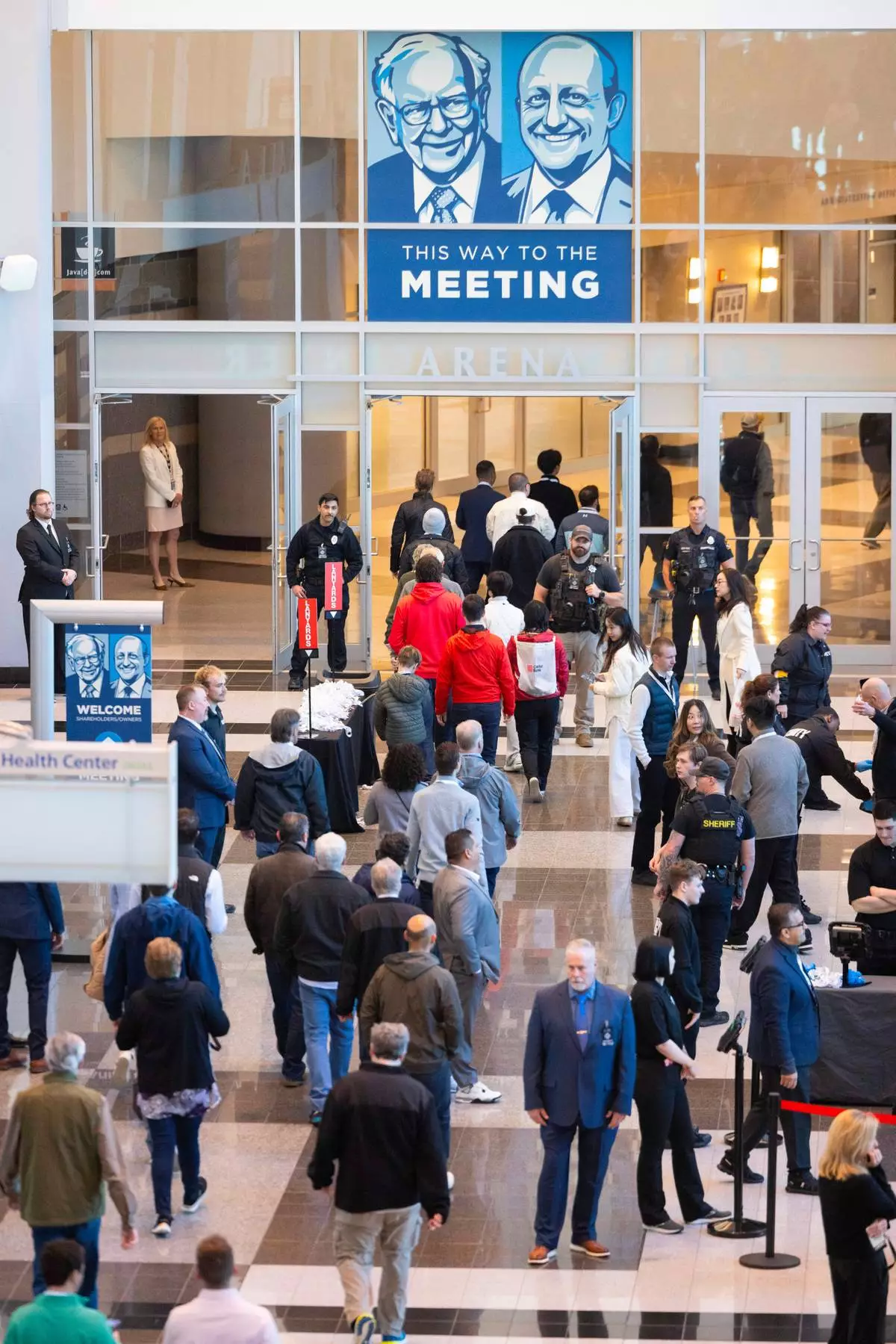
Shareholders enter the CHI Health Center Omaha for the Berkshire Hathaway annual meeting on Saturday, May 2, 2026, in Omaha, Neb. (AP Photo/Rebecca S. Gratz)

Shareholder Anna Larsen, 16, left, of Underwood, Iowa, poses for photo with her friend Ainsley Roberts, 17, in the Hello Kitty portion of the Squishmallows display in the Berkshire Hathaway annual meeting on Saturday, May 2, 2026, in Omaha, Neb. (AP Photo/Rebecca S. Gratz)
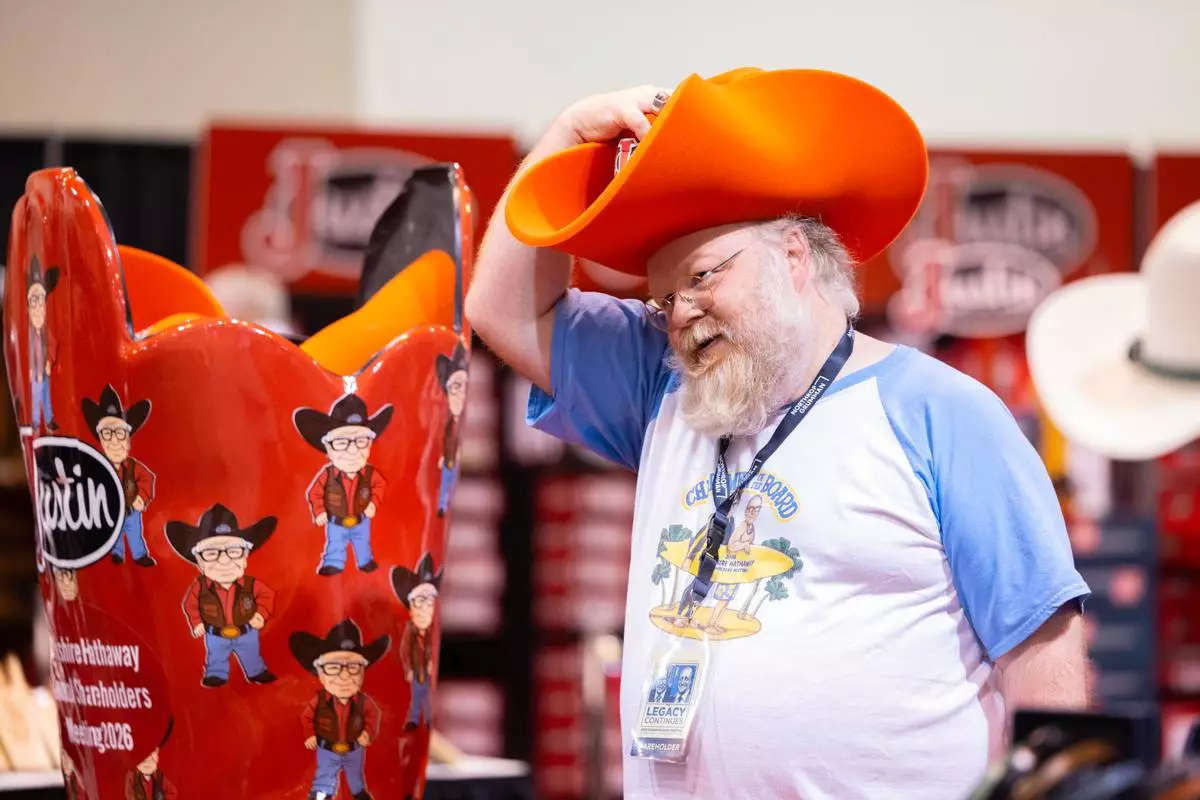
Shareholder Alex Vacca of Milwaukee poses for a photo in a foam hat in the Justin display od the Berkshire Hathaway annual meeting on Saturday, May 2, 2026, in Omaha, Neb. (AP Photo/Rebecca S. Gratz)
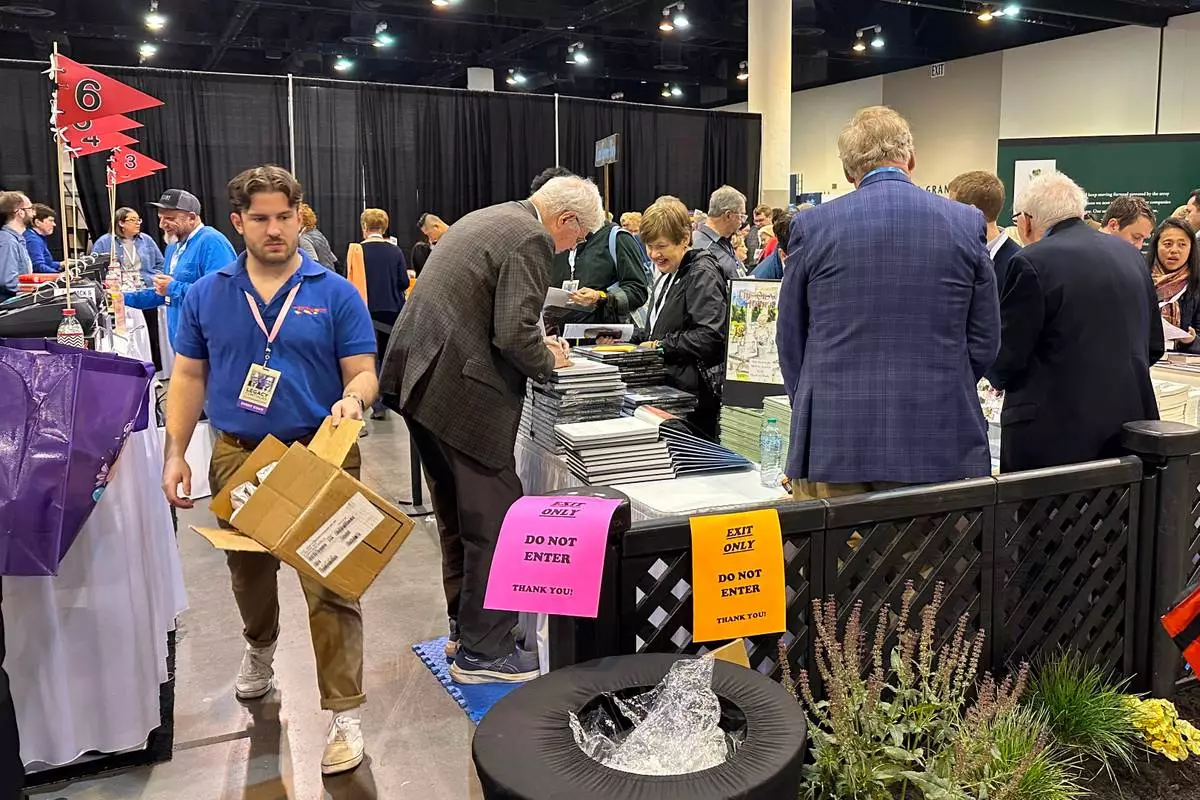
Author and former Omaha World-Herald reporter Steve Jordan signs copies of his book at the Berkshire Hathaway shareholders event on Friday, May 1, 2026 in Omaha, Neb. (AP Photo/Josh Funk)
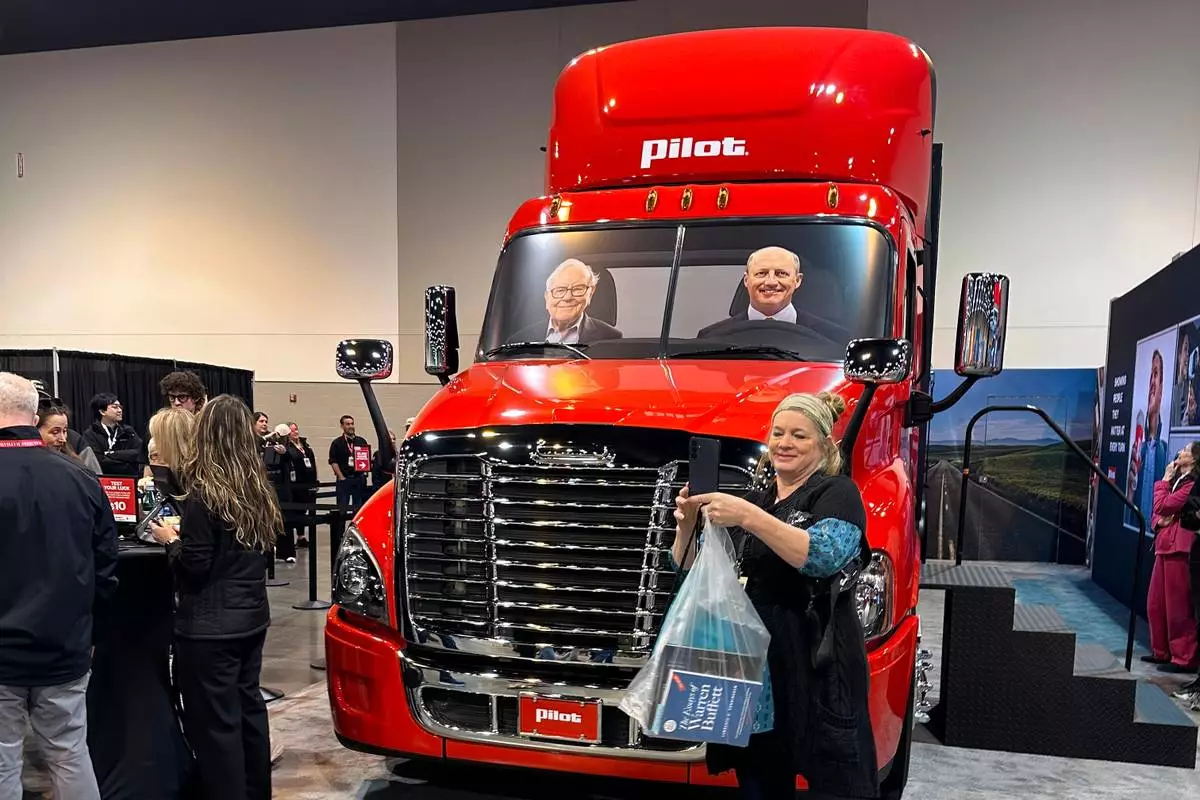
A Berkshire Hathaway shareholder takes a selfie in front of a Pilot truck stops semi truck with pictures of Berkshire's top two executives behind the wheel: new CEO Greg Abel and Chairman Warren Buffett on Friday, May 1, 2026 in Omaha, Neb. (AP Photo/Josh Funk)
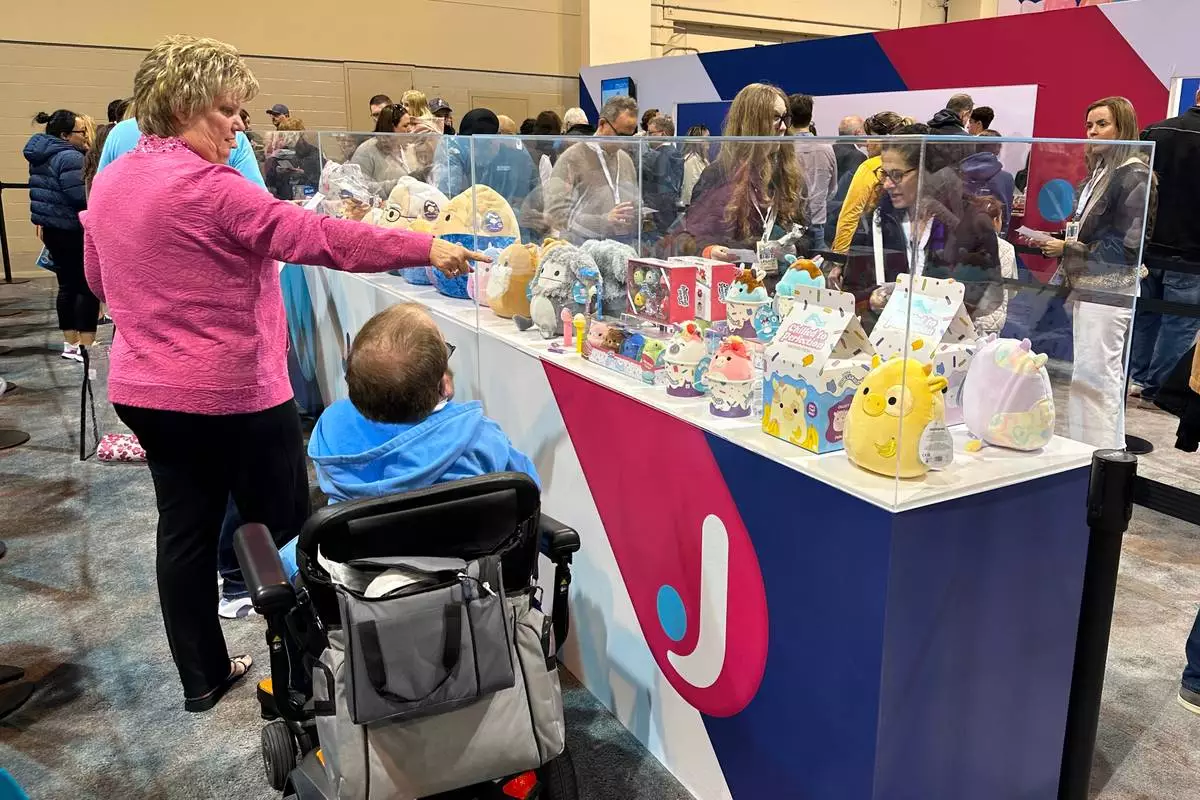
Berkshire Hathaway shareholders stand in line to purchase Squishmallows versions of the company's top executives: CEO Greg Abel, Chairman Warren Buffett and former Vice Chairman Charlie Munger on Friday, May 1, 2026 in Omaha, Neb. (AP Photo/Josh Funk)
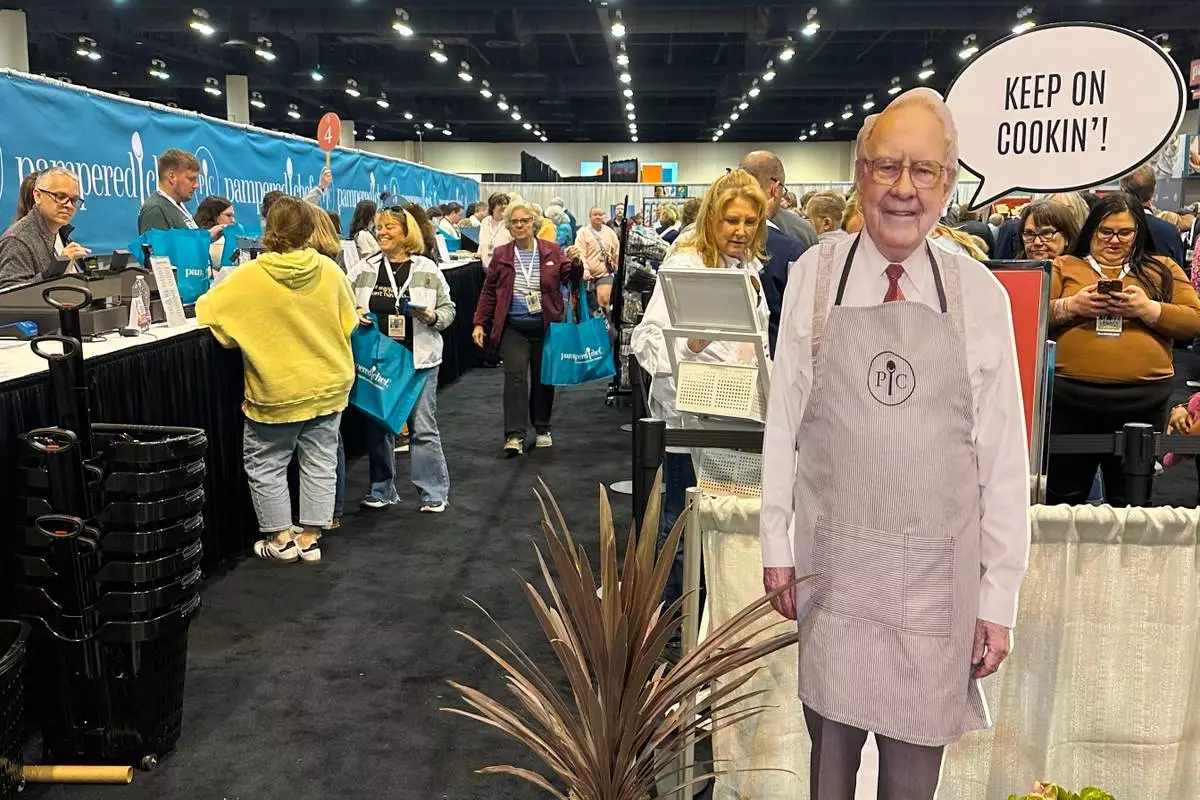
Berkshire Hathaway shareholders line up to buy products at the Pampered Chef booth behind a cutout of longtime CEO Warren Buffett who stepped down in January on Friday, May 1, 2026 in Omaha, Neb. (AP Photo/Josh Funk)
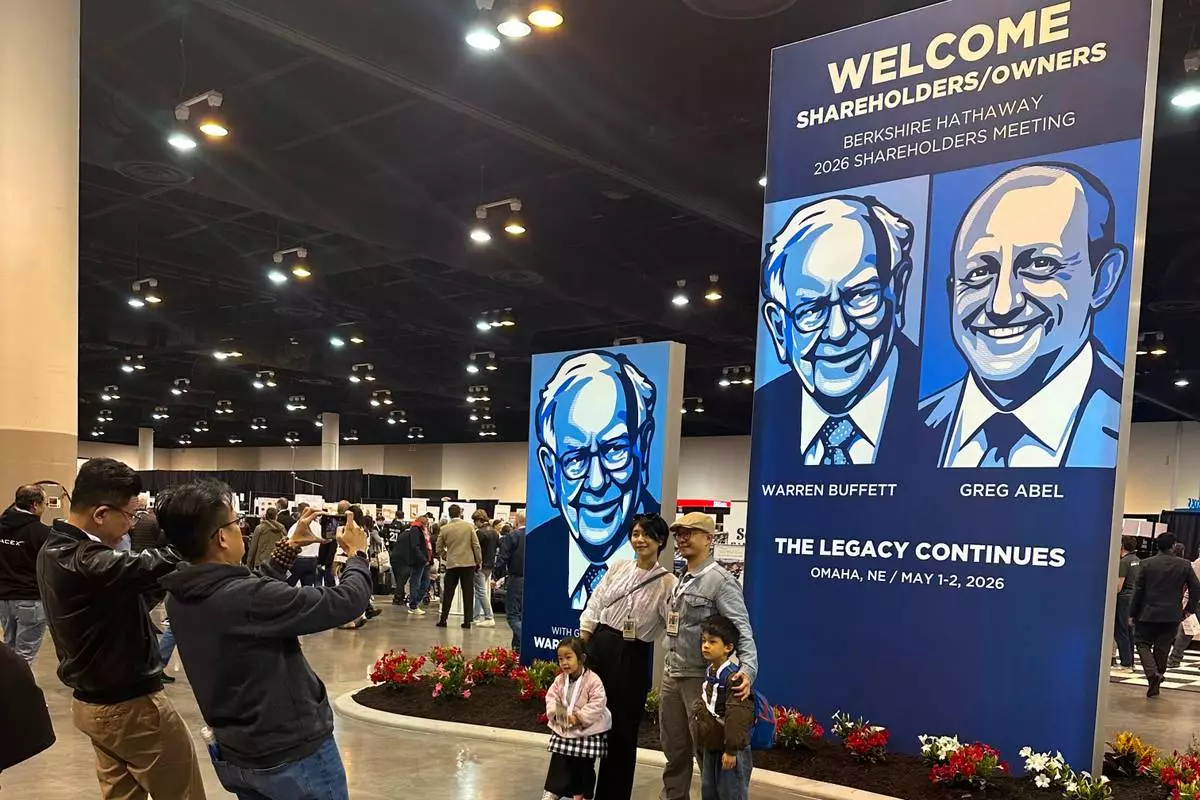
Shareholders line up to take pictures with depictions of Berkshire Hathaway's new CEO Greg Abel and Chairman Warren Buffett on Friday, May 1, 2026 in Omaha, Neb. (AP Photo/Josh Funk)