HANOI, Vietnam (AP) — Voters in Vietnam cast their ballots to select a new National Assembly on Sunday, two months after the ruling Communist Party reelected leader To Lam to the country’s top political post.
Nearly 79 million voters across the country are eligible to pick 500 representatives from 864 candidates to the rubber-stamp National Assembly. All candidates are vetted and pre-approved by the Communist Party, ensuring the assembly remains aligned with the party’s political direction.
Click to Gallery
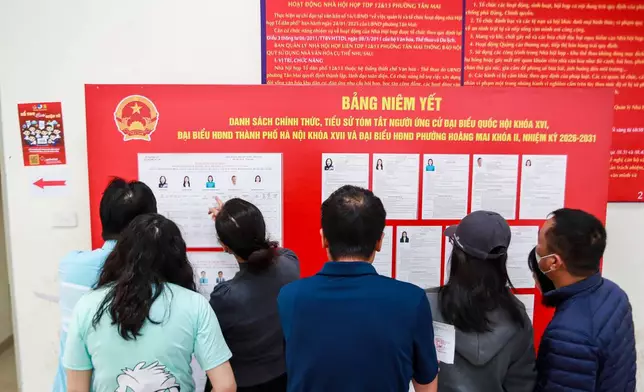
Voters check profiles of candidates before casting ballots to elect representatives in the National Assembly and people's councils in Hanoi, Vietnam, Sunday, March 15, 2026. (AP Photo/Huy Han)
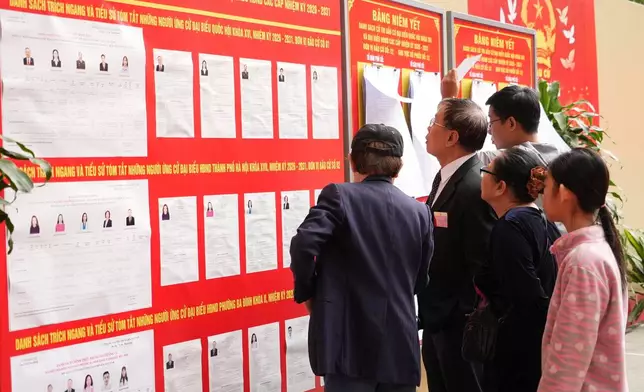
Voters check profiles of candidates before casting ballots to elect representatives in the National Assembly and people's councils in Hanoi, Vietnam, Sunday, March 15, 2026. (AP Photo/Hau Dinh)

Voters wait to cast ballots to elect representatives in the National Assembly and people's councils in Hanoi, Vietnam, Sunday, March 15, 2026. (AP Photo/Hau Dinh)
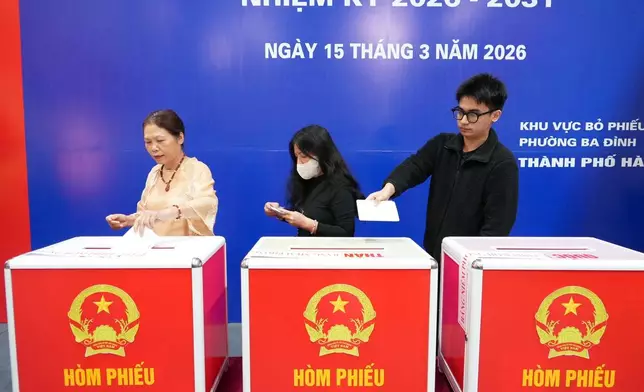
Voters cast ballots to elect representatives in the National Assembly and people's councils in Hanoi, Vietnam, Sunday, March 15, 2026. (AP Photo/Hau Dinh)
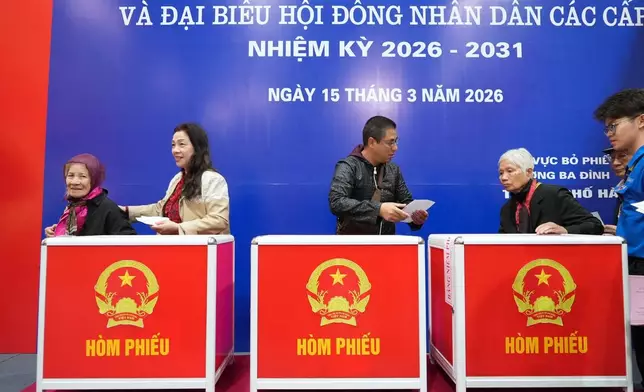
Voters cast ballots to elect representatives in the National Assembly and people's councils in Hanoi, Vietnam, Sunday, March 15, 2026. (AP Photo/Hau Dinh)
The Communist Party tightly controls political activity, arguing that centralized leadership allows the country to pursue longterm development goals without disruptions.
The new National Assembly is expected to implement the policy agenda shaped at the congress, prioritizing sustained economic growth and political stability.
The election follows the Communist Party’s national congress in January, a political event held every five years that sets the country’s leadership lineup and policy priorities. At the congress, Lam was reelected as general secretary, the most powerful position in the political system.
“We have the people’s support in this election,” Lam said after casting his ballot in Hanoi, describing the vote as a national celebration where citizens choose representatives to guide development and safeguard the country’s sovereignty and stability.
Vietnam’s economy has expanded rapidly over the past decade, driven by manufacturing exports, foreign investment and its growing role in global supply chains. The country has positioned itself as an alternative production hub as companies diversify away from China, attracting major electronics and textile manufacturers.
It has now set an ambitious target of 10% or higher annual economic growth over the next five years, placing the private sector at the center of its development strategy in a notable shift for the communist state. Policymakers are now recalibrating the country's economy to push it toward higher-value industries, modernized production and wider use of science, technology and digital tools.
Vietnam’s leadership also faces challenges as the country’s export-driven economy grapples with uncertainty from rising trade tensions, including tariffs introduced by U.S. President Donald Trump.
Voter turnout in Vietnam’s elections is typically high, often exceeding 90%, with polling stations set up in cities, rural communities and remote regions to encourage participation.
“As a voter in this election, I believe I will be able to choose candidates with morals, dedication and competence to serve the country, bringing development and prosperity to our country and our people,” said retired official Doan Thi Bich.
The incoming National Assembly is expected to convene its first meeting in April to formally approve key government appointments and begin implementing the policy roadmap laid out at the party congress.
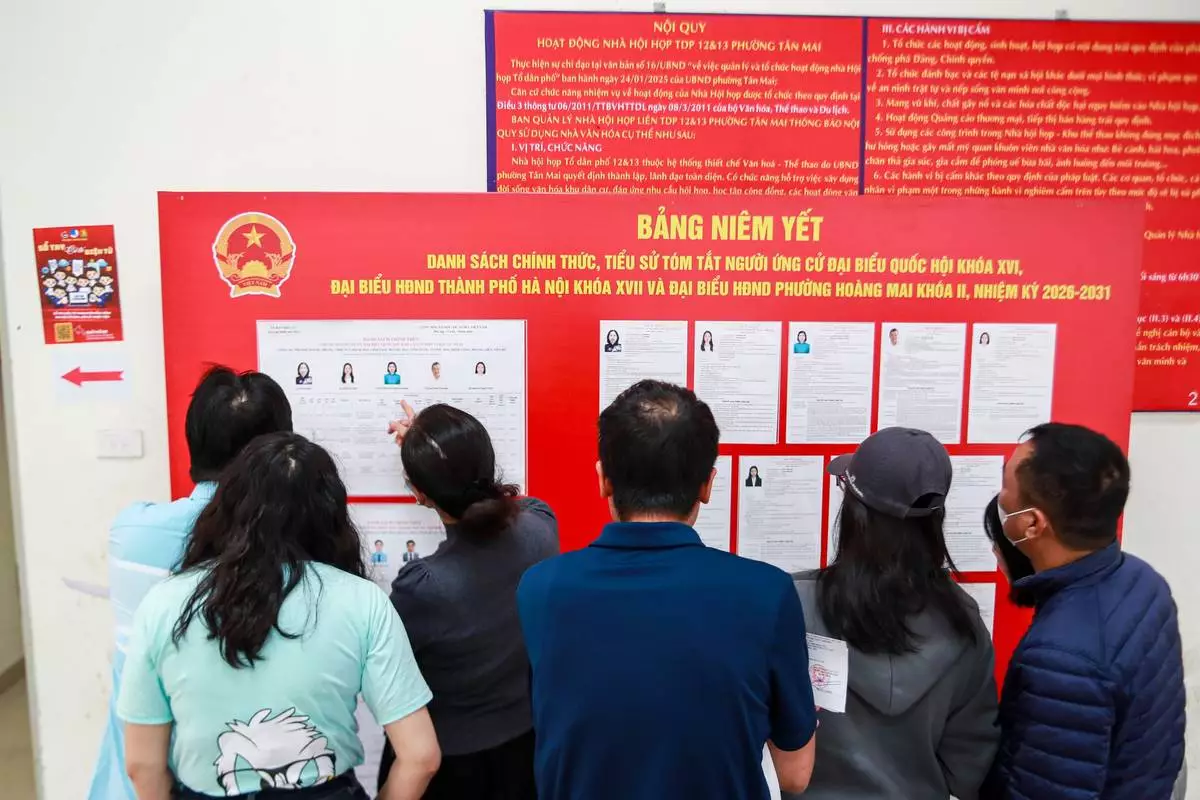
Voters check profiles of candidates before casting ballots to elect representatives in the National Assembly and people's councils in Hanoi, Vietnam, Sunday, March 15, 2026. (AP Photo/Huy Han)
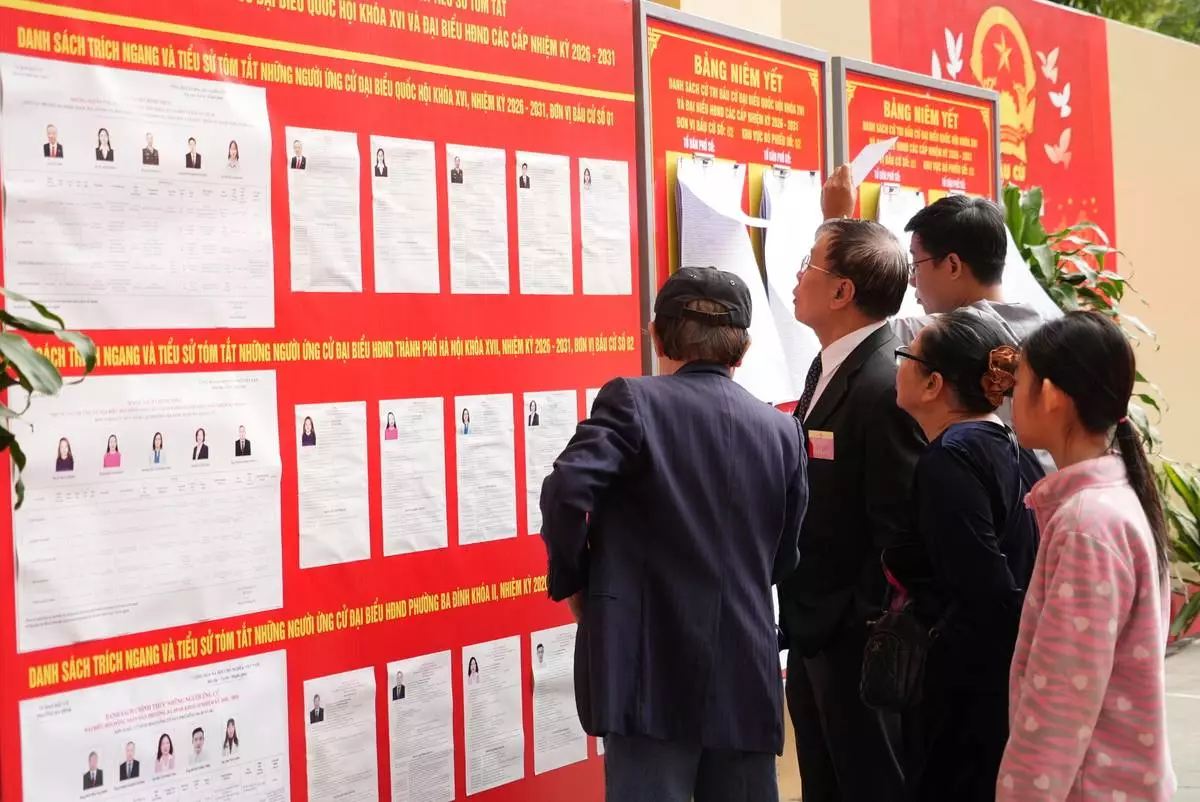
Voters check profiles of candidates before casting ballots to elect representatives in the National Assembly and people's councils in Hanoi, Vietnam, Sunday, March 15, 2026. (AP Photo/Hau Dinh)
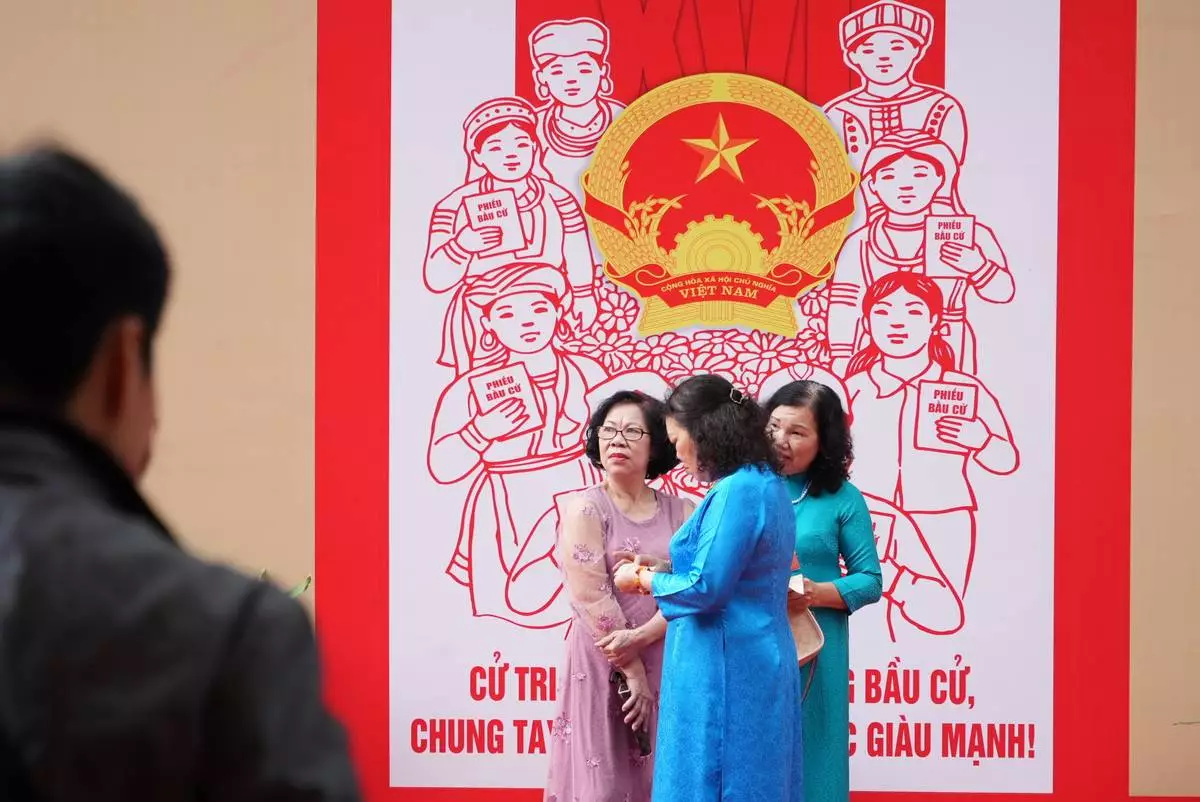
Voters wait to cast ballots to elect representatives in the National Assembly and people's councils in Hanoi, Vietnam, Sunday, March 15, 2026. (AP Photo/Hau Dinh)
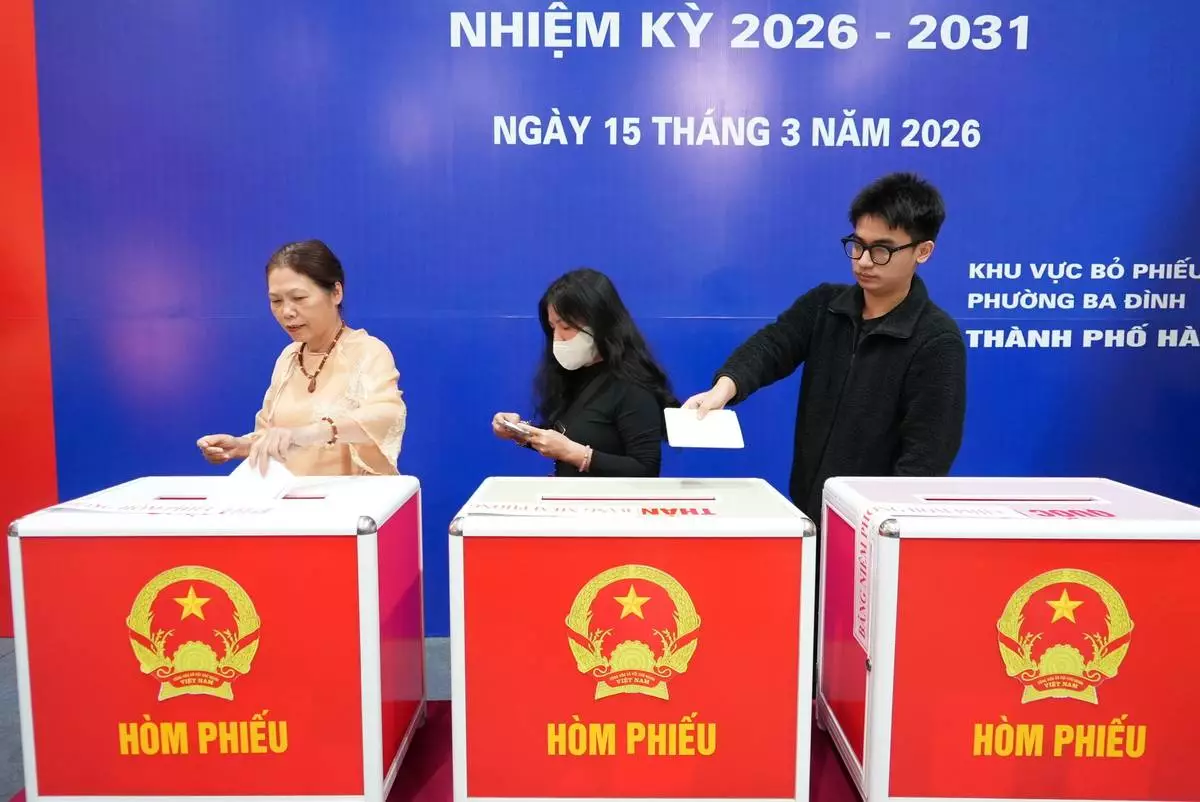
Voters cast ballots to elect representatives in the National Assembly and people's councils in Hanoi, Vietnam, Sunday, March 15, 2026. (AP Photo/Hau Dinh)
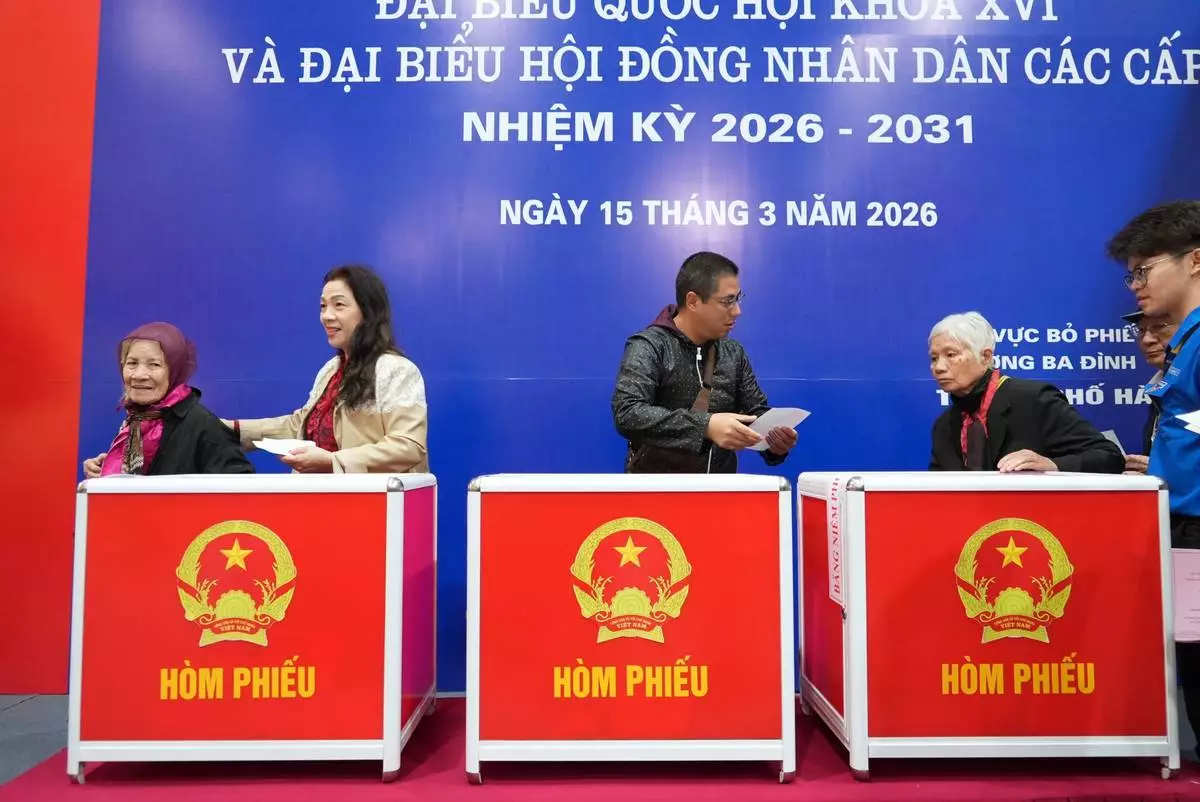
Voters cast ballots to elect representatives in the National Assembly and people's councils in Hanoi, Vietnam, Sunday, March 15, 2026. (AP Photo/Hau Dinh)