At the ongoing 2026 Appliance and Electronics World Expo (AWE) in Shanghai, a wide range of intelligent robots, from household service machines to healthcare and security robots, are on display, highlighting how AI-powered robotics is rapidly moving into everyday life.
As Asia's largest and one of the world's three largest international consumer electronics and smart home exhibitions, the annual event highlights commercial applications of embodied intelligence this year. The 2026 AWE opened on March 12 and ends on Sunday.
One robot embroiderer has even set a Guinness World Records milestone at the exhibition, completing the assembly of over a hundred sub-millimeter wiring harnesses within one hour.
"Our robot has set a Guinness World Record by assembling 105 pieces of wires with high precision. The logic behind this achievement lies in the fact that we are collecting data from human actions rather than through traditional remote robot control. After obtaining data through a large model, we can flexibly transfer the data to the robot, enabling the robot to also possess this capability," said exhibitor Ding Wenchao. Ramping up efforts to develop core technologies in the robotics sector, Chinese companies also seek to accelerate the deployment of robots in both industrial and consumer scenarios.
"We focus on core technologies driven by AI, no matter whether they involve models or agents, and also on chips and joints needed by our robots. We then lay out our core technologies in these related fields," said Chang Xinwei, another exhibitor.
From boxing robots and robot dogs to security patrol robots and rehabilitation exoskeletons, the exhibition presents a wide spectrum of robotic applications, covering entertainment, security, healthcare, and household services, forming what exhibitors describe as an emerging smart service ecosystem.
Industry players are also pushing consumption-level robots to explore more application scenarios.
"We've associated with more than 20 robot brands in operating our booth. By cooperating with top-notch robot companies, we aim to present consumption-level robots, for example, robots priced at around 10,000 yuan (1,450 U.S. dollars) apiece, to make robots more accessible to a wider range of users," said exhibitor Zheng Xiaodan.
Market data suggest the humanoid robot sector is growing quickly. Global humanoid robot shipments approached 18,000 units in 2025, while China, a major application market, is expected to see its use cases expand more than threefold in 2026, with the market size nearing 9 billion yuan (1.3 billion U.S. dollars).
Meanwhile, data from JD.com, China's top e-commerce platform for digital appliances, show surging public interest. Searches for “robots” have increased 25 times since February, with attention to humanoid robots jumping more than 100-fold and views of quadruped and exoskeleton robots rising nearly tenfold.
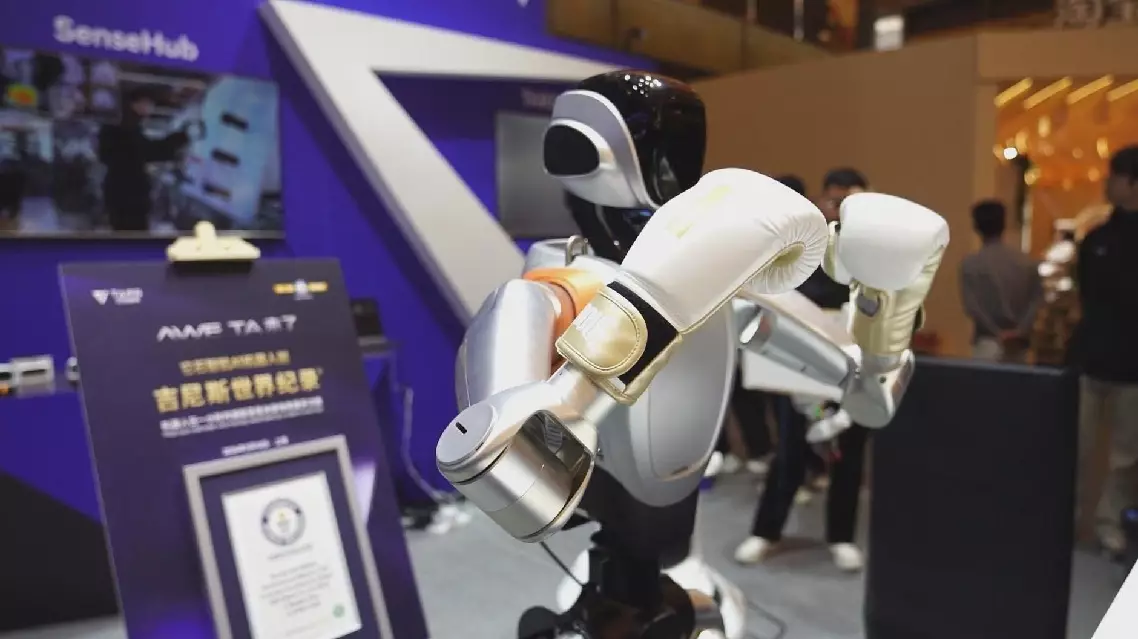
Annual electronics exhibition in Shanghai showcases robots for everyday life