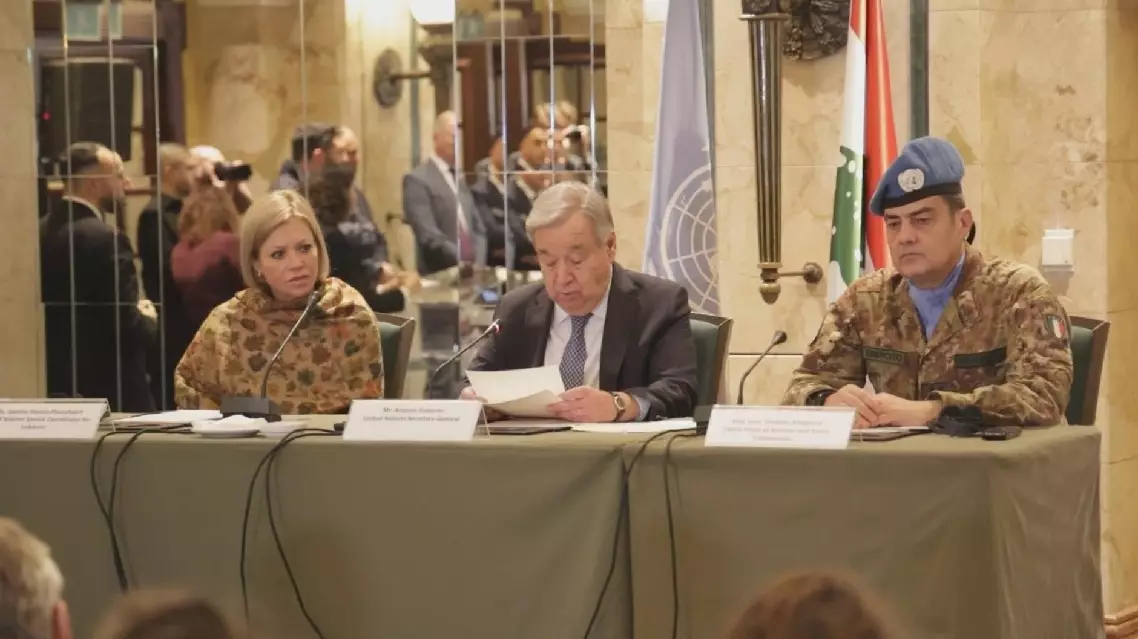
UN Secretary-General Antonio Guterres called for an immediate de-escalation between Israel and Lebanon during a press conference in Beirut on Saturday, warning that escalating violence risks devastating large parts of the country.
"The south [of Lebanon] risks being turned into a wasteland. Southern Beirut, which is under sweeping evacuation orders by Israel, risks being bombed to oblivion. The Beqaa and Baalbek and other areas are scenes of destruction and panic. It is tragic to see all this happening in a country that has contributed so much to world civilization," the UN chief said.
Guterres said the UN is working intensively through diplomatic channels to halt the fighting and bring the parties back to dialogue.
Guterres stressed that there is "no military solution" to the conflict and urged the parties to stop the fighting and return to diplomacy and dialogue in line with the UN Charter and Security Council resolutions, including Resolution 1701.
"My message to the warring partners is clear. Stop the fighting. Stop the bombing. There is no military solution. Only diplomacy, dialogue and full implementation of the UN Charter and Security Council resolutions," he said.
Guterres also reiterated calls for the protection of civilians and civilian infrastructure and stressed the need to respect Lebanon's sovereignty and territorial integrity.
Meanwhile, Lebanon's Public Health Ministry said the death toll from Israeli attacks in the country since March 2 has risen to 826, with 2,009 people wounded, and over 820,000 people displaced.
According to the ministry's Emergency Operations Center, the number of health workers killed rose to 31 after missing personnel were found under the rubble of a primary healthcare center in southern Lebanon, which was hit in an Israeli strike early Saturday.
Hezbollah announced the launch of rockets from Lebanon toward Israel on March 2 for the first time since a ceasefire took effect on Nov. 27, 2024. Israel subsequently launched an offensive military campaign against the group, carrying out intensive airstrikes on multiple areas in southern and eastern Lebanon, as well as Beirut's southern suburbs.
UN chief urges de-escalation during Lebanon visit as death toll rises
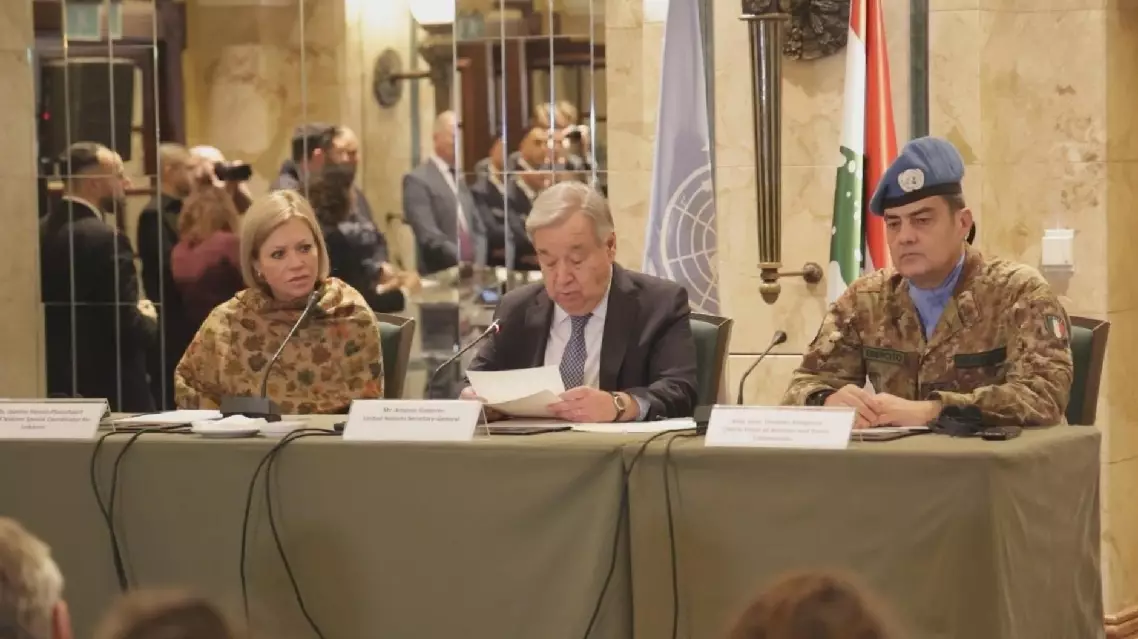
UN chief urges de-escalation during Lebanon visit as death toll rises
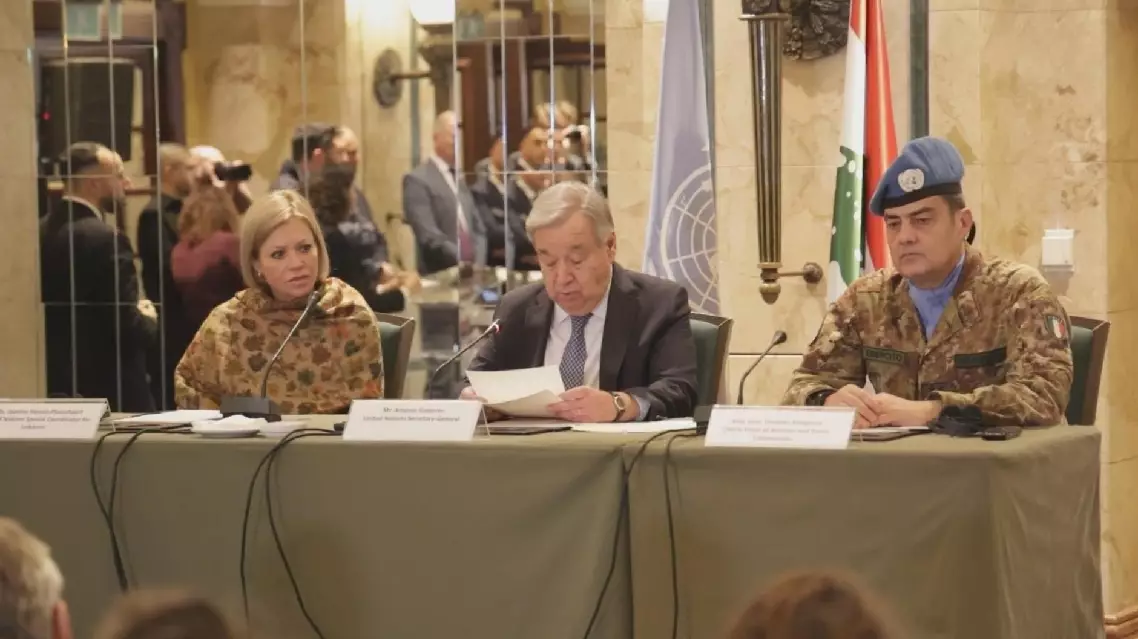
UN chief urges de-escalation during Lebanon visit as death toll rises
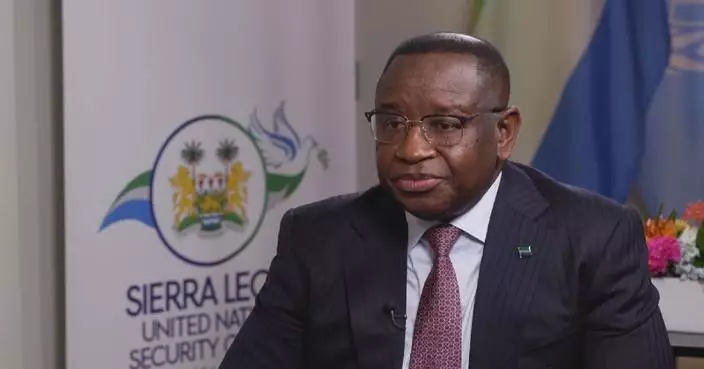
Sierra Leonean President Julius Maada Bio said serving on the UN Security Council has been a great learning experience for his country and stressed the importance of amplifying Africa's voice in global decision-making.
Sierra Leone was elected a non-permanent member of the UN Security Council for the 2024-2025 term and has twice held the rotating presidency during that period. The country also joined the Group of Friends of the Global Development Initiative (GDI) in early 2024.
Noting growing uncertainties over the past two years, the Sierra Leonean president said that the countries of the world must take care of one another, recognizing their common interests.
"We have to recognize, as we normally say, that the world is a village today. And if it is this a village, then we have to take care of one another, and that is what I admire China for. They have been open and willing to help other countries. China is a successful example of a country that has made so much progress in the last 50 years, and they have the experience that we can learn from," Bio said in an interview with China Central Television (CCTV) that aired on Friday.
Since taking office in 2018, Bio has twice presided over high-level open debates at the UN Security Council. He said those experiences offered his country valuable opportunities to understand world politics at the highest level and to navigate complex challenges.
"It's an honor, and a great learning experience for Sierra Leone. The word revolves around, for now, multilateralism, whether it's challenged or not. And being at the Security Council means you are at the center. And to have had the opportunity to preside over the Security Council twice, it's a great opportunity. We've learned quite a lot. It creates the opportunity for you to understand world politics at the highest level, and how you navigate the many challenges. These are very eventful times in the history of the world, and to be in the middle of that has been a great experience and we are happy that we are here and we have contributed to deal with some of the challenges around the world," said the president.
He also emphasized that Sierra Leone has used its seat to bring African perspectives to the UN Security Council, which regularly makes decisions that impact the continent.
"As a member of the Security Council, we used that opportunity to bring the perspectives of Africa, but also the concerns of Africa. We were not there at the beginning of the creation of the United Nations, because most of us, were not independent countries. Africa is 1.4 billion people. And most of the decisions at the Security Council, call it 60 to 70 percent, are actually about Africa. It is just fair to make sure that Africa is equally represented," Bio said.
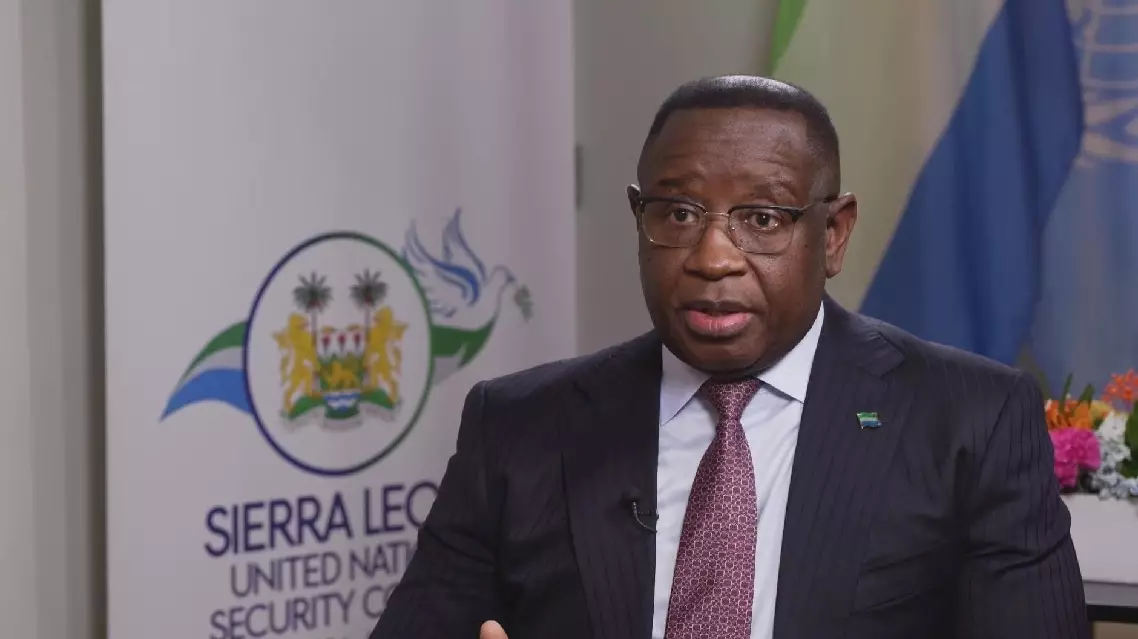
African voices must be heard at Security Council as matter of fairness: Sierra Leone president