NEW YORK (AP) — Teresa Younger's term leading the Ms. Foundation, the first national philanthropy run by women and for women, has spanned the #MeToo movement and the rollback of national abortion rights and is now ending during Donald Trump's second presidency.
“We are currently not in the best shape,” Younger said, of the pursuit for political equality for everyone, part of the Ms. Foundation's mission. But even as she prepares to step down from her role as CEO in June, Younger said she is not walking away from the fight.
“I believe feminism is still alive and well," Younger said in an interview with The Associated Press. "In fact, it has been the one thing that has been the preservation of democracy and our constitutional rights in some way over the past 12 years.”
As CEO, Younger took on domestic abuse by professional football players, expanded the foundation's investments in grassroots groups in the South and Midwest and raised more than $100 million for its endowment. In 2018, the foundation embraced a strategy to advocate for resources to go to girls and women of color. Younger said that change was a long time coming, but it resonated differently under her leadership as a Black and Indigenous woman.
“The institution was explicit in our strategic plan to say that we want to center women and girls of color as a point of inclusion, not exclusion," Younger said. "And now we are sitting in a spot where quote-unquote DEI is looked at as bad. And we refuse to accept that.”
As part of that strategic shift, the foundation produced a 2020 report called, “Pocket Change: How Women and Girls of Color Do More with Less,” which is a call to other philanthropic funders to change not just what they fund but how.
The research identified that charitable foundations granted about $356 million to women and girls of color in 2017, which represents less than 0.05% of funds granted out in 2018 by foundations.
But beyond highlighting this tiny investment in some of the country's most marginalized people, the report revealed major misalignments between funders and groups led by women of color. For example, many of these nonprofits use multiple strategies, providing child care and diapers alongside their advocacy for reproductive justice. Meanwhile, funders may separate grantmaking by population, strategy or issue, and may only want to fund part of their activities.
The report calls for foundations to provide flexible, long-term funding, to align their strategies with the groups they fund, to solicit feedback from grantees and to support intermediaries who are well connected with these groups.
This has long been the role that women's funds and Ms. Foundation have played within philanthropy. They both support grassroots groups that serve marginalized populations, and pioneer new ways of funding and working with those groups, which some other funders then adopt as best practices.
The earliest women's funds in the U.S. started in the 1970s, with Ms. Foundation being the first national funder to support women's groups and feminist movements. It was founded in 1973 by Gloria Steinem, Patricia Carbine, Letty Cottin Pogrebin and Marlo Thomas.
Sunny Fischer, one of the founders of the Chicago Foundation for Women, said the women who started it around 1983 wanted to serve women differently than how many large social service organizations were at the time.
Rather than telling women experiencing domestic violence to go back and save their marriages, she said, “There were new groups that were trying to help women where they were, to really understand what was going on in the home," and to give them safer choices about what they could do if they were in an abusive situation.
Lucia Woods Lindley, a photographer and an heir of a wealthy Nebraska family whose fortune came from telecommunications and coal, was another founder of CFW, who Fischer remembered as "a great planner."
In 2023, Ms. Foundation announced that Woods Lindley had left them $50 million in her estate, the largest gift it had ever received. It made up almost half the $106 million the foundation ultimately raised for its endowment.
In an interview at the time, Younger said Ms. Foundation had not expected the gift from Woods Lindley to be so large.
“She trusted and believed that Ms. (Foundation)’s role as the national public women’s foundation was critical to the thought leadership that needed to happen in philanthropy around feminism and around challenging the field and around growing and asking the right kinds of questions,” Younger said.
Overall, the amount of money controlled by women’s funds remains tiny compared to the assets of major foundations and the largest individual philanthropists. One exception is Melinda French Gates, who has committed billions to benefit women and girls.
The Women’s Philanthropy Institute at the Indiana University Lilly Family School of Philanthropy has tracked giving to women and girls and found that over 10 years, the proportion of overall philanthropic support they've received has risen from 1.59% in 2012 to 2.04% in 2023, with an increase to 2.18% in 2022.
“The vast majority of philanthropic dollars are going to the general population and based on need rather than identity,” said Jacqueline Ackerman, the institute's director, but she said they track giving to historically underfunded groups in order to reveal whether those trends are changing.
Ms. Foundation plans to announce Younger's replacement later this spring and Younger has not yet said what is next for her. Speaking with emotion, Younger said she has loved the work she's done with the foundation but is confident it will benefit from new leadership.
“I want to look back and see somebody who’s built on what I’ve been able to do and take it to the next level,” she said. “And I will sit back with pride in what they are able to accomplish.”
Associated Press coverage of philanthropy and nonprofits receives support through the AP’s collaboration with The Conversation US, with funding from Lilly Endowment Inc. The AP is solely responsible for this content. For all of AP’s philanthropy coverage, visit https://apnews.com/hub/philanthropy.

FILE - Ms. Foundation President and CEO Teresa Younger, right, and Gloria Steinem pose at the Ms. Foundation's Women of Vision Awards at the Ziegfeld Ballroom, May 16, 2023, in New York. (Photo by Evan Agostini/Invision/AP, File)
PARIS (AP) — Activists worldwide held May Day rallies and street protests Friday, calling for peace, higher wages and better working conditions as many workers grapple with rising energy costs and shrinking purchasing power tied to the Iran war.
May 1 is a public holiday in many countries to mark International Workers’ Day, or Labor Day, when workers’ unions traditionally rally around wages, pensions, inequality and broader political issues. Demonstrations were held from Seoul, Sydney and Jakarta to many European capitals. In the U.S., activists opposing President Donald Trump’s policies also were holding marches and boycotts.
“Working people refuse to pay the price for Donald Trump’s war in the Middle East,” the European Trade Union Confederation, which represents 93 trade union organizations in 41 European countries, said. “Today’s rallies show working people will not stand by and see their jobs and living standards destroyed.”
What to know about May Day:
Rising living costs linked to the conflict in the Middle East emerged as a key theme in Friday’s rallies.
In the Philippine capital, Manila, large crowds denounced the U.S. role in the Iran war. Protesters clashed with police blocking the way near the U.S. Embassy.
Indonesian President Prabowo Subianto joined a rally in Jakarta where workers called for stronger government protection from rising prices and difficulties in finding raw materials for key industries.
On a main avenue in Casablanca, Morocco’s largest city, taxi drivers honked their horns and bus drivers parked their vehicles to protest rising fuel costs.
“All my expenses have gone up, but my wages haven’t budged,” Akherraz Lhachimi of the Moroccan Labor Union said.
Turkish authorities in Istanbul detained hundreds of demonstrators for attempting to march in areas declared off-limits on security grounds, most notably central Taksim Square, the epicenter of 2013 protests. May Day rallies in Turkey are frequently marred by clashes with authorities.
Tens of thousands of people crowded into a public square across from the U.S. Embassy in Havana, celebrating Cuba's workers and decrying U.S. sanctions. Many held banners that read, “Down with Imperialism” and “U.S. hands off Cuba.” President Miguel Díaz-Canel and former President Raúl Castro attended the event.
Several rallies were staged in South Africa, where the head of the Congress of South African Trade Unions, Zingiswa Losi, said workers were “suffocating” under rising costs of food, electricity, transport and healthcare.
May Day carries special meaning this year in France, after a heated debate about whether employees should be allowed to work on the country’s most protected public holiday — the only day when most employees have a mandatory paid day off.
Almost all businesses, shops and malls are closed, and only essential sectors such as hospitals, transport and hotels are exempt. A recent parliamentary proposal to expand work on the day prompted major outcry from unions and left-leaning politicians.
“Don’t touch May Day,” unions said in a joint statement.
Tens of thousands of people joined marches across the country, including in Paris, where brief scuffles with police broke out.
“May 1 is not just any day,” Small and Medium-sized Businesses Minister Serge Papin said. “It symbolizes social gains stemming from a century of building social rules that have led to the labor code we know in France. It is indeed a special day.”
In the United States, where May Day is not a federal holiday, May Day Strong, a coalition of activist groups and labor unions, called on people to protest under the banner of “workers over billionaires.”
Voicing strong opposition to Trump's policies, organizers listed thousands of May Day actions across the country and called for an economic blackout through “no school, no work, no shopping.”
Demands include taxing the rich and putting an end to the Trump administration’s immigration crackdown.
While labor and immigrant rights are historically intertwined, the focus of May Day rallies in the U.S. shifted to immigration in 2006. That’s when roughly 1 million people, including nearly half a million in Chicago alone, took to the streets to protest federal legislation that would have made living in the U.S. without legal permission a felony.
May Day, or International Workers’ Day, traces back more than a century to a pivotal period in U.S. labor history.
In the 1880s, unions pushed for an eight-hour workday. A Chicago rally in May 1886 turned deadly when a bomb exploded and police responded with gunfire. Several labor activists — most of them immigrants — were convicted of conspiracy and other charges; four were executed.
Unions later designated May 1 to honor workers. A monument in Chicago’s Haymarket Square commemorates them with the inscription: “Dedicated to all workers of the world.”
Associated Press journalists Barry Hatton in Lisbon, Portugal, Giada Zampano in Rome, Munir Ahmed in Islamabad, Niniek Karmini in Jakarta, Indonesia, Jim Gomez in Manila, Philippines, Cinar Kiper in Istanbul, Turkey, Akram Oubachir in Casablanca, Morocco, and Dánica Coto in Havana contributed to this report.
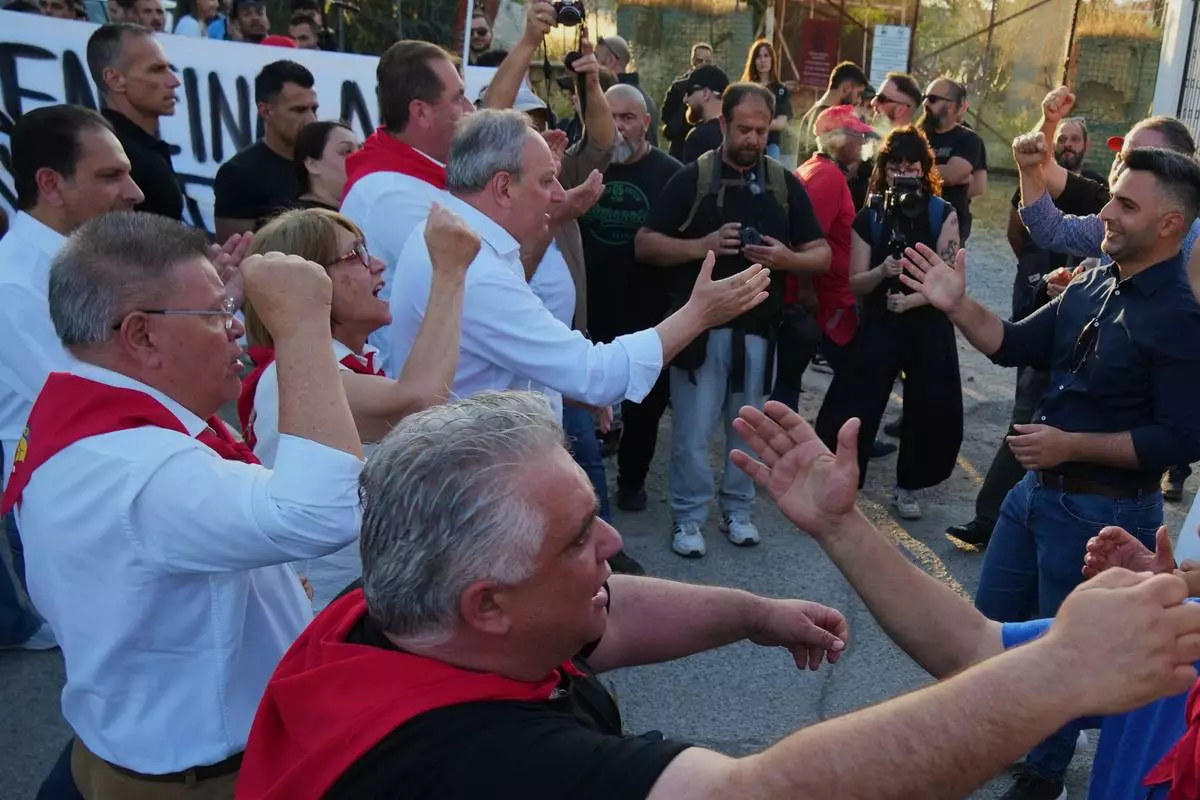
Turkish, right, and Greek Cypriots gathering s they marking May Day inside the U.N. buffer zone at Ledra Palace hotel in the divided capital of Nicosia, Friday, May 1, 2026. (AP Photo/Petros Karadjias)
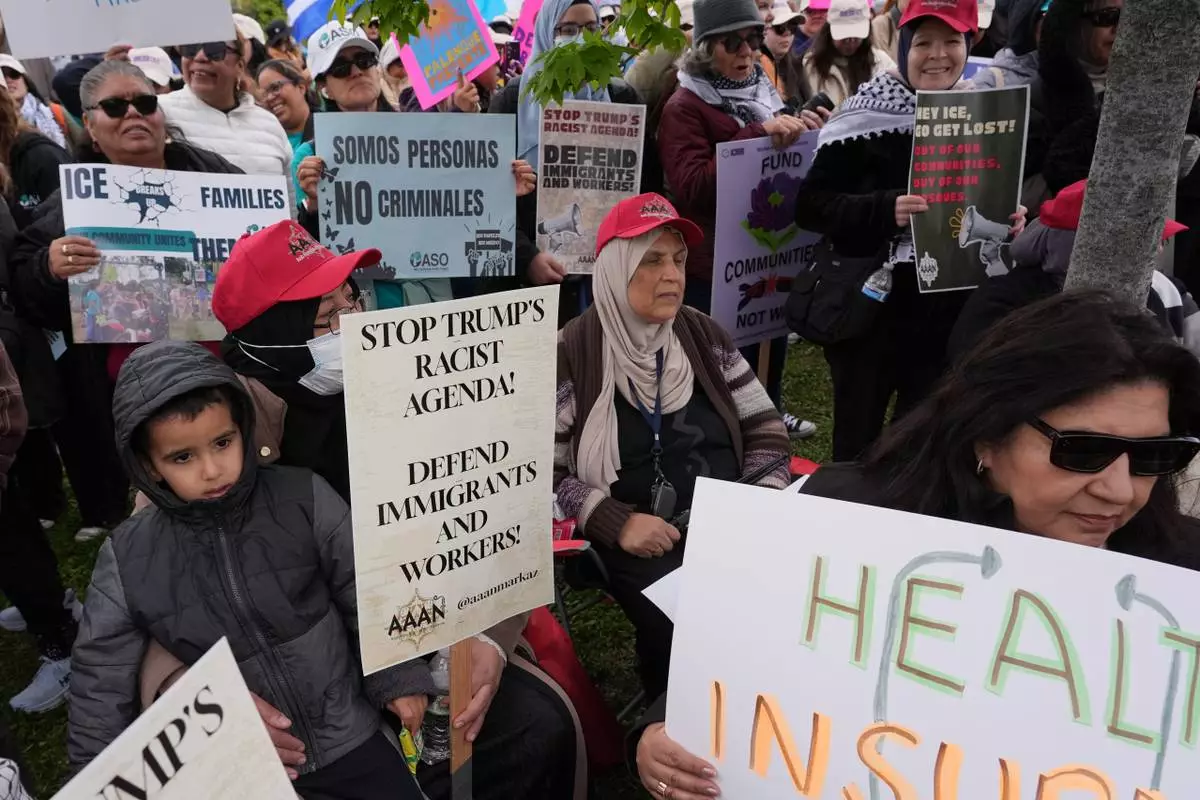
People gather before a May Day rally in Chicago, Friday, May 1, 2026. (AP Photo/Nam Y. Huh)

An effigy of U.S. President Donald Trump burns during an International Workers' Day march marking May Day in Panama City, Friday, May 1, 2026. (AP Photo/Matias Delacroix)
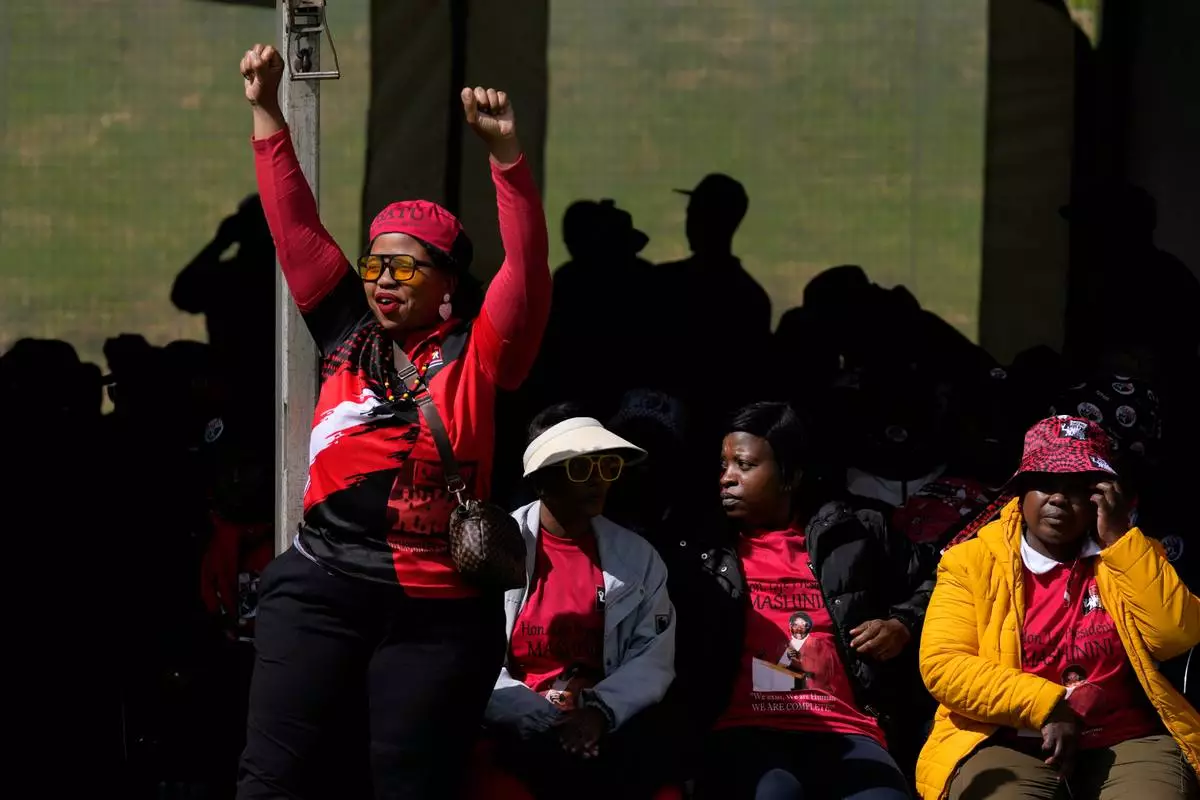
Members of trade unions take part in a May Day rally in Tsakane, east of Johannesburg, South Africa, Friday, May 1, 2026. (AP Photo/Themba Hadebe)
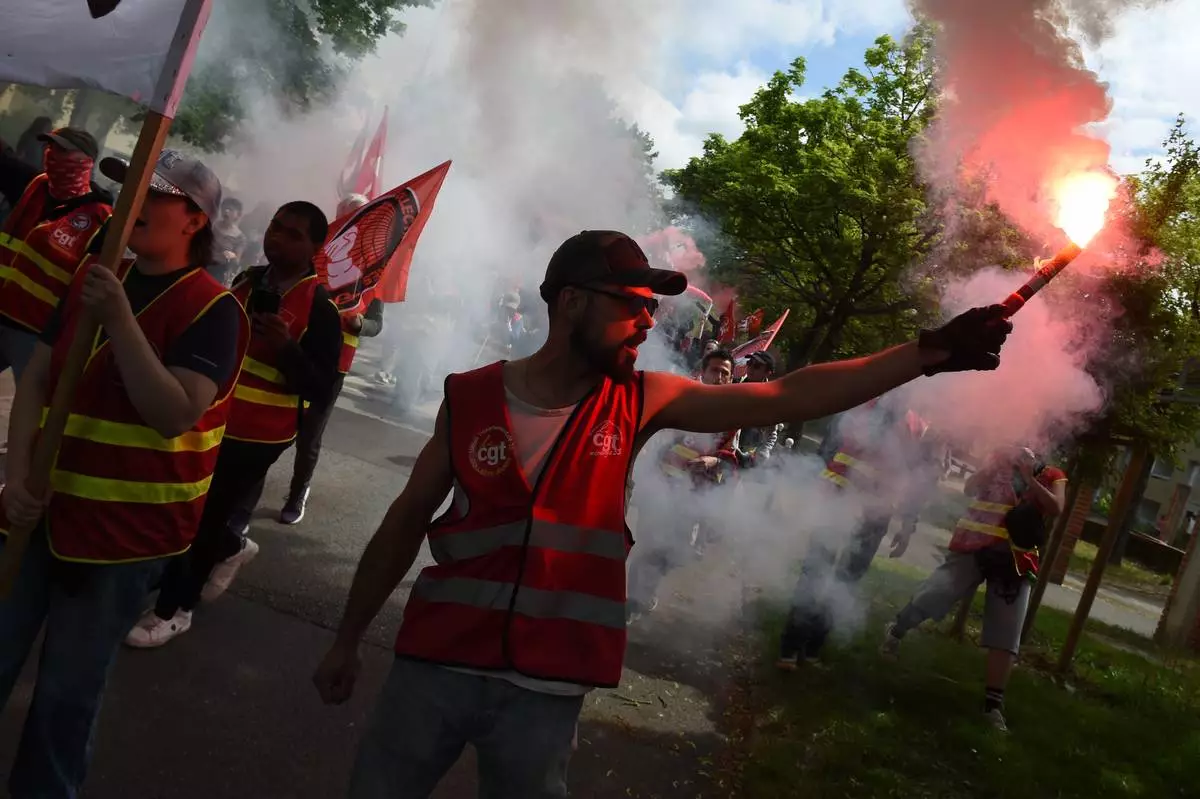
Protesters march during the May Day demonstration in Rennes, western France, Friday, May 1, 2026. (AP Photo)
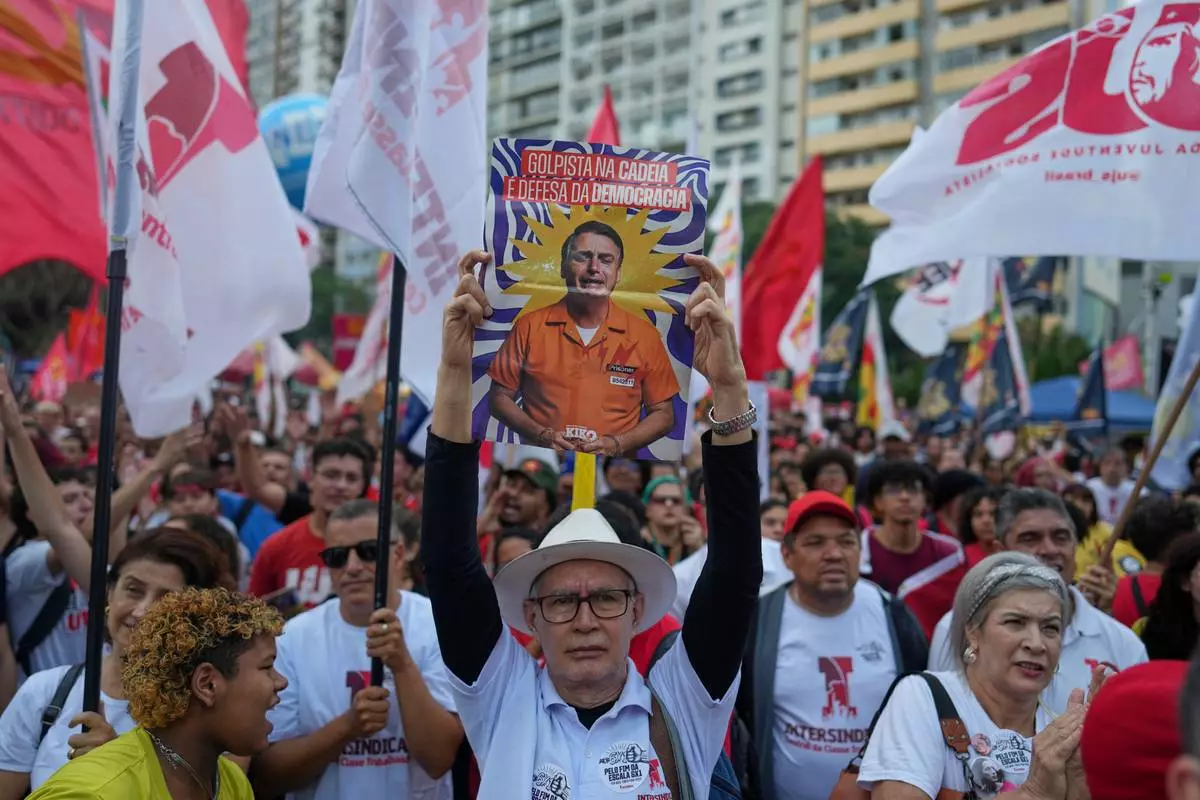
A man holds a picture or former Brazilian President Jair Bolsonaro wearing a prison uniform during a May Day rally demanding greater labor rights in Sao Paulo, Brazil, Friday, May 1, 2026. (AP Photo/Andre Penner)
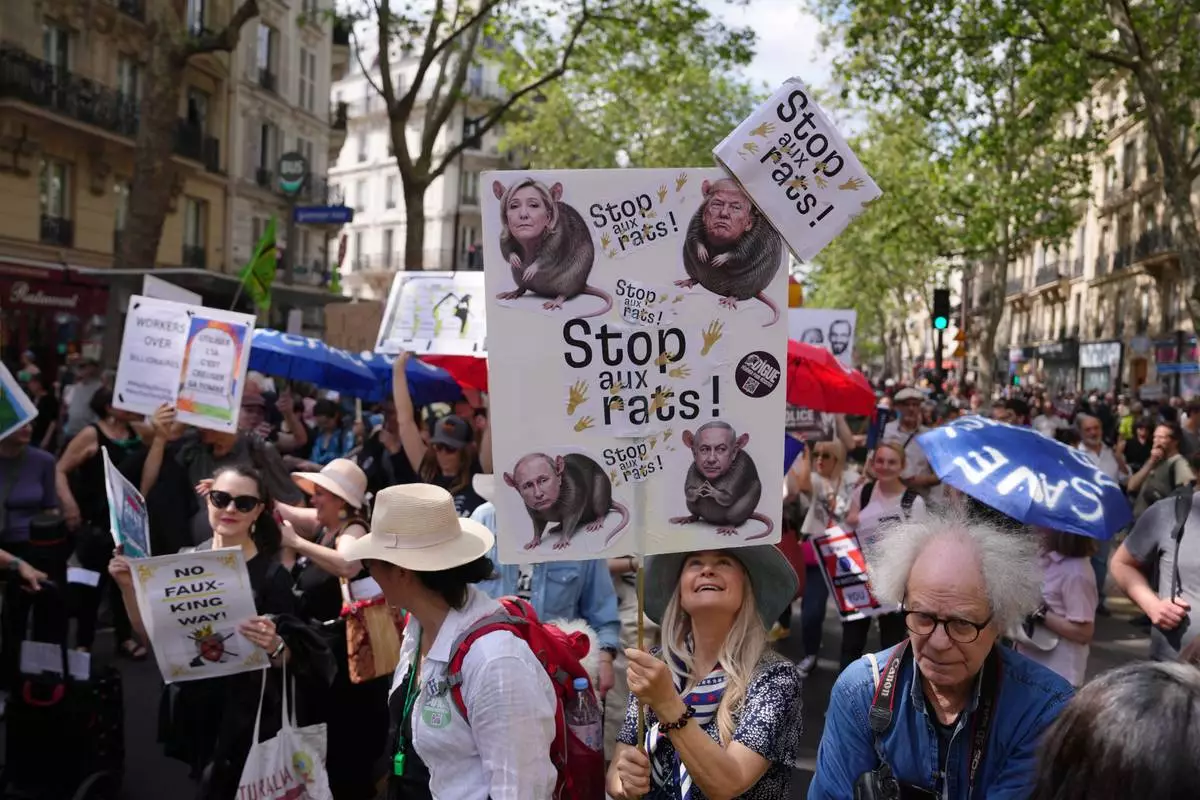
Protesters march during the May Day demonstration in Paris, Friday, May 1, 2026. (AP Photo/Aurelien Morissard)
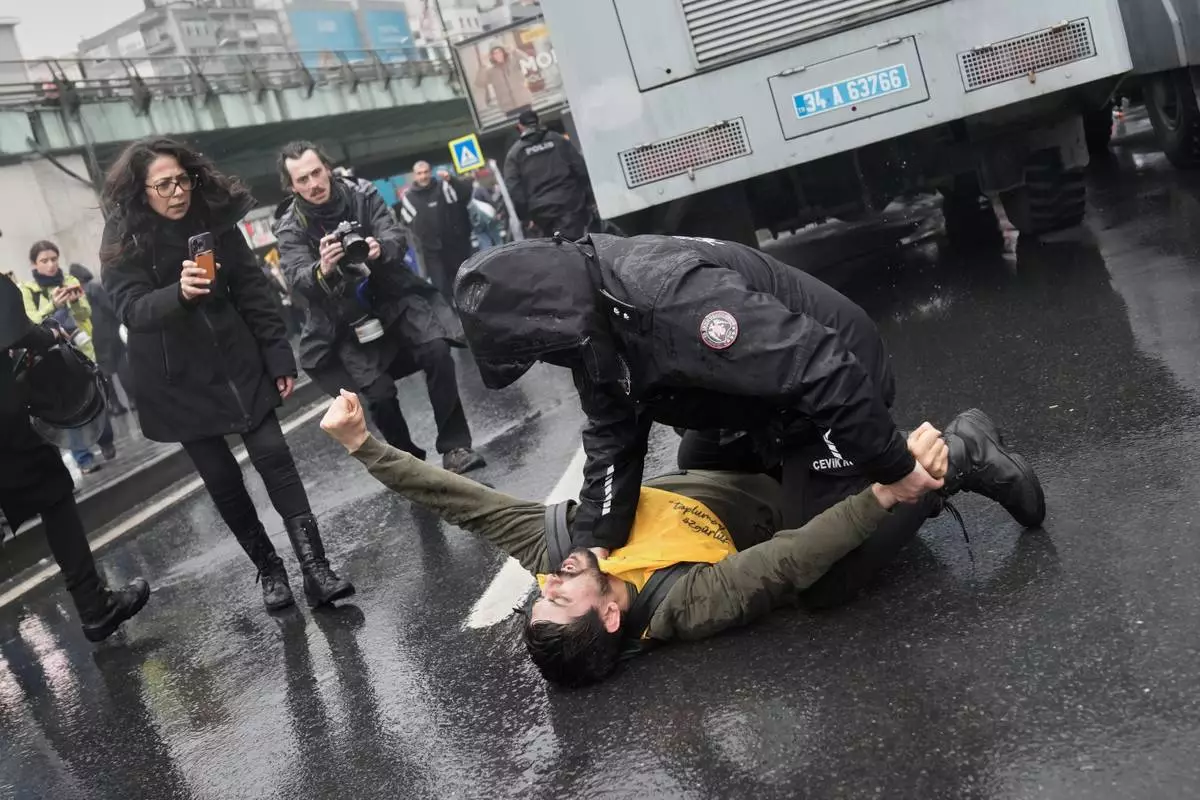
An union member is detained by a Turkish police officer as people try to march towards Taksim square in Istanbul, Turkey, Friday, May 1, 2026, during Labor Day celebrations. (AP Photo/Khalil Hamra)
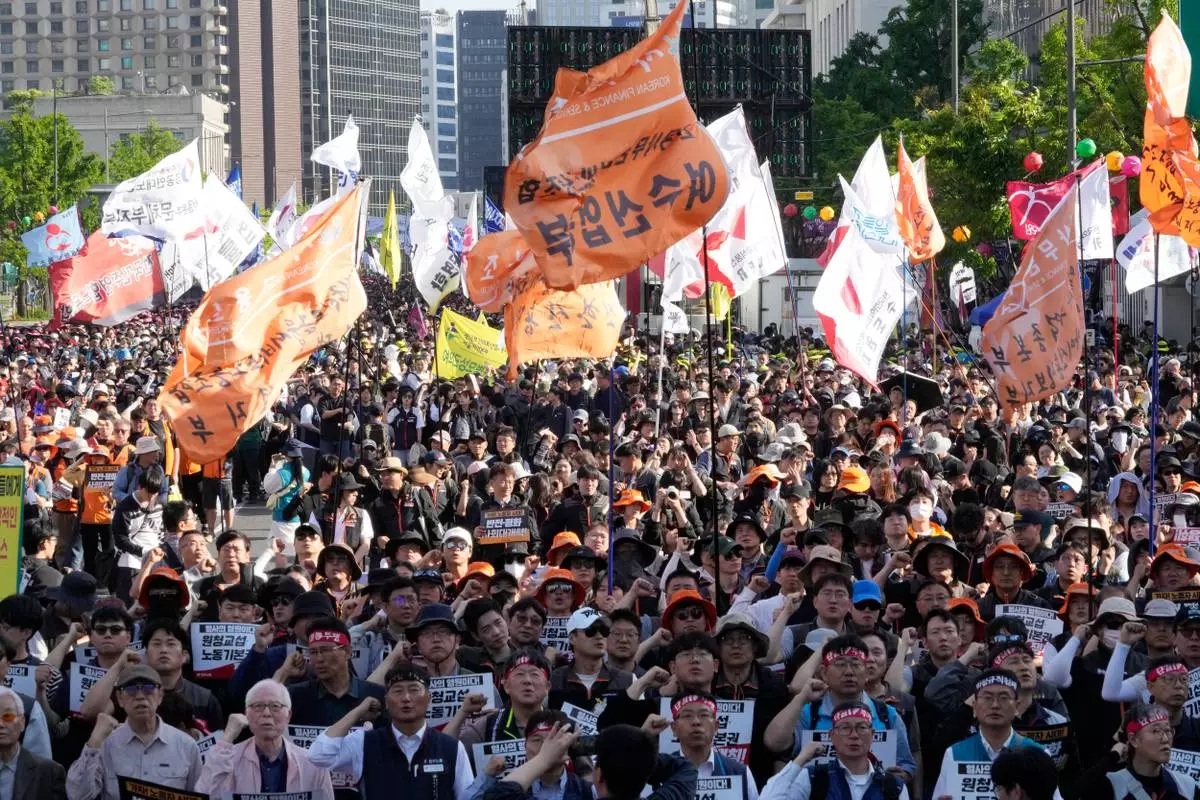
Members of the Korean Confederation of Trade Unions stage a rally on May Day in Seoul, South Korea, Friday, May 1, 2026. (AP Photo/Ahn Young-joon)
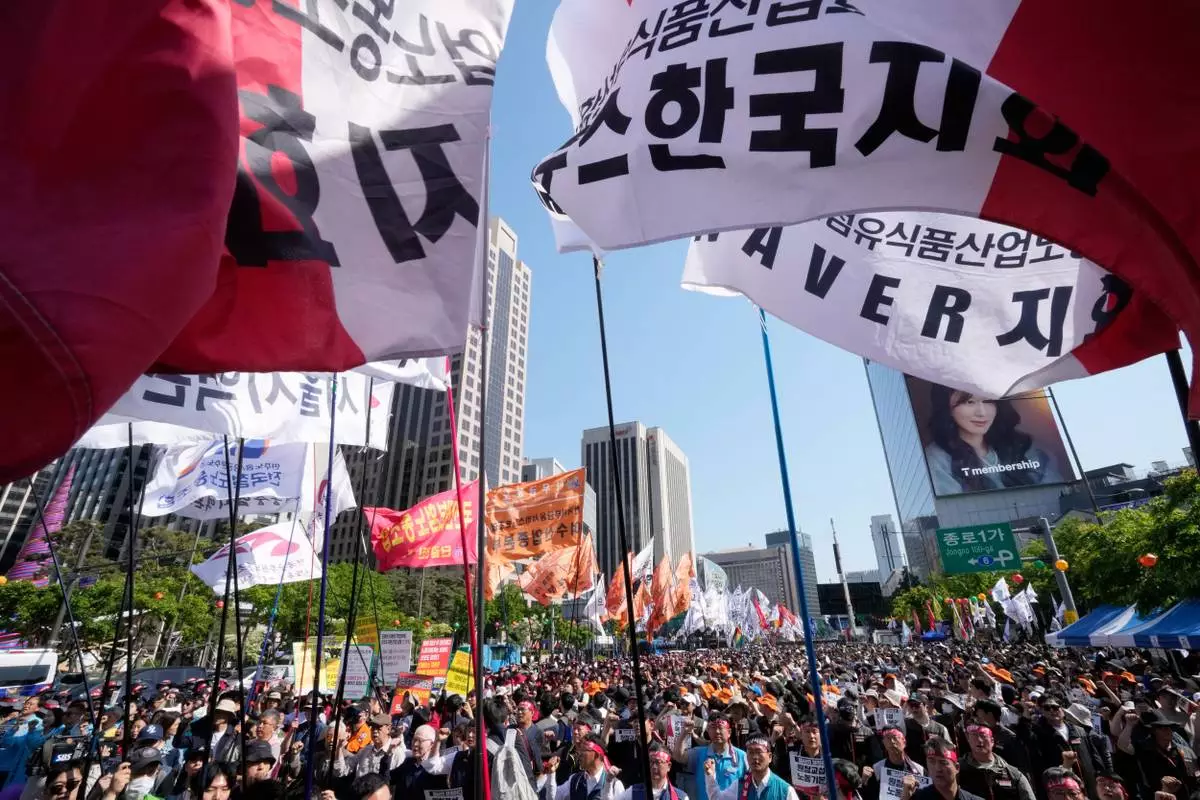
Members of the Korean Confederation of Trade Unions stage a rally on May Day in Seoul, South Korea, Friday, May 1, 2026. (AP Photo/Ahn Young-joon)
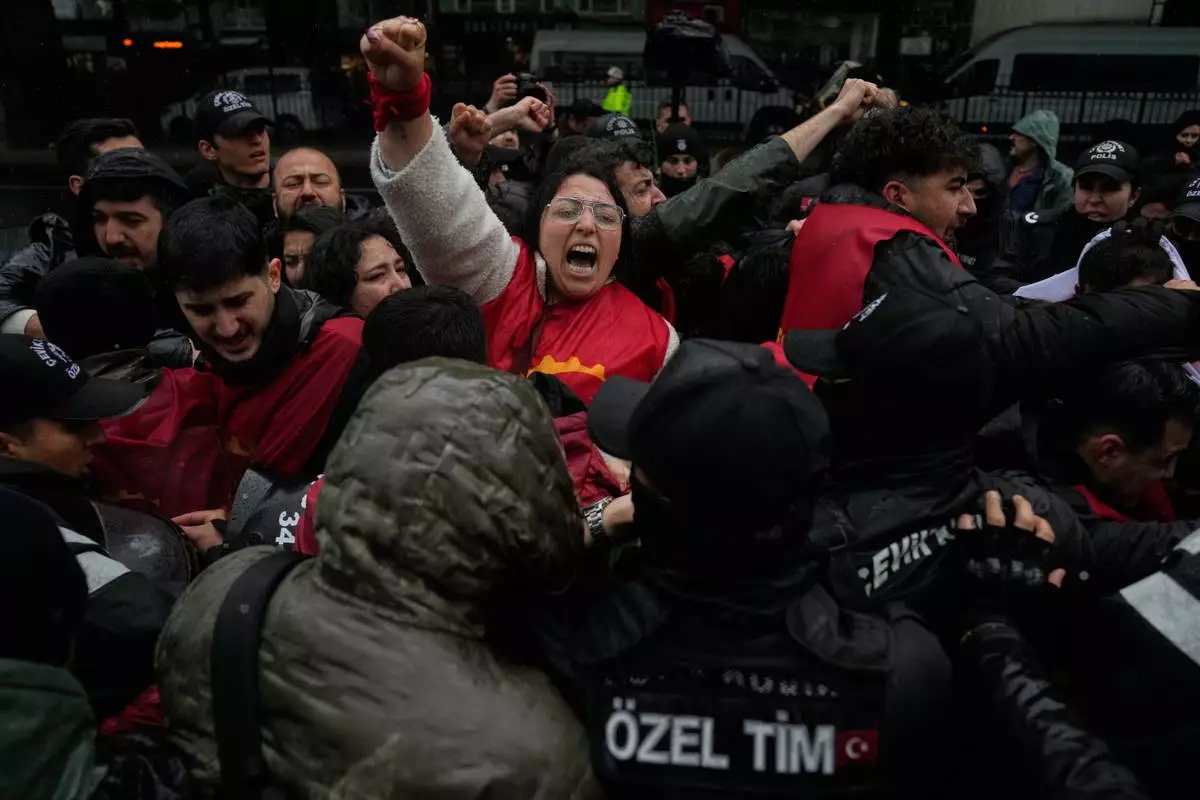
Union members scuffle with Turkish police officers as they try to march towards Taksim square in Istanbul, Turkey, Friday, May 1, 2026, during Labor Day celebrations. (AP Photo/Khalil Hamra)
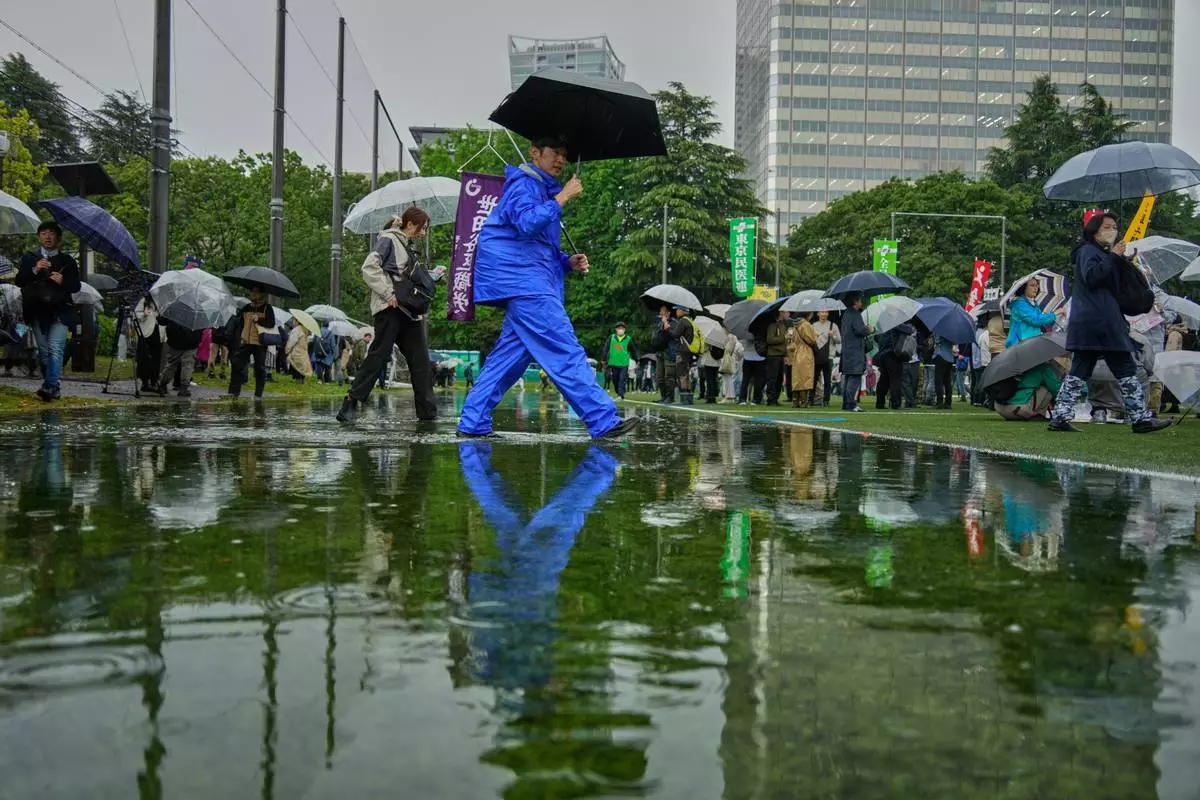
Union members carefully step through rain-formed puddles to participate in a May Day rally in the rain Friday, May 1, 2026, in Tokyo. (AP Photo/Eugene Hoshiko)
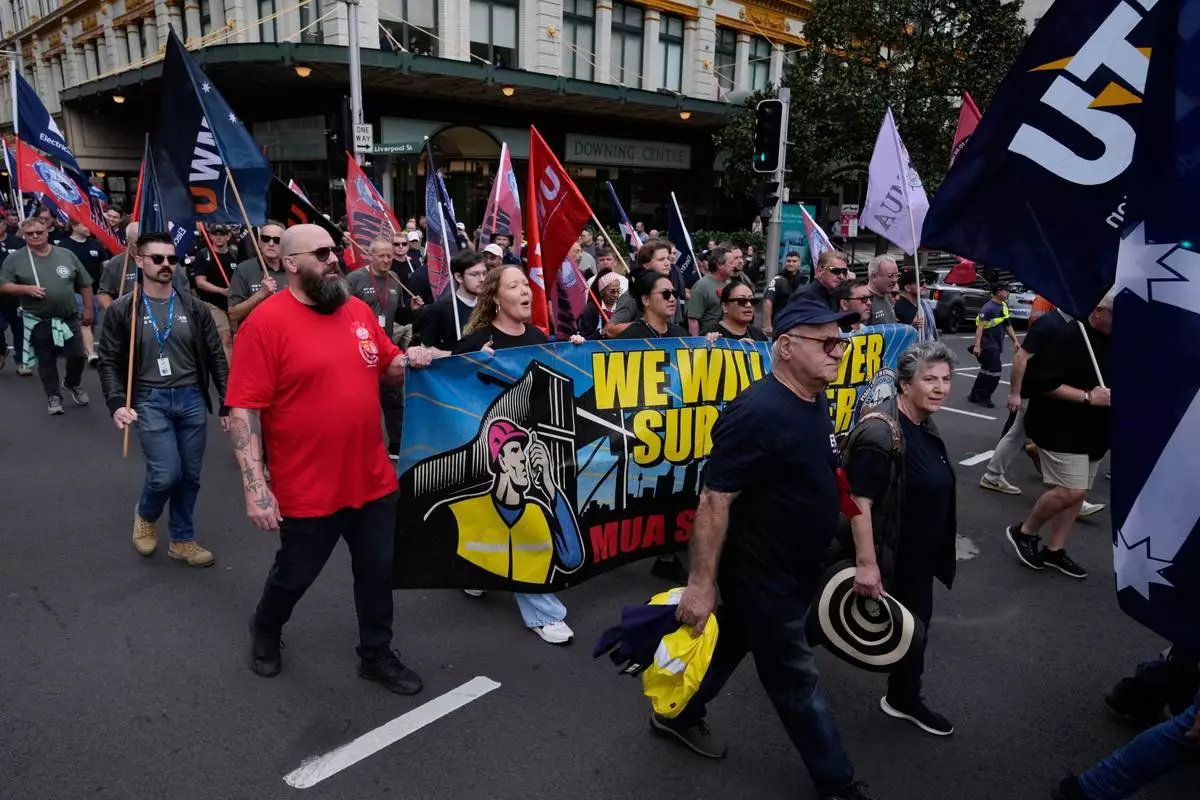
People march to mark International Workers' Day, also known as May Day, in Sydney, Friday, May 1, 2026. (AP Photo/Rick Rycroft)
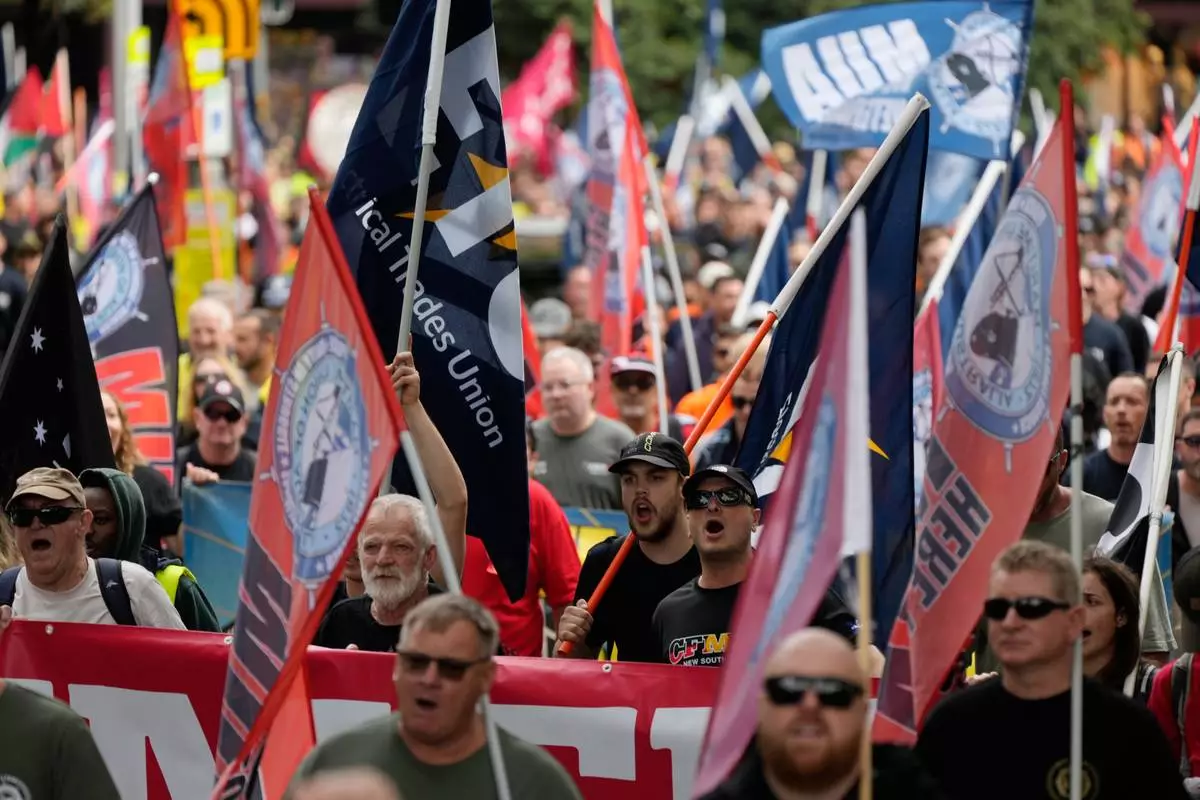
People march to mark International Workers' Day, also known as May Day, in Sydney, Friday, May 1, 2026. (AP Photo/Rick Rycroft)
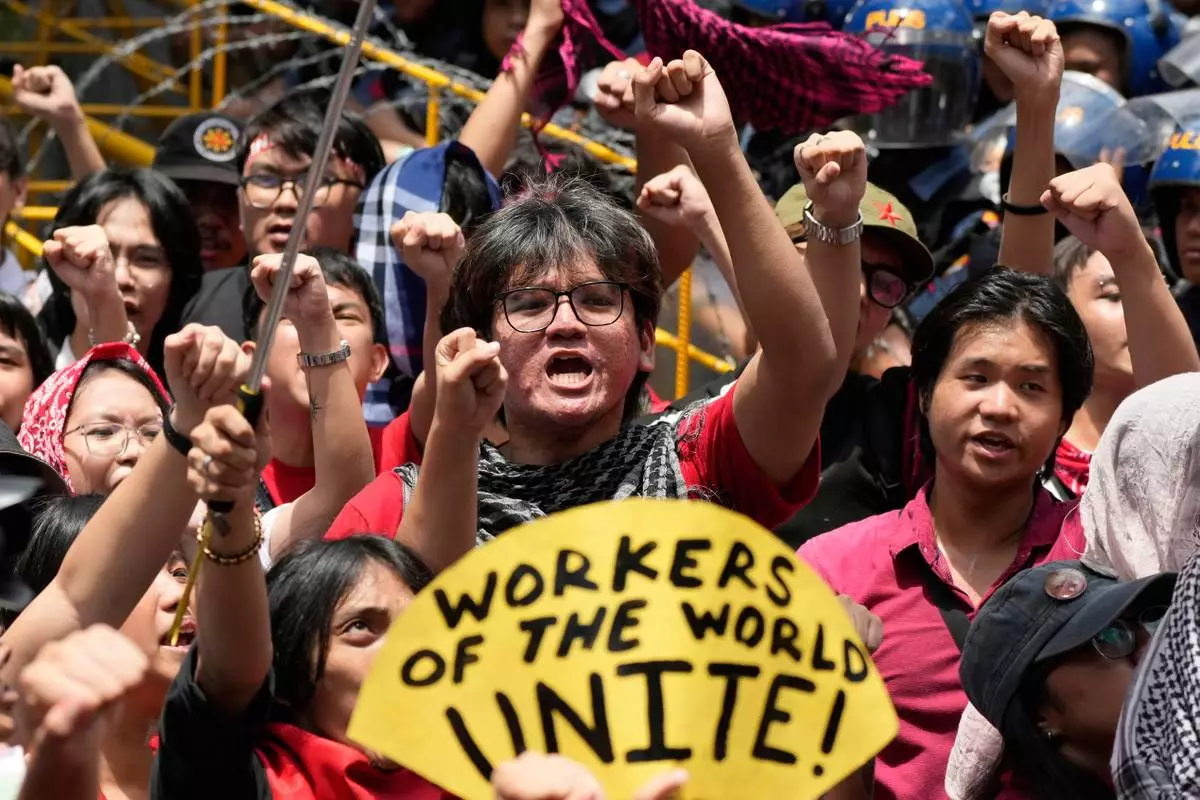
FILE - Activist and workers raise their clenched fists during a May Day rally in Manila, Philippines, May 1, 2025. (AP Photo/Aaron Favila, File)
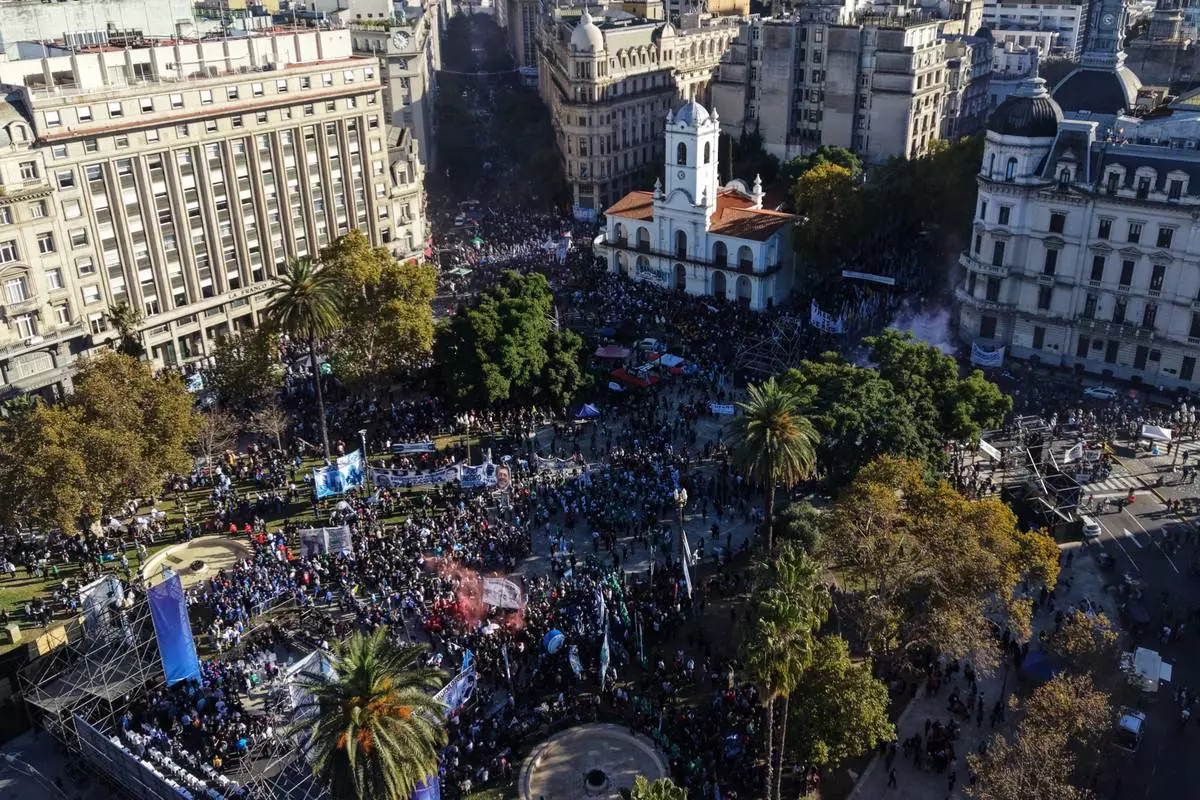
Laborers protest during a May Day demonstration in Buenos Aires, Argentina, Thursday, April 30, 2026. (AP Photo/Rodrigo Abd)
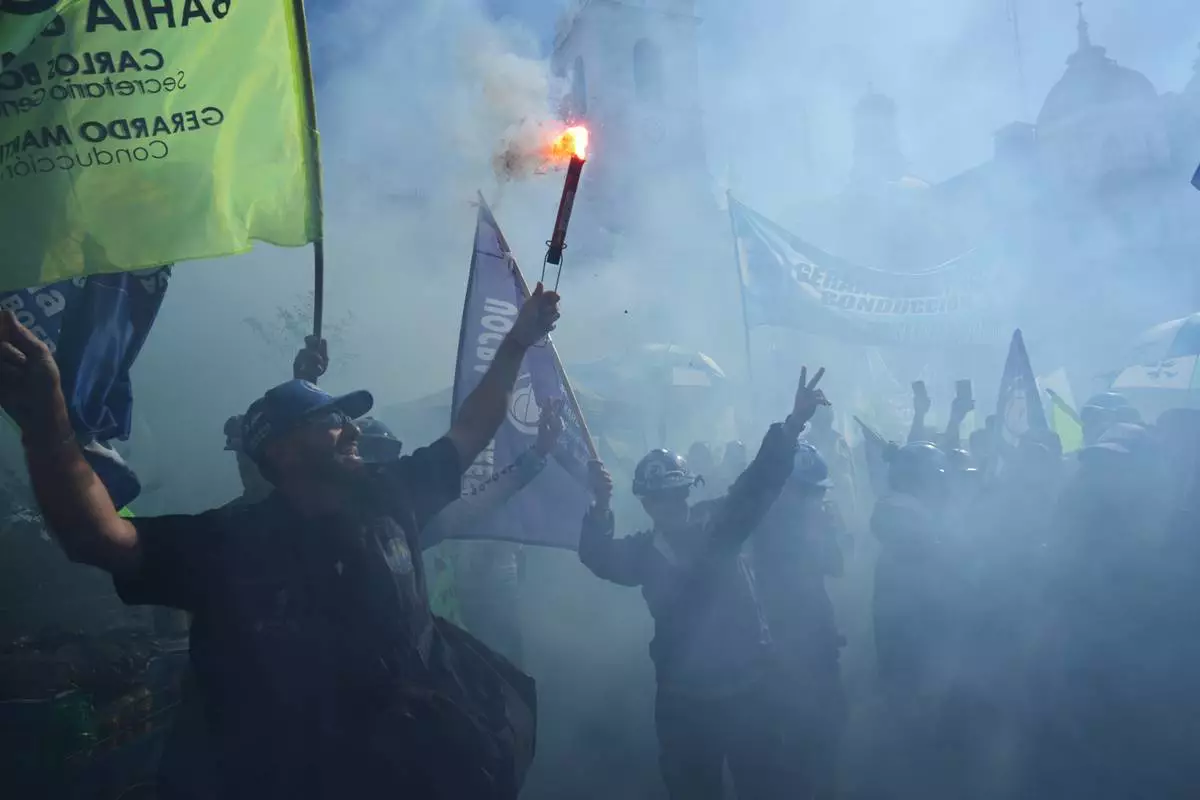
Laborers hold flares during a May Day demonstration in Buenos Aires, Argentina, Thursday, April 30, 2026. (AP Photo/Rodrigo Abd)
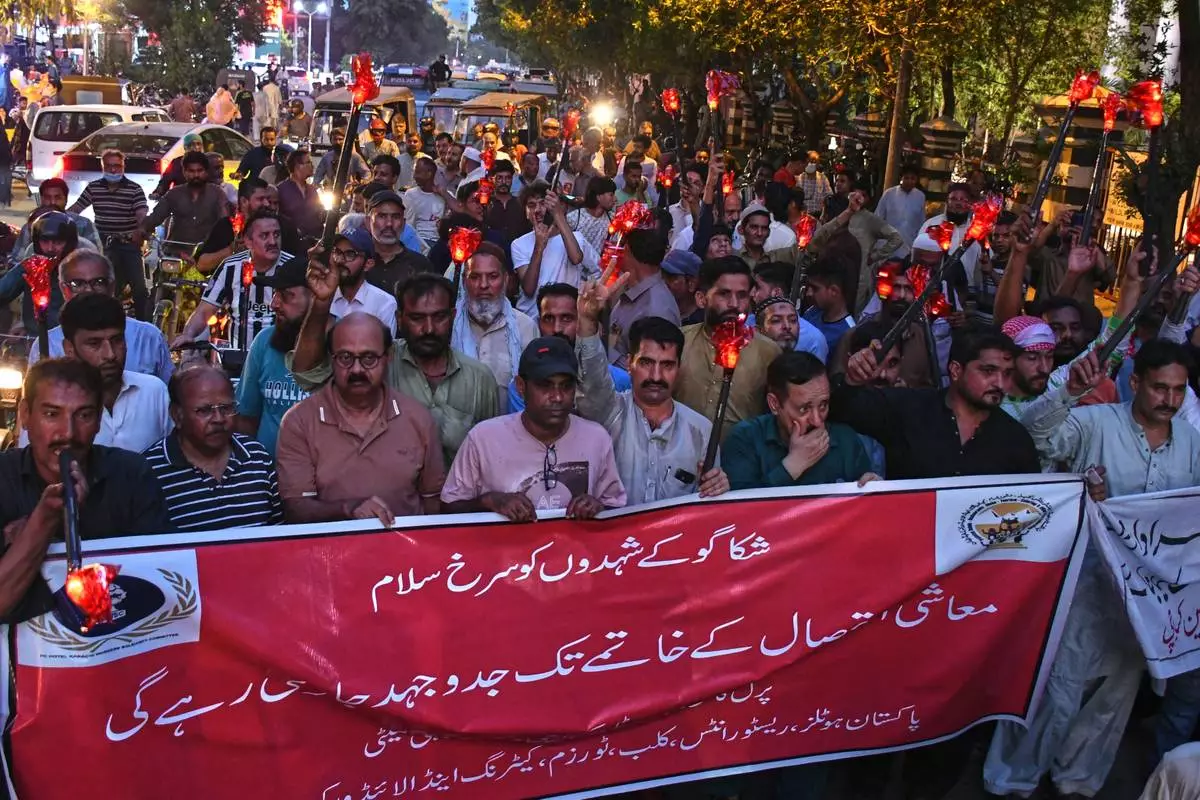
Members of trade unions take part in a rally a day ahead of the International Labor Day, in Karachi, Pakistan, Thursday, April 30, 2026. The banner in center reading as 'red salute to the martyrs of Chicago and the struggle will continue until economic exploitation is ended' (AP Photo/Ali Raza)
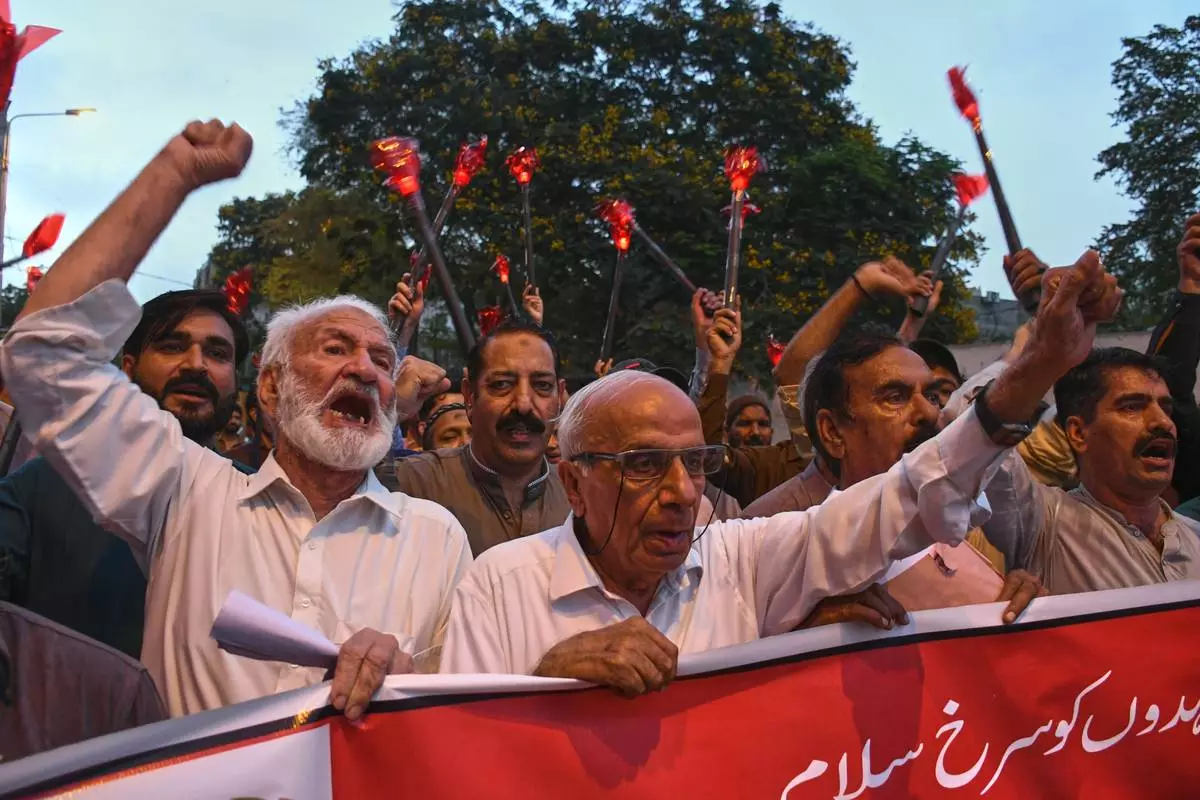
Members of trade unions take part in a rally a day ahead of the International Labor Day, in Karachi, Pakistan, Thursday, April 30, 2026. (AP Photo/Ali Raza)