Skip to Content Facebook Feature Image

Iran denies seeking ceasefire, says war must end without repeat attacks

China

China

China

Iran denies seeking ceasefire, says war must end without repeat attacks

2026-03-17 04:01 Last Updated At:06:17

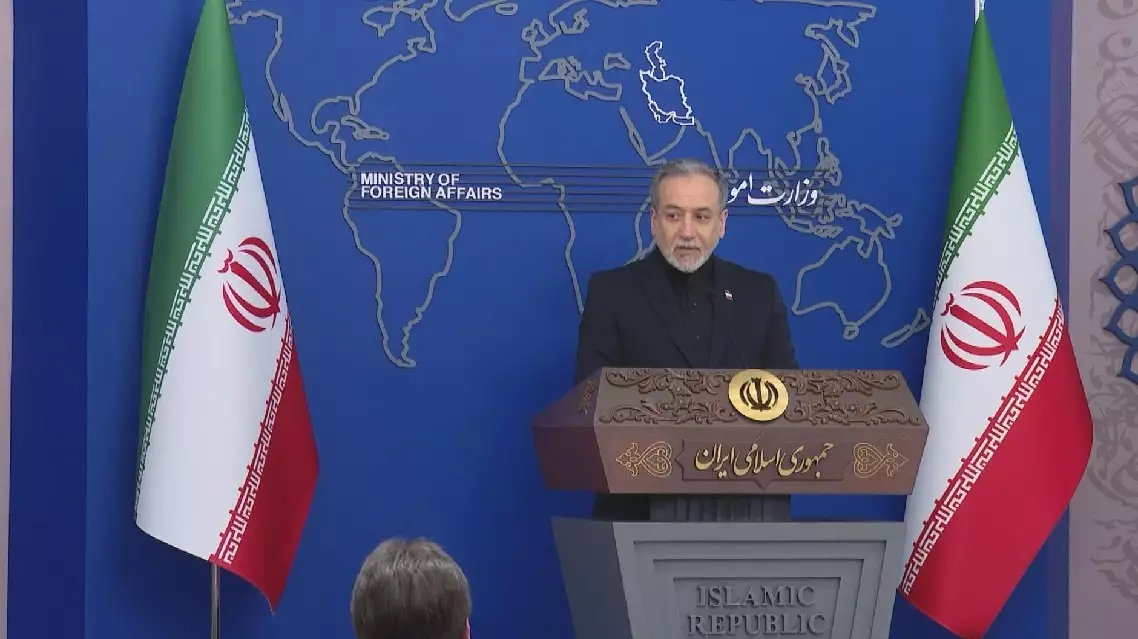
Iran's Foreign Minister Seyed Abbas Araghchi said Monday that the country has not sought a ceasefire with the United States, adding that any end to the conflict must ensure that attacks on Iran are not repeated.

"Let me reiterate that Iran has not signaled or requested a ceasefire. This conflict must end on the condition that it will never be repeated. When we say we do not want a ceasefire, it is not because we seek to continue the war. It is because this time the war must end in a way that the enemies never think of repeating the attacks. I believe they have learned a profound lesson and realized what kind of country they are facing -- a country that will not hesitate to defend its own security and is prepared to continue the war at any cost," Araghchi said at a weekly news conference in Tehran.

Araghchi accused Iran's adversaries of attempting to force the country into "unconditional surrender" after mobilizing their full capabilities. He added that Iran's opponents, more than two weeks into the conflict, were now seeking help from countries they once considered hostile and calling for international assistance to secure shipping in the Strait of Hormuz. Iran, he said, restricts passage only for enemies and their allies involved in the conflict.

Also on Monday, Iranian Foreign Ministry Spokesperson Esmaeil Baghaei said at a press conference that the U.S. people need to understand that the U.S. government showed no sincerity in previous negotiations with Iran, and that the current situation was caused by the joint military operations launched by the U.S. and Israel against Iran.

Baghaei reiterated that Iran is willing to maintain friendly relations with countries in the region, but these countries must understand that their territories should not be used by other nations to attack Iran.

On Feb. 28, Israel and the United States launched joint strikes on Tehran and other Iranian cities, killing former Supreme Leader Ali Khamenei, senior military commanders, and civilians. Iran responded with waves of missile and drone attacks on Israel and U.S. bases and assets across the Middle East.
Iran denies seeking ceasefire, says war must end without repeat attacks

Iran denies seeking ceasefire, says war must end without repeat attacks

China will establish a dynamic maintenance mechanism for territorial spatial planning, according to a circular on enhancing the guarantee of natural resource elements.

The circular, issued by the Ministry of Natural Resources and the National Forestry and Grassland Administration earlier this month, introduced 13 policy measures focusing on optimizing territorial spatial layout, improving resource allocation efficiency, safeguarding mineral exploitation, balancing existing and newly added resources, and coordinating land and sea use.

According to the notice, China will enhance the guarantee of natural resource elements to facilitate the implementation of 109 major projects outlined in the country's 15th Five-Year Plan period (2026-2030).

"With regard to national and provincial projects designated on the planning map, which are eligible for special site selection, if a provincial natural resources administration conducted a review and granted permission that complies with the territorial spatial planning, the land use pre-review and site selection procedures can be omitted. With permission, land can be used. The approval procedures are significantly streamlined to ensure that major projects can be launched, built and put into service as quickly as possible," said Xie Haixia, director of the National Land Spatial Planning Bureau at the Ministry of Natural Resources.

The circular also urged a coordinated approval mechanism for land use, forest use, grassland use and sea use.

"Through information technology, we transition from step-by-step approval to parallel approval. At the provincial level, we will achieve full-system connectivity across all levels, reducing the need to re-enter applications and the step-by-step review of matters. By mobilizing data, we will reduce the legwork for enterprises and the public," said Liu Yan, director of the ministry's Department of Territorial Spatial Use Control.

China to establish dynamic mechanism for maintaining territorial spatial layout

China to establish dynamic mechanism for maintaining territorial spatial layout

Recommended Articles