Skip to Content Facebook Feature Image

Renowned Radiosurgery Provider Fully Transitions to ZAP-X® Gyroscopic Radiosurgery® Platform, Marking New Era of Advanced Cranial Radiosurgery

News

Renowned Radiosurgery Provider Fully Transitions to ZAP-X® Gyroscopic Radiosurgery® Platform, Marking New Era of Advanced Cranial Radiosurgery
News

News

Renowned Radiosurgery Provider Fully Transitions to ZAP-X® Gyroscopic Radiosurgery® Platform, Marking New Era of Advanced Cranial Radiosurgery

2026-03-17 19:15 Last Updated At:19:51

SAN CARLOS, Calif.--(BUSINESS WIRE)--Mar 17, 2026--

ZAP Surgical Systems, Inc., a global leader in non-invasive robotic brain surgery, today announced that the Miami Neuroscience Center at Larkin Community Hospital has fully transitioned its stereotactic radiosurgery (SRS) program from earlier-generation cobalt-60 (Co-60)–based technology to the modern ZAP-X® Gyroscopic Radiosurgery® platform. Since December 2025, all cranial radiosurgery procedures at the center are now performed using the next-generation ZAP-X system.

This press release features multimedia. View the full release here: https://www.businesswire.com/news/home/20260317333537/en/

The transition represents a significant technological milestone for one of the most experienced radiosurgery programs in the United States. Under the leadership of Aizik L. Wolf, MD, FACS, Medical Director of the Miami Neuroscience Center, the program has delivered more than 15,000 stereotactic radiosurgery treatments over the past three decades using earlier-generation Co-60 systems.

Dr. Wolf is internationally recognized as a leading authority in stereotactic radiosurgery. With more than 35 years of neurosurgical experience, he has authored over 100 scientific publications, lectured extensively around the world, and helped pioneer radiosurgery adoption in the United States. Notably, Dr. Wolf was the first physician to introduce Co-60 radiosurgery to the state of Florida and performed the nation’s first outpatient Co-60 stereotactic radiosurgery procedure.

Today, the Miami Neuroscience Center serves as a regional SRS center of excellence, treating patients not only from Florida and the Southeastern United States but also from Central and South America.

“The transition to ZAP-X represents the natural evolution of radiosurgery,” said Dr. Aizik Wolf. “After delivering thousands of treatments with earlier cobalt-based technology, it is clear that modern radiosurgery programs must embrace systems that eliminate radioactive sources while maintaining the precision and clinical performance that define modern stereotactic radiosurgery.”

The center maintains a highly active clinical program treating both oncologic and functional neurological conditions. In addition to radiosurgical management of primary brain tumors and secondary metastases, the team performs an even higher volume of functional radiosurgery procedures, including treatments for trigeminal neuralgia and thalamotomy for tremor.

Dr. Wolf and his clinical team have also played an important role in the development of new technologies designed to enhance treatment delivery on the ZAP-X platform. The Miami group contributed to the development of the recently introduced PinZ® Patient Immobilizer *, an optional immobilization solution designed for patients who require additional stabilization during treatment.

“The PinZ immobilizer addresses an important clinical need,” Dr. Wolf added. “While most patients do extremely well with mask-based immobilization, some individuals, such as those with Parkinson’s or tremors, require additional stability to safely deliver the highest-precision treatments. This system provides clinicians with a valuable supplemental option for managing those challenging cases.”

The ZAP-X Gyroscopic Radiosurgery platform represents a modern rethinking of dedicated cranial radiosurgery technology. Unlike legacy cobalt-based systems, ZAP-X eliminates the need for costly shielded radiation bunkers and radioactive sources while incorporating advanced gyroscopic beam delivery designed specifically for intracranial treatments.

With its transition now complete, the Miami Neuroscience Center continues its long tradition of innovation in radiosurgery - advancing the field while expanding access to state-of-the-art care for patients across the Americas.

* The PinZ Patient Immobilizer is currently U.S. FDA cleared, and pending clearance in other regions.

About ZAP Surgical Systems, Inc.

ZAP Surgical Systems, Inc., a global leader in non-invasive robotic brain surgery, is committed to reducing the costs and complexities that limit access to world-class radiosurgery (SRS) for the brain, head, and neck. The company manufactures the ZAP-X® Gyroscopic Radiosurgery® platform and is also pioneering new applications of high-precision SRS in areas such as depression, addiction, and obesity. Founded in 2014 by Dr. John R. Adler, Emeritus Dorothy & TK Chan Professor of Neurosurgery and Radiation Oncology at Stanford University, ZAP introduced the world’s first vault-free radiosurgery platform - eliminating the need for costly shielded treatment rooms and enabling flexible, high-visibility siting. ZAP-X also advances beyond legacy Cobalt-60 technology with a modern linear accelerator for safer, more sustainable care. Learn more at ZAP Surgical and follow us on LinkedIn.
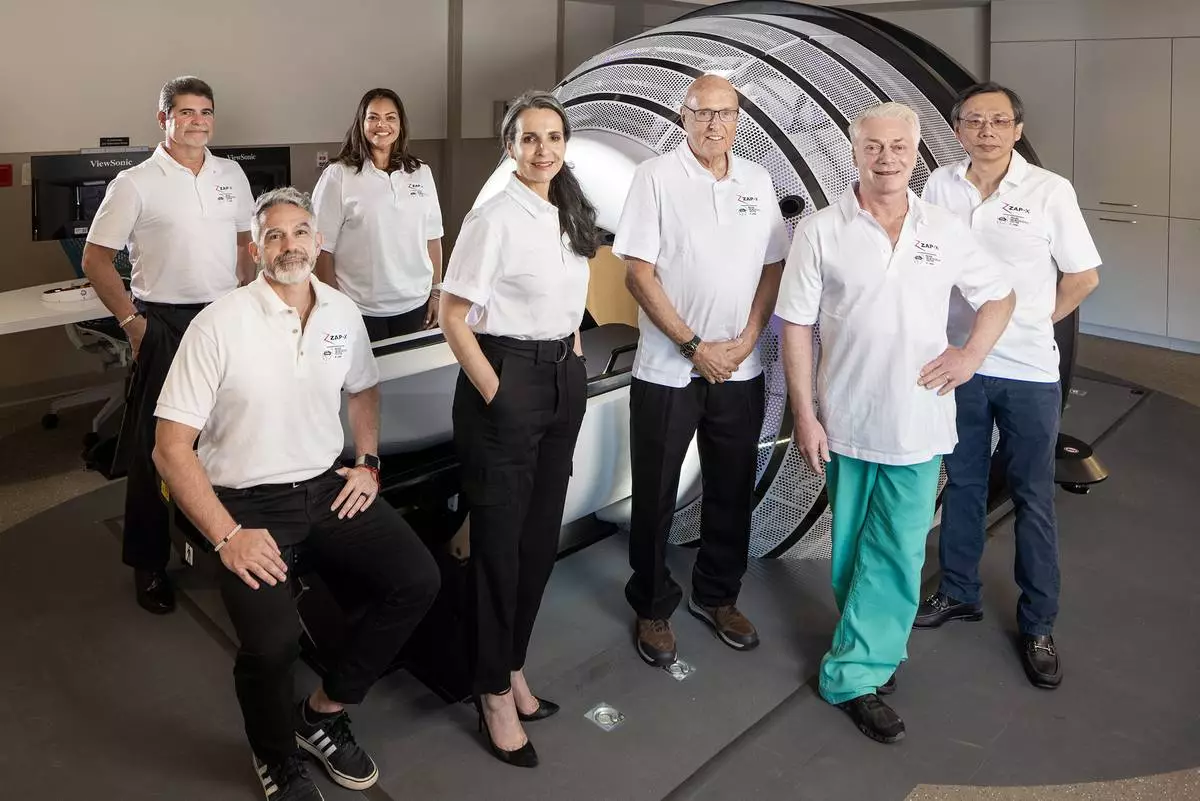
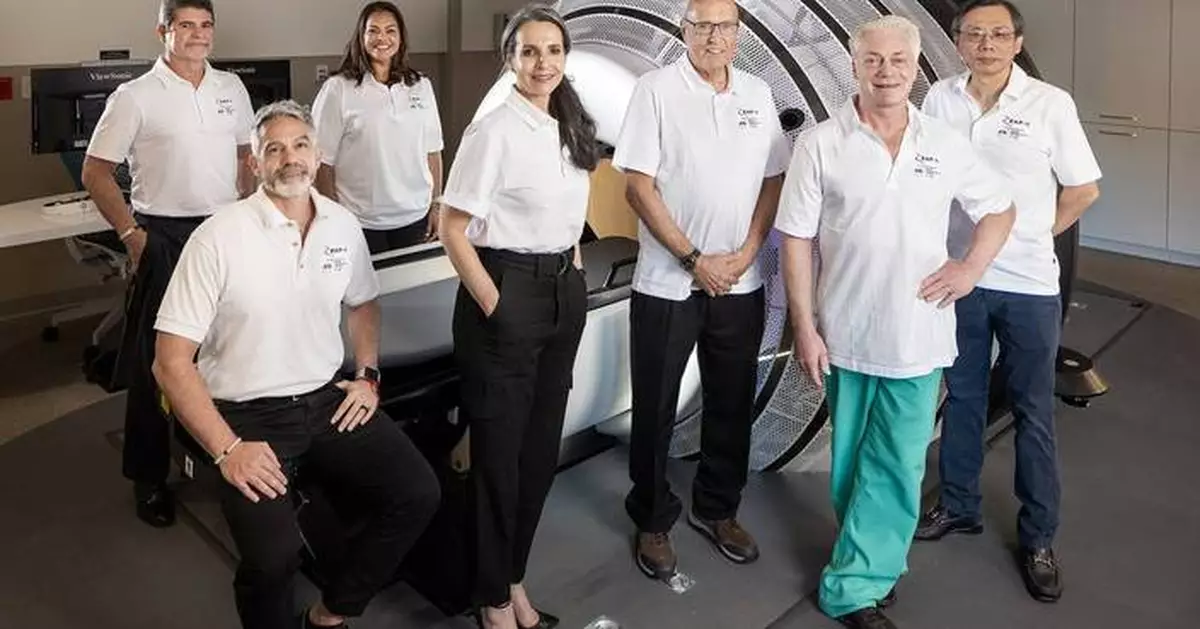
The ZAP-X Gyroscopic Radiosurgery platform with Dr. Aizik L. Wolf and the clinical team at Miami Neuroscience Center at Larkin Community Hospital, Miami, Florida.

The ZAP-X Gyroscopic Radiosurgery platform with Dr. Aizik L. Wolf and the clinical team at Miami Neuroscience Center at Larkin Community Hospital, Miami, Florida.

LONDON (AP) — Len Deighton, a prolific writer whose tough, stylish spy thrillers featured on bestseller lists for decades, has died. He was 97.

Deighton’s literary agent, Tim Bates, said he died Sunday. No cause of death was given.

Deighton’s first novel, “The IPCRESS File,” helped set the tone of cool and gritty 1960s thrillers and was made into a film starring Michael Caine that helped launch both author and actor to long and stellar careers.

“Len was a Titan,” Bates said Tuesday. "He was not only one of the greatest spy and thriller writers of the 20th century but also one of our greatest writers in any genre.”

Born to a working-class family in a wealthy part of London in 1929 — his father was a chauffeur and his mother a part-time cook — Deighton grew up with a keen eye for the intricacies and absurdities of Britain’s class system.

He served in the Royal Air Force as part of Britain’s then-mandatory national service, studied art and worked as a waiter, pastry chef and flight attendant before having success as a book and magazine illustrator. His designs included the first U.K. edition of Jack Kerouac’s “On the Road” in 1958.

He wrote “The IPCRESS File” to amuse himself during a vacation. The story of a secret agent confronted with duplicity and bureaucracy from his own side while investigating a Soviet kidnap ring, it was published in 1962 and went on to sell millions of copies.

The novel was adapted into a 1965 film, with Caine in a star-making performance as Deighton’s protagonist, a sardonic working-class sophisticate with a love of gourmet food. The character is unnamed in the book, though Caine’s character was given the name Harry Palmer.

Deighton’s depiction of espionage as a grubby, error-strewn business was a contrast to the glamour of Ian Fleming’s James Bond novels.

“I had never read a James Bond book,” Deighton said in a 1997 BBC interview, but by chance “The IPCRESS File” was published the month the first 007 movie, “Dr. No,” was released.

His book’s gritty mood, like the murky spy world of John le Carré’s fiction, chimed with the times, and Deighton said he benefited from a backlash against Bond’s huge success. He recalled a friend telling him that “You’re a blunt instrument that the critics have used to smash Ian Fleming over the head.”

Subsequent thrillers “Horse Under Water,” “Funeral in Berlin,” “Billion-Dollar Brain” and “An Expensive Place to Die” all featured the same hero. “Funeral in Berlin” and “Billion-Dollar Brain” were both also filmed with Caine in the starring role.

“Berlin Game,” published in 1983, was the first of 10 novels featuring the smart, cynical MI6 officer Bernard Samson. Along with “Mexico Set” and “London Match” it was adapted into the 1988 TV series “Game, Set and Match.”

Deighton set several novels around World War II, including “Bomber” (1970), which depicted the conflict in the air war from both British and German viewpoints, and “SS-GB” (1978), an alternative-history novel set in a Nazi-occupied Britain. It was made into a TV series in 2017.

Deighton wrote more than two dozen novels in all. The last book in his final trilogy, “Faith,” “Hope” and “Charity,” was published in 1996.

He also wrote historical nonfiction, including a book about the assassination of President John F. Kennedy, and “Fighter: The True Story of the Battle of Britain.”

Another passion was food. Deighton was food correspondent for The Observer newspaper in the 1960s and wrote several cookbooks aimed at men — a then-novel idea — including “Len Deighton’s Action Cook Book” (1965), with recipes illustrated like comic strips.

Deighton’s first marriage, to illustrator Shirley Thompson, ended in divorce. He later married Ysabele de Ranitz. They had two sons.

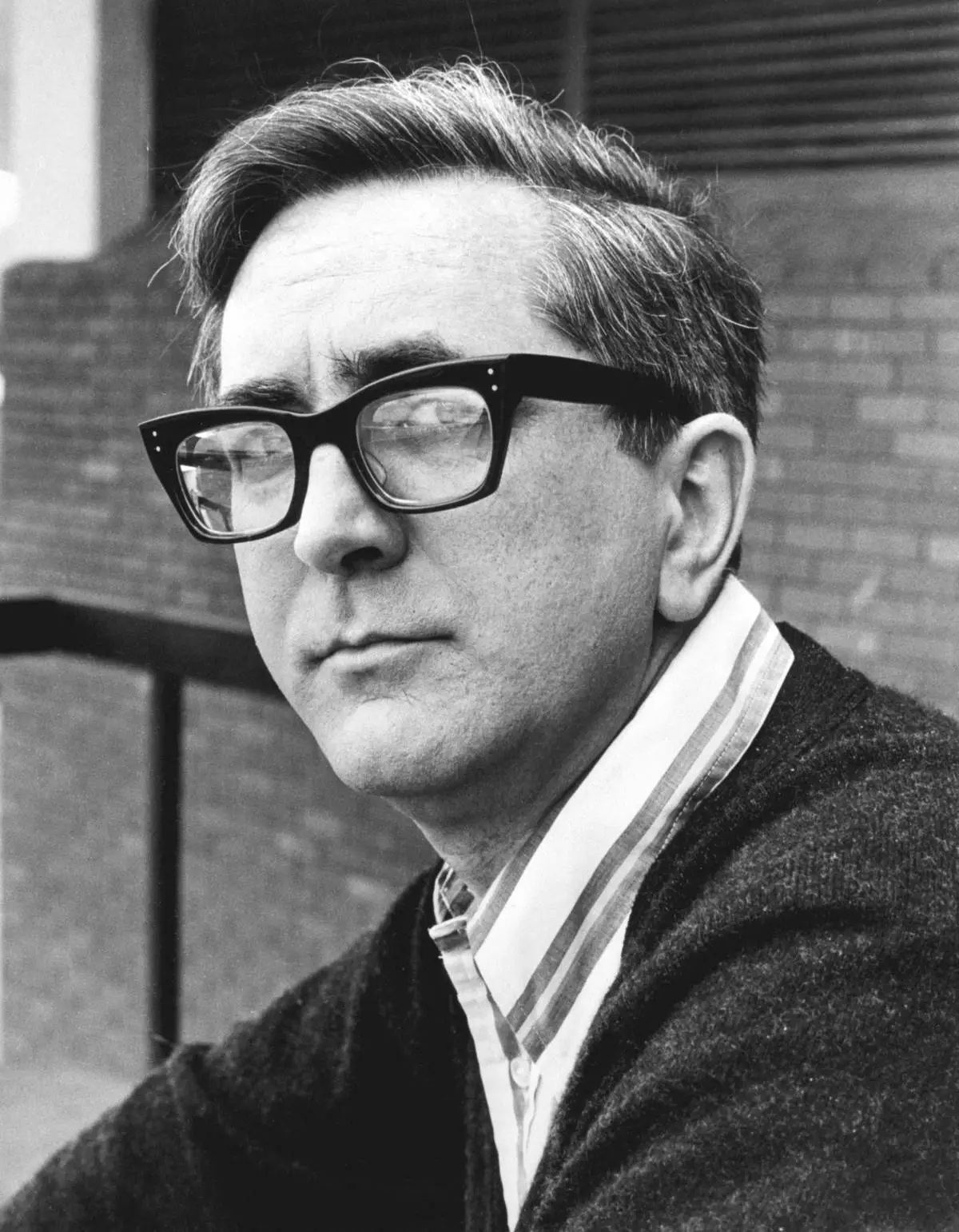
This Jan. 9, 1973 file photo shows British author Len Deighton who has died at the age of 97. (PA via AP)

This Jan. 9, 1973 file photo shows British author Len Deighton who has died at the age of 97. (PA via AP)

FILE - Author Len Deighton, center, poses for a photo with actors Frank Windsor, left and Sam West, who appear in a Radio 4 dramatisation of Len Deighton's book, "Bomber Harris", Feb. 8, 1995. (Sean Dempsey/PA via AP, File)

FILE - Author Len Deighton, center, poses for a photo with actors Frank Windsor, left and Sam West, who appear in a Radio 4 dramatisation of Len Deighton's book, "Bomber Harris", Feb. 8, 1995. (Sean Dempsey/PA via AP, File)

Recommended Articles