Skip to Content Facebook Feature Image

ICL Group Opens Specialty Fertilizer Manufacturing Facility in India, Strengthening Supply Security and Advancing Its Growth Strategy

News

ICL Group Opens Specialty Fertilizer Manufacturing Facility in India, Strengthening Supply Security and Advancing Its Growth Strategy
News

News

ICL Group Opens Specialty Fertilizer Manufacturing Facility in India, Strengthening Supply Security and Advancing Its Growth Strategy

2026-03-18 17:35 Last Updated At:17:40

TEL AVIV, Israel--(BUSINESS WIRE)--Mar 18, 2026--

ICL (NYSE: ICL) (TASE: ICL), a leading global specialty minerals company, today announced the opening of a new specialty fertilizer production facility in Maharashtra, India. The launch comes at a critical time for India, which relies heavily on fertilizer imports and is now facing supply disruptions due to the latest geopolitical instability and the closure of the Strait of Hormuz - a key global shipping corridor. These delays are already affecting fertilizer availability worldwide and could pose long‑term risks to food security if not addressed. This new facility supports the Government of India’s “Make in India” initiative and reflects ICL’s strategy to expand local production in high-growth markets. By manufacturing Water Soluble Fertilizers (WSF) within India, ICL aims to reduce dependence on cross-border supply chains, diversify production routes and ensure more reliable access to essential agricultural inputs.

This press release features multimedia. View the full release here: https://www.businesswire.com/news/home/20260318589447/en/

The plant will produce advanced Water Soluble Fertilizers solutions, that enable precise nutrient delivery and higher agronomic efficiency. According to customs import data and growth trends from previous years, India WSF market has demonstrated a high single-digit CAGR. By expanding access to these solutions, the facility will support Indian farmers in adopting more efficient and sustainable growing practices, helping to increase yields and strengthen long-term food security.

The new facility will span approximately seven acres (28,000 square meters) and will replicate ICL’s advanced production model currently operating in Israel. Designed to deliver the same high-quality specialty fertilizer products currently exported from Israel, the plant will strengthen supply reliability and build a more diversified production base that can better navigate geopolitical constraints while supporting long-term customer demand. ICL has worked closely with partners and customers in India for more than three decades, generating approximately $250 million in annual revenues.

“Establishing this manufacturing plant in India is a strategic step in scaling our specialty fertilizer production platform,” said Nir Ilani, President of the Growing Solutions Division of ICL. “With geopolitical tensions disrupting global trade routes and delaying fertilizer shipments through a key corridor such as the Strait of Hormuz, building local production capacity is essential. This facility enhances India’s supply resilience and ensures farmers have consistent access to high-quality solutions.”

The investment strengthens ICL’s long-term strategy to expand its specialty fertilizers market, deepen customer relationships and respond more effectively to local agronomic needs.

About ICL

ICL Group Ltd. is a global leader in agriculture, food and industrial solutions and uses its unique mineral resources and extensive expertise to address key sustainability challenges related to food security and access to essential minerals. ICL is focused on driving long-term growth through its specialty agriculture and food businesses, while strategically managing its bromine, potash and phosphate mineral resources. ICL’s global professional workforce includes more than 12,000 individuals who are dedicated to expanding its growth engines and efficiently operating – both structurally and economically – while maintaining and optimizing its core operations. The company’s operations are organized under four segments: Industrial Products, Potash, Phosphate Solutions and Growing Solutions. ICL shares are dual listed on the New York Stock Exchange and the Tel Aviv Stock Exchange (NYSE and TASE: ICL), and its 2025 revenues totaled more than $7 billion.

For more information, visit ICL's website at icl-group.com.
To access ICL's CSR report, visit icl-group-sustainability.com.
You can also learn more about ICL on Facebook, LinkedIn, YouTube, X and Instagram.

Forward Looking Statements

This announcement contains statements that constitute forward-looking statements, many of which can be identified by the use of forward-looking words such as “anticipate,” “believe,” “could,” “expect,” “should,” “plan,” “intend,” “estimate” and “potential,” among others.

Forward-looking statements appear in a number of places in this press release and include, but are not limited to, statements regarding the Company’s intent, belief or current expectations. Forward-looking statements are based on management’s beliefs and assumptions and on information currently available to management. Such statements are subject to risks and uncertainties, and actual results may differ materially from those expressed or implied in the forward-looking statements due to various factors, including, but not limited to: the Company’s intentions to expand access to advanced water‑soluble fertilizers to support more efficient and sustainable farming practices in India; the Company’s ambition to strengthen supply reliability and enhance service to customers across India through local production; the Company’s plans for the new facility to support regional economic development and strengthen India’s agricultural supply chain; the Company’s expectations that the production will support rising demand in a major fertilizer-importing market and enhance resilience as geopolitical tensions disrupt global supply routes; the Company’s intentions to be closer to customers and respond more efficiently to local agronomic needs; expectations regarding high single‑digit CAGR growth of the WSF market in India; ICL’s expectations that the new facility will help increase yields and strengthen long‑term food security; ICL’s expectations that the facility will reach a production capacity of up to 30,000 tons by 2029; expectations that the facility may in the future serve as a hub for exports to additional global markets and integrate into ICL’s global production network; the Company’s belief that establishing local production capacity is an operational necessity given geopolitical tensions and supply‑chain disruptions; expectations that the facility will enhance India’s supply resilience and create new employment opportunities; and ICL’s view of specialty fertilizers as a key growth engine for the Company.

Although ICL believes the expectations and assumptions on which such forward-looking statements are based are reasonable, undue reliance should not be placed on the forward-looking statements because ICL can give no assurance they will prove to be correct.

Other factors that could cause actual results to differ materially from those in the forward-looking statements include, but are not limited to, estimates, forecasts and statements as to management's expectations with respect to, among other things, business and financial prospects, financial multiples and accretion estimates, future trends, plans, strategies, positioning, objectives and expectations, the state of the Indian market, general economic, market and business conditions, weather conditions, governmental and regulatory requirements and actions by governmental authorities, including changes in government policy, changes in environmental, tax and other laws or regulations and the interpretation thereof. As a result of the foregoing, readers should not place undue reliance on the forward‐looking statements contained in this press release concerning the timing of the transaction, or other more specific risks and uncertainties facing ICL, such as those set forth in the “Risk Factors” section of its Annual Report on Form 20-F filed on March 13, 2025 (reference no. 2025-02-016733), as such risk factors may be updated from time to time in its Current Reports on Form 6-K and other filings ICL makes with the U.S. Securities and Exchange Commission from time to time.

Forward-looking statements refer only to the date they are made, and the company does not undertake any obligation to update them in light of new information or future developments or to publicly release any revisions to these statements in order to reflect later events or circumstances or to reflect the occurrence of unanticipated events.
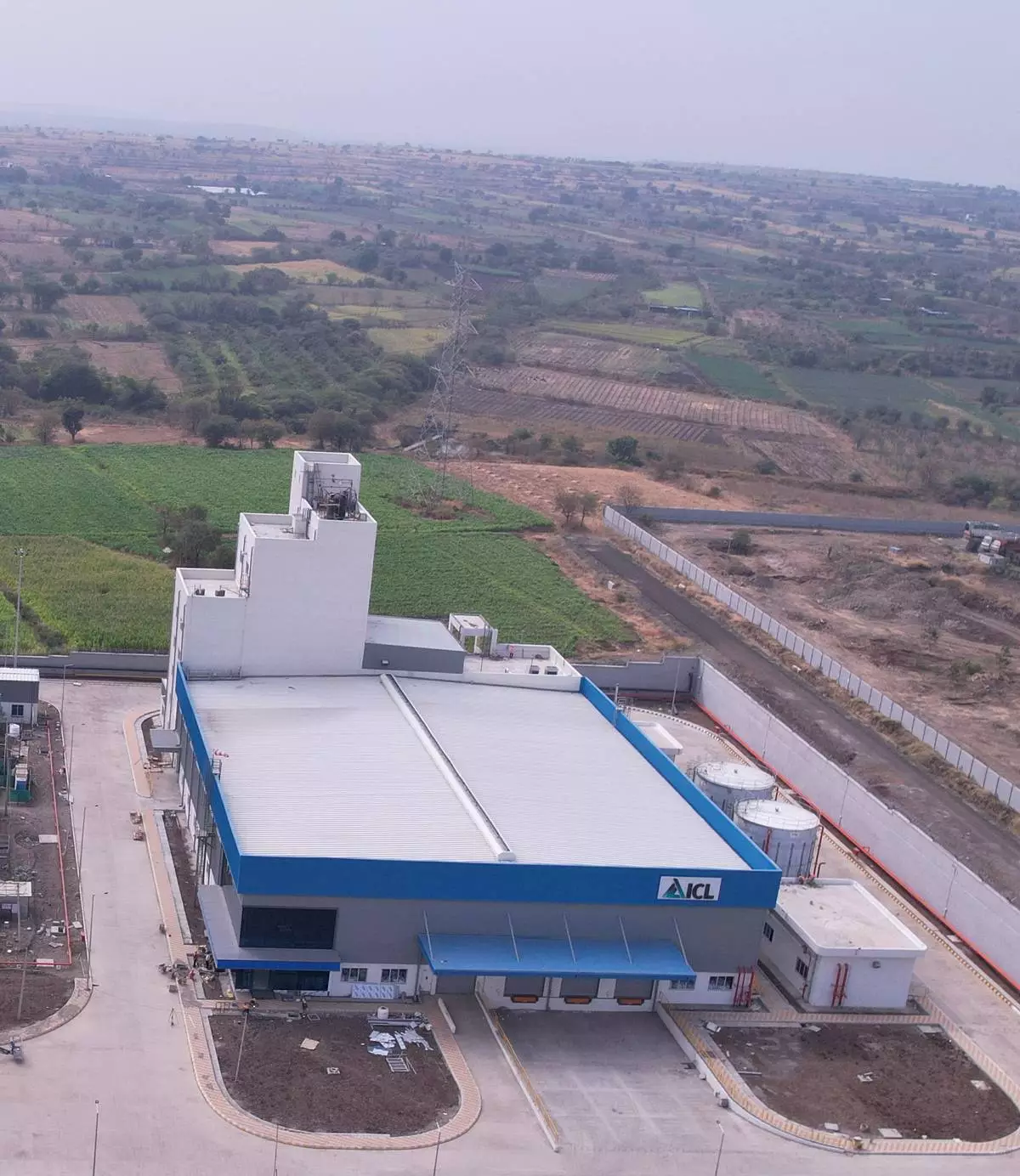
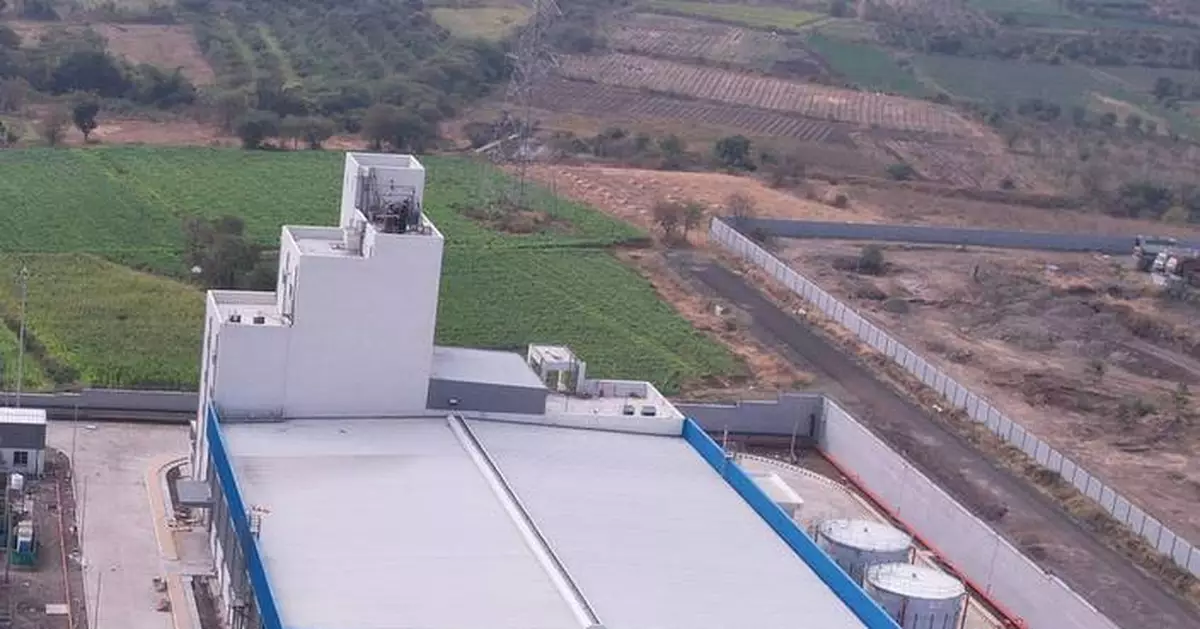
ICL specialty fertilizers plant in India

ICL specialty fertilizers plant in India
DUBAI, United Arab Emirates (AP) — Iran lashed out following the killing of one of its top leaders in an airstrike with attacks on its Gulf neighbors and Israel on Wednesday, using some of its latest missiles to evade air defenses and killing two near Tel Aviv as the war in the Middle East showed no signs of slowing.

Israel kept up intense pressure on Lebanon with strikes it said targeted Iran-backed Hezbollah militants, hitting multiple apartment buildings in Beirut and killing at least six people.

In Iran, the Bushehr nuclear power plant complex was hit by a projectile but there were no injuries and the plant suffered no damage, the International Atomic Energy Agency said after receiving a report from Tehran. The IAEA’s leader, Rafael Grossi, reiterated his call “for maximum restraint during the conflict to prevent risk of a nuclear accident.”

The price of Brent crude oil, the international standard, remained stubbornly over $100 per barrel in early trading on Wednesday, up more than 40% from the start of the war.

Since the United States and Israel attacked Iran to start the war on Feb. 28, Iran has been targeting the energy infrastructure of its Gulf Arab neighbors, as well as military bases, as part of a strategy to drive up oil prices and put pressure on Washington to back down.

Iran’s judiciary announced a man had been executed on charges that he spied for Israel’s Mossad intelligence agency. The judiciary’s Mizan news agency identified the man as Kourosh Keyvani and alleged that he “provided images and information on sensitive locations” to Israel.

Activists and rights groups have warned since Iran’s nationwide protests in January that the Islamic Republic could begin conducting mass executions. Iran violently suppressed the protests through violence that killed thousands and saw tens of thousands detained.

New attacks were reported in multiple Gulf countries early Wednesday, including on Saudi Arabia's vast Eastern Province, which is home to many of its oil fields, Kuwait, Bahrain, Qatar and the United Arab Emirates.

Australia’s Prime Minister Anthony Albanese said a projectile caused a small fire at its base in the UAE near Dubai but caused no injuries. His comments appeared to correspond with explosions heard near Al Minhad Air Base, used by Western nations as a transit hub for the wider Mideast.

Saudi Arabia shot down a ballistic missile targeting the area of the Prince Sultan Air Base, which hosts American forces and aircraft.

Iran has also shown no sign of relenting in its stranglehold on the Strait of Hormuz, the shipping lane through which a fifth of the world's oil transits, giving rise to growing concerns of a global energy crisis.

U.S. Central Command said the U.S. military fired multiple 5,000-pound deep penetrator bombs Tuesday on Iranian missile sites along Iran’s coastline near the strait.

Responding to Israel's killing of Ali Larijani, secretary of Iran’s Supreme National Security Council and one of the country’s most powerful figures, the Republican Guard said Wednesday it had targeted central Israel with multiple-warhead missiles, which have an increased chance of evading missile defense systems and can overwhelm radar tracking systems.

Israel reported at least two salvoes of incoming fire and the country's medical service said two people were killed in Ramat Gan, east of Tel Aviv.

Iran's paramilitary Revolutionary Guard said the force launched the Khorramshahr-4 and Qadr multiple-warhead missiles to avenge Larijani’s killing. Footage filmed by The Associated Press showed at least one missile releasing cluster munitions over Israel.

Larijani, a former parliamentary speaker, was a senior policy adviser to the late Supreme Leader Ali Khamenei on strategy in nuclear talks with the Trump administration. He was sanctioned by the U.S. Treasury in January for his role “coordinating” Iran’s violent suppression of nationwide protests.

Gen. Gholam Reza Soleimani, the head of the Revolutionary Guard’s Basij militia, was also killed in an Israeli strike on Tuesday. Soleimani was sanctioned by the U.S., the European Union and other nations, over his role in suppressing dissent for years through the Basij.

The U.S. Embassy in Baghdad also came under fire for the second day in a row early Wednesday, two Iraqi security officials said, speaking on condition of anonymity because they were not authorized to comment.

Further details were not immediately available, but pro-Iran militia groups have been regularly attacking American targets in Iraq since the start of the war. On Tuesday a drone cashed inside the Baghdad embassy compound.

Israel flattened an apartment building in central Beirut about an hour after issuing an evacuation notice. It was the fourth time the building has been targeted, but three strikes last week failed to bring it down.

Israel's military claimed the building was being used by Hezbollah to store “millions of dollars intended to finance its activities,” without providing evidence.

There were no immediate reports of casualties, but other attacks on apartment buildings in central Beirut have killed at least six people and wounded 24 others, according to Lebanon's Health Ministry.

The Israeli army also said it had begun a wave of strikes targeting Hezbollah in southern Lebanon “in response to firing into Israeli territory.”

Israel’s strikes have displaced more than 1 million Lebanese — roughly 20% of the population — according to the Lebanese government, which says more than 900 people have been killed. In Israel, 14 people have been killed by Iranian missile fire. At least 13 U.S. military members have been killed.

More than 1,300 people have been killed in Iran since the conflict started Feb. 28, according to the Iranian Red Crescent.

Rising reported from Bangkok, AlJoud from Beirut. Associated Press writer Qassim Abdul-Zahra in Baghdad contributed to this story.

Smoke and flame rise from a residential building following an Israeli airstrike in central Beirut, Lebanon, Wednesday, March 18, 2026. (AP Photo/Bilal Hussein)

Smoke and flame rise from a residential building following an Israeli airstrike in central Beirut, Lebanon, Wednesday, March 18, 2026. (AP Photo/Bilal Hussein)

Israeli authorities hang Israeli and U.S. flags at the site struck by an Iranian missile that killed two people, in Ramat Gan, Israel, Wednesday, March 18, 2026. (AP Photo/Oded Balilty)

Israeli authorities hang Israeli and U.S. flags at the site struck by an Iranian missile that killed two people, in Ramat Gan, Israel, Wednesday, March 18, 2026. (AP Photo/Oded Balilty)

A view of a building damaged in an Israeli airstrike, in Dahiyeh, Beirut's southern suburbs, Beirut's southern suburbs, Lebanon, Monday, March 16, 2026. (AP Photo/Bilal Hussein)

A view of a building damaged in an Israeli airstrike, in Dahiyeh, Beirut's southern suburbs, Beirut's southern suburbs, Lebanon, Monday, March 16, 2026. (AP Photo/Bilal Hussein)

Volunteers clean debris from a residential building damaged when a nearby police station was hit Friday in a U.S.-Israeli strike in Tehran, Iran, Sunday, March 15, 2026. (AP Photo/Vahid Salemi)

Volunteers clean debris from a residential building damaged when a nearby police station was hit Friday in a U.S.-Israeli strike in Tehran, Iran, Sunday, March 15, 2026. (AP Photo/Vahid Salemi)

FILE - Commander of Iran's Basij paramilitary force, Gen. Gholam Reza Soleimani, gives a press conference in Tehran, Iran, Nov. 18, 2019. (AP Photo/Ebrahim Noroozi, File)

FILE - Commander of Iran's Basij paramilitary force, Gen. Gholam Reza Soleimani, gives a press conference in Tehran, Iran, Nov. 18, 2019. (AP Photo/Ebrahim Noroozi, File)

Fire and plumes of smoke rise after a drone struck a fuel tank forcing the temporary suspension of flights. near Dubai International Airport, in United Arab Emirates, early Monday, March 16, 2026. (AP Photo)

Fire and plumes of smoke rise after a drone struck a fuel tank forcing the temporary suspension of flights. near Dubai International Airport, in United Arab Emirates, early Monday, March 16, 2026. (AP Photo)

FILE - Ali Larijani, center, head of Iran's National Security Council, gestures as Hezbollah supporters throw rice to welcome him outside Rafik Hariri International Airport in Beirut, Lebanon, Wednesday, Aug. 13, 2025. (AP Photo/Bilal Hussein, File)

FILE - Ali Larijani, center, head of Iran's National Security Council, gestures as Hezbollah supporters throw rice to welcome him outside Rafik Hariri International Airport in Beirut, Lebanon, Wednesday, Aug. 13, 2025. (AP Photo/Bilal Hussein, File)

Recommended Articles