SAN MATEO, Calif.--(BUSINESS WIRE)--Mar 18, 2026--
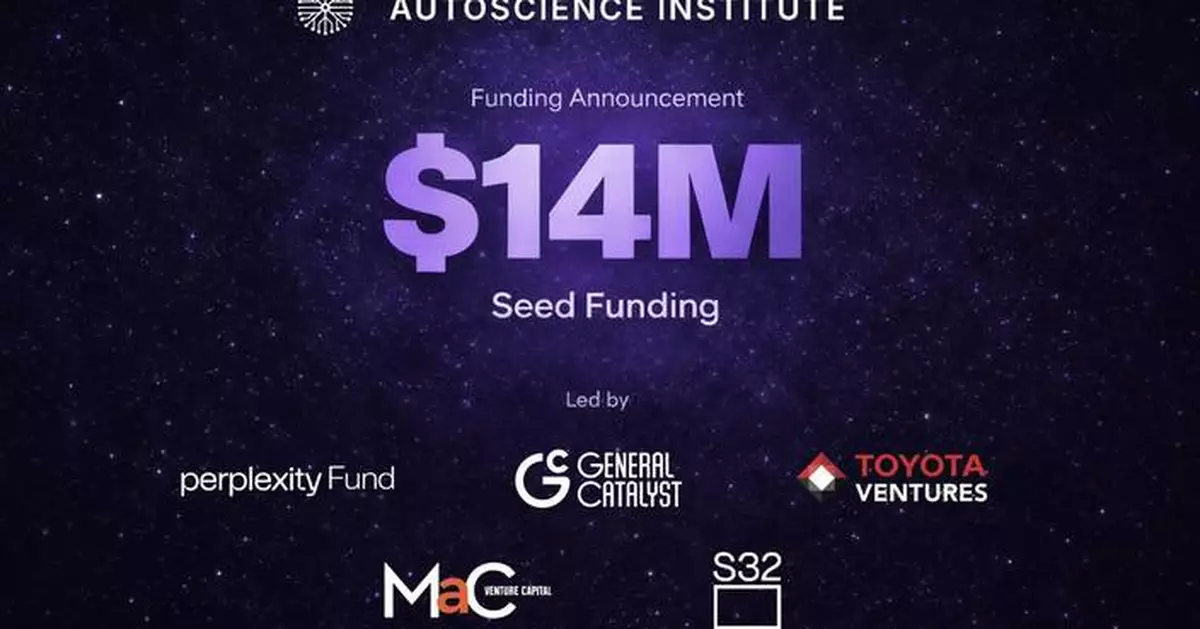
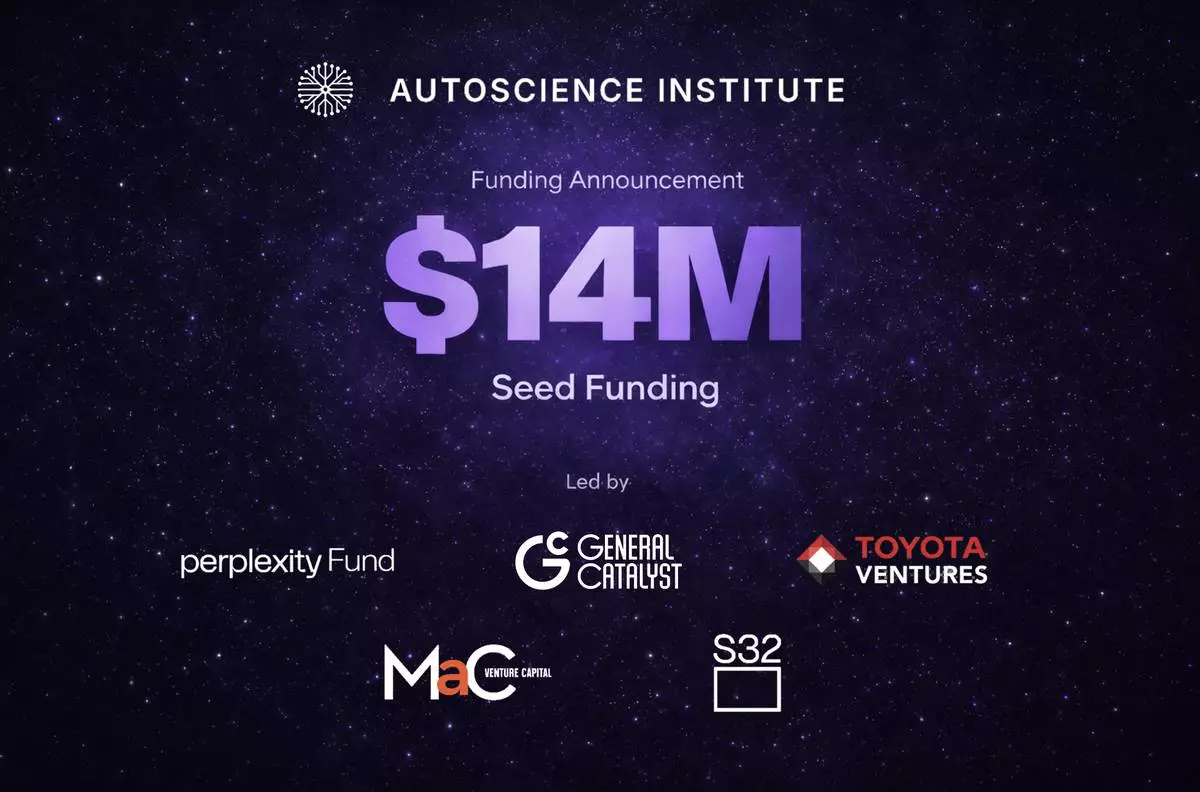
Autoscience announced today it has raised $14M in seed funding to automate the research and development of new machine learning models. The round was led by General Catalyst, with participation from Toyota Ventures, Perplexity Fund, MaC Ventures and S32. The company has created a virtual AI laboratory with non-human AI Scientists and Engineers that can invent, validate, and deploy specialized, state-of-the-art machine learning models.
This press release features multimedia. View the full release here: https://www.businesswire.com/news/home/20260318760407/en/
For many machine learning teams, the primary bottleneck in artificial intelligence development is no longer compute or data, but the human capacity to create and test new ideas at scale. With more than 2,000 machine learning papers published every week, no human research team can effectively evaluate and implement every new breakthrough while advancing their own original hypotheses. Autoscience addresses this problem using two core AI systems: automated scientists that ideate and test new algorithmic hypotheses and automated engineers that optimize and deploy those validated inventions into the real world. Autoscience's first deployments target high-stakes financial applications, manufacturing and fraud detection, enabling companies to benefit from the output of a fully-staffed research division without the headcount.
Autoscience first gained recognition when its autonomous lab became the first AI system to produce a peer-reviewed scientific research paper (ICLR 2025 workshop). Soon after, its system secured a Silver Medal in a machine learning competition (Kaggle Santa 2025) against 3,300 teams, marking the first time a fully-autonomous system has placed in a live, featured Kaggle competition.
“We’ve reached a point where human intuition is no longer enough to navigate the complexity of algorithmic discovery,” said Eliot Cowan, CEO of Autoscience. “We’ve built a research organization where the researchers are AI systems. We aim to compress a decade of machine learning research into months, unlocking new AI capabilities for scientists and forming a competitive edge for our customers.”
“We believe Autoscience is tackling an increasingly important challenge in machine learning: the pace and scalability of experimentation,” said Yuri Sagalov, Managing Director at General Catalyst. “As research output continues to grow, teams are looking for ways to more efficiently test, validate, and translate new ideas into production systems. We’re excited about their progress in advancing autonomous R&D to scale that workflow.”
The $14 million in funding will be used to scale Autoscience’s offering to a select group of Fortune 500 and large private companies who are training specialized models in high-stakes environments. This managed service deploys hundreds of automated AI Research Scientists that continuously generate and ship improvements to their machine learning models at the same time, enabling companies to discover, test, and serve better models. The capital will also support the expansion of Autoscience's engineering team as they accelerate AI research.
About Autoscience Autoscience is an applied research lab based in San Mateo, California. The company builds AI systems that conduct machine learning research and deploy the results, effectively automating the role of the AI researcher and engineer. By combining academic rigor with AI speed, Autoscience helps organizations invent and implement proprietary machine learning breakthroughs. The team is singularly focused on building the systems that enable autonomous AI research to be the new standard for how the world's best models get built.
Autoscience raises $14M in seed funding to build the world’s first autonomous AI research lab
NEW YORK (AP) — U.S. stocks are sinking Wednesday after another climb for oil prices raised worries about inflation, which may have been primed to worsen even before the war with Iran began.
The S&P 500 fell 0.6% and was on track for its first loss this week. The Dow Jones Industrial Average was down 380 points, or 0.8%, as of 12:55 p.m. Eastern time, and the Nasdaq composite was 0.6% lower.
Stocks fell under the pressure of a 4.7% climb for the price of a barrel of Brent crude, the international standard, to $108.27. Benchmark U.S. oil rose 1.5% to $97.61 per barrel.
Oil and natural gas prices have been spiking since the war began because of disruptions to the Persian Gulf's energy industry. Iran’s state television said Wednesday that the Islamic Republic would be attacking oil and gas infrastructure in Qatar, Saudi Arabia and the United Arab Emirates after an attack on facilities associated with its offshore South Pars natural gas field.
If the disruptions keep oil and gas prices high for long, they could send a debilitating wave of inflation crashing into the global economy.
A report released Wednesday morning showed that inflation pressures were already worsening before the war began. It said inflation at the U.S. wholesale level unexpectedly accelerated last month to 3.4%, and those cost increases could hit U.S. households if producers pass them all along.
Such numbers strengthened Wall Street’s consensus that the Federal Reserve will announce that it’s keeping interest rates steady this afternoon following its latest meeting, instead of resuming its cuts.
Cuts would give the job market and investment prices a boost, and President Donald Trump has been angrily calling for them. But lower interest rates would also worsen inflation.
More important for Wall Street is whether Fed officials will say they still think one cut to rates may be possible over the course of 2026. That’s what the median member said in December, the last time Fed officials published such expectations.
The Iran war has made it difficult for anyone to make economic forecasts. Gasoline prices are soaring and will push up inflation for at least the next month or two. The average price for a gallon of gasoline spiked again overnight, reaching $3.84. It was well under $3 last month.
Global oil flows remain largely constrained, ING Bank analysts Warren Patterson and Ewa Manthey wrote in a research note on Wednesday, even as hopes were growing that Iran might be allowing more vessels through the Strait of Hormuz, a key waterway for global oil and gas transport.
Roughly a fifth of the world’s crude oil passes through the strait, which has been largely closed as Iran blocks ships linked to the U.S., Israel and their allies.
On Wall Street, mixed profit reports helped keep the market in check.
Macy’s jumped 5.2% after reporting stronger profit and revenue for the latest quarter than analysts expected. The retailer behind Bloomingdale’s and Bluemercury is in the midst of a turnaround plan to drive growth under CEO Tony Spring.
But General Mills slipped 1% after the company behind the Pillsbury, Progresso and Wheaties brands reported a weaker profit for the latest quarter than analysts expected. CEO Jeff Harmening is investing in its brands in hopes of driving growth, and it’s sticking with its forecast for profit over the full fiscal year.
In the bond market, Treasury yields ticked higher following the higher-than-expected update on inflation at the wholesale level. The yield on the 10-year Treasury rose to 4.22% from 4.20% late Tuesday and from just 3.97% before the war with Iran started.
In stock markets abroad, indexes mostly fell in Europe following a stronger finish in Asia. They reacted to the rise in the price of crude, which accelerated as trading headed westward around the world.
Tokyo’s Nikkei 225 rallied 2.9% after the government reported exports in February were higher than expected. South Korea’s Kospi leaped 5%.
AP Business Writers Chan Ho-him and Matt Ott contributed.
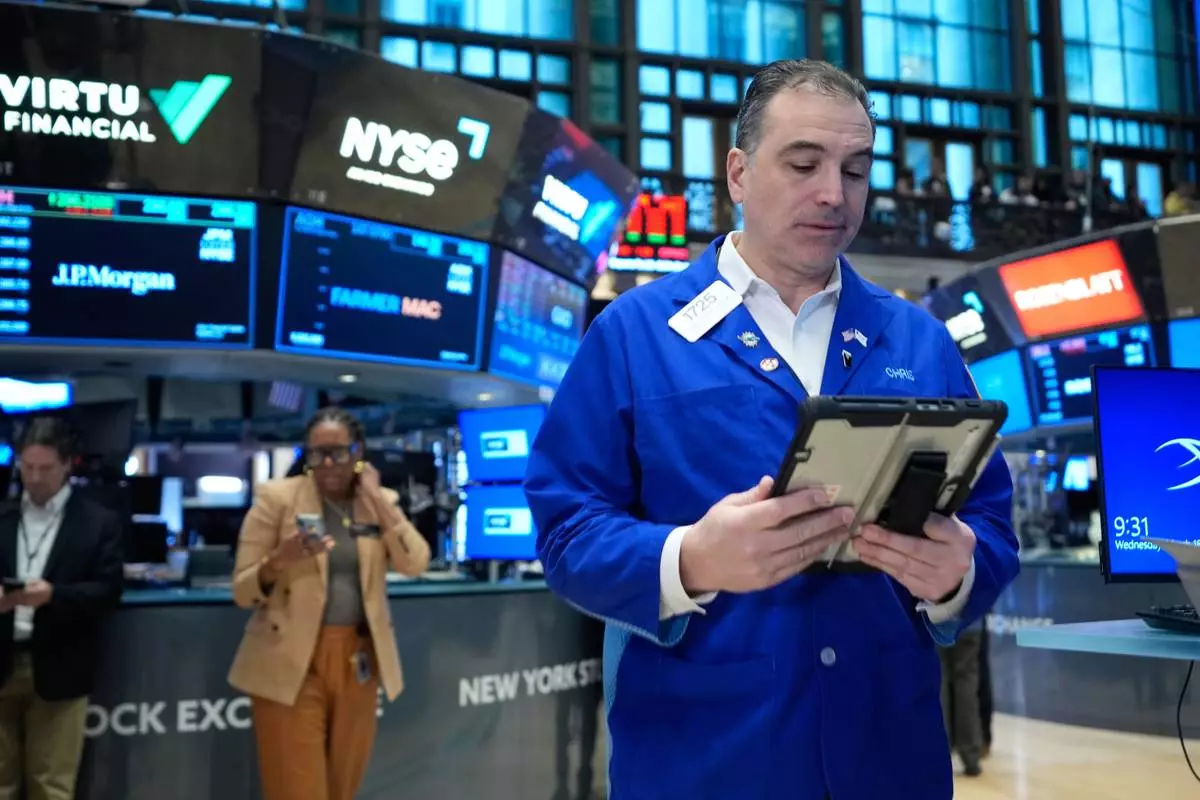
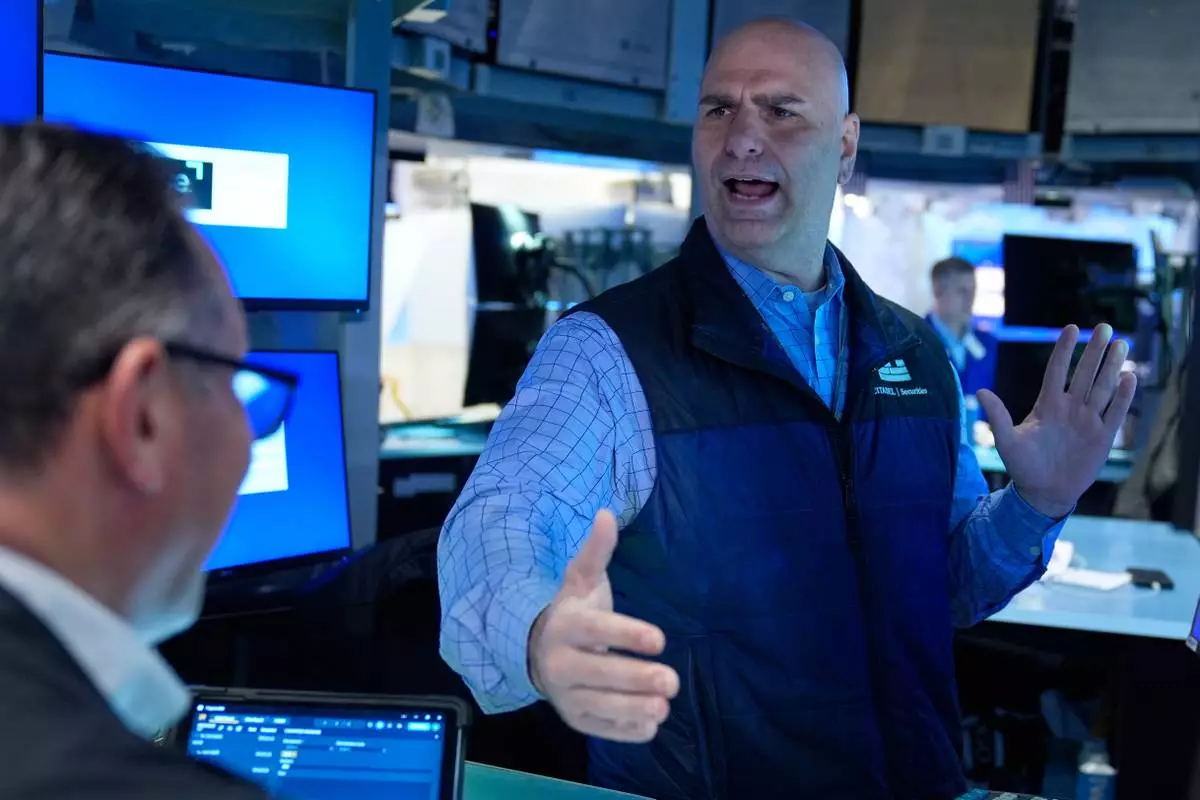
Christopher Lagana works on the floor at the New York Stock Exchange in New York, Wednesday, March 18, 2026. (AP Photo/Seth Wenig)
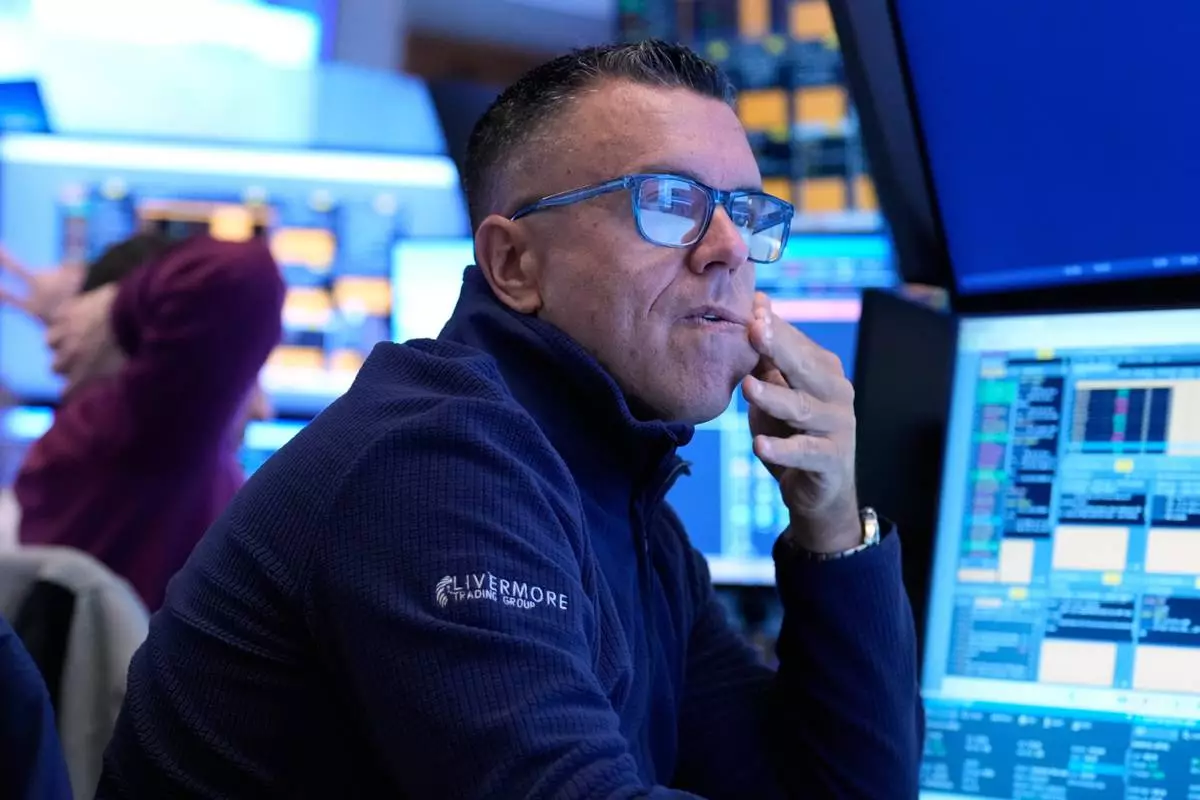
Traders work on the floor at the New York Stock Exchange in New York, Tuesday, March 10, 2026. (AP Photo/Seth Wenig)
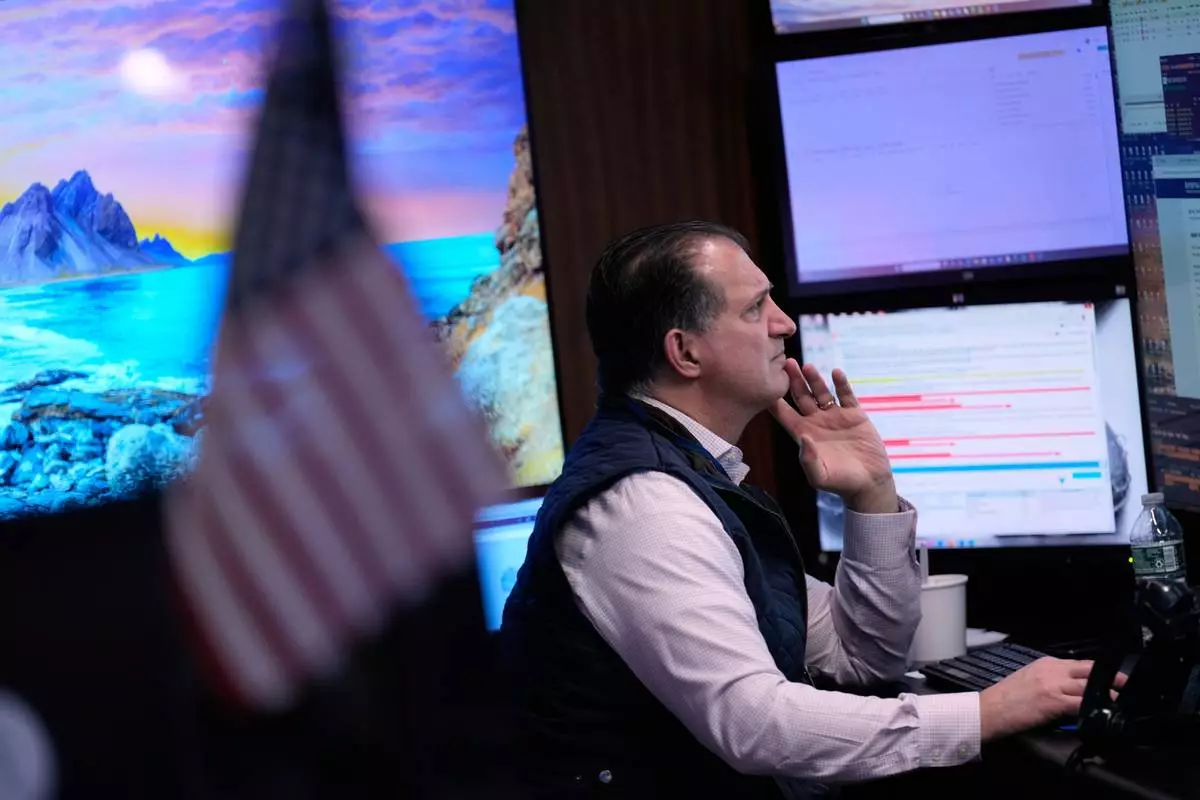
Philip Finale works on the floor at the New York Stock Exchange in New York, Tuesday, March 10, 2026. (AP Photo/Seth Wenig)
Traders work on the floor at the New York Stock Exchange in New York, Tuesday, March 10, 2026. (AP Photo/Seth Wenig)
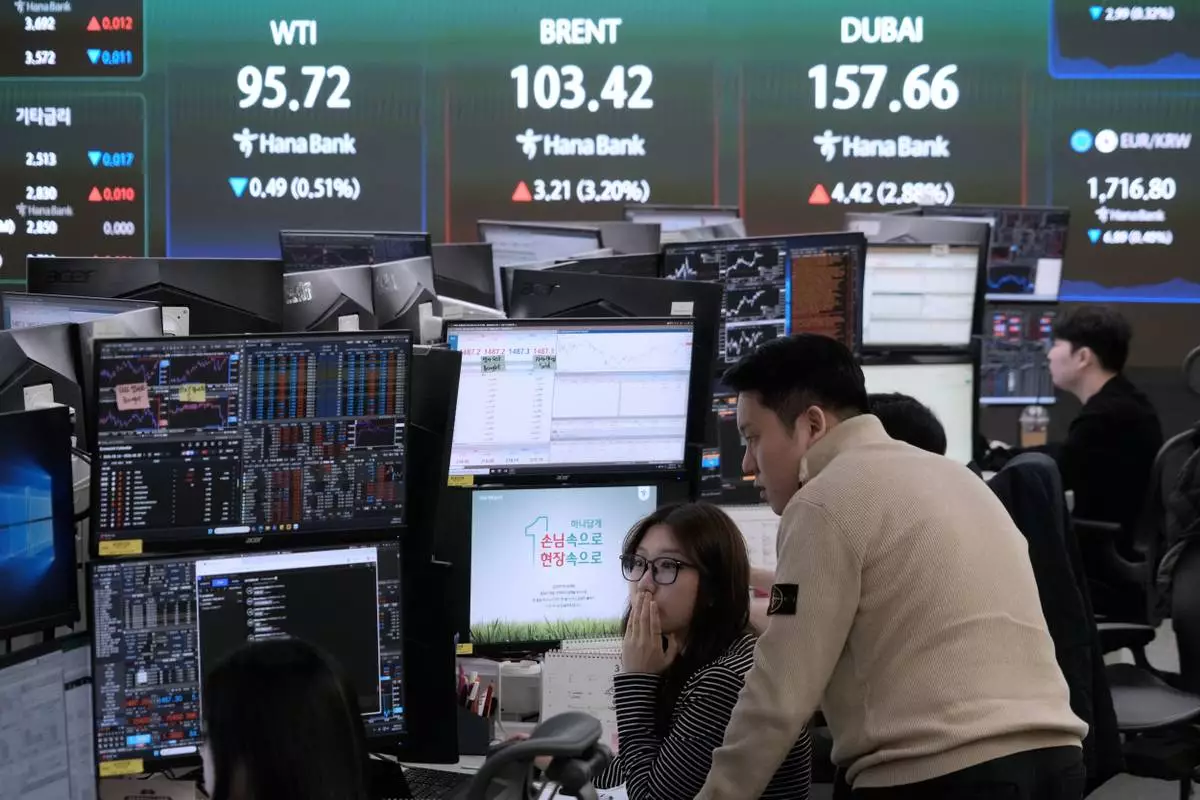
Currency traders watch monitors near a screen showing international oil prices at the foreign exchange dealing room of the Hana Bank headquarters in Seoul, South Korea, Wednesday, March 18, 2026. (AP Photo/Ahn Young-joon)
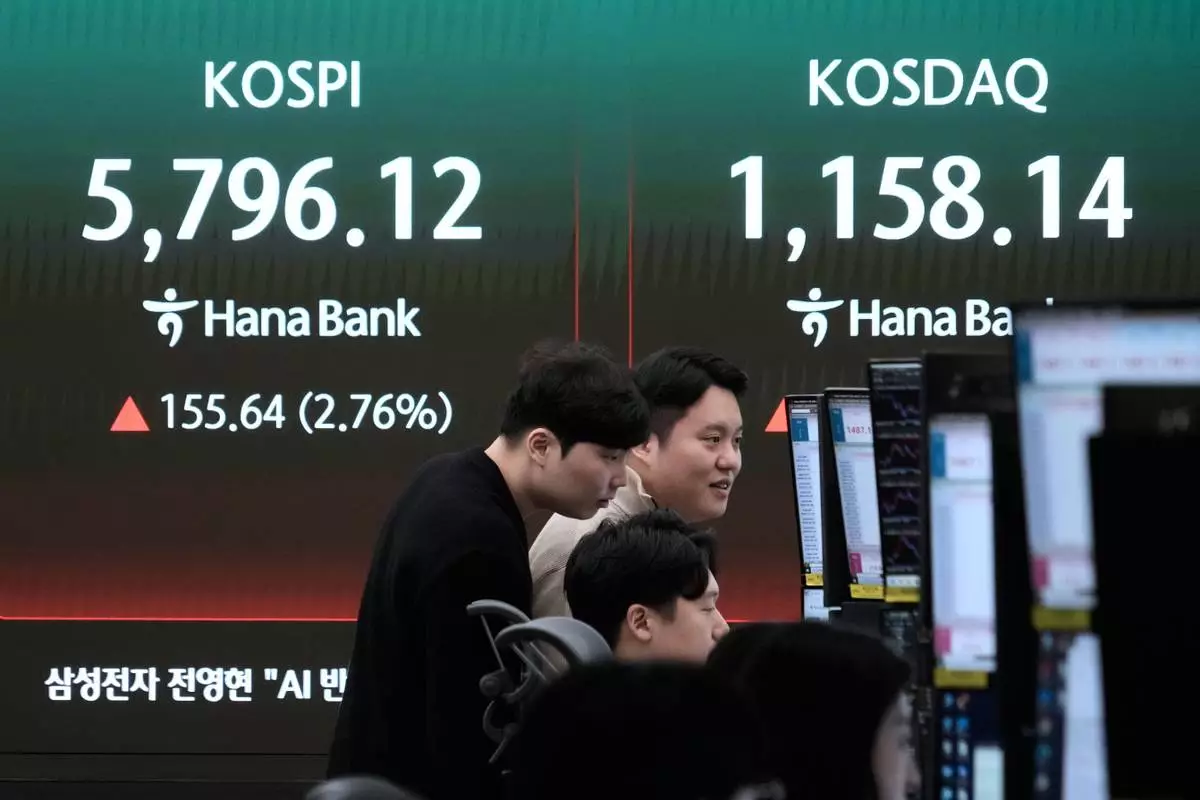
Currency traders watch monitors near a screen showing the Korea Composite Stock Price Index (KOSPI), left, at the foreign exchange dealing room of the Hana Bank headquarters in Seoul, South Korea, Wednesday, March 18, 2026. (AP Photo/Ahn Young-joon)
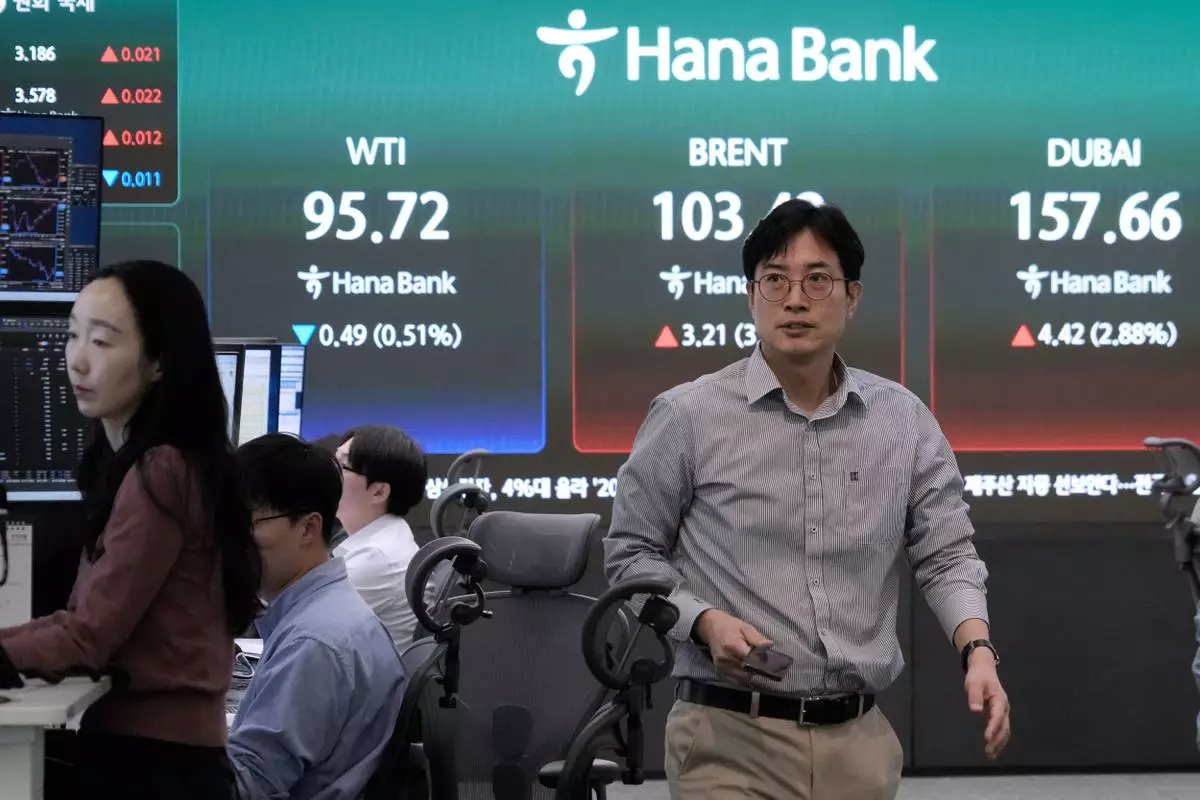
A currency trader passes by a screen showing international oil prices at the foreign exchange dealing room of the Hana Bank headquarters in Seoul, South Korea, Wednesday, March 18, 2026. (AP Photo/Ahn Young-joon)
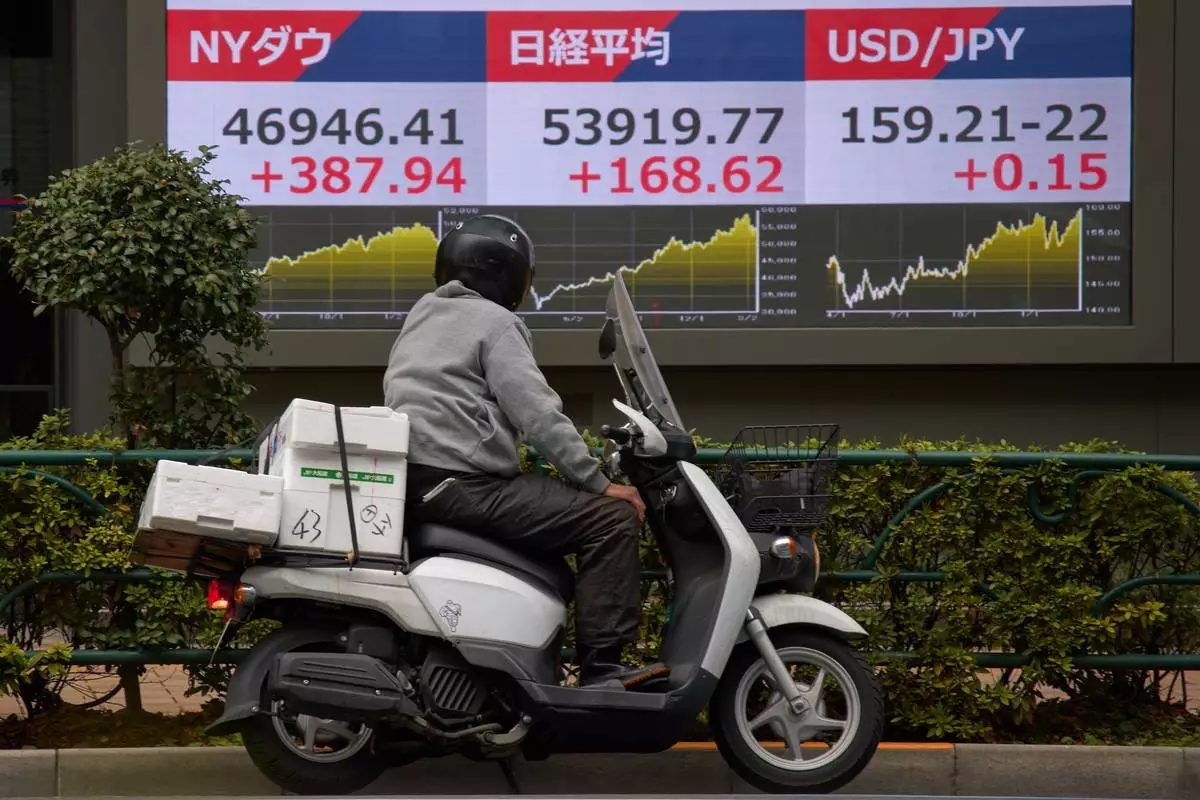
A person looks at a stock price monitor showing New York Dow and Nikkei indexes also US dollar Japanese yen exchange rate at a security company Tuesday, March 17, 2026, in Tokyo. (AP Photo/Eugene Hoshiko)
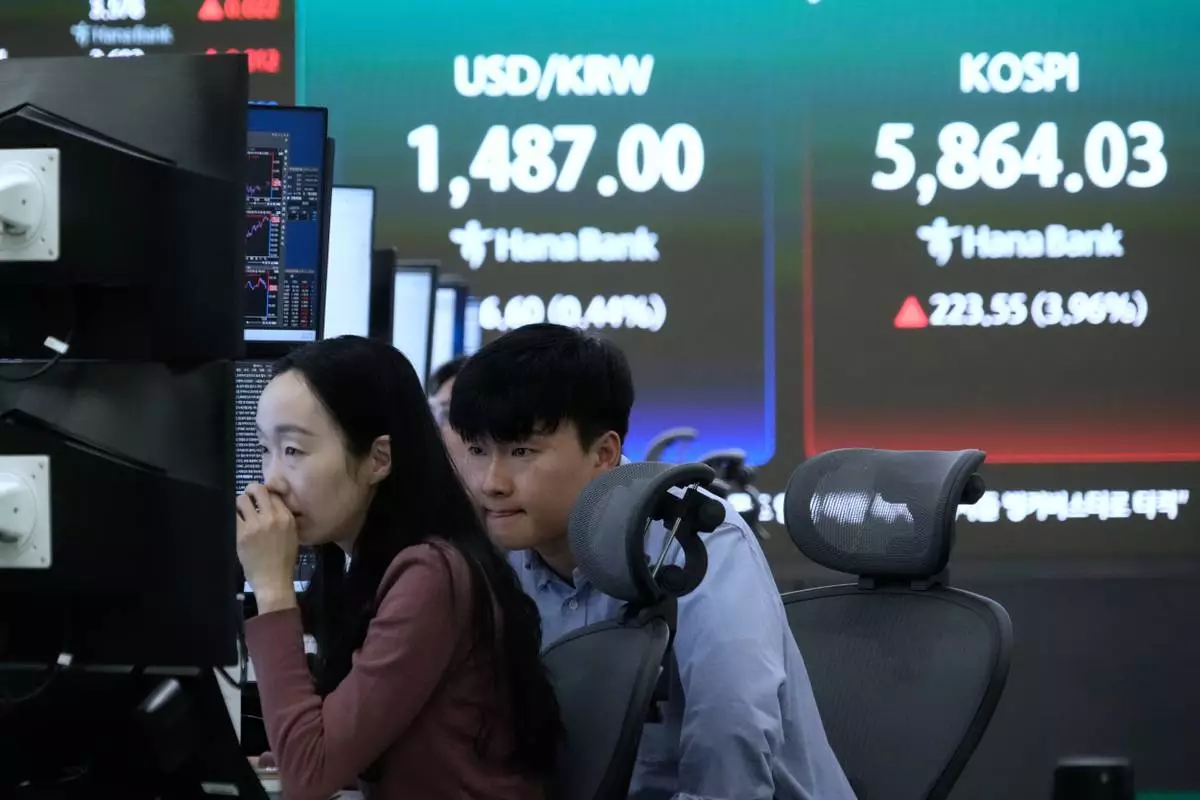
Currency traders watch monitors near a screen showing the Korea Composite Stock Price Index (KOSPI), top right, at the foreign exchange dealing room of the Hana Bank headquarters in Seoul, South Korea, Wednesday, March 18, 2026. (AP Photo/Ahn Young-joon)